…there is a lot to be depressed about. I’m sure you don’t need a list, but we could start with, mostly because surfing is the main thrust of realsurfers, the fact that the surf is one foot ON THE COAST. Oh, it is, like, 17 seconds; due, perhaps, to the hurricane that grew at an astounding and historic rate and slammed the shit out of Acapulco. So, there’s some hope, On the coast, MEANWHILE, it’s 25 degrees and clear at my house, fifty feet above sea level, probably twenty feet under water during the Ice Age. Under ice, rather, in an ancient fjord between the Olympics and the Hood Canal. Not such a big deal except that I am headed to Bremerton to try to finish an exterior paint job.
If I were to allow myself to get depressed by this or the unknowns of approaching winter, it would be because I’m ignoring all the other tragedies and horrors going on in the world: Wars I can’t help but compare (not politicizing, just thinking) to our own western, manifest destiny, expansion. It is Sunday, and there is football, if I turn on the right channel.
Even blocking out the distant wars, it is difficult to not, occasionally, perhaps when trying to pull out of the grocery store, think about how many of us are treading water, trying to pay the rent, trying to keep the heat on, and how many people have given up and gone under.
Despite being somewhat aware of social wrongs and injustices, I freely admit to being quite hypocritical. Thoughts and prayers are no more effective coming from me, a guy who will drive two blocks to avoid eye contact with pretty much anyone holding any sort of sign than from any politician tracked down and compelled to comment on the last or next mass shooting.
I didn’t write the following piece because I was depressed. Or, perhaps, in my sleep, I allowed myself to not ignore, but to follow some twisting dream logic. I have, because I am basically chickenshit, only shared this piece with my friend, Stephen Davis. He says it’s the best thing I’ve ever written. Yeah, so, Steve and I have different opinions on a lot of things, and it isn’t like he’s read that much of my stuff, but…
Like a Hermit Crab, Like Coyotes
It was a found sleeping bag that she spread out and flattened, just out of the rain, on someone’s, a stranger’s, stoop. She wanted this timely gift to be her cocoon; goose down and polyester and cotton; she longed to be wrapped, swaddled, insulated; to wake up as someone else. Someone better.
Pushing herself in, the smell was of mildew, and urine, and other people’s body odors, other people’s sexual encounters, of that odor of the pores trying to rid the body of poisons: Alcohol, hatred, anger, desperation.
She took breaths in through her mouth. This didn’t lessen the coldness in her feet and in her face, each breath almost burning, burning the way whiskey can burn, or vodka. She pulled the top over her head and pulled at the zipper, useless, frozen two-thirds of the way up. She was breathing her own breath. Unbearable. She pulled at her hair. Dry, wispy even.
This wasn’t her. Not the person she believed she was. No. She remembered that person. She remembered why she was no longer that person. Compromises, mistakes, confidently rushing into situations she was warned against, instructed against; stubbornly defending her positions, her choices, as the right positions and choices; angrily striking out at those who questioned her right to make her own mistakes.
Now she blamed others for not trying harder, for not being more convincing.
It just couldn’t be all her fault. Not entirely. If she could have another chance. If she could just roll herself down the stairs, across the sidewalk, into the gutter, the water could wash her down. The water, the open water, wasn’t that far away.
She loved the water. Floating, challenging the waters holding her up and laughing at the clouds holding her down.
If she could, she thought, yes, now, if she could submit herself to the judges, the preachers and the teachers, the analyzers and the purveyors of the hypothetical, the gatekeepers of the straight and the narrow, the high and the mighty; if she could admit she was wrong and they were right. If she could, she would.
Yes. Now.
She heard, at some distance, in the heavy drizzle, in the out-of-focus light from homes and streetlights, in the squish and rumble of passing cars, someone say, “I’m sorry.”
“I’m sorry, too,” she thought. “I’m sorry,” she whispered. “I’m sorry,” she said. “I’m sorry,” she yelled.
There were responses. Other doorways. Other partial shelters. All of them sounded like “I’m sorry.”
The rain and another long night let up by sunrise. She was gone. The sleeping bag was still there, pushed into the shrub where she had found it. I crawled out of the back seat of my car on the curb side. I took a whiz into the gutter. I walked across the sidewalk and up the three cement steps, pulled out the bag. I pulled the zipper open as I walked back. I spread it, inside out, over the roof of my car.
I looked around. “I hope it helped,” I whispered. “I’m sorry,” I said.
THANKS for reading, The long term forecast should bring some relief. On the coast. Look for the latest excerpt from “Swamis” on Wednesday.
Photo from the internet, some real estate outfit. Good luck to them. All original work on realsurfers.net is copyright protected. All right reserved by the author, Erwin A. Dence, Jr. If you really need to contact me, check out Erwin Dence Painting Company. I’m sure there’s a phone number. Checked. Yes.
I probably should have split this into two parts. Thank you in advance for reading. You aren’t required to do it in one sitting. I apologize for annoying ads; it’s because, since I haven’t made any money on this (vanity?) project, realsurfers, I pay the minimum to Word Press. Hence, ads. I inserted a photo of, basically, the view from where Julia Cole’s mother’s house would be, to break up the chapter.
Though the manuscript (not a secret) lacks focus, mostly due to a stubborn desire to make side characters seem real, I have been trying to narrow in on the relationship between Joey and Julia. There’s more of that after the sunset photo.
SIDEBAR, with apology- The professor in a watercolor class I took at Palomar Junior College had a habit of grabbing my work before I was finished. “Done,” he would say. Of one painting I was ready to overwork and ruin, he asked if I loved the woman I was trying to render, his argument being that I should concentrate on shading and form, the pieces, or, since I lacked the skills for truly rendering an image, I could go for something impressionistic.
I don’t believe I’ve over-described Julia Cole, and since the narrator cannot know what she is thinking, we (presumptuously including you) have to rely on how she behaves. Yeah, like the way it should be. Maybe. Do I love Julia/Julie? YES, and if any character has to be real, complicated, vulnerable, tough, for me to consider her properly rendered, it is she. Or is it ‘it is her?’
CHAPTER THIRTEEN- SUNDAY, MARCH 30, 1969
I didn’t get up early enough to surf. Rather, I didn’t leave early enough. I got onto I-5 from 76, got off at the Tamarack exit. Eight surfers out at the main peak in front of the bathrooms. Too small for Swamis, too crowded at the main peak at Pipes. I passed by the turn that would lead me to the grocery store, drove through the parking lot at Cardiff Reef. There were waves, but they were cut up by the shifting sandbars, chopped up by water flowing out of the lagoon on a big tide shift. Outgoing. Still, surfers were taking off on peaks, bogging down on flat sections the shorter boards couldn’t float over. I never got out of the Falcon, but I did stop, between cars, when a larger set hit the outside peak. The five surfers in the water were caught inside. Even that wave flattened out, split into two weaker peaks, and got wobbly in the outflow from the lagoon.
Eleven minutes early, I parked the Falcon in the spot closest to the southwest corner, visible from the double door entrance. I grabbed three loose carts, pushed them together, and aimed for the entrance.
Weekends. Easter vacation. Excuses to go to the beach. A higher percentage of the customers at the San Elijo Grocery, Mrs. Tony’s to locals, seemed to be tourists, down or over from somewhere else. The state park across the tracks and the highway, extending along the bluff at Pipes to the lower, flatter area at Cardiff Reef, contributed customers. Suntan lotion and creams for sunburn, floaties and cheap shovel/pail/rake kits contributed to the independent grocery store’s bottom line.
Almost all the west, ocean-facing wall was glass. The view was of the road, the railroad tracks, the highway, the four-year old shrubbery that was just beginning to provide privacy for campers at the state park. The windows started at four feet from the floor, allowing for bags of dog food and fertilizer and compost, cheap beach chairs and portable barbecues, and extended twelve feet, four short of the sixteen-foot ceiling. The rolldown shades that only partially mitigated the afternoon glare were up.
The middle of three registers was empty. Mr. Tony was at the first register, his voice and laugh echoing off the exposed trusses and half-painted plywood ceilings, bouncing off the windows. He was just finishing up a story I had heard enough times to whisper the punchline as my boss revealed it to an obvious camper. “Can’t get that at no Piggly Wiggly!” Someone from the southeast was my guess.
Mr. Tony dropped the smile when he saw me. I dropped my arms to my sides, slightly out from my hips, palms out, to show I was wearing the appropriate clothing: Chinos, sensible shoes, long-sleeved shirt with a collar, no hippie beads. My hair, over my ears for the first time in my life, was slicked back. I would wet it in the customer’s men’s room occasionally.
I stepped toward the counter, ready to bag groceries. Mr. Tony handed the customer his change, watched me place the items in a bag, then nodded toward the back of the store.
Halfway down the center aisle, I couldn’t miss hearing Mr. Tony with his next customer. “All these hippies. Kid’s thinking he’s foolin’ me with the hair; figures I’m okay with the duck’s ass, greaser look. Pretty soon the kid’s gonna look like a pachuco. Huh, Guillermo?”
Mr. Tony and Guillermo both laughed. “Pachuco.”
The grocery store’s office was behind the wall that held assorted beach and camping gear, tents and sleeping bags, lanterns. A string of Christmas lights, always on, framed the entrance to the storage area. A set of smaller lights framed a hand painted sign hung on the area’s most prominent post. “No public bathrooms.” There was always incoming freight in with the stacks of boxes and partial boxes of non-perishables the Tony’s had gotten a special deal on. Frisbees, hula hoops, tiki torches, garden hoses. Seasonal decorations were also stored there: Plywood Santas, American flags. There was a table for painting the paper signs for bargains and produce prices, bottles of red and green and blue and yellow paint, worn brushes stuffed in dirty water in an oversized pickle bottle.
The door to the inner office was unpainted and unmarked other than a fading message in grease pencil. “Not a bathroom.” The door was almost always open because Mrs. Tony was almost always there.
Mrs. Tony was sitting on the far side of her ping pong table desk, straight back from the door. Clear view. She had yelled “Jody” before I entered the storage area. She began moving aside stacks of invoices and customer account cards, each no less than a six inches high, to maintain her view. She looked up at the clock above the door, pulled out my card from the smaller of three stacks to her right, made a note with the pencil she kept in her hair, stabbed between the rollers and bobby pins and a scarf. Mostly red on this day, with white flowers.
“Jody,” she said again, standing up, “Did you see your apron?”
“Oh. I… get my own apron?” She looked at me as if I had said something rather rude or really stupid. “I mean, thank you, Mrs. Tony.”
“Yeah. Go help Doris.” She pointed through the doorway. “Good?” I nodded. I could see my Pee-Chee notebook under a stack of other papers immediately in front of here. She shook her head, waved her pointer finger. “I haven’t gotten a chance yet, Jody.” She glanced at the clock again. I checked it on the way out. 10:03.
…
Doris, late forties, about the same age as Mr. and Mrs. Tony, was ringing a woman up at the middle register. I walked up, trying to re-tie the cloth string on my new green apron. “Mr. Tony’s at the ‘so glad to see you’ register,” she said as I moved into bagboy position.
I looked over. Tony was talking to and laughing with a man, a bit older, dressed in a gray suit, fedora to match. There were no groceries on the counter.
Doris’ hair was also in curlers and covered with a scarf, hers in several shades of light green. Her customer was wearing a dark dress, with pearls, and what I had heard referred to as a ‘Sunday-go-to-meetin’ hat.’ The woman asked, “Saving your good hair for your man, Doris?” Doris smiled and kept ringing up the groceries. Quickly, most of the prices memorized.
The woman nodded toward the man with Mr. Tony, both now at the front windows, each with a foot up on a pile of bags of dog food. She looked at the prepared pie on the counter. “We’re skipping the sermon, Doris, but we’re definitely going to the social.” She looked at me. “That’s where you hear all the good shit.” I did a sideways nod, tried to appear both impressed and mildly shocked.
“Right about that, Connie,” Doris said. She and Connie laughed. I nodded. I smiled. “Careful with Connie’s pie there… Jody.”
Connie looked at the name, hand sewn, in white, onto my green apron. “Jody? JODY. I’ve got a niece in Arizona named Jodie. JODIE.” I pinched a spot on the apron below the name. I pulled it forward. I looked down at it, looked back at customer Connie as if I might have grabbed the wrong apron.
Connie looked at Doris, looked at the total on the register, looked toward a tall, thin, metal shelving unit just to the right of the cash register, equidistant between the middle and south register, and attached with two strands of metal rope to a metal I beam post. Three wide, five high, each of the shelves contained an approximately even number of tan colored cards. The shelving unit itself was set on top of three wooden milk crates. With a metal gridwork inside to hold and separate glass containers, the crates were built to interlock when stacked, “Story’s Dairy” and “Fallbrook” was stenciled on the sides of each of the crates.
Doris stepped toward the shelf. “Pie’s got to pass for homemade… JODY,” Connie said. ”I have a nice serving dish, out in the car. Should work well enough with the hypocrites and sinners.” I looked at the pie, looked at the shelf Doris pulled the card from. Four down, middle. L-M-N. The pie wouldn’t pass. I nodded at Connie and smiled. She may have missed it. She was adding here initials to the card. “I meant the other hypocrites and sinners, of course, Doris.”
…
Mid-day rush. I was rushing between Doris’s counter and Mr. Tony’s; bagging, smiling at the customers; smiling bigger when Tony said something that might not have been deservingly amusing or clever; smiles Tony had to know were fake, smiles few customers bothered to analyze. I nodded at customer comments, most of which didn’t concern the weather, did concern the damn hippies or the damn tourists or the damn surfers. “At least you’re not one of those,” at least one of the customers told me. Smile.
For the third time on this day, Mr. Tony used someone questioning my name as an excuse to break into his version of the Jody Cadence. “Jody’s bagging groceries, bringing carts back, too…”
Mr. Tony stopped, laid his left hand out and open, and toward me, and waited. This was my cue to join in the joke, add another line. This time it was, “At the San Elijo Grocery, the surf’s always in view.”
We did the “One, two, one two” together. Mr. Tony laughed. I tried not to look embarrassed. Part of the job. So glad to see you.
At two o’clock, Mrs. Tony came to the front to relieve Doris. She made sure I saw her shove my Pee-Chee folder into the shelf under the counter. She pulled an oversized watch with half of the wristband from one of the big pockets on her apron, didn’t really look at it. She made sure I got the message. Keep working.
There was a lull around four. I was at Mr. Tony’s register. “Joe DeFreines’s kid,” he was telling this customer, a regular, probably thirty years older than Mr. Tony. “Jo-dy. Joke. Marine Corps cadence, from… Korea.”
The man shook his head. “Army.” Mr. Tony stepped back. “World War Two, Tony, the durn leathernecks stole it. It’s… fact.” The man laughed, took both of his bags from the counter before I could move them to the cart, and held them against his chest. He took two steps, purposefully bumped into me with a shoulder. Friendly bump. “Good man, Joe DeFreines.” He took two steps more steps, and said, without looking around. “Tony’s okay, too, for a fucking Gi-rine.”
“Jo-dy,” Mrs. Tony, at the middle register, said, loudly, sharply, almost like someone calling cattle. Pigs, more like it, emphasis on the second syllable. She was holding my Pee-Chee notebook out and toward me, six customer account cards on top of it. She slid it, several times, toward the credit shelf as I approached. “Lots of regulars on a Sunday,” she said, “putting it on their tabs.” I took the folder. “You might want to learn some of their names.”
“I’m… working on it, Ma’am.”
Mr. Tony stepped toward us. Mrs. Tony gave her husband a message, eyes-only. Back off. He did. I set the Pee-Chee on the counter, spread the tab cards on top of it. Mrs. Tony said, “Ask your mother,” and turned away.
I reshuffled the cards, rearranged them, alphabetically, and put them away as quickly as I could. “It’s a lot of money, Mr. Tony,” I said, tapping the edge of the folder on the slight guardrail at the edge of the counter. “Lost Arroyo Investments. Are you… familiar?”
Mr. Tony looked at the folder rather than at me. He exhaled, popping his lips, slightly. “It’s not dirty. I guarantee you that.” He turned toward his next customer, one aisle away. “You ready, Honey?” She wasn’t. Not quite. Without looking at me, he asked, “You afraid to ask your mom?” Turning toward me, he read my expression correctly.
“Almost four-twenty, Jody,” Doris said as she returned to the middle register. “Your break. Take it or lose it.”
I acted as if I hadn’t noticed that Doris had removed the scarf and curlers and had brushed out her hair. Doris looked as if she wanted a comment. I was bagging, concentrating. Produce, one bag; ice cream, white, insulated bag; several cans of soup, bottom of double bag; one loaf of bread from a local baker, on the top; quart bottle of milk, TV Guide, straight into the cart. I gestured my willingness to push the cart. The older woman at the counter shook her head. Another church goer, I guessed, another dark dress with white pearls.
“Headed that way anyway, Ma’am. Mrs. …?”
“Not Mrs. anything anymore.” I stepped behind the cart. “Jackie, just Jackie.”
“Just Jackie, did you notice Doris’s hair?” Just Jackie turned and said something to Doris I didn’t hear; something Doris, self-consciously primping, pushing up the curls on one side of her face, seemed to appreciate. Doris gave me a different look when Jackie stepped next to me and set her purse into the cart. Embarrassed but appreciative, perhaps.
The shades across the front windows were a third of the way down, the sun just at the bottom line, the light half glaring, half insufficiently muted. Jackie kept one hand on the side of the cart as she and I walked. I was one set of windows from the main doors, even with Tony’s register, when I saw Julia Cole enter.
It would be an over-romanticization if I said that, at just that moment, the sun, full force, dropped below the shade and Julia Cole was bathed in that light. Amber. That is how I saw it; pausing, stopping myself and the cart, and because I stopped, Jackie stopped.
“I can manage from here… Jody,” Just Jackie said, looking at Julia Cole, looking at me, looking at Mr. Tony at the first register, looking back at me. I blinked, looked at Jackie. She was smiling as if she knew something about sunlight and amber and magic.
Julia Cole, walking toward me, had her eyes on me. I was only slightly aware of Jackie pushing the cart toward her. Julia’s expression changed when she turned toward Jackie. Surprised, perhaps, at the woman’s expression. Still, Julia appeared to be no more than polite.
Julia Cole moved to her right, out of the glare. She stopped. She did not intend to walk any closer to me. If it was a dare, I wasn’t taking it. I was replaying the previous seconds.
Julia Cole was very close. She said something, not quite a whisper. I saw her lips move.
“Ju-lie!” It was Mr. Tony’s loudest voice. “Surf up or something?” Julia Cole turned toward the voice. “Jody can take off and go if he wants.”
“No. No, Mr. Tony, it’s not… that.”
With Mr. Tony and Julia Cole in my periphery, right and left, I saw the silhouette in the alcove at the main doors. Only a hand and arm came out of the shadow. The hand was pointed at me. It twisted and flattened. Fingers out, the hand was pulled back. A summons. Duncan Burgess at the corner of the entrance alcove, just in the light, standing next to Julia Cole’s big gray bag.
Julia Cole asked me a question. Before I could process, she repeated it. “Can you come outside? I mean, please.”
I looked at my watch. 4:23. Break time. Ten minutes. I didn’t look around. I did hear Mr. Tony’s voice, mid-range volume-wise. “And how’s Christina and her little one?”
“Margarita. She’s… fine, Mr. Tony. Christine’s…” Julia’s laugh was surprisingly sharp. “Well, you know Christine.”
“Most popular bag girl we ever had.” Julia must have waited for the punchline. “And the worst.” Mr. Tony’s and Julia Cole’s laughs were several octaves apart; but perfectly synced, timing wise.
Julia gave me a look I read as meaning I was to go see Duncan without her.
Reaching under my apron and into my shirt pocket for the pack of Marlboros and the Zippo lighter, I headed for the alcove. I struck the wheel on the lighter at the point where the windows stopped. It flared up. Duncan noticed. I lit up as if this was normal. Duncan picked up Julia Cole’s bag, backed through the right-hand glass door and held it in the open position, allowing me just enough room to pass. I exhaled at precisely that moment.
Dick move.
Duncan Burgess took a roll of photo paper out of the top of Julia Cole’s bag. He removed the rubber band, put it around his left wrist, unrolled and handed the stack to me. He watched me as I went through the first three pages.
“Contact prints,” he said. “Julie gets them… Palomar. College credits.” I nodded. Duncan looked at the cigarette in my right hand. He stuck out two fingers on his right hand. I allowed him to take the cigarette. I took the stack of photos. “Teacher likes her. Probably a pervert. Photographers. They all are. But… free developing.” Duncan took a drag, blew the smoke just to my left. “Julie takes… a lot of photos.”
Unlike the first three pages, 35-millimeter black and white images from sections of exposed negatives, the fourth, fifth, and sixth pages were almost full-page images of Chulo, in his rough and dirty evangelizing robe, and another man, taller, in a robe, barefoot, his left arm in a sling, leaning to his right on a single crutch. Jumper. The mid-section of the Jesus Saves Bus was behind Chulo and Jumper. The image of Jesus was between them.
I looked at the second three pages, shuffled the first three in behind them, and studied each of the larger images. “Chulo is smoking,” Duncan said, moving to my right side. I looked at my cigarette between the fingers of Duncan’s left hand. He took another drag. “Next photo…”
In the next photo, Jumper’s crutch was falling away as his right hand was knocking the cigarette out of Chulo’s mouth. “Julie said they’d been arguing. Like, quietly. Check out the third enlargement. See? She zoomed in. Jumper is pulling something from a pocket of his robe, handing it to Chulo.” Duncan put his index finger on the photo. “There. See?”
Duncan took my cigarette out of his mouth and offered to put it in mine. I declined, possibly backing away too quickly. Duncan blew smoke between me and the photo. Dick move. Payback.
“You can’t see it.” It was Julia Cole. She had come out the entrance door and was looking over Duncan’s shoulder and directly at me. I looked away from the photo and looked directly at her. “They weren’t arguing,” she said. “Not exactly. Chulo was… he was crying.” I blinked. Julia Cole blinked.
Chulo, in the last photo, was smiling. And crying. Jumper was smiling. I let go of the papers with my right hand, allowing them to roll up against my thumb.
“Actually, Julia Cole, I think they both were… crying.”
Julia Cole smiled. I lost focus on Duncan Burgess, directly in front of me, and everything else. “I do think so,” she said. “You’re… right.”
I would like to believe, and still do believe, that Julia and I froze for the same number of seconds. Her eyes were alive, studying mine, and mine, hers.
“Hey, Junior…” Duncan came back into focus. “You gonna help or not?”
“Not.”
I stepped back, handed the roll of photos to Julia. Duncan stuffed the cigarette butt in among many others in the waist-high concrete pipe ashtray at the side of the entrance door. I tapped my watch. “There’s nothing I can do, and… and my break’s over.”
Julia and Duncan exchanged looks. If Duncan looked angry or frustrated, Julia looked disappointed. She held the roll of photos upright, spun it in little circles, looking past it. At me. Disappointed, angry, resolved; then neutral, then a ‘Fuck you, then,’ Julia Cold look.
Duncan moved between Julia and me. He removed the rubber band from his wrist and double wrapped it around the roll of photos, giving Julia Cole a ‘told you so’ look. He turned toward me; moving his face closer, too close, to mine. I didn’t step back. I was trained not to. Duncan made a growling sound as he pushed past me and though the exit door.
Mr. Tony met Duncan ten steps in. Tony gave him the same side hug he had undoubtedly given Julia. “How’s your dad, Yo Yo?”
“No one calls me that, anymore, Mr. Tony, but… he’s, um, better.”
“You’re excited for prom and graduation and all that, I expect.”
“Can’t wait.” Disingenuous.
Mr. Tony slapped Duncan on the back. “Oh, come on, Duncan!”
Julia Cole stepped closer to me to allow a couple, tourists, possibly newlyweds, with matching sunburns, to keep holding hands as they entered the store. She looked past them and at Mr. Tony and Duncan and the couple. The door closed.
“So, Miss Cole, you’re… angry?”
“I had no… expectations. It was Duncan.”
“Oh? But… why does… Duncan… care so much?”
“He has his reasons.”
“You don’t ask.”
Julia Cole turned toward me. Her expression said, “I don’t need to” before she did.
I wanted to keep Julia Cole talking. I wanted her that close to me, close enough that the only thing in my field of vision was her. I was more aware than usual of my pauses, the lapses, the seconds I spent replaying previous seconds, trying to remember, trying to catalog exactly what she said, and how she looked, exactly, when she said it.
“I had one,” I said. “Yo-yo. Duncan.” Pause. “Sparkly.”
“We all did. Phase.” Short pause. “Sparkly? Yours?”
“Mine? Yeah. Sparkly.” Pause. “Walk… walk the dog.”
“Basic.” Pause. “Good trick. Easy.”
“Yes. The, um, trick… the one I liked… most, was…” I moved my hand up and down a few times, palm down, then flipped it over, pantomimed throwing the yo-yo over my fingers, then flipping my hand back over. “It’s like… switching stance.”
Julia Cole was staring. I was a fool. Ridiculous. She smiled. Politely. “It… is.” She held the smile longer than I could comfortably handle. She was studying me. I looked away, politely, allowing her time to drop the smile and continue the studying. “What do… you think?”
I pointed at the roll of photos. “Chulo smokes. I believe Jumper… maybe he doesn’t. Or… he quit.” I pulled out my father’s lighter. “Zippo. That’s… a guess.”
“Zippo?”
“Marine Corps logo. Maybe, if you enlarge it, the image, more…”
“I will.” Julia looked appreciative in the moment before she looked past me and into the store. I took the opportunity to look at her. When she seemed to sense this, I looked where she was looking.
Duncan and Mr. Tony had moved just beyond the first counter. Duncan pulled folded bills from an inside pocket of his windbreaker. “On account,” he said. Mr. Tony took the cash, pulled out several account cards from the rack, top left box, A-B. He shuffled through them, set one aside, took his pen out of his shirt pocket, wrote something on the card and showed the card to Duncan. He looked past Duncan at Julia Cole and me. I looked away. None of my business. She looked away and toward my car at the far end of the lot, then back at me.
That may have been that lapse, the pause that caused Julia Cole to speak. “I have… other photos. Negatives. I could… How late do you work?”
I refocused on Julia. “Today?”
She didn’t wait through the guaranteed pause. “We saw all the red lights, Swamis, from my, my mom’s house. Cops. Fire engines. We went down. It was… you don’t get it, do you, Junior? That… night. After…”
I didn’t get it. Julia Cole looked frustrated, even irritated.
“We saw it. Saw… it. It. Chulo. Portia. Gingerbread Fred was still there. Everything. It was… I just thought… maybe… you… might…”
I wasn’t keeping up. There was something in my mental image file, the view from Swamis and up the hill. It was a photo in an old Surfer magazine. In color. Maybe it was a cover photo. “From my mom’s house” she had said. It would have to be…
“What is… wrong with you?”
Julia Cole moved a hand over her mouth the second after she asked that question. All I could see was the back of her hand and her eyes. All I could hear were the words. “What is… wrong with you? What… is… wrong… with you?”
Three seconds, ten, I have no idea how long I was staring at Julia Cole. She was backing away and into the parking lot. I backed into the edge of the exit door. I took my eyes off Julia Cole, spun around, and pulled it open. Duncan and Mr. Tony both looked in my direction. In twenty-one steps I was even with the counter, with them. I stopped, pivoted, ninety degrees right. “Duncan Burgess, do you know Jesus?”
I pivoted back. I walked to Doris’s counter, everything slightly out of focus, unaware she was speaking. I grabbed a bundle of San Elijo Grocery paper bags, ripped off the paper ribbon that held them together, stuffed as many as I could into a shelf at Doris’s knee.
Doris put a hand, flat, on my chest. “So, Joey, I figured, I don’t have a man at home… currently; why not let my hair… down?”
I looked at Doris, tried to smile. I looked to my right. Duncan was gone. Mrs. Tony was at her husband’s register. Mr. Tony slid the account card and Duncan’s cash toward her. “Two-fifty-five on Burgess.” Mrs. Tony opened the register, took the bills from her husband, and began counting them. Mr. Tony looked at me. Mrs. Tony looked at him. Both looked at me before I could turn back toward Doris. What was wrong with me?
Doris looked at Mr. and Mrs. Tony. Her expression was hopeful. That’s what Julia’s expression was. Had been. Hopeful. Optimistic. Temporarily.
“What is wrong with me,” I whispered.
“Doris; you look… gorgeous.” Mr. Tony’s body language, the raising of his shoulders, suggested he was suddenly aware the compliment had been in his loud voice. He didn’t turn toward his wife for her reaction. He walked toward the front windows.
Mrs. Tony, walking toward Doris and me with the draw from the other register stuffed in one of the pockets of her faded green apron, stopped and looked at her cashier. She looked over at her husband, a shadow in the glare, as he used the pulley to lower the first of the window shades all the way down. Mrs. Tony touched her own hair, let out an only slightly exaggerated sigh, and pointed at me. “Julie. Beautiful girl, huh Jody.” I couldn’t respond. “The money; ask your mother. Huh?”
It was nearly sunset when I walked across the parking lot. 6:32. Daylight savings time had kicked in and the sun would set, officially, at 7:13. The tourists and inlanders and visitors and customers were all headed elsewhere. The wind was, if anything, slightly offshore. There was time to catch a few waves if I made a quick decision and went somewhere close.
Something was stuck, face up under the driver’s side window wiper. It was a flyer for an Australian surf movie. “Evolution.” There was one on the bulletin board on the wall between the entrance alcove and the window wall. Or there had been one. Friday, April 4, Hoover High School, seven pm. Saturday, April 5, San Dieguito High.
There was something under the flyer. More pages. Seven. Photo paper. Stiff. Slight curl. Slightly damp. I looked at the images as if they were flash cards, moving each to the back of the deck, going through them again and again. The photos were so dark that the artificial light of camera flash and flashlights and headlights burned out any details: Firefighters and cops, Dickson and Wendall; a woman in a robe holding back Portia. One photo showed the unmistakable anguish on Portia’s face. Another was of someone’s body, burned, against the wall. In another, the body was being covered with something more like a tarp than a sheet. In the last photo, Gingerbread Fred was on his knees, looking up. Up.
“Tear in the shroud, “I said.
I couldn’t look at any of these images for more than the time it took to move to the next photo. I couldn’t allow any of these images into my memory, a file too easily pulled. Too late. It was imprinted, permanently. I could describe each of the photos now in more detail than the actual photographs showed.
That was what Julia Cole had seen, witnessed, photographed. I tried to look again at each of the enlargements. It didn’t work. All I wanted to see, or imagine, were Julia’s expressions when she was trying to tell me about that night; how sincere, raw, honest she looked; how beautiful. All I wanted to do was collapse.
I didn’t. I went through my ring of keys, separated the one for the Falcon, I rolled up the pages. There was a note on the back of the flyer: “Portia said you are your father’s son, and you might help. I have more…” Out of room, the words went sideways. “…waiting… for you.”
I looked around the lot. Julia Cole wasn’t there. Of course, she wasn’t.
…
Vulcan Avenue runs parallel to Highway 101 and the railroad tracks, and in front of the San Elijo Grocery. There were several cross streets. I took one, went up two blocks, turned left. I looked at the houses, looked toward the water. I went up another block, headed south again. I stopped at the middle of three empty lots, the place where the best view would be. Optimal view. Surfer magazine view. Swamis Point.
Two houses farther south, on the uphill side of the street, a VW mini-bus, grey-green, white top, was parked in front of a house. “Julia’s mom’s house,” I said. Partially hidden by the VW and some shrubs, the back of the Jesus Saves bus was parked in the driveway. “Portia said you are your father’s son, and you might help.” I repeated the phrase. “Waiting… for you.” Me.
A light went on inside the house, behind the sheer curtains. I drove on. I pulled a u turn at the end of the block, coasted by again before I dropped back down to Vulcan and turned right. When I got to D street, I turned left. The Surfboards Hawaii shop was on my right. There were no cars on the block, either side. Several storefront businesses were on my left. David Cole C.P.A. was one of them. No lights. I got to 101 and turned right.
At Tamarack, parked on the bluff, lights to the south to lit the underside of the clouds. There were black lines on a dark ocean in front, breaking from a peak, gray soup to a gray beach. The rights looked better than the lefts. Still, I was replaying phrases. “You are your father’s son.” Portia. “What’s wrong with you?” Julia. “Waiting for you.” I reread the note that had been on the windshield by the light of my father’s flashlight. I straightened the photos, without looking at them, and placed them in a yellow notebook and slid that into a PeeChee.
I stayed on 101 until it curved away from the beach. Carlsbad Liquor was on my right, still open. Baadal Singh’s truck was parked nearby. “Gauloises bleus,” I said, out loud. “Picasso smokes these.” I considered stopping in, possibly buying a pack. I didn’t.
“Swamis” and all revisions are copyright protected, all rights reserved by the author, Erwin A. Dence, Jr, Thanks for respecting this, and for reading,
Permission to use this photo, here, was given to me by a client, Lana. It is pretty much the (or a) view one might get traveling to or from the Olympic Peninsula to or from Whidbey Island. I liked the shimmer on the ruffled water, the too-deep-to-be-real sky color, and the gauzy clouds aimed toward distant, partially shrouded mountains. AH, THE JOURNEY.
If you are someone who occasionally makes this journey, you can probably identify where this is.
What I get to see is, hopefully, a dark road, one traffic light, more road, more traffic lights, school zones, curvy roads, maybe that one forty mile per hour town, curves,, log trucks, the possibility of waves.
OR, big ass and blinding sun just over the horizon, lighting up every highway sign in front of me, and I’m trying to outrun the glaring sun on a stretch that is basically in line with it.
OR, the sun hitting clouds and that ragged ridge lines of the Easternmost Olympics, and I’m trying to race it to the corner. At one point, a twisting S curve, dropping, easing into the uphill recurve, there is a perfectly framed image, trees on both sides, and a mountain impossibly high (this is one of my favorite descriptions, used because it is true).
OR, MAYBE, thinking of going to Westport or down toward Chinook, where my father lived, the journey could be broken into its parts: Hood Canal, McClary cutoff, watching the power plant stacks go from distant to even to behind, and then the roads, the speed trap town, the lack of reception, and/or, bays and bays and curves, and, as always, THE ANTICIPATION.
BEAUTIFUL.
STILL, any beauty along the way is tangential; nice, but. I go surfing to surf, and though I will surf anything I can catch, getting skunked is disappointing. OH, I should throw in traveling with someone else. Not something I do often; my tendency to get caught in the Sequim vortex too well known, my tendency to avoid long, steep hikes better known, but conversation does shorten the trip, even if you’re the one of three in the back seat. There is a social aspect to surfing, and conversations on the beach are often the highlight of a trip. Again, not as great as great waves.
CHIMACUM TIM let me know, recently, that he went to every spot he knew, paddled out at one as far as he was willing to go on this day, and caught it good “For about forty minutes. How’d you do?” I was lucky (luckier, perhaps), got forty minutes of mediocre waves (realistic analysis) five miles from where I was working. I was quite happy to get them.
OH, and, the last time I was skunked, the conditions were perfect: Tide, wind, lack of clouds, swell angle; just no waves. OTHERWISE…
Enough rationalizing. What’s important, and I’m not, hopefully, sermonizing, is, coming, going, in the water, to remember that each of us has had moments on waves that we long to repeat. The few times I forgot this and allowed myself to be over-frustrated, are regrettable. Not that many.
THANKFULLY.
LOOK FOR the next installment of “Swamis” on Wednesday. I have to admit to still making changes in chapters I have already posted. It’s all to make the manuscript tighter, more readable, hopefully, saleable. If I get to an acceptable end, I will print up some advanced copies. A pre-first edition, limited number, signed, of “Swamis” would make a great gift for the holiday season. SHIT, I better get on it1
Still morning. Still overcast. The Swamis parking lot was now filled, mostly with non-surfers. All the doors to the Falcon were open. Textbooks and notebooks, two surfboards, several towels, and several pairs of trunks were spread on the hood and roof. A partially filled burlap grain sack was positioned just behind the driver’s side back door.
I raised the back seats. With the seat up, I dropped to my knees, leaned in, started placing empty chocolate milk containers, packaging from donettes, bags from Jack-in-the-box, crumpled notebook pages and other trash into the burlap sack. I reached under the front seat. Some things were stuck in the springs. I pulled out a dirty white cotton laundry bag with a drawstring. Fairly heavy. I set it on the hump for the car’s driveline and opened it. The bag had the unmistakable shape of a pistol. There was, inside the bag, a towel with “Back Gate Bowling Alley” in red letters on yellow. Marine Corps colors.
There were also several pages of legal sized paper, folded in half. I tossed them over and onto the front seat.
An inner bag was velvet, royal blue, with a gold pull string. Inside with the pistol, was a small key attached by a wire to a slightly curved piece of metal. Stamped into the key was ‘121.’ Stamped into the metal was, “In case of emergency, break glass.” Several small metal objects dropped to the bottom of the inner bag as I placed it on the back seat cushion. I felt them. “Bullets.” I counted them. “Five. Twenty-two-caliber. Probably.”
The pistol itself was wrapped, properly, in an oil cloth. I spun the cylinder, popped it open. “Empty.” I pulled back the hammer, pushed the barrel down into the seat cushion, pulled the trigger. “Empty.”
There was movement, a silhouette in the driver’s side back window, opposite and above me. In some portion of a second, the pistol was raised and aimed at the window, my left thumb pulling back the hammer. At the very moment I recognized the silhouette in the window as Gary, I pulled the trigger.
Click.
Gary jerked backward and dropped down, nothing but light behind him.
…
For some indeterminate amount of time, I was back on the floor of my father’s patrol car, 1956. So bright. On some level, collapsed on the floor of the Falcon, I had expected an actual gun shot.
…
The sun had won out over the clouds. Gary and I were, quite casually, half-sitting on the hood of the Falcon. I had my feet on the crushed tape player. The partially filled burlap sack was on the hood behind us. The Falcon’s side doors were closed.
“You and Roger… not hanging with the horsie girls at the base stables?”
“Later. Yeah. Definitely.” Gary looked over at the SRF compound wall. “It’s way different, you know, like nothing bad happened there.”
“It looks… cleaner. New grass, plants. Paint. So, like, no, nothing… bad. Someone burned, maybe… alive.”
“Jeez, Joey.” Gary took out a cigarette from a pack of Winstons. He offered me one with a gesture. I declined with a gesture. He knew I was a Marlboro man. “Um, so, if your mom sells the… mini-Ponderosa, where would she move to?” I shook my head. “For you, here, the Swamis parking lot, it would be… perfect.”
“Oceanside makes more sense for her; closer to the base; she has friends there.” I paused. I was thinking about the revolver. “She… we haven’t been to church since the funeral, which is… fine by me. I’m thinking she might want to…”
“You’re thinking you can’t leave your mom alone. With my dad in Vietnam… I get it. And… Stanford’s a long way away. And no surf.”
“I would have gone. My father would have insisted. I’d have failed… Spectacularly.”
Roger was crossing the parking lot with a large, oil-stained piece of cardboard. “I’m taking your spot,” he said, sliding the cardboard under the back of the Falcon.
I lit up a Marlboro with an oversized flame from my father’s lighter, held it out long enough to light up Gary’s Winston. “Overfilled.”
“If Joey lived in Encinitas,” Gary said, as Roger stood up lit his Marlboro with Gary’s cigarette, “Palomar Junior… Junior College; it’s, like, ‘high school with ashtrays.’”
“Sure,” Roger said, “with other dumbasses from Fallbrook, Vista, and… Mexicandido.”
“Palomar. Yeah, there might be some cute surfer chicks from… here.” Gary looked at Roger before looking back at me. “Huh, Joey?” I shook my head.
“Remember, Joey,” Roger said, when your father… I’m sure your mother made him do it; before we went down to Baja; he took us over behind your house. He was, like, ‘if some guy comes up and offers his sister, for sexual… services, says she’s a virgin…’ We were all laughing. Your mom’s looking out the kitchen window. ‘It’s a trap,” he tells us; “you boys should just find a nice girl around here, have sex with her.’ I said…” Roger was laughing. “I said, ‘I’m always looking, Mr. DeFreines, Sir.’ He laughed.”
Gary and I weren’t paying adequate attention. Roger gave up and joined us, gazing over the Falcon at the water glassing off at the horizon, the waves cleaning up, smoothing out.
The distinctive sound of a Volkswagen engine was unavoidable behind us. Not Dickson’s. Quieter. The car stopped. Gary and Roger turned around before I did. The yellow Karmann Ghia’s top was down. Lee Anne Ransom’s sunglasses were up in her hair, her camera up and pointed at us. Click. Click. She took a photo of the smashed tape deck. “Missed the fun, I hear.”
Gary moved one way, Roger the other. Roger walked past Lee Anne’s car, ran a palm across the hood, gave her his signature smile, said “getting my car,” and hustled away.
“I have to go to work,” I said. “Lee Anne Ransom.”
“Better for my byline, Joey. People know I’m a woman. Possibly white. But, hey, this is me… working. But, in case you’re… interested; Langdon just told the Blade Tribune that Chulo Lopez might have had…”
“Marijuana… connections?”
Lee Anne Ransom shut off the engine. “No. Did he?” She didn’t get out of the car. She did look at Gary long enough for him to walk back next to me. “No, Langdon offered a vague allusion to some sort of beef from Chulo’s time in the County work camp. Finding Jesus, according to Langdon, is not always a popular move.” Lee Anne Ransom lifted her camera quickly, not all the way to her face, and took a photo of Gary. “You Gary… or Roger?”
“Do I look like a Roger?”
“You look exactly like a Roger.”
“I don’t want to be in the paper. Okay, Lee Anne Ransom?”
“No photos,” Lee Anne said, “Okay.” Gary looked relieved. “Question, though, Gary; do you know Jesus?”
Gary looked from Lee Anne to me, shook his head, looked back at the reporter. “I’m a… Methodist,” he said, his words aimed somewhere between the Lee Anne and me.
Lee Anne Ransom laughed. She looked in the rearview mirror. Roger, in the Corvair, was behind her. She restarted the Karmann Ghia, dropped her sunglasses over her regular glasses, revved the engine. She pointed at me and mouthed, “You, Joey, you, you, you.” She pointed toward the phone booth near the highway. “Some… reader called the paper, said cops were roughing you up. Well, some Hawaiian dude’s the way he put it. True?” I shook my head. She revved the engine again, popped the clutch, and smiled as she passed us. “Wish I had a photo of that shit.”
Gary grabbed my left forearm. I pivoted, grabbed the burlap sack from the hood of my car with my right hand, and swung it. The bag wrapped all the way around Gary’s torso. “Jesus,” Gary said, dropping his hold. I dropped mine. The bag fell to the pavement.
“She thinks you know something… about Jesus. Do you, Gary?”
Gary closed his mouth tightly and smiled. “Maybe Roger and I can stop by and see you at the San Elijo Market on our way out.”
“No. It’s glassing-off, Gary, and you have Horsie girls… later.” We both blinked. “Sorry about the bag and the, uh gun.”
“What gun?”
I ran over the tape deck when I drove out. Gary and Roger did not stop by the market. I did get to hear, later, about how I would have loved the waves mid-afternoon, how one of the girls from the base stable had asked about me. Driving around the lot and out and down the highway, I tried not to think about what my friends knew about the obvious coded message, “Do you know Jesus?” I was pretty sure “I’m a Methodist” wasn’t the proper response.
…
When I pulled into the lot for the grocery store, careful not to park too close, I looked at the papers I had pulled out from under the seat. Three pages. I unfolded them and straightened them out. “David Cole, C.P.A.” was printed on the top of each of the pages. Numbers. Dates and numbers. I looked at the number on the bottom of the third page. I refolded the papers, moved the contents of one Pee-Chee to another, put the three pages in the empty Pee-Chee, grabbed my blue lunch sack, and headed for the double glass doors.
Two steps away from the doors, seeing my own reflection, I imagined Julia Cole from earlier, her camera moving up and down. “David Cole’s other daughter,” Wendall had said. “Stay away from that one,” Dickson had said, “A regular prick teaser.” Still, my memory, or my imagination, allowed me to zoom in on her face. Angelic? Teasing? Tempting? Innocent. Perfect.
Someone pushed a cart into the exit door. I looked at my watch as the person or persons passed me. I looked at my watch, tapped it, looked again. Three minutes early.
SURF REPORT/FORECAST- Strait of Juan de Fuca- Confusing, inconclusive, ripe for skunkings w/downed or drowned buoys, data reptng neg.sw.ht, inappropriate wind, out of context tidal shifts, sw. direction too this or too that, and, incidentally, or coincidentally, not taking any calls from Surfline asking for eyes-on reports from Hood Canal, Quil and Dabob Bays. If they were local, they would know. @surfLouie says, “avoid the frustration, ferry waits, ferry wakes, back=paddlers and snakes, stay on the city-side where your safe.” @realLouiedon’tsurfnomore says, “Wha? F U fake Louie I’m gonna bring my converted school bus slash Super Sprinter, and sixteen converts, and we’re hittin it! Hard! Softops rule?” I wrote real Louie, asking exactly where and when they were planning on hitting it hard. I shouldn’t have given him my number. I didn’t take his call. Message: “So you want to join the East Fremont Freeballers? Well, kook, you have promise eternal fealty, sign an NDA, submit a photoshopped photo so’s we know you’re cool, oh, and a properly wrecked piss sample, and, yeah, I need all your pass words, and you have to pass a rigorless test, selected from ‘the Bachelor’ and ‘Survivor.’ Erwin, that a girl name, boy name, they name? Not that I care so much? So, bro or ho or tho; you in or you out?”
OUT. Block.
The original manuscript of “Swamis,” and all edits to it are copyright protected, all rights reserved by the author, Erwin A. Dence, Jr. Thanks for reading.
Left to right: Randy Bennett, George South, Abner Agee, Kent Sunday (aka Cheetah), a Tom LeCompte (RIP). Photo courtesy of Abner Agee by way of Tom Burns.
TEXT from TOM: “Back in ’74 when I came up here. I discovered Westport, my locale ever since. Back then, this was the crew. All these guys had tales to tell of the old Grenville days. TODAY only Cheetah still surfs and now lives in Sequim. He spent 30 years in the Coast Guard as a rescue swimmer. The last ten years at Cape Disappointment where he flung himself out of helos on the Columbia River bar to rescue and recover victims. The stories he had!” Has, not to correct Mr. Burns.
Readers of “Surfer’s Journal” are aware that a portion of each issue is devoted to old stories from back in some simpler time; less crowded, for sure; the remembrances, possibly, sanitized, negative aspects edited out, joyful moments, again, possibly, enhanced.
In my advanced age, I’m as guilty of this as anyone. I’m a couple of weeks older than Seahawks head coach Pete Carroll, and really close in age to TOM BURNS. So, yeah, old-ish.
NOW Tom has stories, only some of which overlap with mine. AND YES, he has a story about running into Pete Carroll on a dawn patrol, in some not-distant past, in the parking lot at Westport. “Wait, Tom, Pete surfs?” “Sure. He asked me how the surf was. I said, ‘Well, Pete…'” “Okay. Makes sense.”
What is different about Mr. Burn is that he remembers names, even names of surfers he has met on the Strait. “That guy, ‘Dumptruck Dave…'” “Big Dave.” “What about ‘Tugboat Bill’ and ‘Concrete Pete?'” Yeah, those guys. Haven’t seen either in a while. We’ll run into each other again.” “Sure. Say ‘Hi’ from me. And, hey, what about old…”
Here’s more texting from this week, Tom doing some of his yearly hanging out and surfing down in Southern California, hitting San O and Doheny on 0dark-thirty strike missions: Ya know, Erwin, in my surfing Westport for close to 40 years, the place I held pretty close to my heart died in 1991 when beach erosion took out the bathhouse, the fog horn, and broke through the jetty at the corner, destroying one of the best waves on the coast. After beach nutritionment the break became like today, inconsistent and, like today, as more folks venture into my old locale, I find it hard to find any solace in the place or even the wave that used to exist there. But back in the days, there was no other place I loved to surf more. April ł987, a great day at the jetty. I was riding a 6’9″ Barnfield and bagging rides like this all day on a great swell. Jim Wallace took this pic of me on that day.
When I texted back that I was sitting in a lot overlooking a cove where I first saw waves in Washington State, 1978, and it was almost, almost rideable, Tom texted back that, even in California, “No waves for me today. No swell and a funky wind. It’s San’O tomorrow!” The next day, I drove farther, got skunked. I didn’t bother to tell Tom about it.
POSSIBLY related side story- I had a dream in which, possibly, I was imagining, or changing a scene from my manuscript for “Swamis.” A surfer comes up to some locals, all of them in their mid-teens, in the parking lot, tries to join in, says he just moved into Encinitas. The locals shine him on, quite rudely. When he persists, Duncan or Rincon Ronny, himself a transplant, says something to the effect of: “It takes more than just being local to be a local,” to which the non-accepted surfer says, “Surfing is just like high school… only worse.” Not a scene that’ll make it into some final draft, but the narrator, Joey, whispers if he doesn’t say it out loud, “More like Junior High.” THEN Joey also avoids the newcomer.
I will be posting the last Chapter 12 subchapter on Wednesday. Chapter 13 is way shorter.
MEANWHILE, remember what you can about your surf adventures, maybe the names of some of the folks you run into (not, hopefully,, literally), on the beach or in the water. Then, later… stories.
I really can’t take too much of the coverage of the Hamas/Israel War. It seems as if a surge in violence was predictable and is reminiscent of historic struggles worldwide. The outcomes, however, have varied. Watching MSNBC at the top of any hour guarantees more tales of terror. One analyst, representing this or that organization studying and/or promoting world peace said he expects the situation “Will get worse before it gets even worse.”
The gesture humans have for wonder, whether we are defeated, shattered and questioning; or we are grateful for some hoped for, possibly undeserved, unexpected gift, some surprisingly marvelous ride on a miraculous wave, for example, is the same. The sentiments behind the gesture could not be more different. Opposites Answers and solutions are rarely forthcoming.
“SWAMIS,” CHAPTER 12, PART THREE- SATURDAY, MARCH 29, 1969
All the surfers and non-surfers in the parking lot were in little groups, locals and non-locals, around vehicles or along the bluff. I was writing in a red notebook on the roof of the passenger side of the Falcon. Petey Blodgett and I were the only ones who looked up or over at the stripped-down and noisy red VW bug with flared fenders, primed with red oxide, going down the far side of the lot, counterclockwise, two people inside.
Petey Blodgett turned toward me, nodded, mouthed “Dickson,” His expression had turned the name into a question. I nodded. He whistled, one sharp, three note blast, and made a sort of ‘circle the wagons’ gesture with both hands. Everyone looked at the VW. The younger kids started loading into the Mercedes. Ronny and Duncan looked at me before, in a pace that didn’t appear as casual as they may have hoped, they headed for the Morris Minor.
Julia Cole stepped into the bluff side lane and followed the VW with her camera. When it got to the far end of the lot, she put the camera into her bag. She said, “Cardiff,” to Petey and grabbed Monica’s arm. They hurried, together, Julia Cole’s bag almost bouncing on the pavement, to Ronny’s car. Duncan held the passenger side door open, allowing both girls into the back seat.
The two detectives, Wendall and Dickson, got out of the VW. They straightened their suit pants, buttoned their coats, and walked forward, very slowly. Dickson had a portable radio in his left hand. He raised it, said something, and lowered it again.
The Mercedes, with four boys and Petey Blodgett, backed out and pulled forward. The Morris Minor backed out. Julia Cole, passenger side, back seat, looked at me as the car passed. Duncan may have. I was looking at Julia. She didn’t blink, didn’t move her head. Her eyes moved, left to right. Two seconds, maybe, watching me. Watching me not move.
Two vehicles, almost instantly, moved from the middle row to the front row. Second tier, now first. Three more surfers headed for the stairs.
With my own fake casualness, I lifted the Falcon’s tailgate, cranked up the back window, locked it. I walked to the driver’s door, opened it. I looked around. I heard three distinct Sirens. One was a two-syllable yelp, the other two sirens, three. A Highway Patrol motorcycle and a patrol car, and one cruiser from the Sheriff’s Office, red lights going on each, were blocking the Swamis lot at 101.
The Mercedes and the Morris Minor pulled quick u turns at the original lot and parked next to each other in the middle row, as close to 101 as the blockade allowed. I got in the Falcon, closed the door, set the tape player on the floorboards, set the red notebook on the dashboard next to my father’s oversized flashlight.
The four boys got out of the Mercedes and started running circles around the car and then around other cars. Ronny and Duncan got out of the Morris Minor. Julia Cole got out and started unstrapping boards on the rack of the Mercedes. Monica got out and loosened the straps on the one board side of Ronny’s racks. Julia placed her board on the rack and reattached the straps. Monica resecured the straps on the Mercedes.
Petey Blodgett got out of the Mercedes when the Sheriff’s Office cruiser pulled in front of his and Ronny’s cars. The Highway Patrol motorcycle pulled in behind them. The officer got off his motorcycle, removed the glove from his right hand, and shook Petey’s hand.
Wendall and Dickson were hanging back. Wendall stopped at the edge of the bushes. He disguised taking a leak by lighting a cigarette, his back to the south wind. Dickson took several steps into the open area and raised his walkie-talkie. There was a loud squelch. Wendall took the radio from Dickson, said something into it. Squelch. Both detectives looked at me. I lowered my head.
I pushed down the vertical knob on the front driver’s side door. As I was reaching over to lock the front passenger door, Detective Dickson opened it. He almost threw himself forward and onto the seat. He reached down and put a hand on my tape deck. With some grunting, he pulled himself and my tape deck backwards and out. He ripped out the loose, overlong, taped together wires from the back, set the player on the edge of the roof. He squatted, his eyes level with mine.
“Obviously stolen,” Dickson said before stepping back and standing up. He flicked two fingers toward the obviously stolen tape player, laughed as it fell to the asphalt. He leaned back in, reached for the red notebook. I pulled it toward me.
“Not obviously stolen, Sir. And, if you don’t have a warrant or a compelling…”
“Suspicion? I do.” Dickson was pretty much out of breath. He, quite awkwardly, dropped to one knee, on top of the tape deck. “Bet you can quote me the law. Huh, Jody?”
“Not verbatim, Detective… Sergeant Dickson.”
“With so many of these tape decks getting stolen,” Dickson said, “it’s really hard to figure out who to get them back to.”
“I would guess so.”
“No, it’s under control,” Wendall, just outside the driver’s door, said into the walkie-talkie. He tapped the radio’s antenna on the window. Three times. I must have turned toward him too quickly, looked at him too hard. He slid the radio’s antenna across the glass. “Out.”
Wendall moved with the door as I opened it. He remained just on the other side of it as I got out. He was looking over the Falcon. Deputy Wilson and a very tall Highway Patrol Officer, standing by between the Mercedes and the Morris Minor, were waiting for further instruction. “This isn’t a game, Jody,” Wendall said, still not looking directly at me.
Monica and Duncan and Julia Cole and Rincon Ronny were taking a cue from Petey, looking quite casual, but they were all, definitely, looking at me.
“Kind of looks like a game, Detective Wendall… Sir.”
“You’re not helping here, Jody.”
Dickson pushed the tape deck into the traffic lane with a series of short kicks. “So, Jody, sales receipt?”
I didn’t respond. One of the dawn patrol gremmies was hanging on the racks on the Mercedes. Duncan pulled him off, the kid’s legs pumping. Petey was laughing, chatting with the Highway Patrolman, his hand on the Officer’s shoulder. Three of the four boys were sitting or leaning on the hood of Petey’s Mercedes, looking, if anything, bored. Deputy Scott Wilson was looking at Julia Cole. Monica and Duncan and Ronny were looking at Deputy Wilson. As was I.
Julia Cole, her knees bent, was leaning over the hood of the Morris Minor. Her telephoto lens was aimed at Dickson and Wendall and me. Wendall yelled, “Hey!” He threw out both hands, more in front of his body than straight out. He waved the radio. It was a ‘this is serious’ gesture meant for the motorcycle officer and Deputy Wilson. The CHP Officer shook Petey’s hand and signaled his compatriot in the cruiser. He tapped Deputy Wilson, still watching Julia, on the shoulder. The deputy looked at Julia’s friends, all giving him the same smile. He acknowledged this with an expression I didn’t see but could imagine. Busted.
Julia Cole stood up, never taking her eyes off Wendall, Dickson, and me. She held her camera with the telephoto lens facing up and made four upward thrusts with it. An unmistakable gesture.
I chuckled. Wendall chuckled louder. Dickson wasn’t amused. “Stay away from that one, Jody,” he said. “A regular prick teaser.”
“She’s seventeen years old, Detective Dickson. Sir.”
“Yeah,” Dickson said, jabbing his right hand, in a fist, toward me. Close. I didn’t flinch. He turned toward Wendall. “That is David Cole’s daughter, isn’t it, Larry?” Dickson didn’t give Wendall a chance to answer. “David Cole’s… other, older daughter; she’s the slutty one. Right?” Dickson’s expression was more of a sneer when he turned back. “Surfer girls, huh, Jody?”
Wendall set the walkie-talkie on the roof of the Falcon. He pulled the flashlight from the dashboard, smacking the palm of his hand with it several times. “Gunny… your dad, he didn’t like the ones we were issued.” Wendall turned it on, shined it into my eyes. “Not… impressive enough.” He maneuvered the light into the car, shone it onto a light blue lunch sack in the middle of the bench seat, then turned the flashlight off, handed it to me, smiled. “Lunch, huh?”
I stuck the flashlight back onto the dashboard, took out the light blue lunch sack, set it on the roof. “Habit,” I said. “I could get something at Mrs. Tony’s.”
“When does your shift start?”
“Not yet.”
Dickson walked over to the tape deck. “You wanna pick this shit up, Jody?”
I stepped toward the back of the Falcon, lit up a cigarette with two matches from a book with “Fallbrook, The Friendly Village” on the cover.
Dickson kicked the tape deck as he walked around the front of my car. “So, Jody, your mother know you smoke?”
I opened the lunch sack. I pulled my father’s lighter, a small tin of lighter fluid, and a tiny cardboard box of flints. “Evidently.” I opened the top of my father’s lighter, flicked the wheel. There was a brief flame. “I’m going to add the fluid… when I get a chance.”
Wendall took out a cigarette from a pack in his coat’s lower right pocket. “I know your mom didn’t supply… those.” He pulled out a matching Zippo, held the side with the Sheriff’s Office logo toward me, and lit my cigarette before lighting his own. Camel, non-filter.
Dickson came closer to me. The Sheriff’s Office cruiser passed us, followed by the Highway Patrol motorcycle. Wendall and Dickson gave very informal salutes. “So, Jody,” Dickson said, looking at the locals, all still hanging outside the two vehicles, “You popular around here with the hippies and the… surfers?”
“Not at all. Is the… show over?”
“Think so, Jody,” Wendall said, “just making our presence known.”
“To what end, Detectives?”
Wendall puffed up one cheek, coughed, blew out some air. The portable radio on the roof of the Falcon squawked. A woman’s voice, distorted, said, “Wendall, Vista sub, come in.”
I slid over and grabbed it. “Betty Boop,” I said, “It’s Joey… Jody; lots of fun here at Swamis. Over.”
A man’s voice came over the radio. “Wendall. Is this a joke? Wendall.”
I almost dropped the radio. Dickson shoved me from the side and grabbed it. Wendall took it from him, stepped away. “No. Not a joke. It’s under control. Over.”
“Put the kid on. Over.”
Wendall, shaking his head, stepped toward Dickson and me. Dickson put his hand on my left shoulder and looked over me, toward the cars and the locals. “I’m going to do you a favor, Jody,” Dickson said, removing his hand and smiling as he punched me; short, straight jabs; very quickly, in the solar plexus. Just the way my father taught me. And him.
My cigarette had landed on Dickson’s shoulder with the first punch. I put a hand on his left shoulder, for balance after the third and fourth blows. After the fifth and sixth, Dickson brushed the cigarette off, removed my hand from his shoulder, took the radio from Wendall, held it up to my face and said, “Just say ‘thank you,’ Jody.” He pushed the button.
“Thank you… Sir. Over.”
“Joseph DeFreines, Junior,” the voice on the radio said, “in real life, there are no seventeen-year-old detectives. Over and… out.”
Dickson turned moved his face close to mine. “Now the show’s over.” Between my breaths, Dickson whispered, “And… you’re welcome.”
Wendall picked the cigarette up, put it back in my mouth. Dickson turned away, yelled, “Yeah. You get that, Missy?” He flipped the bird with both hands, spun his body and his hands around. “Not very… professional, huh, Jody?” I didn’t respond. “But then, how would a hick Barney Fife like me know?”
With no answer that would please Dickson, I shook my head.
Dickson set what was left of the tape deck on the hood of the Falcon. Wendall lit a cigarette with the butt of his last one, looked around the parking lot. I flicked my father’s lighter a few times. No flame. “No flame,” I said, flicking it a few more times.
Both detectives turned away and started walking, slowly, toward Dickson’s VW. I heard the tiny engine of the Morris Minor and the diesel engine in the Mercedes start up. I heard both cars drive away. I hadn’t looked that way. I had been afraid. Now I was angry.
“I have… spoken to someone who was here… that night.” Both detectives stopped and turned toward me. They acted as if they didn’t understand, but both looked toward the compound wall. Wendall grabbed the radio from Dickson and turned it off. “The East Indian guy. From London. Not the pretty part. The guy who got singed… in the fire. Wasn’t taken to a doctor. Nephew of the owner of Carlsbad Liquor; the guy you two, or maybe just Langdon, questioned… downtown, for two days. That guy. Baadal Singh.”
This was a reaction caused by anger, I thought, a mistake. Still, I continued, words coming out fast, uncontrolled. “The possible suspect, definite witness… You told him to disappear. I assume you told Gingerbread Fred the same thing.” Wendall and Dickson were both, instantly, angry. I wasn’t displeased. “This must mean… indicate… that you truly believe the killers, in the black car with the loud tailpipes might… return.”
Dickson stepped toward me. Wendall stopped him with a hand, fingers spread, to the chest. “Go on. Jody.”
“Chulo. Was he your… asset; or Langdon’s?”
Dickson was very quickly in my face. “Don’t give a fuck what you truly believe, Jody.”
When Dickson moved his head back, just a bit, I moved my face close to his. “Chulo and Jumper Hayes; when they were arrested, you had to take sides. Butchie Bancroft was… had been your partner. ‘Dickie Bird and Butchie Boy,’ my father said, ‘red on their heads like dicks on dogs.’ I don’t recall whose side you took… Detective Sergeant… Dickson.”
“I wasn’t there, Jody. I might have knee-capped Jumper fucking Hayes.” Dickson held an aggressive expression long enough to see if I would move back. “Quit your recalling,” he said, taking a step back, checking Wendall’s reaction. He moved his lips back and forth a few times before he smiled. Full teeth. “Butchie was a good cop. He… that time, he went too far.”
Wendall stuck his right arm, cigarette in his hand, between Dickson and me. He pushed Dickson back. “We’re detectives, Jody. We were on your dad’s side in that.”
“Didn’t make me and Larry popular with… anyone, really; takin’ an avocado thief’s side. Especially seeing as everyone knew about the marijuana him and Chulo were stealing from… groves. Bonus for them… and the… landowners. That shit, it got… glossed over.”
Wendall was shaking his head. Not at me. At Dickson. “Butchie wasn’t good for the… the Office. It all blew over. As always. You calm now, Danny?”
Danny Dickson wasn’t calm. “So, you got that all wrong, huh? Jody.”
Wendall stepped between his partner and me. “Asset,” he said, “Source.” He didn’t exactly smile. He didn’t nod. His cigarette moved up and down. “Any other theories, Jody?”
“No theories.” There was a pause. “Okay. If Chulo was your… asset… you’d have a better idea who killed him. Still, you have to know who’s involved, locally. Maybe that’s why you’ve let Langdon take over. He doesn’t live here, and… maybe he’s not telling you what he knows.”
Now Wendall seemed the angrier of the two. He broke off eye contact with me just before I would have. He smiled, pointed at me with his cigarette between his first two fingers. “Theories. I am sure you will keep them to… yourself.” I must have looked as if I agreed. “And, Jody, this is all… you’re… you should…” Such pauses were unusual for Wendall. “Your mother and I…”
Full stop. Wendall turned quickly, toward his partner. Dickson dropped his sarcastic smile. Both looked toward me. I wouldn’t allow either the pleasure of reacting.
“Let’s go, Dickie Bird,” Wendall said, walking away. “So glad we took your death trap dune buggy.”
“Undercover, Dickson said, taking a slight detour to push the tape player off the hood of my car. A family station wagon passing by, with three kids in the far back, ran over it. The car stopped. It backed up. A woman stuck her head out the window. Wendall used his badge to wave her on. “Thanks for being here,” she said, the comment aimed at the detective, though she was looking at me. Suspiciously.
“Doing our job, Ma’am.”
Dickson kicked the tape player toward the center of the parking lot, threw his hands out as if he had scored a field goal, and joined his partner, both walking slowly toward the end of the lot, toward where the Jesus Saves bus would have ordinarily been parked.
NOTE: I couldn’t help it. I went back again on previous chapters to keep the continuity, like, accurate.. I am over 100,000 words, but changes now means, hopefully, that I can cut out more later. Yes, I do realize there is a formula successful writers stick to. It’s just… no, I am trying. Thanks for trying to stick with it. “Swamis” and all its variations are protected by copyright. All rights reserved by the author, Erwin A. Dence, Jr.
Autumn and the opportunity for, rather the chance of multiple swell angles, leftover summer pushes, and, of particular interest on the Strait of Juan de Fuca, the possibility that some errant low might produce something. Some thing. Meanwhile, east winds work magic with what might ordinarily be closeout beachbreak. Westport, perhaps? I can’t be sure. I have heard stories.
What the shorter days do to me is, short term, while I’m busily running from here to there, catching up on leftover projects, trying to finish others, and enjoying the days that are actually perfect for exterior house painting, I’m losing out on the time I could be writing. Or drawing. And I do have projects.
Yes, I know that the shorter daytime hours will soon reduce my time outside, rain and fog and all that, and if I just realize that and concentrate on ‘making hay,’ one of my most heard comments by others who do not make metaphorical hay themselves, not that I do; if I am patient, the time to dabble and write and jump into all the deferred projects will come. This is without even mentioning all the home repair projects I have put off, some for years. That leaky spot on the roof, that… and this, and… okay, I’ll stop whining.
And, no, I’m not forgetting surf. It’s coming. But, if you look at the forecasts we all look at, studying them, searching for the right angle and tide level and wind conditions, that, it just seems tough to figure which of several options to make that one strike mission, always hoping waves might show up at a beach adjacent to a work project. Always hoping.
Now, “Swamis,” the manuscript, though I’ve fine tuned chapters ell past Chapter 12, is currently kind of caught in that space. In my endeavor to focus, novelize the overwhelming and only-partially-plot-centric little insights and stories I long to tell, I am… well, working on it. Once done, it will, or should, or must cut down the verbiage later on. I am committed to keeping the manuscript under 100,000 words. So far, after shortening the time span, successful.
I will be posting the final subchapter on Wednesday.
Meanwhile, here are a couple of sketches. Other than my decorating my Volvo and starting on several other to-be-continued projects, this is what I’ve taken the time to do.
It is probably not worth saying these are copyright protected. I will, anyway.
Good luck in finding the waves you want and the time you need. OH, Maybe I’ll post a couple of shots of my formerly stealth surf rig. Wednesday.
Each chapter of my novel corresponds to a single day. THIS is a big day. It isn’t exactly like I’m bogged down here, it is more that I continue to tighten up the plot and the character development. So, Joey is checking out Swamis pre-dawn on a Saturday, almost four days after Chulo was burned to death along the wall of the Self Realization Fellowship compound. He h as already had a connnection with Baadal Singh, a witness to the murder, and possibly a suspect. It’s still early, and with a south wind blowing, the lot is starting to fill up. It’s Swamis… locals and non-locals, and Joey has the optimum parking spot.
CHAPTER TWELVE- PART TWO- SATURDAY, MARCH 29, 1969
It was morning rather than dawn, The south wind still blowing. The Swamis parking lot was filling up. I was standing in the middle of the lot, in the middle of the lane between the middle row of spaces and the single row along the grass. I wasn’t sure how long I had been there, rerunning what I had heard and seen, trying to focus on, to memorize the most important images and words.
Too confusing. If Chulo had been a snitch, a narc, then…. Then what? An image of my father explaining why he was talking to a shady looking guy outside the Vista Foster Freeze broke into my mind. “We need sources,” he said, “Like dictionaries, encyclopedias. Assets.”
If Chulo had been a snitch, a narc, an asset, a source, he was Langdon’s. Had to be.
My fault. Of course, it was. I couldn’t help visualizing the Jesus Saves bus in my rearview mirror, front right tire in the ditch. Langdon had come onto the scene. He had found something.
Of course.
I looked past the latest car to arrive in the lot and toward the bluff. Julia Cole was behind the stack of surfboards stacked on the Mercedes, her telephoto lens between them and the roof. She was taking photos. Of me.
Maybe not. I turned toward the highway. Baadal Singh was gone. His truck was gone. I turned back toward Julia Cole. She waited a moment before pulling her camera back, but kept looking at me. Maybe not. A car was almost even with me, way too close. There were three boards on the rack, two on the driver’s side, one on the passenger side.
It was Rincon Ronny’s car, a late fifties Morris Minor, rather dinged up, the once dark blue paint faded rather unevenly. Rincon Ronny was driving, Monica in the front seat, not quite up against him. Duncan Burgess, in the back seat, flipped me off as the car passed. I nodded and walked toward the Falcon. Duncan turned his body enough to look through the car’s back window. When he saw I was watching him, he flipped me off again, bouncing his middle finger on the window until the Morris Minor parked in the last spot available on the bluff.
Duncan was definitely smiling. I probably was.
Petey Blodgett’s dawn patrol crew members, four boys and Julia Cole, were all gathered at the center of the bluff, in front of the Falcon, an empty Dodge Dart, and the Mercedes. Most of the kids were talking at the same time. The four boys were half-sitting on the hood of my car. Seeing me approaching, two kids slid fully onto my car’s hood. The other two moved to the front of the Dodge. One of them slid a bar of wax across the windshield, just once, before Julia Cole grabbed his wrist. He dropped the wax, then pushed it, hard, with his free hand, across and off the hood.
Julia Cole shook her head, lifted her heavy gray canvas bag from the Falcon’s hood, set it on the pavement, and turned to greet her three friends walking toward her from Ronny’s car.
The surfers from the Dodge Dart, obvious out of towners, had made the decision to go for waves the obvious locals had passed on. Other non-locals were in small groups along the bluff or hanging around their own cars in the middle rows. Second tier surfers, they couldn’t just join in with the locals, and they wouldn’t be invited to.
Nor would I. I unlocked the rear door, rolled down the window, and dropped the tailgate. I leaned into the back of the Falcon, moved my new surfboard to one side and crawled forward over towels and trunks to the back of the front seat. I stretched my body and my arm toward a stack of folders and notebooks on the dashboard. The two boys on the Falcon’s hood moved their faces closer to the windshield. Ronny, Monica, and Duncan looked past them and at me.
If any of them looked amused, I couldn’t tell. “casual” I whispered as I pulled up a red notebook, spiral bound, a pencil in the wires. I started to pull myself back, my left hand on the steering wheel, notebook in my right hand. I heard a click from outside the driver’s side window. Click.
Julia Cole pulled back and lowered the camera. She did look somewhat amused. “Casual,” she said. I mouthed the word. She blinked. I blinked. I would remember her quick smile, quickly dropped, another expression to add to my Julia Cole file.
As I back crawled out of the falcon, the surfers in all the little groups resumed talking. “Fucking south wind,” one of the current members of Petey’s dawn patrol group said, holding back a bit on the ‘fucking.’ Practicing. He was probably about my brother Freddy’s age. Eighth grader. “Fucking wrecking it,” he added, emphasis on the ‘ing’ part. Better. “Fucking!”
“Fucking,” I whispered, equal emphasis on both syllables.
…
Leaning over the tailgate, writing down notes from my discussion with Baadal Singh, trying not to have my thoughts interrupted by another image of Julia Cole, I became aware of comments coming from several speakers in several directions. “Chulo.” “And right here. Swamis.” “Which one was Chulo?” “Limpin’ Jesus.” “Oh, with the big cross thingy around his neck.” “Good surfer, though.” “Barbecued, I heard.” “Shut up!” “Guess he’ll get to know Jesus.” “God!” “What about his woman?” “Portia. What about her?” “Cops know who did it?”
There was a pause in the conversations. I didn’t look around immediately.
“You know Jumper Hayes was busted, few years ago, along with Chulo.” It was someone next to me, standing on the driver’s side of my car. It was Duncan. He was talking over rather than to me. I didn’t look up. He continued. “This asshole Deputy crippled Chulo. They sent him to some work camp in East County.”
“And Jumper Hayes, he ditched out.” This voice came from the passenger side of the Falcon. “They’re not going to bust the son of a big-time flower grower and landowner. Not around here.” It was Rincon Ronny. He was looking at me. He looked away when I looked back.
“No way,” some second-tier surfer said. “I heard Jumper ran off to Canada.”
“San Francisco,” another voice said. “Mexico,” yet another voice added, enough emphasis on the word to make almost anyone believe it was based on fact. “Mainland, not Baja.” More specific. More believable.
“Back off, fucker!” It was Duncan’s voice, directed at one or all the second-tier guys. “Mexico? Really? He was in fucking Vietnam, fucker.” Practiced. Proper emphasis. Impressive,
The “Mainland, not Baja” guy flashed a peace sign and mouthed, “Peace, Brother.”
Duncan flashed his own peace sign, flipped his hand around and lowered his pointer finger. “You don’t know shit. Brother.”
I twisted around and sat on the tailgate. I looked at Duncan, and then Ronny. Both moved together and in front of me. I stuck the pencil back in the spiral binding and closed the red notebook. I started counting the seconds, silently, as I looked at each of the surfers. Evidently my lips moved. Both Duncan and Ronny, after I got to ‘four,’ counted with me. When I got to ten, I said, “Yeah. Marines. Fucking… Vietnam.”
“He was here,” Duncan said, leaning down and toward me. “Jumper.”
Rincon Ronny grabbed the top frame for the back window and pulled himself up an into a kneeling position on the tailgate to my left. “Yeah. Here. Swamis. He and Chulo. Julie got some pictures.”
“Julia Cole?”
Duncan half spit out something like, “Jeez,” before he answered. “Yeah, Julie. Julia Cole.” He spoke loudly, clearly, slowly. Sarcastically. “Jumper. Here, Swamis; the day before. Tuesday.” Duncan sat down to my right. He looked past me, to Ronny. “Tuesday, right?”
“Think so,” Ronny said, pulling himself into a standing position on my tailgate “Yeah, Tuesday. He was talking with Chulo.”
“Tuesday would be the day of,” I said, stepping off the tailgate. “Maybe it was… Monday?”
“No, it was Tuesday,” Duncan said. “Day of.”
“He was all bandaged up,” Ronny said; “Didn’t look too good, I guess, according to Gingerbread Fred.” Ronny pulled Duncan up and next to him and added, obviously for my benefit; “Fred. He comes here, like, every evening. For the… sunsets.”
“Late afternoon, then? Monday.”
Duncan and Ronny both looked toward the water. Ronny spoke without looking around. “After you and your mom left.”
I may have chuckled. More likely I giggled. “What was Jumper… how’d he get… here?”
There was no response. I was thinking, looking between Ronny and Duncan. Staring. I did see them. I didn’t see Julia Cole until she was next to me, looking at me. Not unkindly.
It must have been ten seconds before Duncan, then Ronny, turned toward me. “I told you, Julie,” Duncan said, “Useless.” Ronny jumped down, Monica moved between him and Julia. Duncan jumped down and directly in front of me. “Freak,” he said, crossing his eyes.
“You mean retard, don’t you?” I smiled. Duncan moved back and sat on the tailgate.
Julia Cole stepped closer, put a hand on Duncan’s shoulder. “Pickup. Same one Jumper had… before.” I looked from Duncan to Julia. “I have… photos, but… why’d you ask… that?”
“Curious, Miss Cole. Or, really, no reason.”
Monica moved closer to me. “Portia told me Chulo was returning the flower van. Jumper was supposed to give him a ride back.”
“Never made it,” Julia said, “My dad said the van was over at… not Mrs. Tony’s, the market off of Vulcan. Door was open.” She put her right hand on Duncan’s shoulder. “We think…”
Duncan pushed Julia’s hand off his shoulder, pushed himself off the tailgate, moved forward, crowding Monica and Julia back. He turned toward me. “Fuck you, Junior. Yours and Jumper’s dads; old friends. You do know that; don’t you?”
I didn’t answer.
Duncan turned toward Ronny. “Junior and I… I’m a junior, too. We were born the same day, Balboa. Just before our fathers took off for Korea.”
Ronny stepped off the tailgate. “Duncan. Really?”
“Yeah, Ronny, I’m three hours older than… DeFreines.” Duncan looked from Ronny to me. “His dad came back a hero, mine came back… fucked up. Yeah. But we were all… poor.”
Duncan was looking at Ronny. I was looking at Duncan. “When Joe DeFreines got on with the County, he moved them all up to Frogbutt.” Duncan laughed. “Maybe he thought it was safer.” Duncan turned toward me. “Then some wife beater crashes into the patrol car. Joe fuckin’ shoots him. Meanwhile, Junior there, flying around in the car, gets all…”
I smiled at Duncan, then shared the same smile with Ronny, then Monica, then Julia Cole. Her expression, as blank as the other’s, revealed something close to sympathy.
“Was Jumper in… was he driving the Cadillac?”
“No,” Monica said, “Pickup.” We all looked at Monica. “Same one he always drove.”
“I have the photos,” Julia Cole said.
I visualized Jumper in this very parking lot, 1966. He was leaning on the hood of a Ford pickup from the late 1940s, black paint waxed and shining, exposed metal on the hood waxed and shining, a nine-six Hobie balanced, sideways, across the roof. Jumper was laughing, juggling three avocados, two other, older, surfers and two high school age girls, all entranced, watching him. He held one avocado out toward me as I walked past, catching one, allowing the third one to smash to the asphalt. More laughter.
“Thank you,” I said, and walked to the front of the Falcon. “Jumper wasn’t… here.”
The locals had left. I walked to the bluff. There were five surfer at the peak, one dropping into a choppy peak, another dropping in on him. I walked past the Falcon, took two steps into the traffic lane. Ronny and Duncan were at the Morris Minor, talking. In the other direction, toward the stairs, Julia Cole was standing next to Monica and in front of Petey’s Mercedes. Julia had her bag on the hood and was holding the body of her camera with both hands, the telephoto lens pointed down. She was looking at me. Neutral expression. Monica was looking at her, shaking her head.
I had edited out everything but Julia Cole.
Duncan and then Ronny came from behind me. Duncan, on my right, his left hand in front of my face, waved Julia over. She shook her head. Duncan, stepping around and in front of me, said, “Thousand-yard stare. I’m familiar.”
“I’m sorry.”
There was a chuckle from Ronny, cut short, I guessed, by a quick glance from Duncan. “You. Junior,” Duncan said, close to my ear, “I don’t get you.” I shook my shoulders. I thought the gesture would be taken as ‘nothing to get.’ “You asked about… Jumper, his truck.”
Ronny and Duncan both moved in front of me, blocking my view toward Petey’s Mercedes. I looked from one to the other. Ronny spoke first. “Julie doesn’t know. Monica, she isn’t involved.”
“You’re… protecting. You love Monica?”
Ronny spun around, instantly, yelling “Monica” as he did. “I love you… Monica!”
There were, just as instantly, loud reactions from the various parking lot groups and individuals. Mostly positive. Petey Blodgett raised a fist. Monica put a hand over her face. Julia Cole put a hand on her friend’s shoulder, smiled, kept her eyes on Ronny and Duncan and me.
I exhaled, looked at Duncan for a second. He half-smiled and shook his head. “You don’t know shit, do you?” I copied his smile, reached into my windbreaker pocket for my cigarettes. Duncan put his right hand over mine and pushed, slightly. “The truck? You were talking to that Simon guy. He was there, here, did he see…?”
Duncan pulled his hand back. I pulled my hand out of the pocket and closed my eyes. “Freak!” It was a whisper, but intense, coupled with a shove backward.
“Probably,” I said, catching my balance, opening my eyes. “So, please, kindly, don’t tell me shit I don’t want to know.” Now I did pull out my cigarettes, took one out, put it in my mouth. “Don’t tell me shit, don’t ask me… shit. Why would you?” I half-turned, put my hand on my father’s lighter in my pants pocket.
“We heard you’re… brainy.”
“Closer to freak, Rincon Ronny.” I kept my hand over the Sheriff’s Office logo as I lit up. “Wait.” I stepped forward, took the cigarette out of my mouth, waved it in a big loop, and closed my eyes. “I’m imagining two guys getting out of a pickup truck. They drag Chulo…out.”
Opening my eyes, I aimed the cigarette toward the entrance to the parking lot, watched Julia and Monica move to the far side of the Mercedes. I counted to five, out loud, turned, stepped back until both Ronny and Duncan were in my field of vision. “You know more than I do.” I did a pinching maneuver with my left hand, wiping my eyes. “I shouldn’t have told you that… even.”
“Look, Junior,” Ronny said, “cops have been coming around, talking about how maybe Chulo’s some sort of big deal drug… dealer, drug dealer. Like he deserved… you know.”
“Marijuana,” Duncan said. “Weed. You… familiar?”
“Not… intimately. Not… no, but that, um, diversion, yes, it seems like that is what cops would do. Langdon, maybe.”
“It wasn’t Chulo. He wasn’t… big time,” Ronny said.
“Langdon,” Duncan said. “You think, maybe…?”
I shook my head before I reran the question through my mind. “No. Wouldn’t… suit his… no.” I took another few seconds, shook my head another two times, back and forth. “Thank you both, but… what if I’m a… narc?”
Both Ronny and Duncan laughed. Ronny laughed harder, but not for as long.
“And… I’m not a cop.”
“Not yet.”
“Not ever.”
Ronny followed Duncan’s eyes. I turned around. Petey Blodgett was walking along the bluff. “Hey,” he said, quite loudly, directed to the dawn patrol boys, to Monica and Julia, to Duncan and Ronny and me, and to the second and third tier surfers: “Kids. If you are involved… if you’re into illegal drugs, you’re hangin’ with criminals, and, as a bonus, you are a criminal yourself. Now…”
“Another fucking preacher” the guy who had insisted Jumper had been in Mexico said, instantly silenced with an elbow to the ribs from another second tier surfer.
Petey Blodgett held his right hand up as far as he could, brought it down, licked his finger, raised it again. Everyone shut up and looked at the oldest person in the Swamis parking lot. “South wind,” he said, “not letting up.” He looked at Ronny and Duncan and me.
“Not yet,” Ronny said.
“Not ever,” Duncan said, chuckling after he said it.
Copyrighted material. All rights reserved by the author, Erwin A. Dence, Jr. AND, thanks for reading.
Here is a quote from the speaker of the U.S. House of Representatives Kevin McCarthy after resorting to using Democratic votes to forestall shutting down the government, kicking the next episode of this ongoing drama to a time closer to Thanksgiving: “You can always count on the American people to do the right thing after they’ve exhausted every other option.” No comment, Kev, not even “Get fucked and go back to the valley.”
Here is a quote from Trish after I bought, with her help (so adept at on-line buying), some new (zip up- a surrender move to bone spurs- like, real ones) booties after using some (pull on) not-totally-worn out models borrowed from Keith after I (you may recall) accidentally threw away a bag containing my wetsuit, vest/hood, booties, and my day-glow leash: “How are you doing with gloves?” My response: “Oh, I don’t really need gloves.”
Here is my right hand after being knuckle-dragged across the ‘rock garden’ at a northwest break:
It isn’t just the cuts. If any exposed skin (including the face) hits the rocks at almost any spot on the Strait, there will be cuts. The bruising is an option not exclusive to, but definitely more common among the thinner-skinned less-young. It may get worse among the actually-old.
Here is the scene: The window of rideable waves was closing, the tide was dropping, and I was looking for one last wave. Or another last wave. Just another wipeout, really, but Cougar Keith, who had been too early for the waves, and too late to ride them during this session, was witness to the whole awkward thing; me rolling around, trying to stand up, getting knocked down several times.
Next time, my new gloves (thanks, Trish), will be on. I will sacrifice feeling the water to not feel the rocks.
Odd to me that as hard as I try to be fluid in the water, I look so embarrassingly dorky trying to get back ashore. When I recounted the session story to Adam Wipeout, someone who “Just knew, he said,
“It wouldn’t be an Erwin session without some blood.”
I do have a photo somewhere on when I decided I didn’t need booties. Again, rocks; big crusty rocks. No one got a photo, though everyone in the lineup noticed, when, in my excitement, I bit my tongue on takeoff on a wave early in a session. Evidently a red mustache is noticeable. Cougar Keith may have been out on that occasion. Witnesses. Accounts vary.
WAIT! This is what I really wanted to write about today: An Objective Look at Subjectivity.
AS I WAS waking up this morning, I guessed that it was 6:24. I looked up at the projected time on the ceiling from the clock radio on Trisha’s side of the bed. 6:26. Wow. My brain is just so… I looked at the non-projected time on the other clock radio. 6:29. Oh. I guess I’m just alway a little ahead. OR…
BEFORE I woke up I had this dream in which I was paddling for a wave. There was a sense of urgency. It was a left, and I took off on the shoulder, had an on-the-wave view of the face and the barrel as I rode it, ending with a Hawaiian pullout on the sand. NEW SCENE- I was walking up to someone who was standing by the open trunk of an older American car. “I got a 6.75,” I said, “might have won the heat if I’d gotten another wave.” “Really?” “Yeah. Why?” “Nothing.” “Oh, you just don’t believe I would ever get a 6.75.” “6.25, maybe.”
That’s when I woke up.
We have all noticed that the best waves and the best rides are the ones we didn’t see. Someone else’s story. EPIC. Sometimes, however, the same dreamy setup gets scored… differently when reported on by multiple witnesses. “Longboardable.” “Chest-to-shoulder, bigger on the sets.” Very popular.
I’m never really sure how to respond to reports of epic-ness that I miss. I am prone to believing the person who downplays size and wonderful-ness. Perfection-ness. One surfer I have respect for says, “So, what? A kook on a perfect wave?” And then there’s the “Have you ever seen ______ breaking, with the indicators going off and big roll-throughs and…” “Yes.”
STILL, the opportunities, real or exaggerated, that we miss sometimes stick with us longer than the sessions and conditions and rides we can exaggerate or embellish into the world of EPIC.
Not that I ever have, but, this one time, surfing Upper Trestles, glassy, knee-to-waist, with no one else out… Yeah, I know, it sounds like I’m lying, even though it was 1975, and it is, objectively, true… If someone else told me this, I would be… skeptical.
Look for the next sub chapter of “Swamis” Wednesday. I am thinking about resentment as it applies to surfing. Meanwhile, may everyone, even kooks, score EPIC.



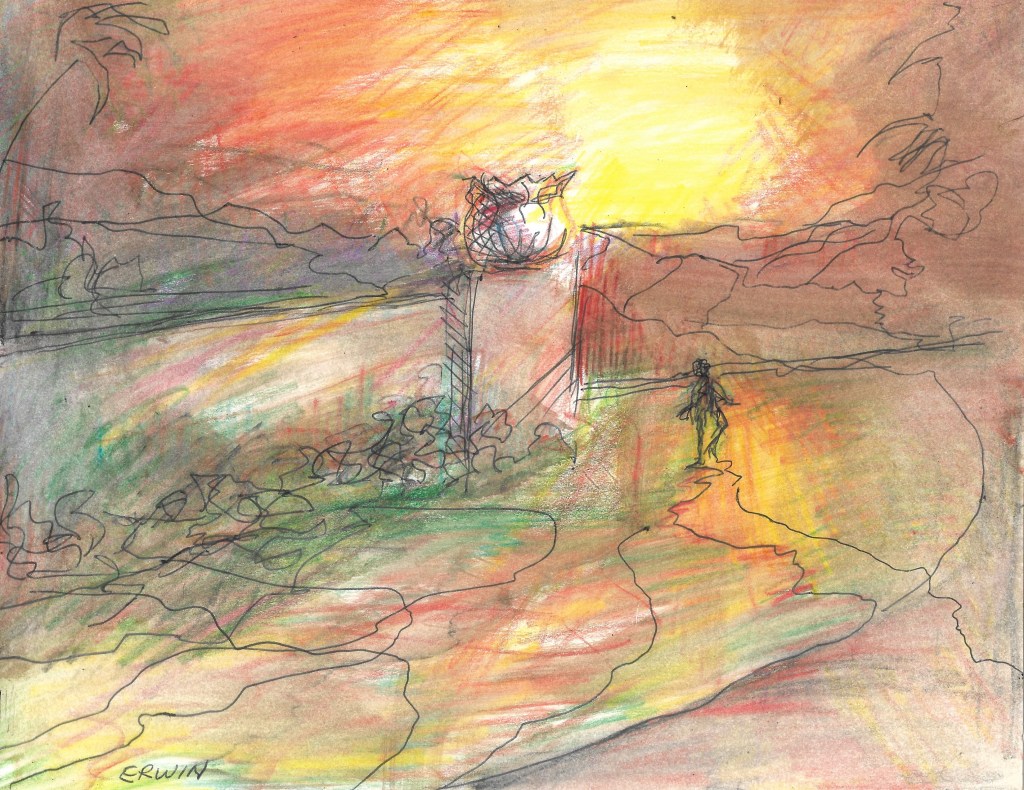


 Real Surfers