There were lulls in the water on this afternoon, time when watching the horizon took priority over trying to out-position the other surfers. Images. Conversations to rerun. I surfed an hour and fourteen minutes. I took my time showering and going up the stairs. I stopped at the top and watched Portia and Judith at the Jesus Saves bus. Numerous individuals came up to them. No, they came up to Portia. Judith stood in the doorway to the bus, arms crossed, standing guard. When she looked at me, seventy yards from where she stood, I looked away.
San Dieguito High School would be letting out around three. I pulled up to 101 at two-fifty-five. I did look across and up, beyond the railroad tracks, past several rows of houses. I saw two dormers on the roof of the first Mrs. Cole’s house. One of them must have been Julia’s room. Julie’s. I imagined her looking out the window, seeing lines approaching, the light from the sun or the moon bouncing off moving liquid fields. The car behind me honked. I looked left, right, left again, and pulled out.
The Simon’s Landscaping truck, heading south, passed me just beyond the Sunset Surfboards shop. Both Baadal Singh and I looked to our left.
CHAPTER 14- MONDAY, MARCH 31, 1969- PART THREE
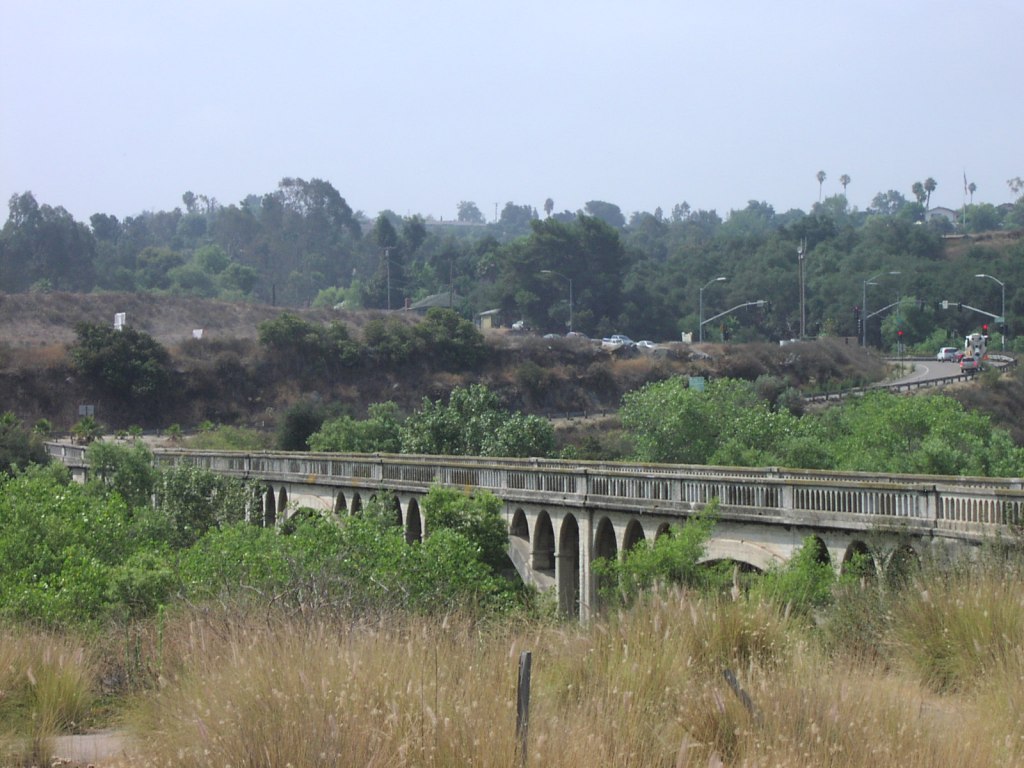
There were three vehicles ahead of me at the stop sign where highway 76 connected with the road to and from Vista, just west of the Bonsall Bridge. Traffic coming down the steep hill had priority. There were two sharp turns. Many drivers, over the years, had mistimed or misjudged the slalom-like run down and around the cliff face and onto the narrow bridge.
There was a pullout to my left. Dirt. Potholed. A truck overloaded with stacks of firewood was parked, idling, driver’s door open. A roughly lettered sign on raw plywood serving as a sort of fence on the sides of the truck’s bed read, “Firewood. Oak. Dry. Split. RA-8-1074. Reasonable.” The woodcutter was out, checking the tires and suspension. He pulled on each of the three ropes that went over the logs. He looked over at me.
I was visualizing my mother in this lot, standing outside the Falcon as I approached from the bridge, coming even with, then pulling beyond the Falcon. I was just jumping out when Wendall’s Buick, red dashboard light spinning, siren wailing, came screaming down the hill. His brakes screeched when he was forced to slow down to make the curve and recurve.
My mother studied my face for a moment or two before she started screaming. Questions. I couldn’t focus. What I heard was, “What did you do?” She was throwing bags out of the Falcon and onto the ground. “Open the trunk!” She was shouting orders I couldn’t process. “Take the back road to Bonsall. Go to town. Fallbrook. Buy some pizza at the, the restaurant… over by Ammunition Road. Make sure they… see you. Keep the receipt. You, you, you… were never here.” I was frozen. “Oh my God! Is he all right?” Still frozen. “Open the trunk. Open the god-damned trunk!” I did. My mom started tossing the bags into the Volvo. “Of course, he’s all right. He’s always all right. Always fine.”
I wanted to visualize, remember, perhaps, if I had observed my mother putting the papers and the bag with the gun under the seat. I hadn’t. It had to have been when she heard the sirens on Wendall’s car, or when she saw the lights. Or both. That had to have been why she pulled over. She didn’t lose control until she saw me. Me. Out of control.
The woodcutter’s truck pulled out. As it hit the last pothole, two split pieces of oak fell off the pile. I looked both ways and continued; hard left, soft right, soft left, and onto the bridge. “Always,” I said, out loud, as I eased into the right-hand corner on the east side of the bridge. “Always fine.”
Why she hadn’t taken the Volvo back to the accident scene was only a vague question I hadn’t thought through. Chaos of the moment. The Falcon was more recognizable. She wanted to protect me. There were other explanations, possibly; she never explained, and I never asked.
…
The yellow Karmann Ghia, top down, was most of the way off the highway on the right-hand side, just beyond the almost completed strip mall. Lee Anne Ransom was standing in front of her car, a notepad and a camera on the hood. The older of two workers, carpenters, was walking away and toward the two vehicles parked in the middle of the lot, a fairly new pickup truck and a fairly thrashed, oversized American car. He looked directly at me as I passed him.
Of course. He recognized the Falcon. I didn’t look at Lee Anne as I passed her. “Fuck!” I pulled into the parking lot at the tavern just under a mile down the road, still contemplating whether to go on or go back.
…
The older carpenter and I exchanged nods when I turned into the strip mall lot. I pulled a lazy u turn, clockwise, on the now-paved surface, parking spaces painted on it. ‘Opening Soon’ signs were painted in bright tempera paint on the windows of the partially painted store fronts. I turned back onto the highway and ten yards past the Karmann Ghia before I pulled in. I didn’t back up to get closer. Both carpenters were walking toward us as I walked up to Lee Anne. Her camera was aimed at me. I put my head down, looked at the scrape marks on the asphalt and the crushed foliage from when my father’s car had been winched twenty feet across the river bottom and twenty feet up to the road.
Perpendicular to the highway, gravel and fill that formed the base for the mall had been covered with topsoil and planted with iceplant and what was supposed to appear to be randomly spaced bushes. A shiny galvanized metal pipe, probably a foot in diameter, came out of the bank, about ten feet below the parking level, and ran above ground and down, at the same angle. The pipe made a bend probably five feet off the flatter bottom of the valley. It extended at an angle five degrees or so off level, and into a square concrete box, three by three, three feet high. A stump of a long dead tree was about four feet beyond the box.
I had read about all of this. I had seen photos. It became real.
When I got close enough that Lee Anne Ransom didn’t have to raise her voice, she said, “Thought you’d be coming the other way, Joey.”
“Thought you’d be, um, working on your yellow journalism for this week’s… edition, Lee Anne. Chulo’s the story. Isn’t it? Not who killed him. Just… him.”
“I’ve got stuff on his funeral, his family. I wanted to get with you on… the guy your father didn’t hit… here, he called us, the paper. He said he didn’t trust the cops. The sun, he said, was…” Lee Anne faced west, put her hand up and in a salute position. “Like now. He just followed other vehicles… around the bus. Even when the… when your father pulled to the right, he thought he was in the clear. So?”
“So?” I can’t be sure I even said that.
“So, trying to avoid the Vista guys, Dan and Larry, and Langdon, my editor took the… let’s call him the Driver… he took the Driver downtown, found out they really didn’t care all that much about who was responsible, and, and the downtown boys turned my editor over to… he was there… fucking Langdon, anyway. He was concerned about Judith Cole, wanting to know what we, meaning me, knew about her. She and her daughter were there, after Chulo was killed. The daughter, Julia, was taking pictures, and Judith was trying to calm… Portia. Langdon was pissed that Wendall didn’t try to get her film, wondered if someone tried to sell it to us.” Lee Anne laughed. “Sell?”
“When did Langdon get to the scene? To Swamis?”
“Soon enough to cart off the mysterious guy, supposedly East Indian, guy who either tried to save Chulo… or kill him. Langdon almost denied the guy existed; said he couldn’t comment on an ongoing… same shit there… but he did ask about you. So?”
I looked toward the sun, closed my eyes, and tried to recall what I had seen. My father looked at me as we passed each other. “So, Lee Anne Ransom, you must have heard I’m kind of slow, so… I have to process.”
“Then, Joey, process.” Lee Anne raised her sunglasses, widened her eyes, bigger with the lenses on her regular glasses. “And… it’s more like… orange journalism. Sensationalist Commie shit. So, orange.” I nodded. “Maybe you didn’t know this. They kept Chulo and Portia here until Langdon got in from Orange County, closed the road for seven hours.”
“Standard. Someone… died.”
“The Highway Patrol is the… usual choice. Right? Standard procedure.”
“My father… knew those guys, their… detectives, too. Also.”
Lee Anne moved in closer to me. “Yeah. That’s the official line from Downtown. But… Langdon was on the scene, here, in fifty minutes. Mario Andretti couldn’t do that from Orange County. And he was at Swamis… my boss has a radio that gets… you know; ten minutes after the initial call.”
“Who made that? The call?”
“Someone, from the phone booth at Swamis. Okay, Fred Thompson. He called the fire department. Point is, Joey, and I’m trying to process all this shit myself, Langdon was already around. It’s all, I’m thinking, about drugs.”
I blew out a breath, took out a cigarette and lit it with my father’s lighter. “With you, Lee Anne Ransom; it’s always drugs and/or corruption.”
“Holy trinity of investigative… anything, Joey; sex and/or drugs, money and/or power, and… corruption.”
“And/or?”
Lee Anne took a breath. “And/or guilt. No, guilt fits in with…. Shit, just tell me what you know about Judith Cole, Julia Cole, the mysterious Indian dude, Portia Langworthy, Chulo Lopez, and yeah, new edition to the list of ‘who the fuck are they?’, Chulo’s old partner in crime, Junipero Hayes.”
“Jumper… Hayes. I… thank you for sharing, and waiting for me, Lee Anne, but, even if I knew… something, I can’t… comment on…”
“Ongoing investigations?” She shook her head. “I’d say ‘Fuck you, Joey,’ ‘cept you’re, what…. Seventeen? And… you might just take it literally.”
“I did say ‘thank you,’ didn’t I, Ma’am?”
“Ma’am? Damn right. Ma’am. And… don’t go givin’ me that ‘I’m slow’ shit Joey.”
THANKS for reading and for respecting the copyright… stuff. All rights reserved by the author, Erwin A. Dence, Jr.
OH, and good luck in finding and riding some waves!
 Real Surfers