“Dark Cutback”- Pen and Ink, “Come In”- Pencil, pen and ink
Meanwhile, on a Strait Far Away…
It was the day before Christmas and all along the Strait, Surfers were sick of the Eddie Swell wait,
And the planning and loading in the dark of the night, All frothed-up and hoping you’d hit it just right,
Get through holiday traffic and ferry lines long, Just to find out the forecasters got it all wrong,
No six to eight-foot faces, with stiff offshore winds, But side chop and flatness, too many surf friends,
All those kooks who got wetsuits and leashes as gifts, And promised pure awesomeness, maybe, when the tide shifts,
Or the currents reset, or the stars realign, Which they haven’t done yet, so you’ll have to resign Yourself to some chilling with the parking lot crew, Having artisan breakfasts and customized brew,
With the burnouts and geezers who still dream of the past, With retired accountants who’ve heard surfing’s a blast, With newbies who ruled in the surf camp’s real water lessons, Who count the wave pool rides as real surfing sessions,
With the hodads and show dads and their sons and their daughters, Influencers and surf tourists who don’t get in the waters,
Cell phones at the ready, all waiting for action, They’ll be hooting and filming, with a deep satisfaction,
Witness to butt-hurt back-paddlers, shoulder-hoppers, and snakers, Heroes and villains, GoPro-ers and fakers, Buzzed-out dudes blowing takeoffs, laughing, pearling and falling, Occasional barrels and turns worth recalling.
They’ll soon be Youtubing a post of their Christmas surf strike, So hit the “subscribe” button, comment, and like,
And save it, repost it, it is something to share, When you watch it again, it’s as if you were there.
Yes, I hope you got waves, I did, too, and in the best Christmas spirit, If you have a great story, I would so love to hear it,
The next time we’re together, facing a skunking, so tragic, You can tell me the tale of your holiday magic.
“You should have been there, Dude; you would have loved it.” “You could have called me.” “You should have known. Are you angry?” “No. It’s just surfing, man; almost all of the magic is… well, you know.”
Color versions, and I slipped in a couple of photos from an ultra fickle spot where rideable waves are mostly imagined. Yes, that’s pretty much every spot on the Strait of Juan de Fuca.
I HAVE HEARD a couple of stories of the usual situations that occur with too many surfers and not enough waves; confrontations that went way farther than they should have. They are not my stories, and, although I LOVE to hear them, AND retell them, if they’re good enough, you will hear them eventually. Maybe from me, but not here. What I will say is, “That wave is gone.”
NEXT.
This is as true when the story is of epic, magical, all-time, best-ever stories. Your joyful stories, perfect moments in an imperfect world; the ones that make you smile; those are the ones to to savor; those are the images to save, to replay.
The illustrations are protected by copyright, all rights reserved by Erwin A. Dence, Jr.
OH, AND I am, of course, still polishing my novel, “Swamis,” and I’m working on a piece for SUNDAY on the LAWS OF ETIQUETTE. Look for it. In the meanwhile, there are a lot of YouTube videos of super crowds at Swamis and elsewhere. Yeah, crowds.
CHRIS EARDLEY texted me this photo with the caption, “Is this Reggie on my bag of Inca Corn Snacks?” “Definitely Reggie, switch stance.” It does resemble REGGIE SMART on the bag of hipster-friendly chips (available on Amazon and I don’t know where else. Co-Op, maybe). Reggie, in addition to being a licensed painting contractor, has rented a space in Port Townsend and is available for your tattooing needs. I know he’s on social media.
CHRISTMAS is coming, and I did my yearly assist in decorating DRU’S house in Port Gamble. Because the town is so, let’s say, quaint, decorating for the various seasons and for whatever other reasons is sort of mandatory. Dru works part time at WISH, a wonderful card and gift shop over by the haunted house and the other vintage attractions. Check it out on your way to or from the Hood Canal Bridge or the Kingston Ferry.
It’s a joke between TRISH and Dru and I that, in movies, when there’s a moon, “It’s always a full moon.” I took this shot over my house last night. Trees could have been in the photo, but were not. In the ‘should have taken a photo’ category- After midnight, when the moon was scientifically at it’s fullest, I looked up in the living room skylight, and the moon was visible through the bare branches of a vine maple. I opened my wallet and did the pagan chant that, once I started doing it, has become as mandatory as any ritual, and as such, must be followed religiously. “Oh moon, beautiful moon; fill ‘er up, fill ‘er up, fill ‘er up. Thank you, thank you, thank you.” MAYBE the ‘er part is some American-ish bastardization, but, hey, that’s how I leart it.
SWAMIS TO “SWAMIS”- While I am waiting for responses from literary agents, I have decided that I should submit something to “SURFER’S JOURNAL.” Before it all hits the big time, my favorite surviving surf-centric magazine could have something on my struggle to capture the magic of a particular time and place through fiction so cutting edge that… Yeah, and art-wise, my stuff, I can hopefully convince them, should grace the magazine’s slick pages.
To that end, I am super editing my submission; as in, I’ve already cut out more than I’m keeping in. OH AND I’m going through my final final version of the manuscript. One more time. A POLISH as they say in the biz. Shit, I want it ready to be glassed and polished.
MEANWHILE, because it’s off off season for painters and the darkest time of the year, I’ve been sleeping more, which mean dreaming more. Not all are worth keeping track of or even attempting to remember, even fewer worthy of trying to figure out some sort of meaning. SO, Here’s:
A Series of Dreams before Christmas
Second dream first- I was surfing, dropping into a left, turning hard off the bottom, going down the line. You know the angle; mine; close to the wall, the creases of the wave threatening, folding; and I’m climbing, too high, dropping, side-slipping, redirecting, racing into the glare.
Suddenly, dream time wise, I’m trying to get dressed, hurriedly, because I’m supposed to be somewhere, somewhere else. I pull on a t shirt with some sort of logo on it. I say, “I don’t work there.” I may add, “Anymore.” Dream talk. I put the shirt on anyway and look down several wide marble stairs. Almost landings. And, yes, marble, everything is marble, white with a very light green tinge. Or the greenness could be because there’s glass to the right, water behind it. An aquarium, perhaps, and possibly connected to a wave pool. Makes sense. Dream sense. Another view of surfers and waves. No, I didn’t see dolphins pressing close to the glass. I can imagine them, but I won’t add them as if they were there.
There is a woman sort of sprawled on the lowest stair, long black hair disappearing in all black clothing. All I can really see is her right hand and her face, in profile, very white, as I drop down and closer. Her reflection is on the glass and the walls between us. The walls, perhaps, are tiles, shiny, like the tile work in the Paris subways, but rectangular, horizontal.
“Did you see my ride?” Because the woman doesn’t answer I add, “I thought it was pretty good. My bottom turn was…” No answer. Her head turns a bit more toward me. “I figured, you probably don’t surf, so you might be…”
“Why do you think I don’t surf?”
“You’re very white.”
“Oh?”
“I mean, the sun isn’t… always…”
“Healthy? No. Not always.” The woman turns back toward the glass.
I notice there’s an above and a below the waterline. The last push of a wave hits the glass, pushing up above our ceiling. The woman seems to smile as she watches the bubbles rising and dissipating into an unseen sky, some of the greenness transferred to her face.
“I did see your ride. It was… from the perspective of a very white non-surfer, not as good as you probably thought, but… if you’re happy with it…” She turned toward me again. “Do you work there?”
I looked down at the shirt. “No.”
Different scene, same dream- It’s still very bright, but I’m driving in some flat, open country. Big windshield. Truck, I’m dream thinking. And I’m late. Probably the surfing. I hard turn into a driveway. No grass, no trees. A house. Covered porch all the way across the front. Imagine Australian Outback. Dust flies as I jump out of the vehicle. Trish appears at the front door, her hands on the opposite arms.
“I’m late,” I say, breathlessly.
“Oh?”
Oh? I feel in my back right pocket. I pull out a cell phone. “Oh.”
“If I were worried, I’d have called you. You know that, right?”
“Right.”
“Where’d you get that shirt?”
GOOD LUCK on finding and surfing some memorable waves. STAY WARM! Remember all original material in realsurfers.net is protected by copyright. All rights reserved by someone, my stuff by me, Erwin A. Dence, Jr.
I know, I know; I’ve been working on the novel for soooooo long. I’ve put a lot of it on this site. Most or all of that has been changed. More like all of it except the baseline story; one which I have had a hard time (changed this from ‘fuck of a time’) reducing to a tagline.
There’s a procedure in selling books to major publishers, of course; daunting enough to dissuade even the most confident writers. AND, and, and we are all supposed to be capable of writing a story; and we all have stories. AND, believing that somewhere in all my millions of words written and changed, pages deleted, there’s a story, I have gotten to the point where I am leaping off some cliff and submitting “Swamis” to, today, seven agents.
Submission; even the word speaks of uncertainty, of decisions by others; SUBJECTIVE DECISIONS with the first round of decision-makers being the folks whose job it is to cut the volume of could-be-somethings down to those deemed worthy, or worthy-er.
Having something out there and out of our control is not that dissimilar to waiting for waves. Check the forecasts all we want, we can’t wish or hope waves into showing up. Yet, we try.
OH, AND if any of you are actual literary agents and believe you can sell “Swamis,” let me know. I’d certainly prefer a real surfer in my corner.
NOW, I did write an earlier query letter, and I did post it here. I also convinced several people to read it and give me feedback. So, thanks to KEITH DARROCK, DRUCILLA DENCE, ANDY and IZZY ROSANE. And then, of course, I rewrote the query. So, more thanks.
UPDATE ON MY SUPER FUN CAR- It was the in-line (as in, on a hose) heater control valve that broke on my thirty-year-old Volvo. Frustrated by my on line searching, I stopped by an auto parts store and tried to explain the whole thing. Kook-like. “It’s, like, kinda like a thermostat-looking thing, and it’s on this hose, and…” The already-flustered counter guy kept some appearance of patience, and found the part. “We’d have to order it.” Yeah. Then, knowing what I need, I went to YouTube to see if I can do the repair. Yes, pretty sure. Then, because it’s YouTube, on to brain surgery. No, probably not.
Query- “Swamis.” Fiction by Erwin A. Dence, Jr.
Marijuana, murder, surf, romance, and magic in a Southern California beach town in 1969.
Dear real surfers,
That my 92,000-word novel “Swamis” has become as much love story as murder mystery is a surprise to me. Almost. The action centers around the surf culture at Swamis Point in North San Diego County. It is 1969. An evolutionary/revolutionary period in surfing and beyond, to those who have only known crowds, this was a magical era.
Very close to turning 18, the narrator, Joseph Atsushi DeFreines, Jr., nicknamed Jody, has a history that includes a serious injury, time in a ‘special’ school, and violent outbursts. A top-level student and compulsive note taker, Joey is a socially awkward outsider who refuses to give oral reports. His two closest friends are other ‘inland cowboy’ surfers. Surf Friends. Joey wants to be accepted on the beach and in the lineup as a ‘local.’
Joey is desperately attracted to Julie Cole, one of a few girl surfers in the beach towns along Highway 101. Nicknamed Julia ‘Cold,’ just-turned-18-year-old Julie appears to be a spoiled, standoffish surfer chick, rabidly protected by her small group of friends. She is almost secretly brilliant and driven. Julie, like Joey, has personal trauma in her past.
Joey is the son of a Japanese ‘war bride’ and an ex-Marine. County Sheriff’s Office detective Joseph DeFreines, who says, “The world works on an acceptable level of corruption” is trying and failing to maintain that level. Marijuana is becoming a leading cash crop in his rural and small town jurisdiction. The completion of I-5 is supercharging population growth.
Julie’s father, David Cole, is a certified public accountant who may, with help from outwardly upright citizens, be laundering increasing amounts of drug money. Julie’s mother, Judith, moves from fixer-upper to fixer-upper in a housing market about to explode. She may also be the head of a group growing, packaging, transporting, and selling marijuana. Once grown in orchards and sold to friends of friends, the product is moved through Orange County middlemen to a larger, more profitable, and more dangerous market, Los Angeles.
Joey and Julie, concentrating on studying and surfing, had been rather blissfully unaware of what was going on around them. Joey’s father’s death, for which Joey may be responsible, has connections to the murder of Chulo, a beach evangelist and drug dealer set alight next to the white, pristine, gold lotus-adorned walls of a religious compound that gives Swamis its name.
Finding Chulo’s murderer, with those on all sides believing Joey has inside information, pushes Joey and Julie together.
There is an interconnectedness between all the supporting characters, each with a story, each as real as I can render them.
“Swamis” was never intended to be an easy beach read. And it isn’t.
I am of this period and place, with brothers and friends who were very involved in the marijuana/drug culture, both sides. I was not. It is very convenient that a Swami, like a detective, like many of the characters in the novel, is a ‘seeker of truth.’
I have written articles, poems, short stories, screenplays, and two other novels, some moving to the ‘almost’ sold category. I had a column “So, Anyway…” in the “Port Townsend Leader” for ten years, I’ve written, illustrated, and self-published several books of local northwest interest. I started a surf-centric website (blog) in 2013: realsurfers.net.
After many, many edits and complete rewrites, I believe the manuscript is ready for the next step. Thank you for your time and consideration, Erwin A. Dence, Jr. (360) 774-6354
Illustrations for “SWAMIS” by the author, Erwin A. Dence, Jr.
“SWAMIS” A novel by Erwin A. Dence, Jr.
The surf, the murder and the mystery, all the other stories; “Swamis” was always going to be about Julie. And me. Julie and me. And… Magic.
CHAPTER ONE- MONDAY, NOVEMBER 13, 1969
“Notes. I take a lot of… notes, but… your stack is bigger. Is that my permanent record?”
“Not sure why you take notes. You seem to remember, like, everything. Records. Records are for… later, for someone else.”
“As are notes. And maybe, some time I… won’t remember.”
“You brought them in; so, can I assume that your mother…”
“Yeah. Snoopy. Detective’s wife. We took the Falcon. I drove, my mother…”
“Snooped. Sure. Would you read me something from one of your notebooks? Your choice. Maybe something about… surfing.”
“Kind of boring, but… give me a second. Okay. ‘The allure of waves was too much, I’m told, for an almost three-year-old, running, naked, into them. I remember how the light shone through the shorebreak waves; the streaks of foam sucked into them. I remember the shock of cold water and the force with which the third wave knocked me down, the pressure that held me down, my struggle for air, my mother clutching me out and into the glare by one arm.’”
“Impressive. When did you write this? You had most of it memorized.”
“Some. But, if I wrote it recently, Doctor Peters. This all happening before the… accident; that would be me… creating a story from fragments. Wouldn’t it?”
“Memories. Dreams. We can’t know how much of life is created from… fragments. But, please, Joey; the basketball practice story; I didn’t get a chance to write it down. So, the guy…”
“I’m not here because of that… offense.”
“I am aware. Just… humor me.”
“Basketball. Freshman team. Locker room. They staggered practice. I was… slow… getting dressed. Bus schedules. He… FFA guy… Future Farmers. JV. Tall, skinny, naked, foot up on a bench; he said I had a pretty big… dick… for a Jap. I said, ‘Thank you.’ just as the Varsity players came in. Most stood behind him. He said, ‘Oh, that’s right; your daddy; he’s all dick.’ Big laugh.”
“’Detective,’ I said. ‘And, Rusty, I am sorry about your brother at the water fountain. I’m on probation already… and I’m off the wrestling team, and…’ I talk really fast when I’m… forced to… talk. I’m sure you’ve made note. I said, ‘I don’t want to cut my hand… on your big buck teeth.’ Bigger laugh. Varsity guys were going, ‘Whoa!’ Rusty was… embarrassed. His brother… That incident’s in the records. Fourth grade. Three broken teeth. Year after I… came back. That’s why the buck teeth thing… Not funny. Joke.”
“Joey. You’re picturing it… the incident. You are.”
“No. I… Yes. I quite vividly picture, or imagine, perhaps… incidents. In both of those cases, I tried to do what my father taught me; tried and failed. ‘Walking away is not backing down,’ he said. Anyway. Basketball. I never had a shot. Good passer, great hip check.”
“Rusty… He charged at you?”
“He closed his eyes. I didn’t. Another thing I got from my father. ‘Eyes open, Jody!’”
“All right. So, so, so… Let’s talk about the incident for which you are here. You had a foot on… a student’s throat. Yes? Yes. He was, as you confirm, already on the ground… faking having a seizure. He wasn’t a threat to you; wasn’t charging at you. Have you considered…?”
“The bullied becomes the bully? It’s… easy, simple, logical… not new; and I have… considered it. Let’s just say it’s true. I am… this is my story… trying to mend my ways. Look, Grant’s dad alleges… assault. I’m… I get it; I’m almost eighteen. Grant claims he and his buddies were just… fooling around; adolescent… fun; I can, conceivably… claim, and I have, the same.”
“But it wasn’t… fun… for you?”
“It… kind of… was. Time’s up. My mom’s… waiting.”
“Joey… I am, can be… the bully here. So… sit the fuck back down!”
CHAPTER TWO- SATURDAY, AUGUST 14, 1965
My mother took my younger brother, Freddy, and me to the beach at what became the San Elijo campground. Almost or just opened, it runs along the bluff from Pipes to Cardiff Reef. We were at the third stairway from the north end. I was attempting to surf; Freddy was playing in the sand. My mother was collecting driftwood for a fire. The waves were small. Pushing my way out, walking, jumping over the lines, I was turning and throwing my board into the soup, standing up, awkwardly, and riding straight in; butt out, hands out, stupidest grin on my face. “Surfin’!”
A girl, about my age, was riding waves. Not awkwardly. Smoothly. Not straight, but across. She wouldn’t have wiped out on the third ride I witnessed if I hadn’t been in her way, almost frozen, surprised by a wave face so thin and clean I still swear I could see through it.
I let my board go, upside down, broach to the waves, and chased down hers. When I pushed it back toward her, she said, “It’s you.”
“Me?” I had to look at her and reimagine the moments immediately before she spoke. She was wading toward me. She pushed the hair away from both sides of her face. She looked toward the beach. She looked back. Her eyes were green and seemed, somehow, as transparent as I had imagined the waves to be. “It’s you.”
“No. No, I’m… not… Who are you?”
“Someone who stays away from cops… And their kids.” She wasn’t going to thank me for grabbing her board. “Surfing isn’t easy, you know. All the real surfer guys are assholes.” She turned, threw herself onto her board, and started paddling. “I’d give it up If I were you.”
“Assholes,” I said as I retrieved my board. “I’m a well-known asshole.” I walked and pushed and paddled and made my way out to where the girl was sitting. She looked out to sea. She looked toward the shore. It was a lull, too long for her not to turn toward me as I attempted to knee paddle.
“We can’t be friends, Junior,” she said.
“No? What about when I… get to the point where I surf way better than you? Still, no?”
The girl turned away again. Not as long this time. “You coming back tomorrow?”
“No. Sunday. Church. My mom… We… Church.”
“Church,” she said. “My mom and I… Well, me; I… surf.”
The girl paddled over and pushed me off my board. The first wave of a set took it in. She turned and caught the next wave. I watched her from behind it. Graceful. “Julia Cole,” I said, loud enough for her to hear. “Your friends call you Julie.” I said that to myself.
CHAPTER THREE- SUNDAY, SEPTEMBER 15, 1968
My nine-six Surfboards Hawaii pintail was on the Falcon’s rust and chrome factory racks. I was headed along Neptune, from Grandview to Moonlight Beach. The bluff side of Neptune was either garage or gate and fence, or hedge, tight to the road. There were few views of the water. I was, no doubt, smiling, remembering something from that morning’s session.
There had been six surfers, including me, at the outside lineup, the preferred takeoff spot. They all knew each other. If one of them hadn’t known about the asshole detective’s son, others had clued him in. There was no way the local crew and acceptable friends would allow me to catch a set wave. No; maybe a wave all of them missed or none of them wanted. Or one would act as if he was going to take off any wave I wanted, just to keep me off it.
As the first one in the water, before dawn, I had surfed the peak, selecting the wave I thought might be the best of a set. Two other surfers came out. Okay. Three more surfers came out. One of them, Sid, paddled past me, making him the farthest one out in a triangular cluster that matched the peak of waves approaching. I knew who Sid was. By reputation. A set wave came in. I had been waiting. It was my wave. I paddled past Sid, paddled and took off. Sid dropped in on me. I said something like, “Hey!”
Rather than speed down the line or pull out, Sid stalled. It was either hit him or bail. I bailed. Sid said, “Hey!” Louder. He looked at me, cranked a turn at the last moment. He made the wave. I swam.
“I didn’t do anything wrong,” I said, approaching the lineup. The four other surfers held their laughter until Sid maneuvered his board around, laughed and said, “Wrong, Junior; you broke the locals rule.” Sid pointed to the lefts, the waves perceived as not being as good, on the other side of a real or imagined channel. “Local’s rule. Get it?” Trying to ignore the taunts of the others, I caught an insider and moved over.
After three lefts, surfed, I believed, with a certain urgency and a definite aggression, I prone-paddled back to the rights, tacking back and forth. A wave was approaching, a decently sized set wave. I wanted it.
“Outside!” I yelled, loud enough that five surfers, including Sid, started paddling for the horizon. I paddled at an angle, lined up the wave at the peak. Though the takeoff was late, I made the drop, rode the wave into the closeout section, pulling off the highest roller coaster I had ever even attempted. I dropped to my board and proned in. I kept my back to the water as I exited, not daring to look back or to look up at the surfers on the bluff, hooting and pointing.
I did look up for a moment as I grabbed my towel where it was stashed, visible from the water, on the low part of the bluff, my keys and wallet and cigarettes rolled up in it. Tromping up the washout to Neptune Avenue, I tried not to smile.
Driving my 1964 Falcon station wagon, almost to Moonlight Beach, a late fifties model Volkswagen camper van, two-tone, white over gray, was blocking the southbound lane. Black smoke was coming out of the open engine compartment. Three teenagers, locals, my age, were standing behind the bus: Two young men, Duncan Burgess and Rincon Ronny, on the right side, one young woman, Monica, on the left. Locals.
There was more room on the northbound side. I pulled over, squeezed out between the door and someone’s bougainvillea hedge, and walked into the middle of the street, fifteen feet behind the van. “Can I help?”
Duncan, Ronny, and Monica were dressed as if they had surfed but were going to check somewhere else: Nylon windbreakers, towels around their waists. Duncan’s and Monica’s jackets were red with white, horizontal stripes that differed in number and thickness. Ronny was wearing a dark blue windbreaker with a white, vertical strip, a “Yater” patch sewn on. Each of the three looked at me, and looked back at each other, then at the smoking engine. The movement of their heads said, “No.”
Someone stepped out of an opening in the hedge on the bluff side of the road, pretty much even with me. I was startled. I took three sideways steps before I regained my balance.
Julia Cole. Perfectly balanced. She was wearing an oversized V-neck sweater that almost covered boys’ nylon trunks. Her legs were bare, tan, her feet undersized for the huarache sandals she was wearing. She looked upset, but more angry than sad. But then… she almost laughed. I managed a smile.
“It’s you,” she said. It was. Me. “Are you a mechanic?” I shook my head, took another step toward the middle of the road, away from her. “An Angel?” Another head shake, another step. She took two more steps toward me. We were close. She seemed to be studying me, moving her head and eyes as if she might learn more from an only slightly different angle.
I couldn’t continue to study Julia Cole. I looked past her. Her friends looked at her, then looked at each other, then looked, again, at the subsiding smoke and the growing pool of oil on the pavement. “We saw what you did,” she said. I turned toward her. “From the bluff.” Her voice was a whisper when she added, “Outside,” the fingers of her right hand out, but twisting, pulling into her palm, little finger first, as her hand itself twisted. “Outside,” she said again, slightly louder.
“Oh. Yes. It… worked.”
“Once. Maybe Sid… appreciated it.” She shook her head. “No.”
I shook my head. “Once.” I couldn’t help focusing on Julia Cole’s eyes. “I had to do it.”
“Of course.” By the time I shifted my focus from Julia Cole’s face to her right hand, it had become a fist, soft rather than tight. “Challenge the… hierarchy.”
I had no response. Julia Cole moved her arm slowly across her body, stopping for a moment just under the parts of her sweater dampened by her bathing suit top. Breasts. I looked back into her eyes for the next moment. Green. Translucent. She moved her right hand, just away from her body and up. She cupped her chin, thumb on one cheek, fingers lifting, pointer finger first, drumming, pinkie finger first. Three times. She pulled her hand away from her face, reaching toward me. Her hand stopped. She was about to say something.
“Julie!” It was Duncan. Julie, Julia Cole didn’t look around. She lowered her hand and took another step closer to me. In a ridiculous overreaction, I jerked away from her.
“I was going to say, Junior…” Julia was smiling. I may have grinned. Another uncontrolled reaction. “I could… probably use… If you were an… attorney.”
“I’m not… Not… yet.”
Julia Cole loosened the tie holding her hair. Sun-bleached at the ends, dirty blonde at the roots. She used the fingers of both hands to straighten it.
“I can… give you a ride… Julie, I mean… Julia… Cole.”
“Look, Fallbrook…” It was Duncan. Again. He walked toward us, Julia Cole and me. “We’re fine.” He extended a hand toward Julia. She did a half-turn, sidestep. Fluid. Duncan kept looking at me. Not in a friendly way. He put his right hand on Julia Cole’s left shoulder.
Julia Cole allowed it. She was still smiling, still studying me. “Phone booth?” I asked.. “There’s one at… I’m heading for Swamis.”
A car come up behind me. I wasn’t aware. Rincon Ronny and Monica watched it. Duncan backed toward the shoulder. Julia and I looked at each other for another moment. “You really should get out of the street… Junior.”
“Joey,” I said. “Joey.”
She could have said, “Julie.” Or “Julia.” She said neither. She could have said, “Joey.”
No one got a ride. I checked out Beacons and Stone Steps and Swamis. The VW bus was gone when I drove back by. Dirt from under someone’s hedge was scattered over the oil, some of it seeping through.
CHAPTER FOUR- WEDNESDAY, DECEMBER 23, 1968
Christmas vacation. I had surfed, but I wanted a few more rides. Or many more. I had the time, and I had the second-best parking spot in the full lot at Swamis- front row, two cars off center. It was cool but sunny. I was standing, dead center, in front of the Falcon, leaning over the hood. I checked my diver’s watch. It was fogged up. I shook my wrist, removed the watch, set it on the part of the Falcon’s hood my spread-out beach towel didn’t cover; directly over the radiator, the face of the watch facing the ocean and the sun.
Spread out on the towel was a quart of chocolate milk in a waxed cardboard container, the spout open; a lunch sack, light blue, open; an apple; a partial pack of Marlboros, hard pack, open, a book of paper matches inside; three Pee-Chee folders. One of the folders was open. A red notebook, writing on both sides of most pages, was open, five or six pages from the back.
A car stopped immediately behind the Falcon. Three doors slammed. Three teenagers, a year or so younger than me, ran down the left side of my car and to the bluff. Jumping and gesturing, each shouted assessments of the conditions. “Epic!” and “So… bitchin’!”
They looked at each other. They looked over me and at their car, idling in the lane. They looked at me. The tallest of the three, with a bad complexion, his hair parted in the middle, shirtless, with three strands of love beads around his neck, took a step toward me. “Hey, man.” He lifted two of the strands. “Going out or been out?”
“Both. Man.”
“Both?” Love Beads guy moved closer, patting the beads. “Both. Uh huh.”
“Good spot,” the driver, with bottle bleached hair, a striped Beach Boys shirt, and khaki pants, said. I nodded. Politely. I smiled, politely, and looked back and down at my notebooks. He asked, “You a local?”
I shifted the notebooks, took out the one on the bottom, light blue, opened it, turned, half sat on my car, and looked out at the lineup, half hoping my non-answer was enough for the obvious non-locals.
A car honked behind us. Love Beads raised his voice enough to say, “At least go get the boards, Shorty.” The Driver ran toward his car. As Shorty reluctantly walked away from the bluff, Love Beads gave him a shove, pushing him into me.
Shorty threw both hands out to signal it wasn’t his fault. Behind him, Love Beads Guy said, “You fuckers down here are fuckin’ greedy.”
“Fuck you, Brian,” Shorty said before running out and into the lane.
Love Beads Guy, Brian, moved directly in front of me. He puffed out his chest a bit. He looked a bit fierce. Or he attempted to. “You sure you’re not leaving?”
I twisted my left arm behind my back and set the notebook down and picked up my watch. When I brought my arm back around, very quickly, Brian twitched. I smiled. I held my watch by the band, close to its face. I shook it. Hard. Three quick strokes, then tapped it, three times, with the pointer finger of my right hand. “The joke, you see, Brian, is that, once it gets filled up with water, no more can get in. Hence, Waterproof.” I put the watch on. “Nope, don’t have to leave yet… Brian.”
Brian was glowering, tensed-up. “Brian,” Shorty said as he carried two boards over to the bluff and set them down, “You could, you know, help.”
Brian raised his right hand, threw it out to his left and swung it back. I took the gesture to mean ‘shut up and keep walking.’ I chuckled. Brian moved his right hand closer to my face, pointer finger up.
I moved my face closer to his hand, then leaned back, feigning an inability to focus. “Brian,” I said, “I have a history…” Brian smirked. “I used to… strike out, and quite violently… when I felt threatened.” I blinked. “Brian.”
Brian looked around as if Shorty, packing the third board past us, might back him up. “Quite violently?”
“Used to… Brian. Suddenly and… violently.” I nodded and rolled my eyes. I moved closer to his face. “But now… My father taught me there are times to react and times to… take a moment, assess the situation, but… watch, and be ready. It’s like… gunfights, in the movies. If someone… is ready to… strike, I strike first. I mean, I can. Because… I’m ready.” I moved my face back from Brian’s and smiled. “Everyone… people are hoping the surfing is… helping. I am not… sure. I’m on… probation, currently; I get to go to La Jolla every Monday, talk to a… shrink. Court ordered. So…” I took a deep breath, gave Brian a peace sign.
“Brian,” Beach Boy, at the driver’s door of his parent’s car said, “we’ll get a spot.”
“Wind’s coming up, Brian,” I said, pointing to the boards. “Better get on it.”
“Oh, I have your permission. No! Fuck you, Jap!” Brian moved back and into some version of a fighting stance as he said it.
“Brian. I’m, uh, assessing.” I folded my hands across my chest.
Brian may have said more. He moved even closer, his mouth moving, his face out of focus; background, overlapped by, superimposed with, a succession of bullies with faces too close to mine; kids from school, third grade to high school. I couldn’t hear them, either. Taunts. I knew the words: “Retard!” “Idiot!” “What’s wrong with you?”
My father’s voice cut through the others. “They don’t know you, Jody. It’s all a joke. Laugh.” In this vision, or spell, or episode, each of my alleged tormentors, all of them boys, fell away. Each face was bracketed by and punctuated with a blink of a red light. Every three seconds. Approximately.
One face belonged to a nine-year-old boy, a look of shock that would become pain on his face. He was falling back and down, blood coming out of his mouth. Red light. I looked at the school drinking fountain. A bit of blood. Red light. I saw more faces. The red lights became weaker, and with them, the images.
The lighting changed. More silver than blue. Cold light. I saw my father’s face, and mine, in the bathroom mirror. Faces; his short, almost blond hair, almost curly, eyes impossibly blue; my hair straight and black, my eyes almost black. “Jody, just… smile.” I did. Big smile. “No, son; not that smile.”
I smiled. That smile.
Brian’s face came back into focus. I looked past him, out to the kelp beds and beyond. “Wind’s picking up.” I paused. “Wait. Did I already say that… Brian?”
I turned toward the Falcon, closed the blue notebook, set it on one side of the open Pee-Chee, picked up the red notebook from the other side. There were crude sketches of dark waves and cartoonish surfers on the cover. I opened it and started writing.
“Wind is picking up.” I may have spun around a bit quickly, hands in a pre-fight position. It was Rincon Ronny in a shortjohn wetsuit, a board under his arm. Ronny nodded toward the stairs. “Fun guys.” He leaned away and laughed. I relaxed my hands and my stance. “The one dude, with the Hippie beads. Shirtless.”
“Brian. Shirtless.”
“Don’t want to know his name.” There was a delay. “Fuck, man; he was scared shitless.”
“It’ll wear off.” I held the notebook up, showed Ronny the page with ‘Brian and friends’ written in larger-than-necessary block letters, scratched out ‘Brian,’ and closed the notebook. “By the time they get back to wherever they’re from, unnamed dude would’ve kicked my ass.” I looked around to see if any of Ronny’s friends were with him. “I was… polite, Rincon Ronny.”
“Polite. Yeah. From what I saw. Yeah. And… it’s just… Ronny. Now.”
I had to think about what Ronny might have seen, how long I was in whatever state I was in. Out. I started gathering my belongings, pulling up the edges of my towel. “I just didn’t want to give my spot to… fuckers. Where are you… parked?”
“I… walked.”
I had to smile and nod. “You… walked.”
Ronny nodded and looked at my shortjohn wetsuit, laid out over my board. “Custom. Impressive.” I nodded and smiled. “One thing, Junior; those… fuckers, they won’t fuck with you in the water.”
“Joey,” I said. “I mean, not that you want to know, and… Ronny, someone will.”
Ronny mouthed, “Joey,” and did a combination blink/nod. “Yeah. It’s… Swamis. Joey.”
Ronny looked at the waves, back at me. A gust of west wind blew the cover of my green notebook open. “Julie” was written in almost unreadably psychedelic letters across pages eight and nine. “Julie.” Hopefully unreadable.
I repeated Ronny’s words mentally, careful not to mouth them. “From what I saw. Joey.”
CHAPTER FIVE- THURSDAY, FEBRUARY 27, 1969
Our house in the hills between Fallbrook and Bonsall was a split level, stucco house, aluminum sash windows, composite roof. Someone else had started building from some plans purchased from a catalog. My parents could save money, they were told, by finishing the lower level and the garage. They could replace the plywood shed at the edge of a corral with a small barn that would provide room for a horse, a side area for hay and tack. New fencing. More trees. A garden. A covered patio off the kitchen, or, perhaps, a bay window.
Almost none of this ever happened. My father promised the patio, and then the bay window. He was working on it, but he was working. Working. There was, outside the sliding door, a concrete slab, with paving stones leading around the corner and down to the driveway. The two-story portion of the house featured a plate glass window, four foot high and eight feet wide, in total, with crank out, aluminum sash windows on either side. This window offered a view to the west, over scrubby trees and deep arroyos, of the hills, some rounded, others more jagged, with ancient boulders visible on all of them. Mission Avenue was hidden below and between. Mission, the road that linked Fallbrook with Bonsall, Vista, Oceanside, everywhere west, everywhere worth going to.
Looking out this window, I felt almost level with those hills. Morning light, descending, brought out the details of the ribs and rocks. Afternoon shadows crept from it until the hills once again became a blank shape. There were waves of hills in irregular lines between my hills and the unseen ocean. I had spent time looking away from my studies, imagining the hills in timelapse, the sun setting at one place in winter, another in summer, lines off clouds held back at the ridgeline, breaking over the top; torn, scattering. I had imagined the block as transparent, the ocean visible, late afternoon sunlight reflected off the water and into the empty skies.
…
The light outside was still neutral when I moved to the dinette table in the kitchen, a bowl of oatmeal, a tab of butter on top of it, in front of me. There was a glass pitcher of milk between my setting and the other two. There were four lunch sacks on the counter. Two were a light blue, one was a shade more orange than pink, the fourth was the standard lunch sack brown. My mother, already dressed and ready for work, took a carton of Lucky Strikes from a cupboard and put a pack into the brown lunch sack.
She looked out the window over the sink. She sniffled.
My father, in one of his everyday detective suits; coat unbuttoned, tie untied; leaned over from the head of the table. “Go get it, Jody.” The ‘now’ part of the command was unspoken. His voice was calm. Almost always. I didn’t move. I didn’t look up from my oatmeal. “Stanford, Jody; you didn’t think they’d send a copy to the school?”
My father’s questions demanded an answer or a response. Crying or lying were not acceptable options. “I did… consider the possibility.”
“Of course. Now, Jody, consider everything you have to do to be ready. Got it?”
Making eye contact was critical in these situations. Required, if for no other reason than to show I was sorry, remorseful. I wasn’t crying.
All original illustrations and writing on realsurfers.net is protected by copyright. All rights reserved by Erwin A. Dence, Jr. THANKS FOR CHECKING! FIND SOME SURF!
RANDY at COHO PRINTING in Port Townsend stayed late to do some tricky stuff on my recent drawings. A Port Townsend native and super avid fisherman, I made the kook mistake, while trying to describe the lighting particular to looking north into the water, of asking him if he fished in the Strait as well as… you know, other waters. There’s nothing quite as enjoyable as that ‘you’re a kook and an idiot’ look. Happy Thanksgiving, Randy! Hope theyre, you know, like, biting.
Top to bottom- THE FIRST DRAWING was a sketch wasn’t too stoked on. Always tough to try to do faces on surfing illustrations. They’re either cartoony or… usually kind of cartoony, as is this one. SINCE my drawing board is plexiglas, I flipped the paper over, put it up to a light, and redrew it as the…
THIRD DRAWING. The cartoonishness might be mitigated by the modified cross hatch technique that, oddly enough, I’ve been doing almost since I tried (and failed) to duplicate Rick Griffin’s work in ‘Surfer.’ OH, and I screwed up, had to glue in a patch, try to make it match.
THE SECOND DRAWING is one of those I draw in reverse, black-for-white. I had it reversed, went into that drawing to add detail, had it reversed again, did some touchup on that, and, Voila! this one. OH, and, again, there is a patched section. SO, another original for Original Erwin is, you know, not pristine.
THE FOURTH DRAWING is one I kept after ripping up three others, the first one a muddied attempt at using pastels despite my being acutely aware that the palm of my hand is way too heavy for chalk or pastels, or pencils. OH, and really wanting a serious drawing of JULIE for “Swamis,” I can’t seem to draw a woman’s face that I’m happy with. Semi happy with this one.
I wanted Randy to do a copy of the FIFTH DRAWING with a blue or silver rather than black on white. “It’s not like I want something that’s all that tricky.” Well, evidently, with Randy’s Star Wars computer/printer set up, it is tricky, can’t just use one of the colored inks. So, next best thing, I got some copies printed up, black on a silver-blue paper. OH, and yes, it is pencil, but with ink over drawing AND, just for more drama, I added some white dots. They don’t show up so much on the original, but when I added some on one of the copies… Yeah, next time I’m at the COHO, I’ll get a scan of that.
IF THIS SOUTH SWELL/ BOMB CYCLONE STUFF KEEPS GOING, I’ll probably do some more drawing AND keep micro-editing stuff required to get “SWAMIS” published.
I am, as always, THANKFUL for the folks around the world who check out realsurfers. I HOPE YOU GET SOME SURF. New stuff on SUNDAY!
All original works are protected by copyright. All rights reserved by Erwin A. Dence, Jr.
I kind of forgot it’s Wednesday. I did say I was going to give an update on my attempts to sell my novel, “SWAMIS.” No, I’m not ready. I am waiting for feedback on my original query letter because, try as I may, though I can go on at length about each character and any and all of the plot points in the manuscript, it has proven extremely daunting to write one page that will convince an agent or publisher that he or she HAS to read it, buy it, print it. Still, I try.
Two illustrations by Scott Quirky (not his actual last name): “Heart of the Sun” and “Globular Raven,” though, he wrote, “They really actually have no names. I let the viewer see what they see..” Really and actually? Okay, I’m seeing…
I did just write a little essay in which a non-surfer has some sarcastic observations about how surfers can go on (or go off) about how awesome wave riding can be. I’ll save if for Sunday.
TODAY is the many-third anniversary of Trisha’s marriage ceremony. SO…
Gary and Roger were my closest surf friends. Roger started board surfing the summer I did, 1965. Gary started the next summer. By the time we were seniors, many others had tried surfing. Most didn’t stick with it for long. Though Roger lived closer to me, Gary offered to give me a ride home.
So, of course, my computer skills fail me. This is a ‘cut’ from “Swamis” I didn’t mean to ‘paste’ here. Inside scoop: Gary and Roger were my neighbors when I lived in Fallbrook. Their family had a bomb shelter; ours didn’t. The characters in the novel are actually based on my friends, Phillip Harper and Ray Hicks, though I kind of get confused in the writing as to which is which. I, sadly, lost contact with Phil years ago. I just spoke to Ray, who I give a lot of credit for getting me back into surfing, last night.
Okay. Out and Back.
Rainy Days in Real Life
An old wives’ tale is that rainy day marriages last. Who better to know the truth of this?
Paul Simon, married several times in real life, wrote: “We were married on a rainy day, the sky was yellow and the grass was gray; filled out some papers and we drove away; I do it for your love, I do it for your love.”
November is the rainiest month in the Great Northwest. We’re somewhere in the eye (or not) of a bomb cyclone/atmospheric river event, so, if you’re planning on getting hitched, hustle it up. Or consult the almanac and set a date.
It was raining on this day, November 10, 1971, when Trish, nineteen-years and eleven days old married me, twenty-years and almost three months old. We thought we were pretty grown up. Still do. We weren’t ‘that’ grown up. Still aren’t.
That any relationship can survive over time is genuinely amazing, A-maz-ing! People who haven’t met Trish want to meet her. Most often, when asked, it’s to see what kind of woman could possibly put up with me.
I already said ‘amazing,’ twice. So, ‘beyond amazing.’
Our daughter, Drucilla, asked me yesterday if I, notorious for not giving Trish gifts, was going to, perhaps, write a poem or something in honor of the occasion. “You mean, like, something new?”
I’m not sure what to write about someone who cries for no reason obvious to me; who refuses to cry when there is good reason; who might panic over some small thing but is strong and determined amid disasters; someone who is wise and decisive, rational in a situation, offering a solution, an attitude adjustment away from anger and frustration.
In all the big decisions we have made in our relationship, me arguing against most of them, Trish has rarely been wrong. All right, almost never. And yet, she has always had faith in me. Not blind faith. True faith. I’m still trying to make that a correct choice.
Here are a few lines from ‘Honey Days.’
“Is it love that gets us through the constant storms, is it love that gets us through that dark December? Love is love, but love can take so many forms; there’s love that’s felt and there is love that is remembered. Years have passed, endless rains, broken glass and empty trains, yet it’s our love that sustains through honey days… I remember.”
I did write a verse for a song a while back, one verse in need of a chorus and two more verses. I very recently came up with a second verse. And no, the ‘honey’ thing, not a theme.
“Hold off on that sugar, Honey, I don’t want to die, I just need a taste of something sweet to get me by; Honey, you should know by now that I might never be, someone who’s as good for you as you have been for me.
I still can’t believe it, Honey, you have been so sweet; didn’t know I needed you to make my life complete; Honey there are universes dancing in your eyes; it’s not just that, it’s so much more that keeps me hypnotized.”
It is tempting to put other examples of Trish-inspired songs/poems. I have them. Julie, one of two lead characters in my novel, “Swamis,” is Trish-influenced. Definitely. Julie has that inner strength; she is intuitive, always seeking the truth, and able to sort through the bullshit to find it.
So, yeah, everything I do other than, perhaps, my ongoing affair with the other woman in our relationship, surfing, “I do it for your love.” And, not to think too much about this, but I did love surfing first. If Trish is, then, my mistress… Well, so be it.
This is actually before we got married; Trish seeming to be wondering what she could possibly see in me. I still have no answer.
Quick Reggie Smart Update: He and Jasmin and two kids are headed to Maui for a eight days, hoping, of course, to get some surf. I have to mention JASMIN because Reggie says she reads realsurfers, like, all the time. SO, thanks, Jasmin, and thank you for checking it out.
I should mention that the rights to Scott’s stuff are his. NEW STUFF ON SUNDAY! If you see some waves, get out there!
I just and finally got this Wheelie, and, I know, it’s kind of cheating, but, if you’re riding an e-bike down the trail, or a regular bike, um, yeah, I’ll cheat… a bit. OH, yeah, I agree that riding an SUP is cheating. So… don’t.
I was the only one checking for surf after a very dark and very night. Me and this seagull. All I had was a banana. One-third for me, two thirds for… this guy.
When I have some free time, I sometimes do some drawing. the excerpt from “Swamis,” chapter nine, has Joey going to a clinical psychologist, court-mandated after he had an incident in which he ended up with his foot on another student’s neck. ANYWAY, you don’t have to psychoanalyze me because I can’t seem to not go a bit too psychedelic.
CHAPTER NINE- MONDAY, MARCH 24, 1969
I was driving my mother’s 1964 Volvo four-door. Because I never told the DMV I had a history of seizures, I did get a license, I did drive. Because my mother believed I was getting better, she allowed me to drive. Still, she looked in my direction frequently. Because my father believed I was getting better, he taught me. If I did, indeed, have some kind of brain damage, I could force myself, will myself to control the freezes my father called ‘lapses,’ and the outbursts he called ‘mistakes.’
There are stories for each sport I was pushed to try, each team I did not become a part of. Each story involved my lack of attention at some point of time critical to practice or a game. More often, I was asked to leave because, while I had not been what my father called ‘fully committed,’ I had committed violent, unsportsmanlike attacks on an opponent. Or a teammate.
I was, initially, pushed toward surfing. My father’s answer to my fears was, “If you have a lapse, you will drown. So… don’t.” It was the same with driving. “Concentrate. You’re always thinking behind. You have to think ahead. Got that, Jody?”
My mom and I were heading down the grade and into La Jolla. “Favorite part of the trip, Mom; the ocean’s just spread out… so far.”
“Eyes on the road, please.” I glanced past her, quickly, hoping to see some sign of waves around the point. She gave me her fiercest look. I laughed, looked at the road, but looked down and out again on a curve. Scripps’s Pier. Waves. “Are they testing you again, this time?”
“I don’t think so. The new doctor. Peters. She’ll, I guess, analyze whatever they found out last time with the wires and the fancy equipment.” I looked over at my mother as we dropped down through the eucalyptus trees at the wide sweeping right-hand curve that matches the curve of La Jolla Cove. “So, maybe we’ll find out; either I’m crazy or brain damaged.”
“Eyes on the road, please.”
…
I was in the office, standing under a round ceiling light installed a few inches off center. I had two PeeChee folders, three notebooks in each, set on a long, thin, empty walnut table. I opened the blue notebook in the top folder, wrote something I had just remembered, and closed it and the folder. I moved my pencil between my fingers until I dropped it.
The cabinets on two of the walls were cherry. A tile countertop featured a double sink. Porcelain. This was a rented space, easily converted. The six windows on the south wall extended from about a foot-and-a-half from the floor to eight inches from the ceiling. Four of the windows offered a view of tropical plants up against a mildewed redwood fence, eight foot high, no more than three feet away. The light that could make it through the space between the eves and the fence hit several, evenly spaced, colored glass and driftwood windchimes. The sound would be muted, nowhere near tinkly.
The fourth wall had a door, hollow core, cheap Luan mahogany. Several white lab coats were hanging on it. There was an added-on closet, painted white, with another mahogany door, this one rough at the hinge side. Cut down and re-used. There were, on one wall, six framed copies of diplomas or certificates. Three doctors, two universities. Two unmatched wingback chairs, each with an ottoman, were canted toward each other, facing the window wall.
The mahogany door opened. Dr. Peters entered, carrying a large stack of folders, most tan, several in a gray-blue. She kicked the door closed, dropped the stack on the table. She removed her white lab coat, hung it on the door, turned and pointed, with both hands, at the Gordon and Smith logo on the t shirt she was wearing.
“More of a San Diego… city thing, Dr. Peters.”
“Susan. I met Mike Hynson once,” she said. “He was in ‘Endless Summer.’ I figured you’d be either put at ease or impressed.”
“Once? Mike Hynson? Professionally?”
She shuffled through the stack, breaking it into thirds. Roughly. “Funny.”
“Is it?”
“No. It’s… funny you should come back with… that. If he was a… client, I couldn’t say so. I nodded. “So… I’m not saying.”
“No.”
Dr. Peters shook her head. “I went to his shop. Really cool. It’s not like I surf. I am petrified of the ocean.” She pulled out a folder from what had been the bottom third of the stack. “You?”
“Sure. There’s… fear, and there’s respect. A four-foot wave can kill you.” She may or may not have been listening. “Is that my… permanent record?” Dr. Peters laughed as if the remark was clever or funny; it wasn’t either. I didn’t laugh. She let her laugh die out.
She pointed toward the wing chairs. I shook my head. “Okay.” She pulled an adjustable stool, stainless steel, on rollers, from the corner on the far side of the closet. She motioned toward it. An invitation. “Or… we can both stand.”
“If it’s… okay with you, Ma’am. Dr. Peters.”
“Susan. What do your… friends call you?”
“Trick question?”
“Maybe. Okay. Yes.” We both shrugged. “And the answer is?”
“Surf friends. A couple.” Her reaction was more like curiosity than disbelief. “Friends call me Joey. So… Joey, Dr. Peters. I… I’m not… accustomed to calling my superiors or my elders by their first names. Respect.”
She leaned in toward me. “I’m fucking thirty… thirty-one. Joey. Young for a clinical psychologist. So?”
“Now I am impressed, and at ease. So… okay.” The Doctor squinted. “But, uh, Dr. Peters; you’re now, I’m guessing, my court mandated doctor of record?”
Dr. Peters restacked the folders. “Your father… and you… agreed to that.”
“Negotiated. Grant’s dad’s an… attorney.”
“Your father’s… was… a detective. Couldn’t he have…?”
“Never. My fault. Best he could do, with me too close to turning eighteen, is… this. A… choice, an option. We… discussed it. But… question; you’ve already suggested I might be a bully; how do you feel about… another smart ass trying to get off easy?”
“Most of the smartasses I deal with aren’t so… smart.”
“And the bullies?”
“That… urge; it shows weakness; I’m sure you agree.”
“That I’m weak? I agree. My dad’s take: I either don’t think or I take too long thinking.”
“Thanks, Joey.” Dr. Peters wrote something down. “Now, your dad didn’t want to go with… what he called ‘Psycho drugs.’” She moved from the stool to the larger of the two wing chairs. She sat down and used one foot to pull the ottoman into position. She put both feet up on it. She looked at the other chair, then at me. Another invitation. I remained standing.
“How long since you had an episode? Full?” I glanced at her folders. “Okay; three years ago, lunchtime, evidently out on the square at Fallbrook High School. Embarrassing?” I must have smiled. “Okay. Different subject. Grant Murdoch, your foot on his throat.”
“Weak… moment. But, previous topic… subject… The drugs, never were an option.”
“No. Of course not. But… Grant Murdoch, his faking a seizure caused you to…?”
“He wouldn’t have done it if he’s known I… I never went to Friday night football… activities. My surf friends… persuaded me… to.”
“Had Grant done this prank… before?”
“You mean, did my friends know he might?” I shook my head. “I haven’t asked.”
“So, this time, the prank, you acted… hastily?”
“Prank? Yes, I did.” I closed my eyes, envisioned the episode. Ten seconds, max. I pulled the metal stool over, sat it, spinning around several times. “He was… really good at it. Foaming at the mouth and everything. I was… Doctor Samuels, your electrode man. Spike. Do you have any… results?”
“Inconclusive.”
“You’re… disappointed?”
“No; but skipping over how you, just now, called another doctor, a grownup, by his first name… the tests; it was… bad timing.”
“Because I didn’t have a seizure, or even a… spell? And… Spike is a nickname. If you have a nickname… that you‘re willing to share.” She smiled. “By inconclusive, Dr. Susan Peters, do you mean… normal?”
“Pretty much, Mr. DeFreines.”
“That is… disappointing. The doctor, two doctors back…” I pointed to the files again. “He insisted I was just faking it.”
“Are you?”
“Inconclusive.”
“You didn’t have a… you know about the most common seizure, right?”
“Petit’ mal. Absence. Thousand-yard stare. Yes.”
Dr. Peters smacked the top of my stack of folders. “You study… everything.”
“Some things. Only.”
Dr. Peters looked toward her stack of files. She took a breath, looked at the plants outside the windows, at the chime swaying slightly and silently, then back at me. “You went back into… regular, public school, in the third grade. Tell me about that.”
“One of the… teachers… decided I might not be a brain-damaged… retard; maybe I’m… a genius.” I waited for her reaction. Her expression was hard to read. Blank. I danced the stool around until I faced the windows and the plants and the mildewed fence. “I’m not.”
“That’s why you turned down the scholarship?”
I made the half spin back toward the Doctor, waited for her to explain how she knew that. “School records came with a note.”
“Vice Principal Greenwald. Sure.” I spun around one more time and stood up, spinning my body a bit, unable to not smile. “I turned down Stanford because I am a faker, a phony. I… memorize.” I gave the seat of the stool a spin. Clockwise. It moved up about three inches. “I wouldn’t be able to compete with people with… real brains.”
Dr. Peters leaned forward, then threw herself back in the chair. “Okay. We’ll… forget about the competition aspect… for now. This… memorization. Yes. In medical school, I had to… so much is repetition, rote, little mnemonics, other… tricks. My roommate called me… don’t use it. Re-Peters.”
“I won’t… repeat it.” I swept one hand back toward the table. “Sorry. Too easy to be… clever. Or funny.” Dr. Peters shrugged. “So… Tricks. Files. Pictures. Little… movies. I… wouldn’t it be great if we could…?” I walked closer. Dr. Peters pulled her feet from the ottoman. She leaned toward me. “There are the things we miss. They go by… too quickly. If we could go back, just a few seconds, review… See what we missed.”
“And you can?”
“Can’t you? Don’t you… you take notes, you… Do you… rerun conversations in your mind, try to see where you were… awkward; where you… didn’t get the joke?”
“I do. I try not to. I’m more of a… casual observer.”
“That’s me, Dr. Susan Peters; Casual.”
“Observant.” Dr. Peters stood up. The ottoman was between us, but she was close. Too close. She was about my height. Her eyes were what people call hazel. More to the gray/green color used in camouflage. “Tell me…” she said, quite possibly making some decision on the color of my eyes, “I’m trying to determine if there’s a trigger, a mechanism. Tell me what you remember about… the accident?”
“The… accident?”
“When you were five.”
“I don’t… remember that one. I was… five.”
“No, Joey, I believe you do remember… that one.”
…
This wasn’t a brief remembrance of past events, this was a spell I couldn’t avoid, couldn’t think or will myself out of, and couldn’t stop. I stepped back, turned away. I shook my head. I tried to concentrate on… plants, the ones outside the window. Ivy, ferns, the mildew, the grain of the wood… “Like Gauguin,” I told myself, “Like Rousseau,” I said, out loud. “There’s a lion in there… somewhere.”
“Can you tell me what you remember, what you… see?”
I could not. The Doctor stepped between me and the window. She started to say something but stopped. She looked almost frightened. The image of the Doctor faded until it was gone. I was gone.
…
Everything I could remember, what I could see, was from my point of view.
I pulled down my father’s uniform jacket that been covering my face. I was in my father’s patrol car. Front seat. He took his right hand off the steering wheel and put it on my left shoulder.
“Our secret, Jody boy. Couldn’t put you in the back like a prisoner.” I didn’t answer. “Too many of you Korean War babies. I can’t believe… if they’re gonna have half-day kindergarten, they should have… busses both ways.” No answer. “Best argument for your mother getting her license.” No answer. “When I get on the school board…”
The light coming through the windshield and the windows was overwhelmingly bright. There was nothing but the light outside.
My father yelled something, two syllables. “Hold on!” His hand came across my face and dropped, out of my sight, to my chest.
His arm wasn’t enough to keep me from lurching forward. Blackness. I bounced back, then forward again, and down. Everything was up, streams of light from all four sides, a dark ceiling. My father was looking at me. His shadow, really, looking over and down. “You’re all right. You’re… fine.” He couldn’t reach me. The crushed door and steering wheel had him trapped. His right hand seemed to be hanging, his fingers twitching. He groaned as he forced his arm back toward his body. “We’re… fine.”
There were three taps on the window beyond my father. “Stay down,” he said. I could see my father’s eyes in the shadow. He looked, only for a second, at his gun belt, on the seat, coiled, the holster and the black handle of his pistol on top.
“You took… everything!” The voice was coming from the glare. “Everything!”
The man came closer. The details of his face were almost clear, then were lost again to the glare, like a ghost, when he leaned back.
“If we could just…” my father said as the suddenly recognizable shape of a rifle barrel moved toward us. Three more taps on the window. “If we could… relax.”
I could hear a siren. Closer. I tried to climb up, over, behind my father’s shadow.
“Everything!”
“No!”
The first gunshot, my father screaming the shattering of glass in front of and behind me were all one sound. The pieces of glass that didn’t hit my father blew over me, seemingly in slow motion. A wave. Diamonds. My father’s left hand was up, out. A bit of the light shone through the hole. I could hear the siren. I could see a red light, faint, throbbing, pulsing. The loudness of the siren and the rate of the light were increasing. I could see the man’s face, just beyond my father’s hand. His eyes were glistening with tears, but wide. Open. His left cheek was throbbing. I could see the rifle barrel again. It was black, shiny. It was moving. It stopped, pointed directly at me.
My father twisted his bloody hand and grabbed for the barrel. Again.
I could see the man’s face. Clearly. His eyes were on me. Bang. The second gunshot. The man looked surprised. He blinked. He fell back. Not quickly. He was a ghost in the glare, almost smiling as he faded and disappeared.
Tires slid across gravel. The siren stopped. The engine noise was all that was remaining, that and something like groaning; my father, me, the guy outside. Mr. Baker. Tom Baker.
“Gunny?” It was a different voice.
“I’m fine.” It was my father’s voice, but at a slower speed.
“Bastard!” It was the new voice, followed by a third gunshot.
Dr. Susan Peters came back into focus. She looked quite pleased.
I HAVE COMPLETED my many-ist rewrite of “Swamis.” AFTER chatting for an hour on the phone with the head of a publishing outfit, I am now looking for an agent. I’ll get into this next time. THIS time, thanks for reading. Remember that original stuff on realsurfers is protected by copyright, all rights reserved. Thanks for respecting this.
AS FAR AS WAVES, best of luck; if I don’t see you on the water, maybe I’ll see you on a trail. WHEELIE!
I got this painting/assemblage from SCOTT. Because I don’t know his last name, after I ran into him out on the Strait, and because he knows KEITH, I called Keith. “Oh, yeah, Scott. He’s kind of… Quirky.” I agreed. Scott was not too thrilled with the nickname. Because he sent this to me on ELECTION DAY, with my mind wanting to be filled with anything other than dread, I had to text back to ask if I could post it, and to ask if this was his illustration of the brain-fuck of being part of endless vote counting and discussion and, ultimately, indecision, or, at least, decision deferred. WHAT I GOT back was something truly cosmic. “If you wish. Kali ma came at an opportunistic moment… to eat our illusions of separateness.” SO, for your consideration: New nickname- COSMIC SCOTT. Fortunately, it’s not up to a vote. It sticks or it doesn’t.
I mentioned that I have been in communication with a publishing house in Seattle. This is the ‘pitch’ I sent them, along with a polished chapter from “Swamis.” The next step is a phone call on Thursday. It isn’t as if I don’t have enough to fret about. We’ll see how that goes. I have put a lot of work into trying to make the manuscript as tight as possible, including setting aside stories I thought worthwhile but just did not fit with the flow of this novel. Strange thing about novels; out of a whole world of storylines crashing into one another, the novelist has to focus, focus, focus. That’s the tough part.
ILLUSTRATIONS -Yes, I do have some original artwork to go with my novel, “Swamis.”
POTENTIAL AUDIENCE-Because I surf, and people know I surf, I look for new works in which surfing is a component. I get ‘the word’ about new surf-related books, often receiving one as a present. Most are not great. Most overdramatize the dangers of the sport while underestimating the intelligence of surfers and the importance surfing plays in their lives.
There were, in 2023, an estimated 3.3 million surfers in the United States, with many more who once surfed, or are attracted to the surf culture, real or imagined, or who believe they
California (and world) surfing spots were undeniably less crowded in 1969, the year in which most of “Swamis” is set. This time, symbolized in my novel by the completion of I-5; with the Vietnam War, the draft, counter-cultures, drugs, radical societal changes, and the most evolutionary period in surfing; is fondly looked back upon by those who came of age during it, and is thought of as a sort of fantasy world by those who have only known crowds daunting enough to keep a wannabe surfer from even going out on a day when Swamis is breaking.
Because I was there, with friends and family on both sides of what became the marijuana industry, and because I, like the narrator, was not a part of it, I believe I can honestly render a realistic-but-fictional story of someone on the cusp of everything that was frightening and magical, love and surf and mystery, about that time.
MY GOAL has always been to have “Swamis” in the hands of a major publishing house. I am treating this as another opportunity to present my case and gather some feedback.
THANK YOU for checking out realsurfers.net. I am, of course, still working on the latest edit of “Swamis,” and I’m about thirty pages from the end. I will post another chapter before Sunday. Or Sunday. All original work, including Scott’s, if protected by copyright.
GOOD LUCK on all fronts. Waves. Yeah. You’ll most likely be reading this after the election day, so…since I don’t know whether to celebrate or sell the farm…
CONCRETE PETE, A 68-year-old GUY who was really pissed off, Legendary TIM NOLAN, photo by another guy in what IAN described as the OLD GUY CORNER. The rest of available parking area was pretty much filled. THE ONLY REASON I am showing a spot that might be recognizable is that SURFLINE, evidently, said it was going to be, on this day, eight feet. There were, at this time, eight people in the water, and eight inch waves, and not many of those. The pissed off guy did go out, came in more pisssssed. I apologize for not getting his name.
HANGING OUT is kind of fun, but my motto is “I’m here to surf.” And I was. So, to use another word I’m using lately, I spent some time ‘Stwaiting.” When the parking lot emptied out and there was only one surfer in the water, and squalls were coming through more consistently than waves, I went out, ready to face another near-skunking.
Yeah. EPIC! Now, perhaps it cleaned up and the waves showed up. Or not. MORAL- DON’T BELIEVE THE FORECASTS. Also, don’t always believe the POSTCASTS. “It was all time, man, chest to shoulder on the sets, rides all the way to the fence (or the woods, or the rock face, or the wherever).”
I COULD GET INTO how the discussion at the old man corner devolved, with input from someone way under 70, into priority and backpaddling and who deserves an asterisk next to their name. It’s a constant issue, not resolved, might never be. Still, if you’re the only one out…
CHAPTER EIGHT- WEDNESDAY, MARCH 19, 1969
Some people come to the bluff at Swamis just for the sunsets. Carpenters and insurance salesmen mix in with the surfers, just out of the water, who have to have one more look.
On this afternoon, the water appearing, deceptively, enticingly, both soft and warm, the waves appearing gently, though too small to do more than wash onto the rock shelves, I was sitting on Falcon’s tailgate, middle row, writing in a notebook. “It’s a picnic and the ocean is the meal.” I scribbled over that and wrote, “After school, after work surfers. Medium crowd. No hassles. Sunset watchers took over the bluff. One lady, business outfit, thanked LA smog for nice orange sunset.”
It was through this crowd of sunset watchers that Portia Langworthy walked, right to left, from the Jesus Saves bus at the far west end of the parking lot to the new brick bathroom and shower facility on the 101 side of the stairs. With something bulky under her left arm, right arm and hand out, palm down, as if floating. Dancing.
Portia was wearing a long blouse, set off with a cloth sash, wide, purple. Violet. Her skirt stopped just above her ankles. Her feet were bare and tan. The blouse and skirt were in dark and almost competitive prints, Gypsy/Peasant/Hippie look. Her hair was long, straight, almost black, accentuated with a band around her head that almost matched the sash. No jewelry, just a smaller version of the cross Chulo wore, hers carved from a conveniently shaped piece of driftwood, hanging on hemp twine.
Pretty at a distance, I couldn’t describe Portia closeup. Inexplicable. When she spoke with others, close to them, she seemed to have an intimidating intensity that said she cared about them, but also understood them. Understood enough that she couldn’t be lied to. Frightening. I didn’t believe it was just me who couldn’t look into her eyes. Not straight on.
In the very middle of the pack of sunset watchers, Portia stepped between the sun and a man straddling a bicycle undersized for him. Gingerbread Fred. Portia blocked his view of that moment just before the sun exploded and spread at the horizon. It took another moment before she hugged him. I could see her face over his right shoulder. Dark, shadowed. She looked at me for a moment.
Losing focus on everything else, I knew her eyes were a blue that didn’t match anything else about her. Maybe the sash.
I saw her, there, and I saw an overlapping image of her from another time. Mid-day, I was taking a break, just around Swamis Point at Boneyards. Lying on the largest, flattest of the big, soft edged rocks, I was close to being asleep. Portia’s shadow blocked the sun. She asked, “Do you know Jesus?”
I didn’t open my eyes. “Whose version?”
“Yours,” she said, without any hesitation. She dropped a pamphlet on my chest and moved back, allowing the sun to hit me full on. I blocked the sun with a hand and opened my eyes. The pamphlet was hand drawn, hand lettered, eight-and-a-half by eleven, folded, with some vague message about some vague but wonderful Jesus. I sat up.
That was when I saw her eyes.
Portia backed rather than looked away, as if we had both seen some truth of who we really were. She turned into the glare, danced up to two young women in street clothes, handed them pamphlets, and danced into the shallows. One, and then both young women danced. Not for very long.
The Portia on the bluff let Gingerbread Fred’s hand slip away as she stepped away. I would save this image: Hands stretched between them, nothing but light behind them.
I had heard stories about Gingerbread Fred. Almost myths. Tijuana Sloughs, breaks outside of Windansea; Fred was on a list of names of surfers from the pre-Gidget past. Legends: Simmons, Blake, Holder, Edwards, Richards; stories enhanced, gilded with each retelling.
This was the current version: Fred was damaged, burned out, not fully there. Korea was the rumor. Or Vietnam. Or both. Yet, he was here, the bluff at Swamis Point, as he was, seemingly, religiously, for the sunset.
Legends are one thing, parking is another. Someone pulled a car out of a space two spots over from the optimum location. Not taking the time to retrieve my notebooks and binders from the tailgate, I got in, and backed out and over, narrowly beating another car as I eased into the spot. Exciting. A little victory.
I was aware that something had blown off the tailgate. I opened the door carefully to avoid hitting the car to my left, got out, and walked to the middle of the traffic lane. A man was holding the North County Free Press, eight pages, stapled in the middle, open and up to his face.
There was an ad for a farm cooperative on the back page, a photo of me on the front. Me, behind the plate glass window. “Local Detective Dies in Mysterious Car Accident.” The heading for the lead story, right side, balanced by the photo, was “Joseph J. DeFreines, Heroic by Nature.” The by-line was “Lee Anne Ransom.”
I imagined what the man was looking at: The coverage and the photos from the funeral. In the featured photo, top right, page five, my mother was looking down, holding the folded American flag, with Freddy, on one side, crying, me on the other side, looking at my mother and not crying. Or he could have been looking at the photo of the crowd, San Diego County Sheriff O’Conner and a group of detectives and deputies, all in uniform, Detective Wendall holding the department’s show horse, a magnificent Palomino, the saddle empty. Wendall looked honestly broken. Or the man could have been reading the testimonials. Or he could have been reading the article on the bottom right, “Is Marijuana Now the County’s Top Cash Crop?” Also written by Lee Anne Ransom.
Or he might have been using the paper as cover to look at me.
The man lowered the paper, held it out, still open, with both hands. He was of East Indian descent, I guessed. I had seen him before, different setting, different clothes. He was, on this afternoon, wearing workman’s clothing; heavy, blue-gray pants with worn and wet knees, lace up boots with the toe areas scuffed, a long sleeve shirt with the sleeves rolled up. He had a faded red bandana half hanging from his left front pocket. His hair and beard were black, both reaching just below his collar.
“I can get another… copy,” he said. “They are, of course… free.”
“No. I have… another copy.” I shook my head. “Free. The free thing.”
“Then, thank you so much.” The man folded the paper, folded it again, tucked it under his arm, did a slight forward tip of his head. “I do some… gardening.” He moved his left hand behind him, pointing toward the wall to the Self Realization compound. “Outside, mostly.” I returned the head tip. “Volunteer.” English accent with East Indian rhythm. Perhaps.
“Oh,” I said, looking along the white stucco wall and suddenly remembering where I had seen him, “You’re a… member?”
He smiled, one of those half face smiles. Right side in this case. “Loosely… connected. Less so all the time. I saw you once. Inside.” He nodded toward the far-left portion of white wall of the Self Realization Fellowship compound. “The meditation garden. Do you remember?”
I tried not to visualize. It didn’t work. I closed my eyes, opened them again. I could still see the gardener, along with another version. Same man, dressed in a robe. He was standing next to an older man, with even longer hair and beard, gray, and dressed in a robe made from a silkier, more colorful fabric. That man was possibly an actual Swami, or Yogi, possibly even the Swami. They were smiling. At me. Appreciative smiles. I jumped up from the bench and ran down the manicured paths with hand-set stones, perfectly cared-for plants, flowers year-round.
“I… ran.”
“You did. Yes, you do remember.”
“I was… studying. Not… anything else, Swami.”
“Perfectly fine. Meditation is… one’s own time. And… not a Swami.”
“Sorry. Not a Swami.”
“If Swami means ‘seeker of truth,’ perhaps, we…many of us are, perhaps, Swamis.” ”
I followed the man’s eyes back to the bluff. Portia was returning from the bathrooms with a different bundle under her arms, with different clothing, a very different look. Braided strands from the front of her hair were wrapped around to hold the rest in place. There was, perhaps, a ribbon. She was wearing a loose top, long, with long sleeves, a subtly patterned or even one-color Pendleton, with bellbottom pants and sandals.
Portia was walking behind the sunset watchers. “Conservative,” I said, pretty much to myself, but expecting some comment from the volunteer gardener. No. He was gone. He was crossing the lawn by the white stucco compound wall; and was halfway to Highway 101 when the Hayes Flowers van entered the lot.
…
I was in front of the Falcon. The people had formed a sort of wall at the bluff, watching the burnt orange in the wispy cirrus clouds at the horizon fade. I was watching Portia. She was watching the yellow van go down the far row. She stepped onto the pavement, and stopped on the passenger side of my car. The van stopped at the squared off end of the asphalt, next to the Jesus Saves bus.
I opened the driver’s side door. I stood there too long, watching Portia. She was not moving closer to the bus and the van. Waiting. She glanced toward me. I am certain she smiled. Because I had to say something, I said, “I got a good… spot.”
“Good,” she said. “Great sunset.”
“Yes.” I glanced toward it, then back toward Portia. Her face was shadowed, but this Portia, in regular clothes, seemed younger.
“Oh,” she said, “It’s… you. How… are you?” I couldn’t think of a response both quick and clever. I gave her a weak smile/nod combination. “Chulo… and me… I, we… have to go to Balboa, the, uh, Naval hospital. His friend… Juni. That’s what Chulo calls him.” She laughed. “It sounds more like ‘hu’ni’ when he says it. Juni. Chulo says you know him… from before.”
Before.
Portia walked to the front of the Falcon, setting her bundle on the hood. I shut the door and moved toward the front of the car, across from her. “Jumper. Jumper Hayes. He’s… there? Balboa?” She nodded. “He allright?”
“He’s alive. He was just flown here… there. From Hawaii.”
There were voices coming from the space between the Jesus Saves bus and the Hayes Flowers van. Portia, keeping her eyes on me, moved closer. Several of the sunset watchers beyond her looked toward that end of the lot each time the two men’s voices were raised, short bursts back and forth, not quite distinguishable words.
I didn’t look. Portia didn’t look. She said, “I have never met him. Jumper.” Portia’s eyes were, with her usual dark eye makeup gone, a softer blue than I had remembered. Or imagined. Her black hair was, at the roots, lighter. “We’re going… with Mr. and Mrs. Hayes… their car. Good citizen car. It’ll get us through the gate.”
“The yellow Cadillac. Yeah. That’ll work. And… Gustavo’s a vet… veteran.”
Portia put her right hand on my left arm. “We didn’t say nothing… about… you.” I looked at her hand until she removed it “Langdon… he wasn’t there because of that.”
“No?”
“No. Never even went to… look. And anyway…”
“I wanted to… It was…” I was trying not to get lost, trying not to cry. I slid my hand across the hood, toward but not quite touching Portia’s. “Thank you.”
Portia had to say something or walk away. The muffled back and forth at the Jesus Saves bus continued. “Your father…” I kept my eyes on her. “Good man. Chulo and me…” She touched my left hand, slid her right hand on top of it, both of our hands resting on the top edge of the door. “He… introduced me and Chulo. ‘Troublemakers,’ he called us. Got me a job with…” She laughed. “You’re there now. Mrs. Tony’s.” I must have looked surprised. “Then I got on with Mrs. Hayes. Consuela. Arrangements, mostly. Shop work.”
Portia paused to make sure I was listening or that I understood. “The religious thing. That was Chulo. Converted and all. Work camp.” She had a ‘taste’s bad’ expression, just for a moment. “Jail. East County. You probably knew about that.”
“In Fallbrook it was known as, ‘The Great Avocado Robbery.’”
Portia laughed. I reevaluated her age again. She was barely over that line I’d set between me and adulthood. “They do love their avocados,” she said, with a surprising amount of enthusiasm.
“They do. Chulo and Jumper and some mysterious guy from… somewhere. A buyer. Supposedly. Never caught him. I got that from the papers. Never… my father didn’t tell… ‘war stories.’” I laughed. “Of course, he did; just… not to me.”
Portia. I was trying to think of a word for the look she was giving me. Earnest. Sincere. “Chulo says he did his best. The Deputy… Bancroft… Well, sorry God, but… fuck him.”
It was my turn to speak. I didn’t. I was visualizing Deputy Bancroft from the few times I had seen him at the Vista Substation. Once was before he had crippled Chulo, all smiles and backslapping his fellow deputies. A second image was of him looking worried and angry, trying to get the others to support him. Some took his side. My father did not.
Portia shrugged. She may have smiled. “I see… your father, in you. He… sorry for saying this again… He was a good man.” I had to look at her. Sincere. “You are your father’s son.”
The light had become grainy, the smog-enhanced colors at the horizon had gone gray. The few lights around the parking lot, just coming on, had to compete with the advance of night. The sunset show was over. Most of the watchers moved away from the bluff and, at various speeds, toward their vehicles. A few stayed on as if, perhaps, they were waiting for closing credits.
Not yet.
“Really?” It was loud. There was a softer, muffled response, followed immediately by, “Fuck you and Jumper then… Chulo!” Loud and clear. Both Portia and I looked over. The Hayes Flowers van blocked the view, but occasional columns of cigarette smoke raising up beyond the two popout surfboards revealed where Chulo and the man doing the yelling were standing. “Last run.” The other man’s voice was lower but clearer. “There and back. Simple.”
A skinny man wearing a cowboy hat, straw rather than cloth, went up the stairs of the Jesus Saves bus, closed the doors, started the engine, revving it quite unnecessarily.
“Asshole,” Portia said. She looked up and whispered, “Sorry. Again.”
Asshole was honking the Jesus Save bus’s horn, flashing the headlights. The running lights and the inside lights in the driver’s area were flashing. The bus’s engine was racing. I looked over as it passed. Asshole, wearing sunglasses, a bandana around his neck, looked straight ahead, rode the clutch, then popped it.
Chulo limped around the front of the van, and got in. “Different clothes,” I said. The engine was still running. He pulled the van forward and started down the bluff side lane. Counterclockwise. The van stopped, passenger door even with me.
Chulo nodded. I nodded. “Get any… good ones?” he asked through the open window, both of us aware of the sound of gears grinding between second and third as the Jesus Saves bus headed north on 101.
“A couple,” I said, to Chulo, as Portia walked past me, “Before the tide got too high.” She opened the van’s passenger door, set her bundle of clothes on the bench seat, held the door open, and looked at me as if she expected me to say more to her or Chulo. “Different clothes,” I said, more to Portia than Chulo. “I mean,” I said, looking directly at Chulo, “this is not the, um, John the Baptist look.”
“Yeah! Most people get it wrong,” Chulo said. “Jesus, way classier dresser.”
“Oh. Sure. Jesus. Whole cloth. Yeah.” I stepped away.
“You know the gospel.”
“Partially by choice.”
“Holy Spirit, man,” Chulo said, moving his fingers like a piano player. “Mysterious.” Portia closed the door. Chulo looked at her before he looked past her and at me. “I told them, Jody; Wendall, the State Patrolman, everyone… Plymouth. Gray Plymouth. Old guy, I said; probably didn’t even realize… what happened. And besides, your dad had already…”
“What about Langdon?”
“I can handle… Langdon. God… God love him.”
“He means ‘fuck Langdon,’” Portia said. “Another asshole.”
Portia looked at Chulo and then at me. I looked away and then up. There was something about the popout surfboards the van. Different boards, not the same ones I’d seen at my father’s wake. I took a step back to check out the skegs. Quickly, aware Portia and Chulo were watching me, aware someone was approaching from my left.
“Asshole,” I said. “God love him.”
“No shortage of assholes.” Someone was beside me. Gingerbread Fred. Threadbare sweater over a once white t shirt; maximum fade on his Levis, sewn-on patches of different fabric at the knees; no shoes; long, once-red hair, grayed-out and as stringy as his beard; glasses patched and listing to the left; Gingerbread Fred was looking up. He was looking beyond the popout surfboards, beyond the palm fronds and the pine branches. I had to follow his eyes.
A gauze of cloud had caught the last of the day’s sunlight, impossibly mixing pink and blue in a colorless sky. Gingerbread Fred moved close to the van’s still open passenger side door. “Boy gets it,” he said.
Portia, in a voice as gauzy as the clouds, said, “Fred’s here for the show.”
“Fred Thompson, the legend,” Chulo said. “Fred. Me and Portia; we have to get going. Juni… Jumper, he’s… They got… overrun. His platoon. He’s… wounded. He’s in Balboa.”
“Oh,” Fred Thompson said, “so Petey was right. That cocksucker DeFreines did get Jumper to fuckin’ join up. Semper Fi, motherfuckers.”
Neither Chulo nor Portia looked at me. Chulo looked at Portia. She shook her head. Chulo said, “Juni’s choice. Jumper. He wanted it kept… secret.”
Fred laughed. Not a crazy man’s laugh. “Yeah. Well, Petey and me… and secrets. No. At least he… Jumper… had a choice.”
“Mister Thompson, I heard you were out and you…went back in.” I realized, even as I was saying the words, that I had said too much. “Sorry.”
“Mistake. Crashed twice, shot down once.” Fred Thompson seemed to drift away for a moment. I had to look, had to see what that looked like. He came back with a snap. “Sometimes, like, the right wave can make the wipeout and the swim in… just part of the price. Worth it.” He looked at me. I nodded. He shook his head. “Sometimes… not.”
“Bad knee or not, Fred; I still wouldn’t have chosen the Marines.”
“I’m no Catholic, Chulo, but…” Fred made the sign of the cross, then threw his right hand out, fingers spread. “Hope our friend’s… better. And, catholic-wise, I do like the gesture.”
“It is a… good one.” Chulo shook his head, only slightly, did a version of the sign of the cross between the steering wheel and his chest, and revved the engine. “He’s coming back.”
“Jesus?”
“Yeah, Fred,” Chulo said, laughing. “Him too.”
Portia kissed the palm sides of the fingers on her right hand before folding them into a fist. She tapped her fist on the middle of her chest, three times, opened her hand, placed it over her heart. After five or six seconds, she wrapped her fingers around Fred Thompson’s right hand for another five or six seconds.
…
As the van pulled away, Fred held out his right hand. He looked at it, refocusing on me, as if, perhaps, he was supposed to know who I was; as if we had, perhaps, spoken before. “We come back. We just don’t come back the same.”
I copied Fred’s smile.
“You one of their… Chulo’s and Portia’s… followers?” He pointed roughly toward the highway. I shook my head. His hand staying in pretty much the same place, he turned the rest of his body toward the remains of the sunset. “You staying for the encore… kid?”
I wanted to ask Fred Thompson about Tijuana Sloughs, about Windansea and Simmons’s Reef and San Onofre before foam boards, about Malibu and surfing before ‘Gidget,’ about Korea and Vietnam, helicopters before they were gunships. I wanted to ask why he went back in the Army after Korea.
I didn’t. I followed him through the now-empty space next to the Falcon and to the bluff. His bicycle was on the ground, too close to the edge. When Gingerbread Fred looked up at the sky, I looked up. “It’s darkness, for sure, but it’s not… night. We’re in the… shadow.”
Fred Thompson, facing the horizon, extended his left arm and hand forward, level, cocking his hand back at the wrist. He extended his right, creating an almost ninety-degree angle. “Perpendicular,” he said, holding that position for a second before throwing both arms back until they were straight out at his sides. “Parallel.”
He clasped his hands behind his back. I had to step back as he spun around, one, then another revolution. “You’ll get it,” he said, regaining his balance. “You know why?” I shook my head. “Because you… are… looking.” He turned to what was left of the sunset colors.
“Shadow,” I said.
“Ha! Yes. Shadow.” Gingerbread Fred came close enough to me that I could smell his breath. Milk, perhaps, soured. I tried not to react. “You probably heard. I’m… crazy.”
“There’s… a lot of that going around, Mister Thompson.”
“Yes!” He stooped down a bit, still too close to me. “You get it.” I nodded. “This one night, clear, like now. Now, I was raised on the Bible. Not a Catholic. Not a heathen, neither.” He laughed and raised his right hand straight up. “An explosion. There was a… rainbow. So high up… the zenith… that high. The sun was still on it. ‘Every eye shall see him,’ the Book says. People here, in this very parking lot… they were panicked.” He lowered his right arm, stretched out his fingers, brought his arm back until his hand was between us. He, then I looked at his palm. He lowered his hands just enough to look at me. “None of us are ready for… that Jesus.”
“I saw it! Here! I was… here, Mr. Thompson! Swamis!”
“Whoa-aaaa-ooooo!” Fred Thompson’s zoomed to the highest octave he was capable of, and dropped, rapidly. He closed his eyes and looked up. His voice was gravelly when he tapped me, three times, on the chest, and asked, “Can you still… see it?”
“In my mind; yes, sir, I can.”
I could remember, perfectly, what I saw from the back of Gary’s real dad’s Ranchero in the Swamis parking lot. My back was against the cab, three towels wrapped around me, ballast for three longboards, stacked, longer to shorter, and extended out the back. Gary, Roger, and Roger’s second girlfriend were in the cab. The girlfriend was in the middle. I was the only one to see the bright glow, expanding, somewhere between the clear sky and space, the zenith; high enough the sun was still on it. Rainbows.
I had thought about that Jesus, having judged the wicked and the righteous, returning in glory, as advertised. I was sixteen. I wasn’t ready.
When I was dropped off, I peered into the cab of the Ranchero and pointed to the spot in the high sky. I described what I had seen. Roger and Gary and the girlfriend got out and looked up. The glow was a ghost of what it had been. I got a ‘sure,’ an ‘okay,’ and a ‘sorry I missed it.” The girlfriend. She was nice. She didn’t believe me, either.
I opened my eyes. Gingerbread Fred Thompson was six feet away. “I’m sure you know this,” I said. “Vandenburg Air Base. Rocket. Explosion.”
“Sure.” He turned toward the stairs. “I have chosen to believe it was a… a glimpse at what is… beyond, that it was a tear… in the shroud.”
“I’m… fine with that. But… we… you and I, we saw it.”
“We did. You and I… did.” Gingerbread Fred twisted the frames of his glasses, put a finger in his left ear, and yawned. He used the same finger to tap, three times, on his forehead, and said, “Keep it… here.” He clawed at his hair. He tapped his finger, three times, on his chest. “Here, too.” He pulled at his sweater. “I do hope you will excuse me. I am going to… quick dip. Therapeutic. And, kid, what I said about… your father. Yeah. Just checking. Good man, Joe was… for a Jarhead… and a cop.”
As he was dropping down the stairs and out of sight, I looked back up at the highest part of the sky. Zenith. Shadow. Stars, planets. Closing, and later, opening credits for the next show. “A tear in the shroud,” I said, out loud.
MORE CONTENT ON SUNDAY. “Swamis” and all other original material is protected by copyright, all rights reserved by the author, Erwin A. Dence, Jr. THANKS, get some waves when you can.
I hadn’t really planned on going to Seattle. I had forgotten that I had an appointment in Silverdale to check out the progress on my left eye (looking good after the last surgery, should get the oil out in, like, January), and since I was over that way anyway, and TRISH mentioned that DRU, who had just gotten disturbing-but-(of course)not 100% verified) news about her ongoing disputes with cancer, was going to go over to meet WENDY, someone our daughter met in her first year at LOYOLA UNIVERSITY in Chicago, there with her husband, JON, and I said, “Oh, maybe I could go…also,” this turning, instantly, into a commitment.
Jon, Wendy, and Dru. lost tourists in the background bemoaning that “The place where they throw the fish is closed, pre-8 O’clock.” “Yeah,” I said, to Jon and Wendy, not to the tourists, “It still smells… fishy.”
BECAUSE I wasn’t planning on going to Seattle, I was wearing Crocks. “Not a problem,” Trish, who wasn’t going said, “You’ll walk on, and then you’ll get an UBER.” The ferry terminal at COLEMAN DOCK and the roads in the vicinity have been in a constant state of destruction/construction before and since September of 1978, my first trip to the northwest. Every time I go through there it’s different. The current structure was, no doubt, designed after the oversized structures Hitler’s favorite architect designed. AND walking on from Bainbridge is, like, lengthy. AND you can’t just go out in front and jump in a cab. Actually you can, but we were going to Uber, and Dru has an app, so we walked, like, two piers north (Spring Street if you’re savvy) before we could figure out where a car could pull in, what with the long, plant-filled structure blocking the outside lane of southbound Aurora. Meeting up with Jon and Wendy, the plan was to walk down to Pike Place Market. “It’s only two blocks,” Jon said. No. two blocks over, two blocks down. In crocks.
I AM SUDDENLY REALIZING, as I’m one-drafting this, that I should either do a serious version or just get to the highlights. Or both. Lots of walking. Lots of people. Groups of: Tourists; Buffalo Bills fans; Halloween celebrants in costume (including a staggering drunk catwoman, a woman in a physics-defying top taking photos with others in, you know, other, less memorable costumes); an angry dudes talking to himselve; very very happy dude kind of twerking and singing.
It’s not that I PEOPLE WATCH, but… yeah; can’t help it. ON the way back, crush of people headed home, one way or the other, I noticed a guy (because he reminded me of a friend) with a man bun, a kilt, and oversized glasses. There he was, Dru and I limping along the boat to land walkway.
“I’m ready to go back to ______ (unnamed spot on the Strait that requires extensive walking/climbing).”
I’m not. I’m sore. OH, one last thing: When Dru and I were almost to the parking lot, her van in spot #7, thankfully, I reacted to a smell I identified with, “Smells like skunk,” before I realized the smell, at once sweet and somehow a bit harsh, was… something else. Just laughing was enough for Dru. “You know,” she had said, “Bainbridge Island votes 100% democratic.” “100%?” “Well, almost.”
Three Poems basically revealing that I am so happy I don’t have to live in Seattle:
Limerick Seattle surfers at ferry docks wait, You just want to check out the Strait, At its best it’s quite iffy, You can’t get there in a jiffy, You’ll arrive… just a little too late.
(or early; couple of hours, couple of days, couple of weeks)
Haiku Just missed the ferry, I may as well drive around, Settle for Westport.
Ode Oh, if I was a Seattle surfer, I’d feel so alive, Maybe I’d live in Fremont, Somewhere west of the I-5.
I’d have a built-out sprinter van, No V-dub or Subaru, Three boards in board bags on the rack Like other city surfers do.
And I’d study all the forecasts, Surfline premium’s a must, And every five-star rated day, It’s on the road or bust.
I’d be out there on the highways, In the darkness before dawn, Or I’d be waiting in the ferry line, Hoping, praying I get on.
Or perhaps I’d drive to Seaside, Maybe Short Sands or Westport, Hoping all Tacoma and Portland folks Adopted wing-foiling as their sport.
There is one code that I live by, A truth yet to be debunked, Don’t ever head out to the Strait Unless you’re willing to get SKUNKED.
Apology/explanation I understand how frustrating it is to be hours away from the possibility of waves worth surfing. During Covid, quite a few surfers moved over to the Olympic Peninsula, particularly those who could work anywhere they could get a signal. It didn’t take too long for many of them to realize how frustrating it is to live here. AND, there are so many easy amusements in the big city.
All original material protected by copyright. All rights reserved by the author, Erwin A. Dence, Jr. Another chapter of “SWAMIS” will be posted on Wednesday. PUBLISHERS- I have a publisher showing some interest in my novel. They have questions as to my potential audience, my goals. I am working on a response, but , MEANWHILE, if you are or know a writer’s agent, or if you have connections with an actual, non-vanity press, let me know. Leave a message at my home/office (360)765-3212.
NON-POLITICALLY SPEAKING, Please write down all the reasons you would vote for Citizen Thrump (moral character, intelligence, empathy/narcissism level, religious-ness, allegiance to our country and our rule of law, whatever other bullshit you can think of), CONSIDER that you actual reasons for even considering voting for one of the more despicable human beings ever might have more to do with your own grievances that an honest appraisal of a serial lowlife, and, you know, don’t vote for the asshole.
TRISHA’S and my older son, older. JAMES JOSEPH MICHAEL DENCE had a birthday yesterday. His caption, texted with the photo, is “Forty-eight never looked so good.” J.J. when he was young, JAYMZ as a stage name, he has been in Moscow, Idaho since college, working and playing guitar with the FABULOUS KINGPINS, all the while leading his own bands, the current version being SOLID GHOST.
SIDENOTE- I just received (yesterday) a reasonably priced front zip wetsuit, replacing the one I’ve thrashed and patched, the one famously (locally) for having the hole in a most inopportune place for someone knee paddling in a crowded lineup. The suit is from NRS, which, I discovered, stands for NORTHWEST RIVER SUPPLY, and, surprise, they are located in MOSCOW, IDAHO. James said he almost went to work for them, a small outfit then, but now worldwide, but “They still pay Idaho wages.” Yeah, well… in this case, I appreciate it.
ADAM ‘WIPEOUT’ JAMES, obvious animal lover, worldwide local, and HAMA HAMA OYSTERS ambassador, is having a birthday TODAY. 47, and choosing which locals are ready to welcome into which lineup. Adam put the ‘local’ in ‘local or lucky,’ (I do take credit for the phrase) seeming to arrive at locations on days that turn out to be EPIC. Example- Cape Kiwanda, the pullback capitol of the world, with the point actually acting like a point break. Almost guaranteed today will be awesome and barrelling. At least, using a phrase often used by Adam, there’ll be a few butt barrels.
SEQUIM VORTEX STORIES-
I’m checking out at Costco. The checkout guy, possibly trying to impress the young woman assisting, says, “Pop a wheelie. On, like, a BMX bike. You’re too young for that one. This guy probably gets it.” “Yeah, I am, but, you know, there’s never a mention of mama wheelie.” “Oh. Is that a thing?” “Probably not.”
I’m headed from Home Depot (for stain) to Walmart (for bird food, mostly, assuming I need a decent excuse for going to either big box, right-wing owned store), and I see this guy at the light with a sign that says, “Looking for human kindness.” I change lanes to avoid eye contact (because I’m a hypocritical liberal who already voted, solid blue, but one who is still working at 73), and because I run a constant stream of ‘what if’ scenarios through my mind, I wonder what reaction I would get from the man if I came back and gave him the gallon of milk from Costco. It might be, “Yeah, that’s exactly what I meant.” Or not.
I’ll skip the in-depth ‘Previously’ for “Swamis” again, but this chapter mostly takes place at GRANDVIEW, JOEY and a guy from Fallbrook High racing over after school. If you’re figuring out that the story is almost more about the relationship between Joey and JULIE COLE… yeah.
CHAPTER SEVEN- FRIDAY, MARCH 14, 1969
Fallbrook Union High School was letting out. Gary and Roger and I were standing in the big dirt parking lot behind the band room. Johnny Dale, in his daddy’s restored 1957 Chevy Nomad station wagon, two girls in the front seat with him, slowed down, then popped the clutch, and spun out directly in front of us. Gary, then Roger, flipped Johnny off, both called him an asshole. Both looked at me when I didn’t participate.
“Witnesses,” I said.
“You?” Gary asked. “No,” they both said. The next two cars that passed got three sets of double eagles, my gesture only waist high, almost happily returned by the car’s occupants.
…
“Friday, March 14,” I said, writing the date into a page about a third of the way through a red notebook sitting on the hood of a yellow 1968 Super Beetle with two surfboards, side by side on the Aloha racks; my bruised and patched nine-six pintail and a brand-new Hansen ten-two. “Finally enough light after school for going. Gary and Roger bailed.”
Roger said, “We’re not bailing, Joey; we have dates.”
Gary mouthed, “Dates” while running his hand along the rail of the board on the driver’s side, adding, “With girls. And it’s fuckin’ Friday! And, anyway, Joey, where’s your date, Doublewide Doug?”
“Doug-L-ass has… art seventh period,” Roger said. I nodded, looked at my watch, wrote a sentence in the notebook without saying it out loud.
“Why is it,” Gary asked, “That Dingleberry Doug has a new fucking car and a new fucking surfboard?”
“Why is it, Gary, that Joey is such a whore that he’ll ride with Dipshit Doug?”
“Why is it, Joey, that everyone’s getting shorter boards, but your buddy, Dipsy doodle Doug, is going full-on aircraft carrier?”
I looked around the lot. “Because, gentlemen, Doug’s… working; one, and his father’s running irrigation for all the new… ranchettes; two, and three, I’m a whore for the surf, and three, again… gas money.” I stepped back from my friends. Both were wearing Levis, Ked’s boat shoes, J.C. Penny’s white t shirts, and nylon windbreakers. As was I. “Why is it that we all don’t have… matching windbreakers like we’re on the Dork Neck Dreever Surf Team?” Both gave me ‘fuck you’ looks. “You guys, with the blonde hair and all. Uninformed people might believe you surf better than I do.”
“Fine with me, Joey. Gary? You?”
“Yeah. Fine, but… Hey, Joey; here comes your date now!”
Doug, varsity offensive lineman, was on the sidewalk, still a distance away, slow running toward us. He had a cardboard art portfolio under his right arm, his left arm out and ready to straight arm anyone in his path.
“Joey DeFreines, surf slut,” Gary said, kissing his right hand, then using a big arm movement to simulate throwing the kiss toward Doug. Roger ran out, putting both hands out as if he might catch this pass.
Doug only saw the last part before Roger bumped into him and bounced away. Doug dropped Roger with his left arm. “Incomplete,” he said, leaning over to help Roger back up.
Gary’s mom’s Corvair pulled in beside Gary and me, trailed by its usual puffs of black smoke. The Princess was driving. There was another girl in the front seat, two more in the back. Sophomore girls. Giggling. The Princess peeled out just as Gary went around the back of the car.
“Better remember to put some oil in it, Princess,” Gary said, pointing to the hood. “One quart ought to do it.”
The Princess popped the clutch, honked as she cut another car off, and pulled out and onto the side road in a cloud of black smoke.
Doug touched his car and leaned against it, breathing heavily. “Made it!” He opened his portfolio, pulled out a piece of drawing paper and laid it on the hood. “Check this shit out!” It was a drawing, pastels, of cartoonish people and cars on the side of a road. A red light was glowing from beyond and below the cars and people. “Pulled over” was written in the same red as a sort of caption.
“It’s from… last week’s Free Press,” I said.
“Where’d you get it, Doublewide Dave?”
” Well… Roger, someone in my art class wanted me to scotch tape it on…” He pointed toward me. “Jody’s locker.”
“Grant Murdoch.”
“Grant fucking Murdoch.”
“Bingo! I told him to fuck himself, Jody, you and I are surfin’ buddies.”
“Surfin’ buddies, Doug-l-as,” Gary said, extending the ‘ass’ part, “Don’t wear that fucking letterman jacket to the beach. Joey wants all the hodads to think he’s from somewhere else.”
“Laguna… specifically,” I said as I rolled up the drawing, using the scotch tape at the corners to secure the roll. “Or San Clemente. Santa Cruz. Just… not… Fallbrook.”
Douglas took a folded piece of paper out of a pocket, the Warrior’s jacket off and tossed it, inside-out, onto the hood of his car.
“Oh, and fuck Grant Murdoch,” Gary said as he and Roger turned and headed toward an almost new Ford Mustang, two girls standing beside it.
Doug looked that way as he unlocked the driver’s door. “Roger’s stepfather’s car, Doug.”
“Yeah, I know, but, Jody, that one girl; I think she’s, maybe, a… sophomore.”
I stepped in front of Doug, blocking his view. “Maybe.” I shaded my eyes and looked toward the sun.
“Maybe she flunked third grade or something. We… You ready?”
I half-danced around the front of the car, grabbing my books and notebooks. “Maybe.”
When I got in the super beetle, Doug slid the paper across the dashboard. “Murdoch. Wanted me to give it to you…” I didn’t unfold it. “Personally. I didn’t look at it.”
I placed the unopened paper into the side pocket of my PeeChee folder. “We going?”
…
Doug was driving. I had a book open, its paper bag cover with unreadably psychedelic pencil lettering. “Civics” and “Grandview” and “JOEY DeFreines.”
“Shit, Jody, I could just cheat off of you.”
“Or… you could… study. I’ll just give you the… shit I think’ll be on the test.”
“Close your eyes, Jody.” Doug pushed the book back toward my face.
I knew exactly where we were; three big corners west of the village of Bonsall, on the last straightaway before the sharp left and the narrow bridge across the wide valley that held the thin line of the San Luis Rey River. I looked over the book and Doug just in time to see the construction site, an elongated building framed up, level with and parallel to the highway on an artificial peninsula of fill.
“Building it quick, Jody.”
“Yes. Quickly.’
“Um, uh, Jody; you know, my sister… she taught me how to drive. She said, if there’s a truck or something coming… on the bridge… she just closes her eyes.”
“Uh, Doug… no. Eyes open. Please.”
We made it across, no vehicles coming our way. A choice had to be made. It was a soft right-hand turn or a steep hill.
“Oceanside’s probably faster,” Doug said. “Cut over at El Camino Real.”
“Faster then, Doug.”
Doug downshifted, made the soft right-hand turn. Thirty seconds later Doug said, “Um, you know; Gary and Roger call you Joey.” I didn’t look over the Civics book. “I’ll call you that if you call me…”
“Dangerous Doug? Or… your choice. Sure.”
“And you can tell Gary and Roger that I’m, you know, really good, surfing-wise. Joey.”
I lifted the book back up to my face. “Or… I can give you a dollar for gas… Doug-ie.”
“Oh. No. That’s all right… Jo-ey.”
…
Doug cut off an oncoming pickup truck as he made the thirty-five-degree turn onto the El Camino Real cutoff, southwest, up and out of the valley, We hit highway 78 on the other side, merged onto I-5, got off at Tamarack Avenue. High tide. Shorebreak. We didn’t even drop into the lower parking lot. Doug missed the turn for Grandview. So, Beacons. Doug pulled in next to a green-gray VW bus with a white roof.
“Last chance, Doug. Sun’s down in… forty minutes.”
The tide was dropping. There were five surfers out, two of them girls. Young women. One of the young women was Julia Cole. There were four guys in street clothes on the beach. Two were watching the young women, one was looking at the flotsam along the tide line, one was doing some sort of surf pantomime, a beer bottle in each hand. He was the one who looked up the bluff at Doug and me.
“Jerks,” I said.
“Fucking Hodads,” Doug said as he opened the trunk on the front of his super beetle. That one in the blazer and wingtips, guaranteed not from around here.”
I moved to the bluff, wrapping Doug’s extra towel around me. A set was coming in and Julia Cole was on the second wave. I turned my shortjohn wetsuit back to outside out, peeled off my Levis and boxers, pulled the wetsuit up partway, wrapped the clothes in the towel, pulled the sleeveless suit up the rest of the way. Right arm through, I connected the stainless-steel turnbuckle at the left shoulder.
“My first wetsuit, Doug, December of 1965, made by a sailmaker at Oceanside Harbor, cost fifteen dollars. Christmas present. This one… seventeen-fifty, plus tax. But they were custom, two weeks from measuring to pick up.”
“Val’s,” Doug said as he unstrapped the boards, “my dad… up in LA.”
“Val’s is… valley, as in… valley cowboy.”
“Not trying to hide it.”
“Good. Noble. I am.” I pulled a cigarette out of the pack, showed it to Doug. He shook his head. I lit the Marlboro with three paper matches. Throwing my clothes into the trunk, I stashed my wallet, cigarettes, and matches in one shoe, stuffed the other shoe inside that one, slid the shoes under my clothes.
“Yes, Jo… Joey; I will lock the car.”
Halfway down the first section of the path, I saw that Julia Cole and her friend were out of the water. The three other Jerks followed the pantomimer toward them. “Monica,” the pantomimer, the Head Jerk, said. Loudly. His crew laughed. He repeated the word, stretching it to, “Mon-ee-ca. We have some be-er, San-ta Mon-e’-ca.”
Monica, her head down, made it to the bottom of the trail. The Head Jerk, walking backwards toward the bluff in front of Julia Cole, blocked the trail access. Julia Cole stopped; her face was very close to the Head Jerk’s. She said something. He put his free hand over his crotch, hopped backwards, throwing his hands out and up, beer sloshing onto his madras shirt.
Julia Cole was ten steps up the trail when he said, “Juuu-li-a. Juuuu-lee-ya; you are so cold. Soooo coooold. Ju’-li-a cold.”
Doug and I, boards under our arms, made the turn at the trail’s upper switchback.
The Head Jerk took several steps up the trail, turned back to his crew. “Come on up, you pussies!” Raising the volume, he added, “Surf broads. You jagoffs liking Monica’a ass better… or Juuu-lie’s?”
If any of the Jagoffs responded, it was more like growling or laughing than discernible words. “Brrrrrrrr,” the Head Jagoff said, Julie fifty feet up the trail, “Is the water cold, Juu-lie? And… I’m wondering if you’ve got anything on under that wetsuit. I saw… skin.”
More laughter. One of the members of the Jagoff Crew said, “Come on, dude; cool it.”
Head Jerk moved both beer bottles to his left hand and shot his right hand out. Pleased that the subordinate flinched, Head Jagoff said, “And don’t fuckin’ call me dude… dude.” He started up the trail. His cohorts hung back, possibly because they saw me, looking quite displeased, and the much bigger Doug, behind me, also displeased.
Monica and I met at the lower switchback. I stopped. Doug stopped. I stood my board up, holding it with my left hand, and moved to the uphill side. Doug did the same. Monica nodded, quickly, but looked down as she passed. Julia Cole had an expression as much determined as pissed-off. Defiant. Looking at me, she didn’t seem to adjust her expression one way or the other. I did notice the chrome turnbuckle on one side of her wetsuit was undone and her bare shoulder was exposed. Skin. She noticed I noticed. Another asshole. Another jerk. Her lower lip seemed to pull in, her upper lip seemed to curl. Disappointment. Or anger. Julia blinked. I didn’t. I couldn’t.
Julia Cole passed me and then Doug. “Joey’ll get ‘em,” Doug said.
“No,” she said. “Not… no.”
I may have been replaying Julia Cole’s expression for the third or fourth time when Head Jagoff approached the tight angle at the switchback. I may have missed the first few words he kind of spit at me.
I replayed his words. “What’s the deal, asshole? Huh? You some sort of fuckin’ retard?”
“Possibly, Dude,” I said. “I do believe, Dude, you owe Julia Cole and Monica… don’t know her last name… a sincere apology.”
“You do,” Doug said. “And… don’t know where you’re from, Jagoff; somewhere east coast; but we don’t fuckin’ call our chicks ‘broads’ around here.” Doug looked at me.
“I believe,” I said, “The Jerk prefers being called Dude… over Jagoff.”
“No, Jagoff seems apropos. That, Jagoff, means ‘appropriate.’ It’s French. Jagoff, which, I might be wrong, has something to do with… you know, whacking the… willy.”
Jagoff looked at Dangerous Doug in his new Val wetsuit, his un-dinged Hansen leaning against his left shoulder, his spotless white towel over his right shoulder. Jagoff looked back down the trail. His cohorts hadn’t moved. “Come on up. We have us a fuckin’ farm boy and some sort of retard Gook.”
“Oh, no. Jody; Willy Whacker called you a Gook.”
“Common mistake.”
“Step aside, fuckers!” Neither Doug nor I moved. “Jody,” Jagoff said, leaning in way too close to my face. “Girl’s name. Well. Fuck Monica! Fuck Julie fuckin’ Cole. And… fuck you, Jo-dee… And your fat-ass friend.”
Doug turned toward me. “I meant… Joey, but. Joey, I don’t think an apology is, you know, forthcoming.”
I let go of my board and extended my right hand, palm up, toward Jagoff. My board fell against the bank. He looked at my hand. He made a sound as if he was hawking up a loogie. I kept my hand out. He spit near but not on my hand.
Doug laid his board, carefully, uphill, against the scrub and ice plant on the bluff. He wrapped his towel around his neck and pointed at each member of the Jagoff Crew, now partway up the lower portion of the trail. “Hey, assholes, come on up and help out your friend. But, warning, Joey’s a, for real, fucking, by-God, Devil Dog!”
Jagoff shook his head. “Devil Dog?” It didn’t register. He looked up toward the parking lot, sneering. He put one of the beer bottles in his other hand. Holding the bottles by the necks, he smashed them against each other. The open one shattered, the remaining beer running down his arm. He held the raw edges against the palm of my right hand. He was smiling. “Fuck you, Gook!”
I closed my eyes. I imagined an eleven-year-old kid. My opponent. He had padded fabric head gear and a heavy pad on his body, a padded pugil stick in his hands. He was sneering. Other voices were cheering. I could hear myself crying. Big sobs, inhaling between each one. My father’s voice said, “Eyes open, Jody! Open!” The kid in the head gear, still sneering, was about to hit me again, this time with the right-hand end of the stick. I could also see the Jagoff, his beer bottle weapon pulled back. My father’s voice screamed, “Get in there! Jody!” I did. I saw my pugil stick connect, saw the opponent fall back. His sneer gone.
As was Jagoff’s.
Both beer bottles were on the path, both now broken. It would be a moment before Jerk/Dude/Jagoff reached for his nose; before the blood started flowing from there and his upper lip. It would be another few moments before the three Jagoffs, frozen near the top of the bluff, continued scrambling for the top.
“Devil Dog,” Dangerous Doug said.
“Devil Pup,” I said, keeping my eyes on my opponent. “Marines, Dude… may I call you Dude? There were tears in Dude’s eyes, blood seeping between his fingers. “Or… your name? No? Well, Dude, Devil pups; it’s kind of like… summer camp… on the Marine base, with hand-to-hand combat.”
Doug pulled his towel from his shoulders and handed it to Dude. “Apology, then, Dude?”
Fluffy towel to his face, Dude nodded. “Not to us,” I said. He nodded again. “Promise?” Third nod. “Okay. And, if you would… pick up the glass. It dangerous. Huh, Doug?”
“Dangerous,” Doug said. “Keep the towel, Dude. Souvenir.”
Looking from Doug to me, Dude pulled the towel away, blood seeping through it. “You don’t know Julia Cole. What she’s really like. You defending her, it’s like…”
“You’re right. I don’t know her.”
“’Cause we’re from Newport, Dude. Huh, Joey?”
Dude was staring at me. His eyes narrowed, then widened. Whether or not this meant he recognized me, I smiled. “Newport… yeah.”
Doug blinked and mouthed, “Laguna.”
…
When Doug and I got to the beach, Dude was still at the same spot, placing pieces of broken glass into Doug’s towel. His friends were in the parking lot, three vehicles over from the VW camper bus. There was a flash of light off glass. Julia Cole was behind the passenger side door. I couldn’t see her expression. I could remember it from earlier.
“Sorry, Doug. You know I’m trying to be all ‘peace and love,’ and not…”
“You shittin’ me, Joey? You’re a fuckin’, by-God Devil Dog!”
When we were knee deep in the water, Doug jumping onto his board early, too far back, too much of his board’s nose out of the water, I said, “Maybe we can keep this little incident to ourselves.”
Doug laughed. “How good am I doing, Joey?”
I jumped over a line of soup and onto my board. “You’re fuckin’ ripping, Dangerous Doug!”
…
I left my wetsuit and my shoes on the porch, stacked my books on the dinette table, and looked back into the living room, all the lights except a lamp by the console off. My mother was on the couch. A World War II era record was playing, a woman singing wistfully about lost love. Seventy-eight rpm. The wedding photo was leaning against the console. The song ended and another record, 33 and 1/3 rpm, dropped onto the turn table. “South Pacific,” original Broadway cast.
My mother got up, adjusted the record speed, and walked into the kitchen. I followed.
“The surfing?”
“Good. Doug is just learning, and…”
“Doug. Who are Doug’s… people?” She turned off the oven and pulled out a foil covered plate, set it on the cast iron trivet on the kitchen table. “Would you like milk?”
“I’ll get it. Doug’s father has the irrigation company. Football player. That Doug.”
“Irrigation. Football. Doug. You and he are… friends… now?”
“Now? I guess so. Surf friends, Mom; it’s… different.”
“Still, it is nice that you have… friends.”
“It’s just… it’s not… Surfing’s cool. I surf. It doesn’t make me cool.” My mother gave me a look I had to answer with, “Yes, mother; friends are… nice to have.” She nodded and walked through the formal dining room and into the living room.
I pulled the paper Doug had given me out of the PeeChee and unfolded it. “It was a drawing of me, from this week’s Free Press. Me in the window, looking out. The pen and ink drawing wasn’t quite a rendering, not quite a cartoon, with un-erased pencil lines. “Grant,” a signature at the bottom, was not finished in ink.
I tried to figure what Grant’s motives were. Intentions. I allowed water trapped in my sinuses to drain from my nose, not wiping at them with a paper napkin for a moment, then blowing as much water as I could into the napkin.
Freddy ran into the kitchen from the hallway, half pushed me against the counter. “She called,” he said. “The reporter. Asked for you… after I told her mom wasn’t here. Are you crying?”
“No. No.” I refolded the drawing. “Who? Lee Ransom?”
“Yeah. Her. Mom was here. Outside, grooming Tallulah.”
“Okay.”
“I told her…” Freddy switched to a whisper. “I told her what you told me to say.” I nodded, tried to push past my brother. He put a hand to my chest. “She asked what kind of car mom drives.” I did one of those ‘and?’ kind of shrugs. “She said she asked one of the detectives, and he pointed to a different car than the one someone else pointed to… not the Volvo.”
“Which one?”
“Which car?”
“Which detective?”
“Boys!” I looked around Freddy. Our mother was in the dining room. I couldn’t tell from her expression how much she had heard. I had to assume too much.
“SWAMIS’ is copyrighted material, all rights reserved by the author, Erwin A. Dence, Jr.
And, in the RELUCTANTLY POLITICAL catagory, please vote the reasoned choice; BLUE. There is no other America to save America from going the way of many another country. There is no reasonable reason to vote for a disgusting example of a human being and wannabe dictator. If you claim some sort of Christian stance, ‘he is redeemable’ kind of bullshit argument, you must not believe Jesus when he said about those who speak the way the orange candidate does, that “the truth is not in them.” Or, perhaps, you put little value in the last book of the BIBLE. Cons con. Liars lie. Grifters grift.
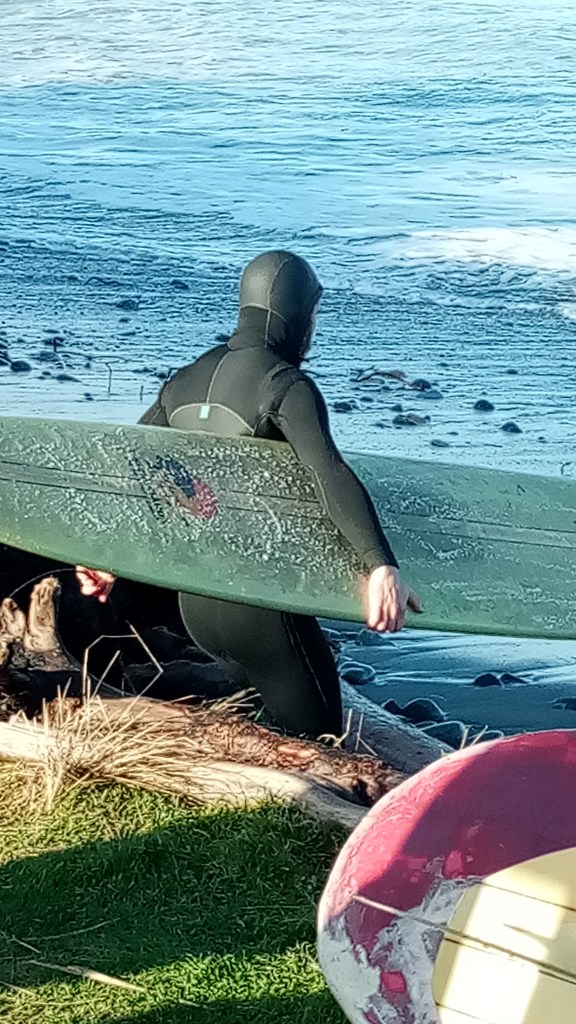
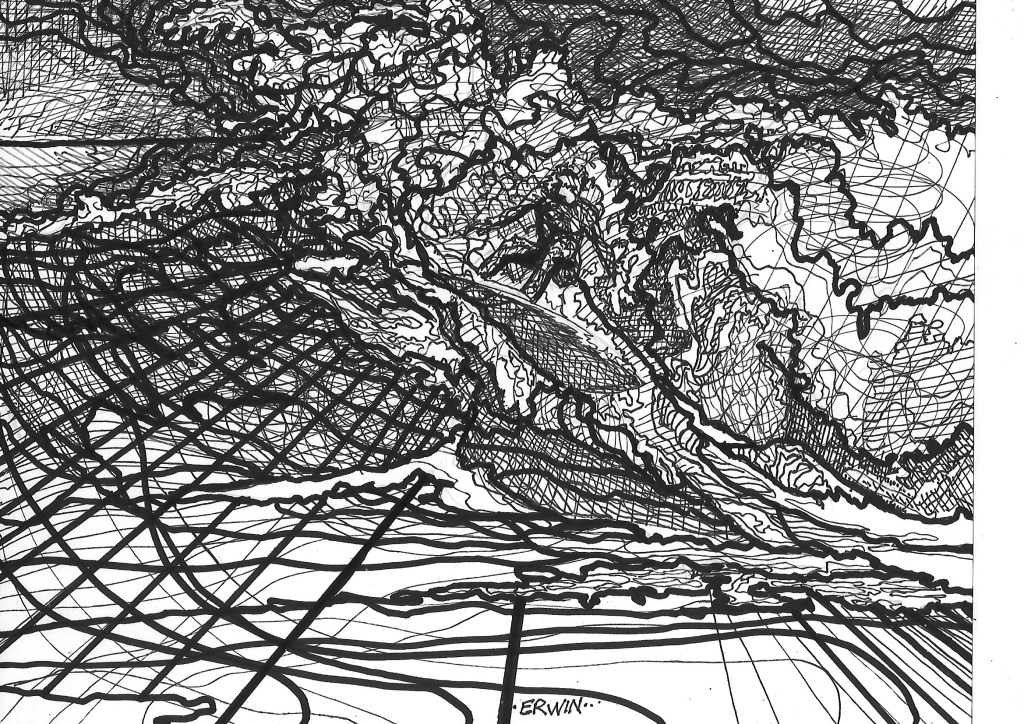


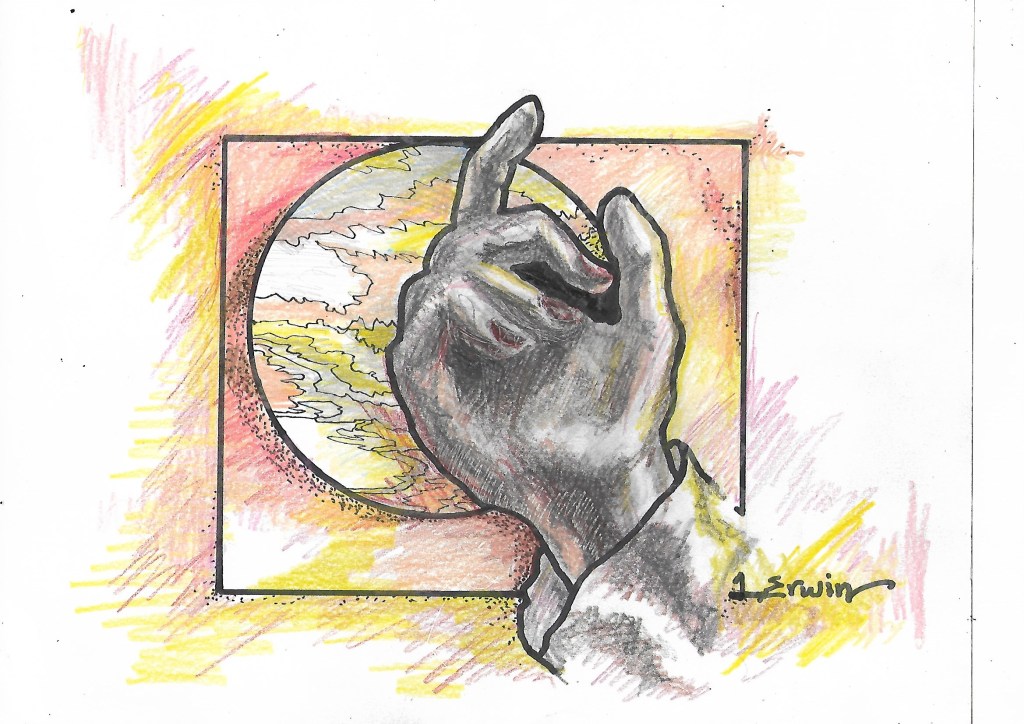


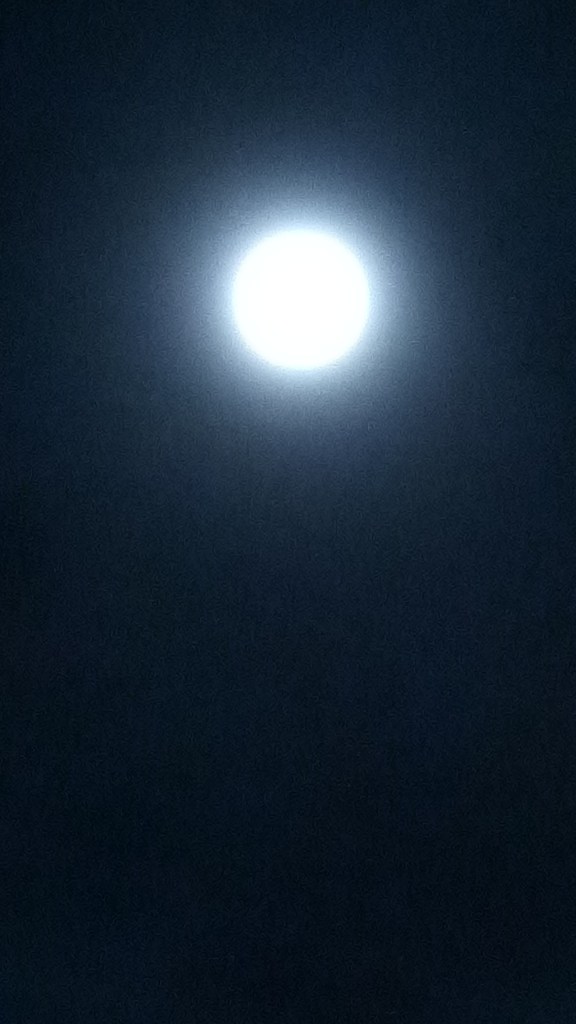

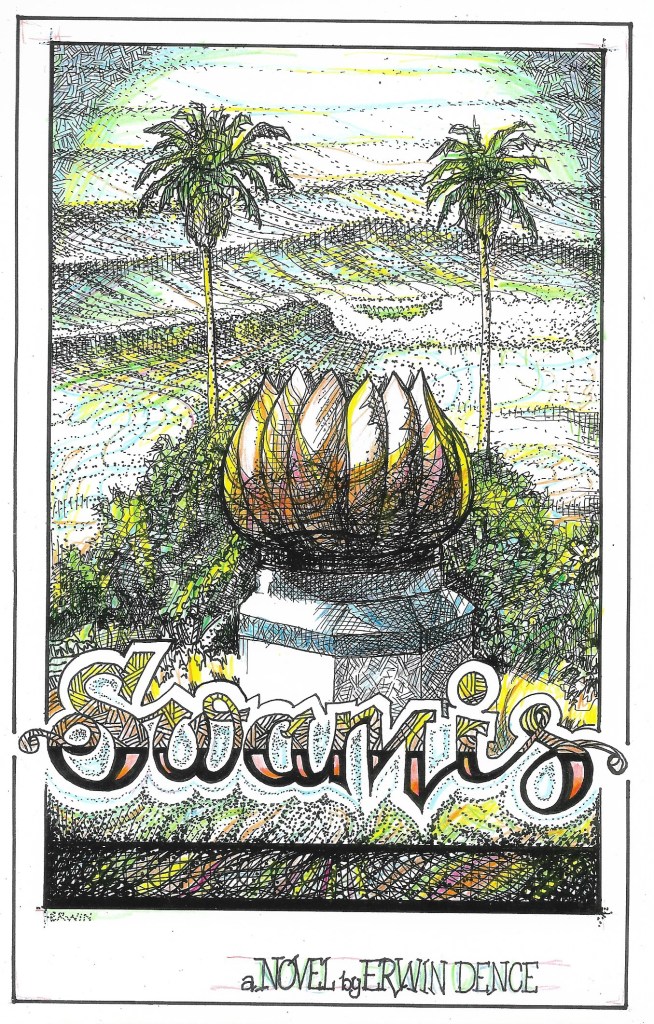


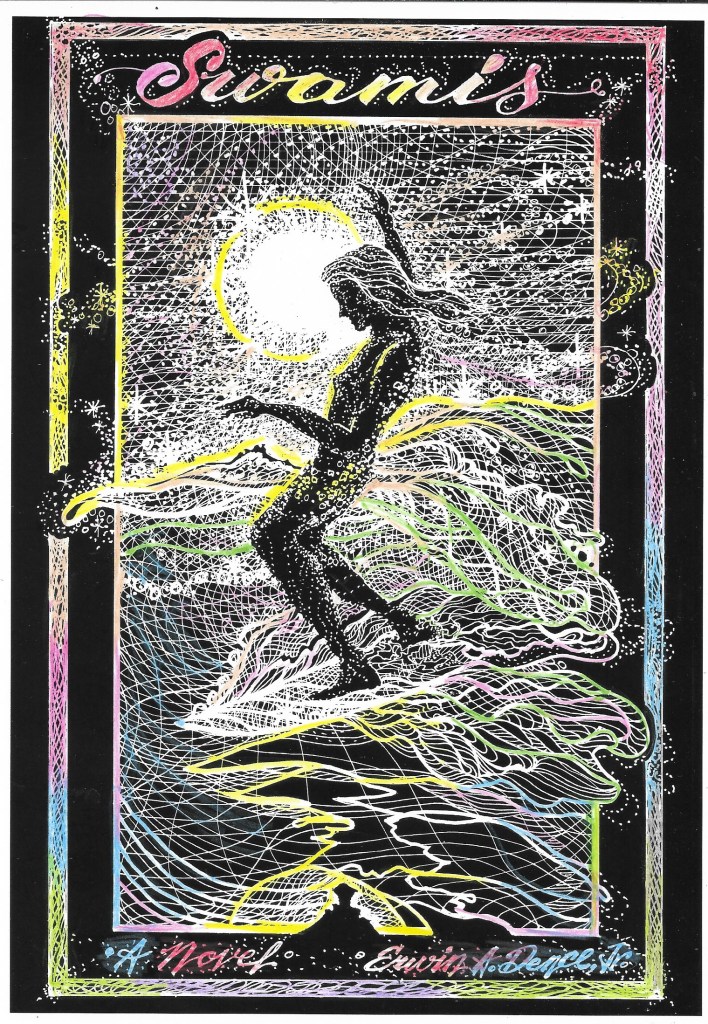


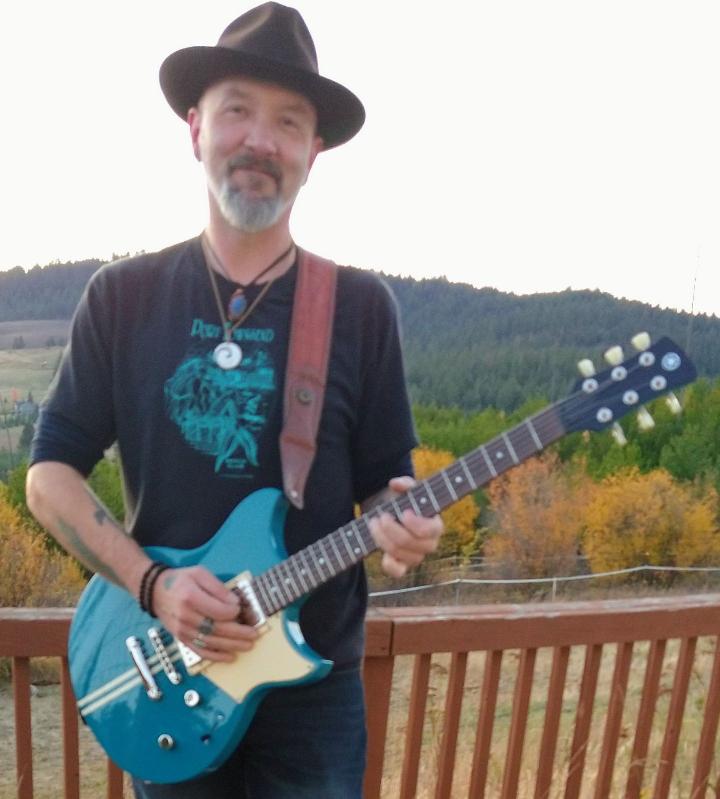

 Real Surfers