‘YOU’LL DO ANYTHING FOR ATTENTION’- This is what Trish, who refuses to look at the cut (and only a cut) on my head says. “I hope it was worth it” is what she texted when she figured out, through spyware on my phone, that, three days after smacking against something (we’ve determined it was a 2 by 2 on a lattice, forensics based on blood splatter) hard enough to provide (?) me with a cut requiring 20 stitches.
The surfing: I did try to keep my head above water, pulling out of sections I would ordinarily plow through or, perhaps, drop under (barrel dodging, not immune); but, sometimes, yes, a real surfer has to tuck in (not bragging, I insist for myself and others, that being ‘in position’ is not the same as being in the barrel). And once I was wet… well… AND I did wash the wound and sanitize it and cover it and… Yeah, worth it.
OTHER PEOPLE’S STITCHES STORIES- Word got around. Partially because I posted a (rare, on purpose) selfie of me with a dressing; partially because I know other surfers AND, allegedly, I love to gossip. Not on a high school and above level, more like junior high. When I, post-cut, post-stitches, talked to ADAM WIPEOUT, he had a WAY BETTER head injury/stitches story from when he, down Surf Route 101 in the wilds of Lilliwaup, was about junior high age: His older brother at the wheel of some giant wreck of a car, two younger cousins between them, they were joy riding around the property. Something happened, like the car suddenly losing power, and power steering, and the car hit head on into an apple tree. Adam, attempting, bravely, to save his cousins from hitting the dashboard by the time honored if never successful method of putting an arm across them, was launched forward, cutting his head on the metal (of course) uncloseable door to the glove compartment. Blood. While his brother hid in a creekbed, Adam ran to his grandmother’s house where, evidently, multiple members of the extended HAMA HAMA families were gathered.
So… blood, stitches and a great story.
Every real participant in surfing and any other gliding/riding sport has to have some stories of stitches or sprains or broken bones. Hopefully your injuries weren’t life threatening. There are truly tragic stories out there.
TIME AND TIME AGAIN- When I was contemplating what to put on my next (like the one I didn’t write for Sunday) posting, one of the things I considered is that, on a recent trip/session, I happened to notice that SEAN GOMEZ, Olympic Peninsula ripper and teacher, has lost a significant amount of hair. Sorry, man; I understand. Others, including DARREN, also have suffered this fate. The realization is that I have surfed around these folks long enough that I remember when they had full heads of hair. If I count my northwest surfing story as having begun when I was a mere 27, 1978, rather than the restart, now over twenty years ago, yeah, my hair was fabulous.
LUCKY OR LOCAL- Not to be bringing Adam into, like, everything, but in a recent cell phone conversation, he said that the session, that I totally missed, in which he surfed two spots many miles apart, on one day, was this time of year, in 2013. “What? That’s like twelve years ago.” “I know.”
Incidentally, Adam, when we spoke, was trying to do a different kind of double; snowboarding and surfing on the same day. There was some late season snow in the Olympics, and Adam, and many others, including those who include surfing and snow-sliding in their lists of sports, took advantage of conditions on, like, Saturday, just before a different wind/storm pattern came in and turned snow reported as powder into something else, not powder, on the way to, I guess, mud.
It seems like a theme around here; conditions are fickle in the mou tains and on the water; get it when you can.
LUCKY OR LOCAL OR LOSER- All the surfers I run into on a regular basis pride themselves on keeping track of tides and winds and buoy readings, As do I. But, now perhaps it was the day off to recover from my injury, but I got word that some lucky souls got some decent surf. “What?” “Lucky or local.” Now, I did text back to complain about using the phrase, that I take credit for, if the session isn’t all time great. It wasn’t. Or maybe it was. It’s not FOMO if you know you missed out. It’s just MO, loser. “Next time,” we say, over and over again. “Next time, man…”
FRAME OF REFERENCE- I was hanging out with AARON and KEITH, two rippers, looking over the high bluff at some waves dumping on the beach. Aaron said it’d be great for skimboarding. I mentioned how I’d seen amazing stuff on YouTube, but it all requires getting thrashed in the shorebreak. SO, we agreed, not for me and my ancient and non-nimble knees-to-ankles-to-feet, me with a known history of getting worked trying to get out of the water and up the beach. Fine.
There was talk of snowboarding and skateboarding, both of which my fellow water-watchers had participated in. I did skateboard, back in ‘the day,’ as in, not lately (see above). I asked Aaron, “So, did you, like, read ‘Thrasher’ magazine and… stuff?” “I was in ‘Thrasher’ magazine.” “Oh, then… Warren Bolster; he was a big time surf photographer who was everywhere on skateboarding magazines? He once blatantly burned me at Swamis; 1970… or ’71. Maybe he was pissed because he’d been filming rather than…” Lost my audience. Aaron had no clue. “You know, guys, I saw a movie about some guys… I think it was Mike Doyle and Joey Cabell, riding early snowboards… in 1968. They were flying off cornices and everything, and…”
Blank looks. I know Keith was born in 1977, a year after my older son, James. “When were you born, Aaron? “1971.” “Oh; so you have no idea.” “No. Never heard of Joey Cabell.” Aaron did a sort of Italian/mobster type accent, with, “Hey-a, you don’t a mess with a Joey a Cabell.”
Of course; my talking about the sixties, or even the seventies is similar to my father talking, or not talking, about World War II, or the Depression. His day. History. Other people’s stories.
Joey Cabell. Historical photos.
ANOTHER SELECTION FROM ‘LOVE SONGS FOR CYNICS’-
I have a whole lotta work, so I’ve just got a little time; I’ve got a whole lot of work, so I just have a little time; now they say everybody chooses their own mountain to climb.
I’m gonna climb that mountain, gonna start about four AM, gonna climb that mountain, gonna start about four AM; gonna stop about noon at a lake that I know for a swim.
When I get to the top, I’m gonna check out the other side; when I get to the top, I’m gonna check out the other side; and if I see the ocean, you know that I’ll be satisfied.
I JUST WANNA GO SURFIN’, now tell me, is that such a sin; I just wanna go surfin’, now tell me, is that such a sin? when you know darn well it’s been a mighty long time since I’ve been.
I’m gonna take off late, free fall drop, carve off the bottom and fly off the top; Locked in so tight the wave spits me out, hit the shoulder and turn one-eighty about; Movin’ down the line like a water snake, saving my best moves for the inside break; Hit the inside section, arching, hanging five; that’s when I’ll know that I’m still alive…
I just wanna go surfin,’ but I just don’t have any time; I wanna go surfin,’ and I’m gonna find me some time; NOW… if you get to go surfing, but you need a good board… borrow mine!
Not that, given the thrashed nature of my HOBIE, anyone would. Thanks for reading, thanks for respecting my rights to my original, copyrighted work. GOOD LUCK on finding some waves worth remembering. When I say, “That wave is gone” it means, partially, it’s history.
That may be a bit cynical. I have been surfing a bit (never enough) lately, trying my darndest to make up for a 2024’s bad session/wave count. I’m back to trusting my reborn VOLVO to make it up SURF ROUTE 101 far enough to find some rumored waves. MEANWHILE, rumor-wise, there have been times when surfers just had to check out the Strait. Whether or not it was working, surfers did show up and I did not. The sentiment among those lucky or stubbornly willful enough to live on the Olympic Peninsula is to try to avoid the forecasted days, particularly on the weekends (Friday through Monday, sometimes Thursday -Tuesday) to avoid any crowds.
CROWDS- Here is my wish/prayer list- 1. Waves. 2. Good tides. 3. Favorable winds. 4. Good parking spot. 5. Uncrowded lineup.
OBVIOUSLY there is a correlation between the parking and the number of surfers in the lineup. I have seen days where all semi-convenient parking spots were taken, some with occupants sleeping or making brunch, and the crowd is mostly surfers on the beach watching and waiting. And I have seen days with no crowds and rideable waves.
Here’s what happens: You surf. It’s, you know, decent. You tell one or two of your closest surf friends. They don’t believe you. That’s fair; you don’t believe them when they talk about barrel fests and such.
This lack of belief shouldn’t be a problem. REAL SURFERS do it for the soul enriching wonderfulness of the experience of climbing into a cold, damp wetsuit, booties and gloves and hood, and venturing into cold ass water to surf waves, their wonderfulness in the eye and mind of the venturer. BUT, NO, a little acknowledgement is, at the very least, appreciated. I’ve seen the most soulful of soul surfers surf just a bit better when someone else shows up. It’s the nature of the beasts we are.
BECAUSE I’M candid by nature as well as competitive, I admit, now, in writing, that I kind of enjoy having some sort of reputation for showing up when waves are rideable. I enjoy seeing surfers I know, or recognize; and I collect little stories from many of them. AND, since I’ve shown up less frequently, I… neurotically, self-centered-ly, worry, just a bit, or, more accurately, have considered that I am in the process of being forgotten.
It happens. Years ago, now, I read a piece on some older surfer who quit surfing urging other older practitioners of the sport/art/lifestyle to just fucking quit and become a legend. Sure, but legends only last as long as people remember. Do you remember ARCHIE or BIG DAVE or a growing number of surfers who made the same searches you are making, suffered the same skunkings, found the same rare gems, felt the same chill and the same magic?
MAYBE you do. Or you have your own list. This all leads me to surfing in crowded conditions. Is it worth it? I’ve seen so many times when people piled out of rigs and raced into the water without even checking the conditions, all based on ‘the rule of the parking lot;’ if surfers are out, it must be worth joining them.
AGAIN, crowds are number five on my list. I might just snag a few. As much as I appreciate the atmosphere of even, let’s say, the whole circus-like scene at Westport, my motto continues to be: I’m here to surf.
International Women SURFERS’ DAY- I do not have a problem with women surfers. At all. Some have had issues with me. Understandable. There were fewer, percentage-wise, girls and women surfing when I started. AND, I know I’ve said this before, but my sister Suellen got me into board surfing, our mother drove us and our siblings to the beach because she loved it, and went to better surfing beaches because we surfed.
It isn’t an accident that one of the two main characters in my novel, “SWAMIS,” Julia ‘Cold’ Cole, is a surfer AND a strong and intelligent woman. Persistence is absolutely required for anyone to attain any level above mere competence in surfing, the sport, and is also necessary to fit in as an equal in the art/lifestyle part of trying to ride waves, an objectively ridiculous and so-often frustrating activity/obsession/addiction.
I am pushing my daughter, DRU, to format and, maybe, do a little editing, if necessary, on my manuscript. MEANWHILE, though my painting life has suddenly gotten way busier, I am working on getting pieces together for my poetry/song (mostly song, some essays, some illustrations) book, “Love Songs for Cynics,” together.
Thanks, as always, for checking out realsurfers.net. Get some waves!
…AGAIN. Yeah. I turned on the Seattle news station to see if there is a possibility of waves, where the snow is sticking, and while maintaining what has. become my new and elevated level of anxiety and concern over definitely destructive tariffs; over the imminent acceptance of more crazy and objectively and blatantly unqualified nominees, each ready to facilitate and complete the takeover of all branches and functions of government, and reek vengeance on lists of those not onboad; over the US Congress continuing its obviously suicidal mission to trade a legislative branch for executive whims and lightning round edicts; and, while wondering how the stock market will react tomorrow, I accidentally, almost, discovered Michael Hynson has died. WHAT?
This is a photo taken from a 2007 article written by Steve Barilotti, entitled “Rainbow’s End. It is also proof that a surf shop in La Jolla I visited once actually existed.
Famous, of course, for his role in “Endless Summer,” Mike Hynson was of the Miki Dora, Butch Van Artsdalen, Herbie Fletcher school of surfers with that ‘fuck you, I’m surfing’ attitude. He was about nine years older than me.
For surfers in the early to late sixties, the ability to surf way better than the post-Gidget, post-Endless Summer group (I’m from the group in between) made them stars. In my abbreviated catchup this morning, I read a piece in which Hynson claimed he and other “Red Fin” surfers (Barry Kanaiaupuni, Billy Hamilton, others) would go to WIndansea and, basically, dominate.
Surfing coverage in the sixties was limited to occasional surf movies at, in San Diego County, Hoover High, by word of mouth, and through every-other-month magazines. Surf heroes were the ones in the photos. Hynson was among the group.
When I moved to Pacific Beach in 1971, I was in Hynson territory. I knew he had a connection with Skip Frye, who I would see quite often, surfing his way from tourmaline to Crystal Pier, finding waves the hordes were missing. In building boards of my own, I would see Skip Frye at the Gordon and Smith factory. Skip had a completely different reputation than Mike’s, more cleancut, kind of religious. I always thought it a bit strange that they were friends.
Then again, there is reputation and there is reality. Surfing at crowded, late morning La Jolla Shores in, probably 1974, word spread in the lineup (such as there was) that Mike Hynson was coming out. “Doper,” “Asshole,” “Druggie.” Still, I watched him wail on a couple of walls.
The surfboard shaping world in the late 60s, early 70s period was, I believed, centered in San Diego; and the evolution of board design was the most important since balsa gave way to foam. Surfboards Hawaii in Encinitas and Gordon and Smith in San Diego were, I still believe, the leading innovators, with garage shapers and engineers (like Tom Morey) and ever-moving professionals (like Donald Takayama) melding radical contours into ever better wave riding vehicles. If others do not give Hynson at least partial credit for boards with down rails, nose to tail, I will. As does Gerry Lopez. RIP MR. HYNSON.
SURFERS OUT OF THE WIND
PHOTO voluntarily REMOVED.
Some fat guy in an ORIGINAL ERWIN hoodie, holding a ‘graveyard’ mixed soda and Jamie Fox standee at the Emerald Queen Casino. My daughter, Drucilla (Dru) had to have surgery last week in Tacoma. ADAM LARM, a friend of two of Trisha’s and my three children (Sean is less so because Adam and his brother James sort of, kind of, definitely tortured him a bit as a child- as friends of brothers do- still kind of friends), now a nurse (and a lover of casinos) decided to treat Dru to a night at the adjoining hotel prior to her 5am check in at St. Joseph’s Medical Center.
The surgery went well, Dru is recovering at her home, with help from Trish. There are a couple of worth-telling stories around the adventure. Another time. OH, and I did get a photo of my daughter in the recovery room, but she asked me not to post it. SO, you know, another time.
A SONG/POEM FOR TODAY- from “Love Songs for Cynics’ and upcoming collection:
IF IT’S OVER, then it’s over, guess we’re through; there’s no reason I should go on loving you; but you know that’s exactly what I’ll do; if it’s over, then it’s over, guess we’re through; but I JUST CAN’T SEEM TO LET GO OF THESE BLUES.
YES, I treated you unkindly, as you say, though I loved you, love you blindly, still today; it’s a love I’ll likely take right to my grave; If it’s over, then it’s over, guess we’re through; but I just can’t seem to let go of these blues.
Like the clouds the winds have scattered, my heart’s broken but not gone; like the coast have battered, I’ve no choice but to hold on; like a river at the ocean, I’ll give in eventually; but I’ll hold on, long as I can, to the memory.
I can find the bbroken pieces of my heart; I can build myself another from the parts; I need a new life, and it’s time for me to start; if it’s over, then it’s over, guess we’re through, but I just can’t seem to let go, gotta find a way to let go, I just can’t seem to let go OF THESE BLUES.
SURF REPORT- YES. Waves continue to break. Waves continue to break. Waves continue to break. Find some. Don’t be a wave hog if you can help it. Don’t be a wave hog if you can help it. Happy GROUNDHOG DAY!
All original works by Erwin Dence on realsurfers are protected by copyright, all rights reserved by the author. Swamis update on Wednesday. THANKS FOR CHECKING OUT realsurfers.
credit for photo- the “Guardian” Mark Edward Harriss/ZUMA/Press Wire/REX/shutterstock
Everyone who grew up in California is familiar with the Santa Ana or Santana winds. Hot and dry, they are associated with clear conditions, generally offshore, sometimes beneficial. A wind that starts out straight offshore can bend, through a day, into one that is too north, chopping most breaks into oblivion. Some of the most blown out conditions I’ve experienced were not from the dreaded south winds, but from the Santanas. If they are not Devil Winds, once the spark get going, it isn’t too difficult for even non-believers to imagine the Devil being, somehow, involved.
The devastation still going on in Los Angeles is, like so many things happening in the world, surprisingly bad, but not necessarily shocking. There is a pattern, and this part of the drought, wind, fire, rain, flooding, mudslides, rebuilding cycle is the latest… and the worst of my lifetime.
Hopes and prayers and all that; as someone who had a house burn down, I am aware of the trauma, the hopelessness, the lingering effects of losing so much. Not that it is any way soothing, but I have also felt what it is to realize that possessions are only worth so many tears. Trish saved our ten day old daughter from our second floor bedroom. I saved jackets from an antique coat rack because it was cold outside when I could have saved the rack. I took what I could outside where neighbors helped get possessions out of the way and volunteer firefighters scrambled to do something when nothing much could be done.
I joined the Quilcene Fire Department shortly after, possibly hoping to save something more than someone else’s foundation.
The hottest spot in the fire that destroyed my house was under the stairway. That’s where I had my little writing area. Almost everything I had written or painted or drawn up to the age of 29 was gone. Some of it might have been good.
Doesn’t matter; gone in the firestorm; another wave gone. We fucking move on.
I hadn’t planned on even thinking about this today.
That’s my thumb as I was trying to catch a shot of a friend’s pre-kickstall on a post-shaker smoothie in a short-fetch Santana wind situation at a California spot that was not quite around-the-corner enough. It is good to remember that waves are created by wind; Angel Winds, Devil Winds, energy goes somewhere.
Possibly related to the photo- Back when I worked on Camp Pendleton (1975-ish), up the hill from Lower Trestles, I often tried to beat the more northerly Santanas by going to Church; figuring the wind might be more favorable. It wasn’t. Or it wasn’t that much more offshore. Somehow I discovered what I should have already known: The lighting looking toward the shore of a west facing beach on a sunny afternoon is similar to the lighting when looking west in the morning. It might be that I remember thinking this on one of several attempts because the surf just didn’t work. If it was something more cosmic, I would say it was because I was at Church. Further off the point; when I switched from riding surf mats to boards (1965), it was at Pre-harbor-expansion Doheny that I discovered one sometimes has to paddle a board to catch waves. No, neither of these were eureka moments facilitated or enhanced by any kind of drugs.
Here is another song; possibly appropriate to these, or any, times:
Give me some GOOD NEWS, please, no more bad, You know I’m crazy, But I’m not mad; Guess disappointed’s the word I’d choose, I think you can give me some good news, Something that might shake away these blues.
We need some laughter, Don’t want to cry, From here on after, It’s you and I, And no more running, It’s time to cruise, I hope you can give me some good news, Something that might shake away these blues.
We need some romance, Get you alone, No more long distance, No telephone, You know you want this, You can’t refuse, I know you can give me some good news, Something that might shake away these blues.
Gimme now, gimme now, gimme now, you know what I need, I’ll give it back, give it back, give it back, I don’t want to plead; You know and I know, and we know and they know, The world has blown a fuse; and God ain’t grantin’ no more interviews;
Some come now and give me… Something that might shake away, something that might take away, I know we can break away from these blues; If only you would give me, gimme, gimme, gimme; I know you can give me… some… good news.
As always, thanks for checking out realsurfers. And, yes, I am still working on “SWAMIS,” more on that on WEDNESDAY. Meanwhile, cherish what is important in your life.
“SOME GOOD NEWS,” from “Love Songs for Cynics,” copyright Erwin A. Dence, Jr. ALL RIGHTS RESERVED.
I know, I know; I’ve been working on the novel for soooooo long. I’ve put a lot of it on this site. Most or all of that has been changed. More like all of it except the baseline story; one which I have had a hard time (changed this from ‘fuck of a time’) reducing to a tagline.
There’s a procedure in selling books to major publishers, of course; daunting enough to dissuade even the most confident writers. AND, and, and we are all supposed to be capable of writing a story; and we all have stories. AND, believing that somewhere in all my millions of words written and changed, pages deleted, there’s a story, I have gotten to the point where I am leaping off some cliff and submitting “Swamis” to, today, seven agents.
Submission; even the word speaks of uncertainty, of decisions by others; SUBJECTIVE DECISIONS with the first round of decision-makers being the folks whose job it is to cut the volume of could-be-somethings down to those deemed worthy, or worthy-er.
Having something out there and out of our control is not that dissimilar to waiting for waves. Check the forecasts all we want, we can’t wish or hope waves into showing up. Yet, we try.
OH, AND if any of you are actual literary agents and believe you can sell “Swamis,” let me know. I’d certainly prefer a real surfer in my corner.
NOW, I did write an earlier query letter, and I did post it here. I also convinced several people to read it and give me feedback. So, thanks to KEITH DARROCK, DRUCILLA DENCE, ANDY and IZZY ROSANE. And then, of course, I rewrote the query. So, more thanks.
UPDATE ON MY SUPER FUN CAR- It was the in-line (as in, on a hose) heater control valve that broke on my thirty-year-old Volvo. Frustrated by my on line searching, I stopped by an auto parts store and tried to explain the whole thing. Kook-like. “It’s, like, kinda like a thermostat-looking thing, and it’s on this hose, and…” The already-flustered counter guy kept some appearance of patience, and found the part. “We’d have to order it.” Yeah. Then, knowing what I need, I went to YouTube to see if I can do the repair. Yes, pretty sure. Then, because it’s YouTube, on to brain surgery. No, probably not.
Query- “Swamis.” Fiction by Erwin A. Dence, Jr.
Marijuana, murder, surf, romance, and magic in a Southern California beach town in 1969.
Dear real surfers,
That my 92,000-word novel “Swamis” has become as much love story as murder mystery is a surprise to me. Almost. The action centers around the surf culture at Swamis Point in North San Diego County. It is 1969. An evolutionary/revolutionary period in surfing and beyond, to those who have only known crowds, this was a magical era.
Very close to turning 18, the narrator, Joseph Atsushi DeFreines, Jr., nicknamed Jody, has a history that includes a serious injury, time in a ‘special’ school, and violent outbursts. A top-level student and compulsive note taker, Joey is a socially awkward outsider who refuses to give oral reports. His two closest friends are other ‘inland cowboy’ surfers. Surf Friends. Joey wants to be accepted on the beach and in the lineup as a ‘local.’
Joey is desperately attracted to Julie Cole, one of a few girl surfers in the beach towns along Highway 101. Nicknamed Julia ‘Cold,’ just-turned-18-year-old Julie appears to be a spoiled, standoffish surfer chick, rabidly protected by her small group of friends. She is almost secretly brilliant and driven. Julie, like Joey, has personal trauma in her past.
Joey is the son of a Japanese ‘war bride’ and an ex-Marine. County Sheriff’s Office detective Joseph DeFreines, who says, “The world works on an acceptable level of corruption” is trying and failing to maintain that level. Marijuana is becoming a leading cash crop in his rural and small town jurisdiction. The completion of I-5 is supercharging population growth.
Julie’s father, David Cole, is a certified public accountant who may, with help from outwardly upright citizens, be laundering increasing amounts of drug money. Julie’s mother, Judith, moves from fixer-upper to fixer-upper in a housing market about to explode. She may also be the head of a group growing, packaging, transporting, and selling marijuana. Once grown in orchards and sold to friends of friends, the product is moved through Orange County middlemen to a larger, more profitable, and more dangerous market, Los Angeles.
Joey and Julie, concentrating on studying and surfing, had been rather blissfully unaware of what was going on around them. Joey’s father’s death, for which Joey may be responsible, has connections to the murder of Chulo, a beach evangelist and drug dealer set alight next to the white, pristine, gold lotus-adorned walls of a religious compound that gives Swamis its name.
Finding Chulo’s murderer, with those on all sides believing Joey has inside information, pushes Joey and Julie together.
There is an interconnectedness between all the supporting characters, each with a story, each as real as I can render them.
“Swamis” was never intended to be an easy beach read. And it isn’t.
I am of this period and place, with brothers and friends who were very involved in the marijuana/drug culture, both sides. I was not. It is very convenient that a Swami, like a detective, like many of the characters in the novel, is a ‘seeker of truth.’
I have written articles, poems, short stories, screenplays, and two other novels, some moving to the ‘almost’ sold category. I had a column “So, Anyway…” in the “Port Townsend Leader” for ten years, I’ve written, illustrated, and self-published several books of local northwest interest. I started a surf-centric website (blog) in 2013: realsurfers.net.
After many, many edits and complete rewrites, I believe the manuscript is ready for the next step. Thank you for your time and consideration, Erwin A. Dence, Jr. (360) 774-6354
Illustrations for “SWAMIS” by the author, Erwin A. Dence, Jr.
“SWAMIS” A novel by Erwin A. Dence, Jr.
The surf, the murder and the mystery, all the other stories; “Swamis” was always going to be about Julie. And me. Julie and me. And… Magic.
CHAPTER ONE- MONDAY, NOVEMBER 13, 1969
“Notes. I take a lot of… notes, but… your stack is bigger. Is that my permanent record?”
“Not sure why you take notes. You seem to remember, like, everything. Records. Records are for… later, for someone else.”
“As are notes. And maybe, some time I… won’t remember.”
“You brought them in; so, can I assume that your mother…”
“Yeah. Snoopy. Detective’s wife. We took the Falcon. I drove, my mother…”
“Snooped. Sure. Would you read me something from one of your notebooks? Your choice. Maybe something about… surfing.”
“Kind of boring, but… give me a second. Okay. ‘The allure of waves was too much, I’m told, for an almost three-year-old, running, naked, into them. I remember how the light shone through the shorebreak waves; the streaks of foam sucked into them. I remember the shock of cold water and the force with which the third wave knocked me down, the pressure that held me down, my struggle for air, my mother clutching me out and into the glare by one arm.’”
“Impressive. When did you write this? You had most of it memorized.”
“Some. But, if I wrote it recently, Doctor Peters. This all happening before the… accident; that would be me… creating a story from fragments. Wouldn’t it?”
“Memories. Dreams. We can’t know how much of life is created from… fragments. But, please, Joey; the basketball practice story; I didn’t get a chance to write it down. So, the guy…”
“I’m not here because of that… offense.”
“I am aware. Just… humor me.”
“Basketball. Freshman team. Locker room. They staggered practice. I was… slow… getting dressed. Bus schedules. He… FFA guy… Future Farmers. JV. Tall, skinny, naked, foot up on a bench; he said I had a pretty big… dick… for a Jap. I said, ‘Thank you.’ just as the Varsity players came in. Most stood behind him. He said, ‘Oh, that’s right; your daddy; he’s all dick.’ Big laugh.”
“’Detective,’ I said. ‘And, Rusty, I am sorry about your brother at the water fountain. I’m on probation already… and I’m off the wrestling team, and…’ I talk really fast when I’m… forced to… talk. I’m sure you’ve made note. I said, ‘I don’t want to cut my hand… on your big buck teeth.’ Bigger laugh. Varsity guys were going, ‘Whoa!’ Rusty was… embarrassed. His brother… That incident’s in the records. Fourth grade. Three broken teeth. Year after I… came back. That’s why the buck teeth thing… Not funny. Joke.”
“Joey. You’re picturing it… the incident. You are.”
“No. I… Yes. I quite vividly picture, or imagine, perhaps… incidents. In both of those cases, I tried to do what my father taught me; tried and failed. ‘Walking away is not backing down,’ he said. Anyway. Basketball. I never had a shot. Good passer, great hip check.”
“Rusty… He charged at you?”
“He closed his eyes. I didn’t. Another thing I got from my father. ‘Eyes open, Jody!’”
“All right. So, so, so… Let’s talk about the incident for which you are here. You had a foot on… a student’s throat. Yes? Yes. He was, as you confirm, already on the ground… faking having a seizure. He wasn’t a threat to you; wasn’t charging at you. Have you considered…?”
“The bullied becomes the bully? It’s… easy, simple, logical… not new; and I have… considered it. Let’s just say it’s true. I am… this is my story… trying to mend my ways. Look, Grant’s dad alleges… assault. I’m… I get it; I’m almost eighteen. Grant claims he and his buddies were just… fooling around; adolescent… fun; I can, conceivably… claim, and I have, the same.”
“But it wasn’t… fun… for you?”
“It… kind of… was. Time’s up. My mom’s… waiting.”
“Joey… I am, can be… the bully here. So… sit the fuck back down!”
CHAPTER TWO- SATURDAY, AUGUST 14, 1965
My mother took my younger brother, Freddy, and me to the beach at what became the San Elijo campground. Almost or just opened, it runs along the bluff from Pipes to Cardiff Reef. We were at the third stairway from the north end. I was attempting to surf; Freddy was playing in the sand. My mother was collecting driftwood for a fire. The waves were small. Pushing my way out, walking, jumping over the lines, I was turning and throwing my board into the soup, standing up, awkwardly, and riding straight in; butt out, hands out, stupidest grin on my face. “Surfin’!”
A girl, about my age, was riding waves. Not awkwardly. Smoothly. Not straight, but across. She wouldn’t have wiped out on the third ride I witnessed if I hadn’t been in her way, almost frozen, surprised by a wave face so thin and clean I still swear I could see through it.
I let my board go, upside down, broach to the waves, and chased down hers. When I pushed it back toward her, she said, “It’s you.”
“Me?” I had to look at her and reimagine the moments immediately before she spoke. She was wading toward me. She pushed the hair away from both sides of her face. She looked toward the beach. She looked back. Her eyes were green and seemed, somehow, as transparent as I had imagined the waves to be. “It’s you.”
“No. No, I’m… not… Who are you?”
“Someone who stays away from cops… And their kids.” She wasn’t going to thank me for grabbing her board. “Surfing isn’t easy, you know. All the real surfer guys are assholes.” She turned, threw herself onto her board, and started paddling. “I’d give it up If I were you.”
“Assholes,” I said as I retrieved my board. “I’m a well-known asshole.” I walked and pushed and paddled and made my way out to where the girl was sitting. She looked out to sea. She looked toward the shore. It was a lull, too long for her not to turn toward me as I attempted to knee paddle.
“We can’t be friends, Junior,” she said.
“No? What about when I… get to the point where I surf way better than you? Still, no?”
The girl turned away again. Not as long this time. “You coming back tomorrow?”
“No. Sunday. Church. My mom… We… Church.”
“Church,” she said. “My mom and I… Well, me; I… surf.”
The girl paddled over and pushed me off my board. The first wave of a set took it in. She turned and caught the next wave. I watched her from behind it. Graceful. “Julia Cole,” I said, loud enough for her to hear. “Your friends call you Julie.” I said that to myself.
CHAPTER THREE- SUNDAY, SEPTEMBER 15, 1968
My nine-six Surfboards Hawaii pintail was on the Falcon’s rust and chrome factory racks. I was headed along Neptune, from Grandview to Moonlight Beach. The bluff side of Neptune was either garage or gate and fence, or hedge, tight to the road. There were few views of the water. I was, no doubt, smiling, remembering something from that morning’s session.
There had been six surfers, including me, at the outside lineup, the preferred takeoff spot. They all knew each other. If one of them hadn’t known about the asshole detective’s son, others had clued him in. There was no way the local crew and acceptable friends would allow me to catch a set wave. No; maybe a wave all of them missed or none of them wanted. Or one would act as if he was going to take off any wave I wanted, just to keep me off it.
As the first one in the water, before dawn, I had surfed the peak, selecting the wave I thought might be the best of a set. Two other surfers came out. Okay. Three more surfers came out. One of them, Sid, paddled past me, making him the farthest one out in a triangular cluster that matched the peak of waves approaching. I knew who Sid was. By reputation. A set wave came in. I had been waiting. It was my wave. I paddled past Sid, paddled and took off. Sid dropped in on me. I said something like, “Hey!”
Rather than speed down the line or pull out, Sid stalled. It was either hit him or bail. I bailed. Sid said, “Hey!” Louder. He looked at me, cranked a turn at the last moment. He made the wave. I swam.
“I didn’t do anything wrong,” I said, approaching the lineup. The four other surfers held their laughter until Sid maneuvered his board around, laughed and said, “Wrong, Junior; you broke the locals rule.” Sid pointed to the lefts, the waves perceived as not being as good, on the other side of a real or imagined channel. “Local’s rule. Get it?” Trying to ignore the taunts of the others, I caught an insider and moved over.
After three lefts, surfed, I believed, with a certain urgency and a definite aggression, I prone-paddled back to the rights, tacking back and forth. A wave was approaching, a decently sized set wave. I wanted it.
“Outside!” I yelled, loud enough that five surfers, including Sid, started paddling for the horizon. I paddled at an angle, lined up the wave at the peak. Though the takeoff was late, I made the drop, rode the wave into the closeout section, pulling off the highest roller coaster I had ever even attempted. I dropped to my board and proned in. I kept my back to the water as I exited, not daring to look back or to look up at the surfers on the bluff, hooting and pointing.
I did look up for a moment as I grabbed my towel where it was stashed, visible from the water, on the low part of the bluff, my keys and wallet and cigarettes rolled up in it. Tromping up the washout to Neptune Avenue, I tried not to smile.
Driving my 1964 Falcon station wagon, almost to Moonlight Beach, a late fifties model Volkswagen camper van, two-tone, white over gray, was blocking the southbound lane. Black smoke was coming out of the open engine compartment. Three teenagers, locals, my age, were standing behind the bus: Two young men, Duncan Burgess and Rincon Ronny, on the right side, one young woman, Monica, on the left. Locals.
There was more room on the northbound side. I pulled over, squeezed out between the door and someone’s bougainvillea hedge, and walked into the middle of the street, fifteen feet behind the van. “Can I help?”
Duncan, Ronny, and Monica were dressed as if they had surfed but were going to check somewhere else: Nylon windbreakers, towels around their waists. Duncan’s and Monica’s jackets were red with white, horizontal stripes that differed in number and thickness. Ronny was wearing a dark blue windbreaker with a white, vertical strip, a “Yater” patch sewn on. Each of the three looked at me, and looked back at each other, then at the smoking engine. The movement of their heads said, “No.”
Someone stepped out of an opening in the hedge on the bluff side of the road, pretty much even with me. I was startled. I took three sideways steps before I regained my balance.
Julia Cole. Perfectly balanced. She was wearing an oversized V-neck sweater that almost covered boys’ nylon trunks. Her legs were bare, tan, her feet undersized for the huarache sandals she was wearing. She looked upset, but more angry than sad. But then… she almost laughed. I managed a smile.
“It’s you,” she said. It was. Me. “Are you a mechanic?” I shook my head, took another step toward the middle of the road, away from her. “An Angel?” Another head shake, another step. She took two more steps toward me. We were close. She seemed to be studying me, moving her head and eyes as if she might learn more from an only slightly different angle.
I couldn’t continue to study Julia Cole. I looked past her. Her friends looked at her, then looked at each other, then looked, again, at the subsiding smoke and the growing pool of oil on the pavement. “We saw what you did,” she said. I turned toward her. “From the bluff.” Her voice was a whisper when she added, “Outside,” the fingers of her right hand out, but twisting, pulling into her palm, little finger first, as her hand itself twisted. “Outside,” she said again, slightly louder.
“Oh. Yes. It… worked.”
“Once. Maybe Sid… appreciated it.” She shook her head. “No.”
I shook my head. “Once.” I couldn’t help focusing on Julia Cole’s eyes. “I had to do it.”
“Of course.” By the time I shifted my focus from Julia Cole’s face to her right hand, it had become a fist, soft rather than tight. “Challenge the… hierarchy.”
I had no response. Julia Cole moved her arm slowly across her body, stopping for a moment just under the parts of her sweater dampened by her bathing suit top. Breasts. I looked back into her eyes for the next moment. Green. Translucent. She moved her right hand, just away from her body and up. She cupped her chin, thumb on one cheek, fingers lifting, pointer finger first, drumming, pinkie finger first. Three times. She pulled her hand away from her face, reaching toward me. Her hand stopped. She was about to say something.
“Julie!” It was Duncan. Julie, Julia Cole didn’t look around. She lowered her hand and took another step closer to me. In a ridiculous overreaction, I jerked away from her.
“I was going to say, Junior…” Julia was smiling. I may have grinned. Another uncontrolled reaction. “I could… probably use… If you were an… attorney.”
“I’m not… Not… yet.”
Julia Cole loosened the tie holding her hair. Sun-bleached at the ends, dirty blonde at the roots. She used the fingers of both hands to straighten it.
“I can… give you a ride… Julie, I mean… Julia… Cole.”
“Look, Fallbrook…” It was Duncan. Again. He walked toward us, Julia Cole and me. “We’re fine.” He extended a hand toward Julia. She did a half-turn, sidestep. Fluid. Duncan kept looking at me. Not in a friendly way. He put his right hand on Julia Cole’s left shoulder.
Julia Cole allowed it. She was still smiling, still studying me. “Phone booth?” I asked.. “There’s one at… I’m heading for Swamis.”
A car come up behind me. I wasn’t aware. Rincon Ronny and Monica watched it. Duncan backed toward the shoulder. Julia and I looked at each other for another moment. “You really should get out of the street… Junior.”
“Joey,” I said. “Joey.”
She could have said, “Julie.” Or “Julia.” She said neither. She could have said, “Joey.”
No one got a ride. I checked out Beacons and Stone Steps and Swamis. The VW bus was gone when I drove back by. Dirt from under someone’s hedge was scattered over the oil, some of it seeping through.
CHAPTER FOUR- WEDNESDAY, DECEMBER 23, 1968
Christmas vacation. I had surfed, but I wanted a few more rides. Or many more. I had the time, and I had the second-best parking spot in the full lot at Swamis- front row, two cars off center. It was cool but sunny. I was standing, dead center, in front of the Falcon, leaning over the hood. I checked my diver’s watch. It was fogged up. I shook my wrist, removed the watch, set it on the part of the Falcon’s hood my spread-out beach towel didn’t cover; directly over the radiator, the face of the watch facing the ocean and the sun.
Spread out on the towel was a quart of chocolate milk in a waxed cardboard container, the spout open; a lunch sack, light blue, open; an apple; a partial pack of Marlboros, hard pack, open, a book of paper matches inside; three Pee-Chee folders. One of the folders was open. A red notebook, writing on both sides of most pages, was open, five or six pages from the back.
A car stopped immediately behind the Falcon. Three doors slammed. Three teenagers, a year or so younger than me, ran down the left side of my car and to the bluff. Jumping and gesturing, each shouted assessments of the conditions. “Epic!” and “So… bitchin’!”
They looked at each other. They looked over me and at their car, idling in the lane. They looked at me. The tallest of the three, with a bad complexion, his hair parted in the middle, shirtless, with three strands of love beads around his neck, took a step toward me. “Hey, man.” He lifted two of the strands. “Going out or been out?”
“Both. Man.”
“Both?” Love Beads guy moved closer, patting the beads. “Both. Uh huh.”
“Good spot,” the driver, with bottle bleached hair, a striped Beach Boys shirt, and khaki pants, said. I nodded. Politely. I smiled, politely, and looked back and down at my notebooks. He asked, “You a local?”
I shifted the notebooks, took out the one on the bottom, light blue, opened it, turned, half sat on my car, and looked out at the lineup, half hoping my non-answer was enough for the obvious non-locals.
A car honked behind us. Love Beads raised his voice enough to say, “At least go get the boards, Shorty.” The Driver ran toward his car. As Shorty reluctantly walked away from the bluff, Love Beads gave him a shove, pushing him into me.
Shorty threw both hands out to signal it wasn’t his fault. Behind him, Love Beads Guy said, “You fuckers down here are fuckin’ greedy.”
“Fuck you, Brian,” Shorty said before running out and into the lane.
Love Beads Guy, Brian, moved directly in front of me. He puffed out his chest a bit. He looked a bit fierce. Or he attempted to. “You sure you’re not leaving?”
I twisted my left arm behind my back and set the notebook down and picked up my watch. When I brought my arm back around, very quickly, Brian twitched. I smiled. I held my watch by the band, close to its face. I shook it. Hard. Three quick strokes, then tapped it, three times, with the pointer finger of my right hand. “The joke, you see, Brian, is that, once it gets filled up with water, no more can get in. Hence, Waterproof.” I put the watch on. “Nope, don’t have to leave yet… Brian.”
Brian was glowering, tensed-up. “Brian,” Shorty said as he carried two boards over to the bluff and set them down, “You could, you know, help.”
Brian raised his right hand, threw it out to his left and swung it back. I took the gesture to mean ‘shut up and keep walking.’ I chuckled. Brian moved his right hand closer to my face, pointer finger up.
I moved my face closer to his hand, then leaned back, feigning an inability to focus. “Brian,” I said, “I have a history…” Brian smirked. “I used to… strike out, and quite violently… when I felt threatened.” I blinked. “Brian.”
Brian looked around as if Shorty, packing the third board past us, might back him up. “Quite violently?”
“Used to… Brian. Suddenly and… violently.” I nodded and rolled my eyes. I moved closer to his face. “But now… My father taught me there are times to react and times to… take a moment, assess the situation, but… watch, and be ready. It’s like… gunfights, in the movies. If someone… is ready to… strike, I strike first. I mean, I can. Because… I’m ready.” I moved my face back from Brian’s and smiled. “Everyone… people are hoping the surfing is… helping. I am not… sure. I’m on… probation, currently; I get to go to La Jolla every Monday, talk to a… shrink. Court ordered. So…” I took a deep breath, gave Brian a peace sign.
“Brian,” Beach Boy, at the driver’s door of his parent’s car said, “we’ll get a spot.”
“Wind’s coming up, Brian,” I said, pointing to the boards. “Better get on it.”
“Oh, I have your permission. No! Fuck you, Jap!” Brian moved back and into some version of a fighting stance as he said it.
“Brian. I’m, uh, assessing.” I folded my hands across my chest.
Brian may have said more. He moved even closer, his mouth moving, his face out of focus; background, overlapped by, superimposed with, a succession of bullies with faces too close to mine; kids from school, third grade to high school. I couldn’t hear them, either. Taunts. I knew the words: “Retard!” “Idiot!” “What’s wrong with you?”
My father’s voice cut through the others. “They don’t know you, Jody. It’s all a joke. Laugh.” In this vision, or spell, or episode, each of my alleged tormentors, all of them boys, fell away. Each face was bracketed by and punctuated with a blink of a red light. Every three seconds. Approximately.
One face belonged to a nine-year-old boy, a look of shock that would become pain on his face. He was falling back and down, blood coming out of his mouth. Red light. I looked at the school drinking fountain. A bit of blood. Red light. I saw more faces. The red lights became weaker, and with them, the images.
The lighting changed. More silver than blue. Cold light. I saw my father’s face, and mine, in the bathroom mirror. Faces; his short, almost blond hair, almost curly, eyes impossibly blue; my hair straight and black, my eyes almost black. “Jody, just… smile.” I did. Big smile. “No, son; not that smile.”
I smiled. That smile.
Brian’s face came back into focus. I looked past him, out to the kelp beds and beyond. “Wind’s picking up.” I paused. “Wait. Did I already say that… Brian?”
I turned toward the Falcon, closed the blue notebook, set it on one side of the open Pee-Chee, picked up the red notebook from the other side. There were crude sketches of dark waves and cartoonish surfers on the cover. I opened it and started writing.
“Wind is picking up.” I may have spun around a bit quickly, hands in a pre-fight position. It was Rincon Ronny in a shortjohn wetsuit, a board under his arm. Ronny nodded toward the stairs. “Fun guys.” He leaned away and laughed. I relaxed my hands and my stance. “The one dude, with the Hippie beads. Shirtless.”
“Brian. Shirtless.”
“Don’t want to know his name.” There was a delay. “Fuck, man; he was scared shitless.”
“It’ll wear off.” I held the notebook up, showed Ronny the page with ‘Brian and friends’ written in larger-than-necessary block letters, scratched out ‘Brian,’ and closed the notebook. “By the time they get back to wherever they’re from, unnamed dude would’ve kicked my ass.” I looked around to see if any of Ronny’s friends were with him. “I was… polite, Rincon Ronny.”
“Polite. Yeah. From what I saw. Yeah. And… it’s just… Ronny. Now.”
I had to think about what Ronny might have seen, how long I was in whatever state I was in. Out. I started gathering my belongings, pulling up the edges of my towel. “I just didn’t want to give my spot to… fuckers. Where are you… parked?”
“I… walked.”
I had to smile and nod. “You… walked.”
Ronny nodded and looked at my shortjohn wetsuit, laid out over my board. “Custom. Impressive.” I nodded and smiled. “One thing, Junior; those… fuckers, they won’t fuck with you in the water.”
“Joey,” I said. “I mean, not that you want to know, and… Ronny, someone will.”
Ronny mouthed, “Joey,” and did a combination blink/nod. “Yeah. It’s… Swamis. Joey.”
Ronny looked at the waves, back at me. A gust of west wind blew the cover of my green notebook open. “Julie” was written in almost unreadably psychedelic letters across pages eight and nine. “Julie.” Hopefully unreadable.
I repeated Ronny’s words mentally, careful not to mouth them. “From what I saw. Joey.”
CHAPTER FIVE- THURSDAY, FEBRUARY 27, 1969
Our house in the hills between Fallbrook and Bonsall was a split level, stucco house, aluminum sash windows, composite roof. Someone else had started building from some plans purchased from a catalog. My parents could save money, they were told, by finishing the lower level and the garage. They could replace the plywood shed at the edge of a corral with a small barn that would provide room for a horse, a side area for hay and tack. New fencing. More trees. A garden. A covered patio off the kitchen, or, perhaps, a bay window.
Almost none of this ever happened. My father promised the patio, and then the bay window. He was working on it, but he was working. Working. There was, outside the sliding door, a concrete slab, with paving stones leading around the corner and down to the driveway. The two-story portion of the house featured a plate glass window, four foot high and eight feet wide, in total, with crank out, aluminum sash windows on either side. This window offered a view to the west, over scrubby trees and deep arroyos, of the hills, some rounded, others more jagged, with ancient boulders visible on all of them. Mission Avenue was hidden below and between. Mission, the road that linked Fallbrook with Bonsall, Vista, Oceanside, everywhere west, everywhere worth going to.
Looking out this window, I felt almost level with those hills. Morning light, descending, brought out the details of the ribs and rocks. Afternoon shadows crept from it until the hills once again became a blank shape. There were waves of hills in irregular lines between my hills and the unseen ocean. I had spent time looking away from my studies, imagining the hills in timelapse, the sun setting at one place in winter, another in summer, lines off clouds held back at the ridgeline, breaking over the top; torn, scattering. I had imagined the block as transparent, the ocean visible, late afternoon sunlight reflected off the water and into the empty skies.
…
The light outside was still neutral when I moved to the dinette table in the kitchen, a bowl of oatmeal, a tab of butter on top of it, in front of me. There was a glass pitcher of milk between my setting and the other two. There were four lunch sacks on the counter. Two were a light blue, one was a shade more orange than pink, the fourth was the standard lunch sack brown. My mother, already dressed and ready for work, took a carton of Lucky Strikes from a cupboard and put a pack into the brown lunch sack.
She looked out the window over the sink. She sniffled.
My father, in one of his everyday detective suits; coat unbuttoned, tie untied; leaned over from the head of the table. “Go get it, Jody.” The ‘now’ part of the command was unspoken. His voice was calm. Almost always. I didn’t move. I didn’t look up from my oatmeal. “Stanford, Jody; you didn’t think they’d send a copy to the school?”
My father’s questions demanded an answer or a response. Crying or lying were not acceptable options. “I did… consider the possibility.”
“Of course. Now, Jody, consider everything you have to do to be ready. Got it?”
Making eye contact was critical in these situations. Required, if for no other reason than to show I was sorry, remorseful. I wasn’t crying.
All original illustrations and writing on realsurfers.net is protected by copyright. All rights reserved by Erwin A. Dence, Jr. THANKS FOR CHECKING! FIND SOME SURF!
I haven’t updated my “Previously” recap of my novel, but we’re still at the post funeral memorial or wake for Joey’s father.
I WILL HAVE some photos and comments on my latest session attempt for SUNDAY, but, with elections upon us like a wave we saw on the horizon that is suddenly WAY BIGGER than we were ready for, I, non-political as I am, have some thoughts I’m trying to work through on just why the fuck anyone would vote for the guy, knowing what an absolute example of everything disgusting and vile and hateful any silver-spoon asshole can be. HATEFUL is, possibly, the key. Voters trying to hide behind some phony wall of “Oh, he’s, you know, not all that bad, and anyway…”
IT MIGHT BE that some folks think the guy will punish the “They” and the “Them” these voters hate. They. Them. YEAH, he said he will, and he has thugish backers who have promised to help. ONE PROBLEM might be that, HISTORICALLY, when things go to shit in a country, the whole country gets hit with the shit. AND covered in it.
THERE IS NO AMERICA to save AMERICA. Everyone is an infidel to someone. Everyone is a ‘them’ or a ‘they.’ Good luck, vote your conscience. But first, check to make sure you have one.
THINK IT THROUGH. VOTE BLUE. AND, with this, I apologize for ranting. I would rather talk about surf predictions and post-dictions, and I will. SUNDAY.
CHAPTER SIX- PART THREE- TUESDAY, MARCH 4, 1969
I was sitting on my mother’s little bench on the porch, tying my shoes. Lee Ransom stepped down onto the concrete pad, the part of a sidewalk my father had completed. “Optional today,” I said. “Shoes.”
“I… should have,” Lee Ransom said, “to show proper respect.” We both looked at her practical black shoes. She looked toward the many cars parked on the lawn and in the driveway. She pulled her sunglasses down and over her regular glasses. She pointed at the Falcon. “You just… keep the board on top?” I nodded, stood up, jumped off the part of the porch without stairs. “So, Joey; which one of these cars is your mother’s?”
Freddy, a toy revolver in his hand, ran out the door, past Lee Ransom, jumped off the porch, swung around me, and fired five shots as the younger Wendall brother ducked behind someone’s car, making a mouth sound with each shot, following the volley with “Got ‘cha!”
“I think he ducked,” I said as Freddy crouched and hurried down the lawn and took shelter behind the Wendall family station wagon. Wendall’s kid popped up, took a shot at Freddy. “Dick Tracy model. Snub nose 38.” Lee Ransom and I had made it down to the flatter, gravel and bare earth part of the property. She was still looking at the various cars. “I gave it up. Guns. Switched to…” I went into some version of a swashbuckling stance… “Swords.”
The younger Wendall brother ran in front of Lee Ransom and me. She swiveled, threw back both sides of her coat, drew two fake pistols from fake holsters, and shot at the kid. Two shots from each hand. The younger Wendall kid looked surprised, but instantly grabbed at his chest, both hands, staggered dramatically, and fell to the ground.
“Regular Annie Oakley,” I said.
“Well,” Lee Ransom said, blowing the fake smoke from the end of each fake pistol, “Where I came from, we played cops and robbers with real… cops.” She fake-holstered the fake pistols. “Real guns, too.” She shook her head and laughed.
“I never played the cop, always the… robber.”
We both turned when we heard someone being slammed up against someone’s car. “Surrender, Jap!”
Larry Junior had Freddy off his feet and pinned against the Wendall’s red station wagon. Freddy dropped his pistol and gave me a desperate ‘you have to help me’ look. Larry Junior’s expression, at Freddy and then me, was a defiant ‘do something, Jap’ look. The younger Wendall kid leapt to his feet. Lee Ransom took a step back, then a few more, in the direction of her car, and looked at me.
Theresa Wendall, holding a large Corning Ware serving dish with a glass cover in both hands, came out of the front door. Wendall and Deputy Wilson came around from the back of the house. “Lawrence Oliver Wendall, Junior,” Mrs. Wendall said, quite loudly.
Lawrence Oliver Wendall, Junior looked at his mother, stepping off the porch. He looked at his father. Wendall threw a lit cigarette onto the lawn. He looked at Freddy but did not let go of him. He looked at me, just coming around the front of the car, left hand out, right hand in a fist. He let go of Freddy.
Everyone stopped.
Everyone except Theresa Wendall. Her high heels failed to make the transfer from concrete to lawn. She fell forward, the dish ahead of her. Launched.
None of this happened in slow motion. All of us on the lawn and the porch were frozen when the Corning Ware dish hit the splotchy lawn, the glass lid skimming like a rock on the water before skidding to a stop on the gravel. The contents of the Corning Ware dish belched out she lost control. It hit on one edge and flipped forward just enough to hit the next edge. Then the next. It landed upright, one-fourth full, amazingly close to the lid.
A few moments later, in slow motion, I mentally replayed what I had seen. Ten seconds, maybe. I was standing at the hood of the Wendall’s station wagon, my right hand still in a fist.
Everyone else had moved.
Freddy and Larry Junior and Larry’s younger brother were on their hands and knees, scooping food and bits of grass and gravel into the Corning Ware dish, chipped but unbroken.
Deputy Wilson was crouched down but not helping. He was looking at me. “I said, Jody, I notice you have chickens.” He nodded toward an unpainted plywood chicken coop with just enough of a fenced yard for six hens and a rooster.
“Chickens. Yes… we do.” I looked toward the porch, expecting to see a crowd. No one. I looked at our chicken coop, back at the Deputy. “We don’t let them out, Deputy Wilson. Coyotes.”
Deputy Wilson nodded, stood, straightened the crease in his uniform pants. “Scott,” he said, “Scott Wilson, Jody.” He adjusted the tilt of his hat, turned away, showing his clean hands to the three kids whose hands were lasagna sauce colored.
“Scott,” I said, quietly, “Joey. Joey, not Jody.”
“I worked on cases… not really; I watched… you know. Your father knew his shit.”
“Yeah. He… the chickens… lasagna; they’ll eat it. I mean, the… spilled part. Scott.” Deputy Scott Wilson took the dish from Larry Junior and walked toward the coop.
…
Theresa Wendall was sitting in the driver’s seat of the station wagon, door open. Her husband was standing between her and the door, leaning over rather than crouching. Her left hand was on his right arm. She was crying. Detective Larry Wendall removed his left hand from the door and put it on his wife’s left hand. He kept it there for a moment, then lifted her hand from his arm, shifted slightly, and opened the back driver’s side door.
“I’ll help you turn the car around. Okay?” Mrs. Wendall didn’t answer. “Theresa?”
Theresa Wendall made the slightest of gestures with her left hand before clutching the outside ring of the steering wheel. Her husband waited a moment before coming closer. This time he crouched. “I shouldn’t have talked to her, Larry,” she said. It wasn’t a whisper.
“It’s… all right.”
Deputy Scott Wilson came back with the emptied dish, took the glass lid from the younger Wendall kid, handed it to me. Toward me, as if I should be the one returning it. I looked at the three kids before I took possession of the dish. Both hands.
I approached the station wagon. Theresa Wendall looked past her husband, used the left sleeve of her dress to wipe both of her eyes before regripping the steering wheel. Detective Wendall stood up, stepped back, turned toward me. He looked embarrassed, almost angry. He slammed the back passenger door, reopened it as he passed, turned, and took the dish from me. Lid in one hand, dish in the other. He set them on the roof and turned toward his kids, Freddy, Deputy Wilson, and me. He lit up a cigarette, went around to open the very back door.
“Lasagna and Bermuda grass,” Mrs. Wendall said, breaking into the half-laugh kind of crying. “Probably improved the taste.” She looked at me for some reassurance, some sort of sympathetic response. I barely knew the woman. Cops’ wives. I knew something about what that meant, what it required. “Your mother,” she said. “I am just so… sorry.”
I have no idea what I look like in these situations. Not cold and uncaring is my hope. Helpless is what I was.
A few moments later, I was over by the Karmann Ghia trying to convince Lee Ransom this wasn’t worth taking notes on or photos of. “Personal,” I said. Larry Junior and the younger Wendall kid were in the red station wagon. Mrs. Wendall was attempting to turn the station wagon around with some direction from Deputy Wilson. Freddy was leaning into the back seat window. All three kids were laughing.
Only a small percentage of those coming out of the house had to put their shoes back on. Deputy Scott Wilson was back directing traffic. Wendall lit up a cigarette with the butt of his previous one, waved at his children, and headed back up to the house. Theresa Wendall, eye makeup mostly wiped off, waved at me, and because I was standing next to her, Lee Ransom, on her way out. The younger Wendall kid did a finger shoot at Lee Ransom on the way by.
Lee Ransom jerked to one side, shot back. Just one finger gun, this time. She looked at me. “Regular Annie Oakley, huh?” She looked at the horse that was leaning over the barbed wire and over the front seat of Lee’s car.
“Tallulah,” I said. “My mother’s. Pet. Mostly.”
“Like the actress; Tallulah Bankhead.”
“Yeah. From the old movies.” I stepped over to the small shed adjacent to the covered stall, all constructed of plywood, still unpainted. I pulled out a handful of grain, closed that door, pulled up the plywood cover on Tallulah’s stall. The horse looked at Lee Ransom. Both walked over toward me. “My dad called her Tallulah Bankrupt.”
Lee Ransom held out both hands, cupped together. I transferred the grain. She fed it to Tallulah through the opening, with me still holding the cover up. I stuck the hinged two-by-two onto the sill to prop the cover as Tallulah ate and snorted and Lee Ransom giggled.
“Joey, what do you know about… grass; that whole… thing?
I looked back at the house, looked at the cars passing by. I took out a pack of Marlboros from the inside pocket of what had been my dad’s black coat, lit one up with two paper matches. “I’m the wrong person to ask, Lee Annie Ransom. No one tells me… anything.”
Lee Ransom brushed at Tallulah’s mane, ran her hand down the horse’s face, held the horse’s head up. “Someone told me that… if you…” She leaned over, blew a breath into Tallulah’s nostrils. “They’ll remember you.” She let go of the horse, pointed to my pack of cigarettes.
I pushed the pack toward the reporter, took the cigarette out of my mouth to light Lee Ransom’s. I blew some smoke into the stall, inhaled, blew a semi-clean breath into Tallulah’s nostrils. The horse reared back, hitting my face on the way up and back. I stopped myself from screaming but kicked a hole in the rotting plywood siding. Lee Ransom took a drag on her borrowed cigarette and let out most of the smoke. I pulled and kicked my foot several times before it was freed from the plywood.
Lee Ransom came up very close to my face. She blew a very slight bit of breath toward me. Cigarettes and the vague remains of the whiskey, a bit of the skanky cheese and vinegar from a salad. “I don’t fucking believe you. Joey. You see, you observe.”
“Only what concerns… or relates… People believe I know… things.”
“Aha!” She was close again. “See? That’s something I… I interviewed, sort of, your father… several times. When people think you know more about them than you do… he told me this… They tell you… more.” Lee Ransom took a double hit on the cigarette, held the smoke in for longer than I would have been comfortable doing. She exhaled slowly, down. “I didn’t know shit about you. Now I do.” She inhaled again, the smoke trickling out as she continued. “Now I know more. And…”
“And?”
“Not enough.” Lee Ransom turned away. “Tallulah, lucky Joey didn’t hit a stud, huh.”
“Lucky.” I took a deeper than usual drag, held it longer than usual.
“Joey. When your dad got that… wound… You were there. Correct?”
I crooked my left leg, butted the cigarette out on the sole of my shoe, turned halfway around, twirling the filter between a finger and thumb. “I was five, and… that is the story.”
“The story is your dad saved your life.”
I almost waited too long before responding. “He is… was… it’s his nature to be… heroic.” I turned fully away from Lee Ransom and walked toward the house.
“Good. Quote. Yeah. Thanks. But, Joey, which car did you say is your mother’s?”
“I didn’t say.”
“But Joey… Joey.” I turned around. Lee Ransom had her camera up and aimed at me. “Half stigmata!” She took three photos. Snap, snap, snap.
“SWAMIS.” Copyright Erwin A. Dence, Jr. All rights reserved by the author.
“SWAMIS” UPDATE- Working on it. Here is a quickie flyer for a fictional Newspaper. I can’t say that there wasn’t such a weekly paper back in the time my novel covers, 1969. My guess, yes. I do know, based on a story I heard, later, like 1971, when I went to work in the Big City, San Diego, from an older guy, that there were Free Clinics, or, at least, one. “So, I picked up this hitchhiking Hippie chick, and I’m thinking… you know, free sex and all that, and she says she’s trying to get to the free clinic.”
Also not related, directly: I noticed, on occasional trips south, in the narrow strip that is Mission Beach, a storefront law office that, real or imagined, seemed to offer free services. Hard to imagine that now. Parking, incidentally, was pretty much as bad then as it is now.
If writing, journalism or fiction, or drawing, or any form of art is someone trying to transfer imagination to paper or wood or film or any other medium, images stored and remembered are the critical ingredient.
Although I haven’t quite gotten to THE END of the fourth or fifth rewrite of “Swamis,” I do have plans, beyond it, for the main characters. The storefront law office might be part of that.
MEANWHILE, I am still recovering from cuts and an infection on my leg, the treatment keeping me out of the water for at least the rest of this week. SO, IF THERE ARE WAVES, I won’t be competing for them. GOOD LUCK.
SCREW UP of the day- I did write something, using Microsoft Word, filling in some omissions from my last posting. Halfway through this, I realized I hadn’t copied it. Not wanting to lose what I had, I… well, I’ll get back to you on what is partially “Guilty with an explanation” stuff.
In the “I’M NOT POLITICAL, BUT…” category, something about the delays in the trials of the former president, and the inability of some other citizens to see a grift when it’s reaching into their pockets, caused me to draw… this:
It’s already, liike, last week’s news. Ordinarily I claim all rights to my work, but, this time, in the spirit of freedom, free press, all that, if you want to borrow it… FEEL FREE.
I really can’t take too much of the coverage of the Hamas/Israel War. It seems as if a surge in violence was predictable and is reminiscent of historic struggles worldwide. The outcomes, however, have varied. Watching MSNBC at the top of any hour guarantees more tales of terror. One analyst, representing this or that organization studying and/or promoting world peace said he expects the situation “Will get worse before it gets even worse.”
The gesture humans have for wonder, whether we are defeated, shattered and questioning; or we are grateful for some hoped for, possibly undeserved, unexpected gift, some surprisingly marvelous ride on a miraculous wave, for example, is the same. The sentiments behind the gesture could not be more different. Opposites Answers and solutions are rarely forthcoming.
“SWAMIS,” CHAPTER 12, PART THREE- SATURDAY, MARCH 29, 1969
All the surfers and non-surfers in the parking lot were in little groups, locals and non-locals, around vehicles or along the bluff. I was writing in a red notebook on the roof of the passenger side of the Falcon. Petey Blodgett and I were the only ones who looked up or over at the stripped-down and noisy red VW bug with flared fenders, primed with red oxide, going down the far side of the lot, counterclockwise, two people inside.
Petey Blodgett turned toward me, nodded, mouthed “Dickson,” His expression had turned the name into a question. I nodded. He whistled, one sharp, three note blast, and made a sort of ‘circle the wagons’ gesture with both hands. Everyone looked at the VW. The younger kids started loading into the Mercedes. Ronny and Duncan looked at me before, in a pace that didn’t appear as casual as they may have hoped, they headed for the Morris Minor.
Julia Cole stepped into the bluff side lane and followed the VW with her camera. When it got to the far end of the lot, she put the camera into her bag. She said, “Cardiff,” to Petey and grabbed Monica’s arm. They hurried, together, Julia Cole’s bag almost bouncing on the pavement, to Ronny’s car. Duncan held the passenger side door open, allowing both girls into the back seat.
The two detectives, Wendall and Dickson, got out of the VW. They straightened their suit pants, buttoned their coats, and walked forward, very slowly. Dickson had a portable radio in his left hand. He raised it, said something, and lowered it again.
The Mercedes, with four boys and Petey Blodgett, backed out and pulled forward. The Morris Minor backed out. Julia Cole, passenger side, back seat, looked at me as the car passed. Duncan may have. I was looking at Julia. She didn’t blink, didn’t move her head. Her eyes moved, left to right. Two seconds, maybe, watching me. Watching me not move.
Two vehicles, almost instantly, moved from the middle row to the front row. Second tier, now first. Three more surfers headed for the stairs.
With my own fake casualness, I lifted the Falcon’s tailgate, cranked up the back window, locked it. I walked to the driver’s door, opened it. I looked around. I heard three distinct Sirens. One was a two-syllable yelp, the other two sirens, three. A Highway Patrol motorcycle and a patrol car, and one cruiser from the Sheriff’s Office, red lights going on each, were blocking the Swamis lot at 101.
The Mercedes and the Morris Minor pulled quick u turns at the original lot and parked next to each other in the middle row, as close to 101 as the blockade allowed. I got in the Falcon, closed the door, set the tape player on the floorboards, set the red notebook on the dashboard next to my father’s oversized flashlight.
The four boys got out of the Mercedes and started running circles around the car and then around other cars. Ronny and Duncan got out of the Morris Minor. Julia Cole got out and started unstrapping boards on the rack of the Mercedes. Monica got out and loosened the straps on the one board side of Ronny’s racks. Julia placed her board on the rack and reattached the straps. Monica resecured the straps on the Mercedes.
Petey Blodgett got out of the Mercedes when the Sheriff’s Office cruiser pulled in front of his and Ronny’s cars. The Highway Patrol motorcycle pulled in behind them. The officer got off his motorcycle, removed the glove from his right hand, and shook Petey’s hand.
Wendall and Dickson were hanging back. Wendall stopped at the edge of the bushes. He disguised taking a leak by lighting a cigarette, his back to the south wind. Dickson took several steps into the open area and raised his walkie-talkie. There was a loud squelch. Wendall took the radio from Dickson, said something into it. Squelch. Both detectives looked at me. I lowered my head.
I pushed down the vertical knob on the front driver’s side door. As I was reaching over to lock the front passenger door, Detective Dickson opened it. He almost threw himself forward and onto the seat. He reached down and put a hand on my tape deck. With some grunting, he pulled himself and my tape deck backwards and out. He ripped out the loose, overlong, taped together wires from the back, set the player on the edge of the roof. He squatted, his eyes level with mine.
“Obviously stolen,” Dickson said before stepping back and standing up. He flicked two fingers toward the obviously stolen tape player, laughed as it fell to the asphalt. He leaned back in, reached for the red notebook. I pulled it toward me.
“Not obviously stolen, Sir. And, if you don’t have a warrant or a compelling…”
“Suspicion? I do.” Dickson was pretty much out of breath. He, quite awkwardly, dropped to one knee, on top of the tape deck. “Bet you can quote me the law. Huh, Jody?”
“Not verbatim, Detective… Sergeant Dickson.”
“With so many of these tape decks getting stolen,” Dickson said, “it’s really hard to figure out who to get them back to.”
“I would guess so.”
“No, it’s under control,” Wendall, just outside the driver’s door, said into the walkie-talkie. He tapped the radio’s antenna on the window. Three times. I must have turned toward him too quickly, looked at him too hard. He slid the radio’s antenna across the glass. “Out.”
Wendall moved with the door as I opened it. He remained just on the other side of it as I got out. He was looking over the Falcon. Deputy Wilson and a very tall Highway Patrol Officer, standing by between the Mercedes and the Morris Minor, were waiting for further instruction. “This isn’t a game, Jody,” Wendall said, still not looking directly at me.
Monica and Duncan and Julia Cole and Rincon Ronny were taking a cue from Petey, looking quite casual, but they were all, definitely, looking at me.
“Kind of looks like a game, Detective Wendall… Sir.”
“You’re not helping here, Jody.”
Dickson pushed the tape deck into the traffic lane with a series of short kicks. “So, Jody, sales receipt?”
I didn’t respond. One of the dawn patrol gremmies was hanging on the racks on the Mercedes. Duncan pulled him off, the kid’s legs pumping. Petey was laughing, chatting with the Highway Patrolman, his hand on the Officer’s shoulder. Three of the four boys were sitting or leaning on the hood of Petey’s Mercedes, looking, if anything, bored. Deputy Scott Wilson was looking at Julia Cole. Monica and Duncan and Ronny were looking at Deputy Wilson. As was I.
Julia Cole, her knees bent, was leaning over the hood of the Morris Minor. Her telephoto lens was aimed at Dickson and Wendall and me. Wendall yelled, “Hey!” He threw out both hands, more in front of his body than straight out. He waved the radio. It was a ‘this is serious’ gesture meant for the motorcycle officer and Deputy Wilson. The CHP Officer shook Petey’s hand and signaled his compatriot in the cruiser. He tapped Deputy Wilson, still watching Julia, on the shoulder. The deputy looked at Julia’s friends, all giving him the same smile. He acknowledged this with an expression I didn’t see but could imagine. Busted.
Julia Cole stood up, never taking her eyes off Wendall, Dickson, and me. She held her camera with the telephoto lens facing up and made four upward thrusts with it. An unmistakable gesture.
I chuckled. Wendall chuckled louder. Dickson wasn’t amused. “Stay away from that one, Jody,” he said. “A regular prick teaser.”
“She’s seventeen years old, Detective Dickson. Sir.”
“Yeah,” Dickson said, jabbing his right hand, in a fist, toward me. Close. I didn’t flinch. He turned toward Wendall. “That is David Cole’s daughter, isn’t it, Larry?” Dickson didn’t give Wendall a chance to answer. “David Cole’s… other, older daughter; she’s the slutty one. Right?” Dickson’s expression was more of a sneer when he turned back. “Surfer girls, huh, Jody?”
Wendall set the walkie-talkie on the roof of the Falcon. He pulled the flashlight from the dashboard, smacking the palm of his hand with it several times. “Gunny… your dad, he didn’t like the ones we were issued.” Wendall turned it on, shined it into my eyes. “Not… impressive enough.” He maneuvered the light into the car, shone it onto a light blue lunch sack in the middle of the bench seat, then turned the flashlight off, handed it to me, smiled. “Lunch, huh?”
I stuck the flashlight back onto the dashboard, took out the light blue lunch sack, set it on the roof. “Habit,” I said. “I could get something at Mrs. Tony’s.”
“When does your shift start?”
“Not yet.”
Dickson walked over to the tape deck. “You wanna pick this shit up, Jody?”
I stepped toward the back of the Falcon, lit up a cigarette with two matches from a book with “Fallbrook, The Friendly Village” on the cover.
Dickson kicked the tape deck as he walked around the front of my car. “So, Jody, your mother know you smoke?”
I opened the lunch sack. I pulled my father’s lighter, a small tin of lighter fluid, and a tiny cardboard box of flints. “Evidently.” I opened the top of my father’s lighter, flicked the wheel. There was a brief flame. “I’m going to add the fluid… when I get a chance.”
Wendall took out a cigarette from a pack in his coat’s lower right pocket. “I know your mom didn’t supply… those.” He pulled out a matching Zippo, held the side with the Sheriff’s Office logo toward me, and lit my cigarette before lighting his own. Camel, non-filter.
Dickson came closer to me. The Sheriff’s Office cruiser passed us, followed by the Highway Patrol motorcycle. Wendall and Dickson gave very informal salutes. “So, Jody,” Dickson said, looking at the locals, all still hanging outside the two vehicles, “You popular around here with the hippies and the… surfers?”
“Not at all. Is the… show over?”
“Think so, Jody,” Wendall said, “just making our presence known.”
“To what end, Detectives?”
Wendall puffed up one cheek, coughed, blew out some air. The portable radio on the roof of the Falcon squawked. A woman’s voice, distorted, said, “Wendall, Vista sub, come in.”
I slid over and grabbed it. “Betty Boop,” I said, “It’s Joey… Jody; lots of fun here at Swamis. Over.”
A man’s voice came over the radio. “Wendall. Is this a joke? Wendall.”
I almost dropped the radio. Dickson shoved me from the side and grabbed it. Wendall took it from him, stepped away. “No. Not a joke. It’s under control. Over.”
“Put the kid on. Over.”
Wendall, shaking his head, stepped toward Dickson and me. Dickson put his hand on my left shoulder and looked over me, toward the cars and the locals. “I’m going to do you a favor, Jody,” Dickson said, removing his hand and smiling as he punched me; short, straight jabs; very quickly, in the solar plexus. Just the way my father taught me. And him.
My cigarette had landed on Dickson’s shoulder with the first punch. I put a hand on his left shoulder, for balance after the third and fourth blows. After the fifth and sixth, Dickson brushed the cigarette off, removed my hand from his shoulder, took the radio from Wendall, held it up to my face and said, “Just say ‘thank you,’ Jody.” He pushed the button.
“Thank you… Sir. Over.”
“Joseph DeFreines, Junior,” the voice on the radio said, “in real life, there are no seventeen-year-old detectives. Over and… out.”
Dickson turned moved his face close to mine. “Now the show’s over.” Between my breaths, Dickson whispered, “And… you’re welcome.”
Wendall picked the cigarette up, put it back in my mouth. Dickson turned away, yelled, “Yeah. You get that, Missy?” He flipped the bird with both hands, spun his body and his hands around. “Not very… professional, huh, Jody?” I didn’t respond. “But then, how would a hick Barney Fife like me know?”
With no answer that would please Dickson, I shook my head.
Dickson set what was left of the tape deck on the hood of the Falcon. Wendall lit a cigarette with the butt of his last one, looked around the parking lot. I flicked my father’s lighter a few times. No flame. “No flame,” I said, flicking it a few more times.
Both detectives turned away and started walking, slowly, toward Dickson’s VW. I heard the tiny engine of the Morris Minor and the diesel engine in the Mercedes start up. I heard both cars drive away. I hadn’t looked that way. I had been afraid. Now I was angry.
“I have… spoken to someone who was here… that night.” Both detectives stopped and turned toward me. They acted as if they didn’t understand, but both looked toward the compound wall. Wendall grabbed the radio from Dickson and turned it off. “The East Indian guy. From London. Not the pretty part. The guy who got singed… in the fire. Wasn’t taken to a doctor. Nephew of the owner of Carlsbad Liquor; the guy you two, or maybe just Langdon, questioned… downtown, for two days. That guy. Baadal Singh.”
This was a reaction caused by anger, I thought, a mistake. Still, I continued, words coming out fast, uncontrolled. “The possible suspect, definite witness… You told him to disappear. I assume you told Gingerbread Fred the same thing.” Wendall and Dickson were both, instantly, angry. I wasn’t displeased. “This must mean… indicate… that you truly believe the killers, in the black car with the loud tailpipes might… return.”
Dickson stepped toward me. Wendall stopped him with a hand, fingers spread, to the chest. “Go on. Jody.”
“Chulo. Was he your… asset; or Langdon’s?”
Dickson was very quickly in my face. “Don’t give a fuck what you truly believe, Jody.”
When Dickson moved his head back, just a bit, I moved my face close to his. “Chulo and Jumper Hayes; when they were arrested, you had to take sides. Butchie Bancroft was… had been your partner. ‘Dickie Bird and Butchie Boy,’ my father said, ‘red on their heads like dicks on dogs.’ I don’t recall whose side you took… Detective Sergeant… Dickson.”
“I wasn’t there, Jody. I might have knee-capped Jumper fucking Hayes.” Dickson held an aggressive expression long enough to see if I would move back. “Quit your recalling,” he said, taking a step back, checking Wendall’s reaction. He moved his lips back and forth a few times before he smiled. Full teeth. “Butchie was a good cop. He… that time, he went too far.”
Wendall stuck his right arm, cigarette in his hand, between Dickson and me. He pushed Dickson back. “We’re detectives, Jody. We were on your dad’s side in that.”
“Didn’t make me and Larry popular with… anyone, really; takin’ an avocado thief’s side. Especially seeing as everyone knew about the marijuana him and Chulo were stealing from… groves. Bonus for them… and the… landowners. That shit, it got… glossed over.”
Wendall was shaking his head. Not at me. At Dickson. “Butchie wasn’t good for the… the Office. It all blew over. As always. You calm now, Danny?”
Danny Dickson wasn’t calm. “So, you got that all wrong, huh? Jody.”
Wendall stepped between his partner and me. “Asset,” he said, “Source.” He didn’t exactly smile. He didn’t nod. His cigarette moved up and down. “Any other theories, Jody?”
“No theories.” There was a pause. “Okay. If Chulo was your… asset… you’d have a better idea who killed him. Still, you have to know who’s involved, locally. Maybe that’s why you’ve let Langdon take over. He doesn’t live here, and… maybe he’s not telling you what he knows.”
Now Wendall seemed the angrier of the two. He broke off eye contact with me just before I would have. He smiled, pointed at me with his cigarette between his first two fingers. “Theories. I am sure you will keep them to… yourself.” I must have looked as if I agreed. “And, Jody, this is all… you’re… you should…” Such pauses were unusual for Wendall. “Your mother and I…”
Full stop. Wendall turned quickly, toward his partner. Dickson dropped his sarcastic smile. Both looked toward me. I wouldn’t allow either the pleasure of reacting.
“Let’s go, Dickie Bird,” Wendall said, walking away. “So glad we took your death trap dune buggy.”
“Undercover, Dickson said, taking a slight detour to push the tape player off the hood of my car. A family station wagon passing by, with three kids in the far back, ran over it. The car stopped. It backed up. A woman stuck her head out the window. Wendall used his badge to wave her on. “Thanks for being here,” she said, the comment aimed at the detective, though she was looking at me. Suspiciously.
“Doing our job, Ma’am.”
Dickson kicked the tape player toward the center of the parking lot, threw his hands out as if he had scored a field goal, and joined his partner, both walking slowly toward the end of the lot, toward where the Jesus Saves bus would have ordinarily been parked.
NOTE: I couldn’t help it. I went back again on previous chapters to keep the continuity, like, accurate.. I am over 100,000 words, but changes now means, hopefully, that I can cut out more later. Yes, I do realize there is a formula successful writers stick to. It’s just… no, I am trying. Thanks for trying to stick with it. “Swamis” and all its variations are protected by copyright. All rights reserved by the author, Erwin A. Dence, Jr.
I’m still polishing the manuscript for my novel, “Swamis.” A lot of what I am doing is trying to cut out pages, lines, even words that don’t progress the story. The story.
THE STORY has changed considerably since I started the project. THE TRUTH is that this project, realsurfers, was an attempt to tell the larger story of surfing in a particular time, the late 1960s, Southern California; the draft, Vietnam, various revolutions in music, surfboard design, human rights; there’s a lot to cover. NOW I have a story and I’m trying to make all the parts, all the characters and plot twists seem REAL.
I don’t want to post pages that I cut because I rewrote them, improved upon what I am offering you. Rather, I will only post outtakes because they no longer fit in the trimmed-down, story driven manuscript. ACTUALLY, there are still sidetrips I will not be able to cut.
In rereading this passage, I do have to admit that it’s Joseph DeFreines channeling me. The fiction part is that his father was a cop, killed in a mystery among mysteries. SO:
Sure. Surfing is sexy, coolness illustrated; pirate/rebels washed clean.
Coolness, hipness; we adapt our lives, change our speech patterns, make different choices in clothing and music and attitude as we discover new, and, if not better, more modern things, newer new things; trends, fashions.
The very word, fashion, describes its temporary nature. Subtext. That fashion goes in and out is given to the user of the word for free.
We steal, borrow, incorporate. The strands are pretty obvious; like blues to jazz, blues to rock and roll, blues coopted by popular AM music. If you were born in the 1950s, you heard Sinatra and Chuck Berry on the same AM station; experienced the Beatles, then Dylan. No, you probably got Dylan through Dylan covers, Peter Paul and Mary, the Byrds; then Dylan, then… whatever was fashionable. Temporary.
THE REAL DYLAN
We, my Fallbrook contemporaries, suburban teenage males, isolated from the big cities, behind the times; we were Doors fans. Of course. My friends bought the albums. Garage bands played extended versions of ‘Light My Fire’ at sock hops and VFW dances. When tape players came out, some of my friends had them installed in the cars their parents handed down to them. Or bought for them. Four trac, then 8; Three Dog Night and Jimi Hendrix.
Somehow, I held on to the songs from the 78s my parents owned, surprisingly varied, with jazz, husband and wife duos, black torch singers, Nat King Cole. I remembered tunes from musicals in my mom’s LP stash, “Oklahoma” and “South Pacific.” They had LPs, 33 1/3rd, Johnny Mathis and The Everly Brothers. I didn’t want doo wop or bubblegum pop, I wanted to hear the real Dylan. Dylan was in the magazines, angry young man, voice of a generation; why wasn’t he on the radio?
Dylan was certainly not on KCPQ, the station my friends in Junior High went on about. KCPQ advertised pimple cream and played Beatle songs for portable radios, songs sung in the hallways by hormone-strained voices, guys suddenly affecting English accents. There were sanitized versions of Dylan; but no Dylan. I didn’t want more Chad and Jeremy, more Herman’s Hermits.
Someone dropped a clue, something heard by overhearing an older brother. There was a station from San Diego, KPRI, FM (for god’s sake), that played whole albums; radical, underground music. I could barely get it, but I tried, over in the corner of my bedroom, while I studied, wrote; edited and typed-up other people’s term papers (for a fee); another detached, isolated, suburban (almost rural, really) teenager.
KPRI, as close to tuned in as I could get it, still had that grainy, scratchy, ringing-in-the-ear background. I tried. I persisted. I listened. That it was difficult to tune into made it better. Way better. FM, for god’s sake.
SURF’S UP
Channel 9, from Santa Barbara, was a similar, hard-to-tune-in mystery. With Ray on the roof moving the antenna, Phillip at the window, and me at the TV set, we tried to get “Surf’s Up.” It was listed in the Fallbrook-specific TV Guide; and, at best, we almost saw, or barely saw, some footage of Trestles, a legendary break, peeling. The only audio we could hear was, “peeling like a washing machine.”
That barely-there-ness only added to the appropriateness. “Peeling like a washing machine” became, briefly, our phrase for a perfect wave on an imperfect day. Rare, peeling…
“We’re going,” the slow-speaking voice (opposite of am radio) of a possibly-stoned KPRI disc jockey would say, “to go in the back room and get our heads together (background chuckles); so, here’s Dylan’s “John Wesley Harding.” Sound of inhalation, extended version.
Appropriate. Black-and-white, scratchy-grainy TV, whispered songs with tinnitus backgrounds.
When I got my first tape player, 4 plus 4, capable of playing four and eight trac tapes; and stolen, as previously mentioned, traded for fifteen bucks and some homemade sandwiches (and a promise for more) in the school parking lot, installed (rather, wired) by a guy (can’t remember his name) who told me I, my dad being an asshole and a cop and all, should have known it was stolen. I bought some on-sale tapes at the Buy-and-Save market: Laura Nyro, Leonard Cohen, “Aerial Ballet” by Harry Nilsson.
“What’s that shit?” One of my friends would ask.
“Good music,” I would say.
Yeah, I had some Doors, Hendrix; often wondered if I really liked them more than the Moody Blues. When Led Zeppelin came out, I just avoided it. Or tried. Orgasmic rock. All these years later, KPRI is probably sports or talk or playing new age country/western, and there is no classic or hardrock station that can go an hour without playing something from Led Zep.
Orgasmic rock I called it. Hated Led Zeppelin, but I still know most of their songs.
Somewhere in those years, I lost my California coastal accent. Or, maybe I just thought I had. It comes back sometimes. “Oh, I see; you don’t like a-vo-caaa-do.”
My novel, “Swamis,” keeps growing, keeps reaching past ‘novel’ to ‘epic novel’ length. I keep editing it, deleting stuff, then, tightening and polishing and making sure all the little moves are clear; it just keeps rolling past the 120k word zone, that fictional border that keeps a fictional story at a readable length.
Yeah, and as much as it hurts me to cut chapters, with where I am, so close to an ending that keeps evading me in the rewriting and editing, I definitely need to cut a couple of thousand words. SO, I keep moving them to the backup, shadow story, labeled “Sideslipping” on my laptop. I have published some of these on realsurfers, and, if I can swing the computer moves, I will stick some ‘edits,’ don’t want to call them ‘deleted scenes,’ here. MAYBE ‘deleted scenes’ is acceptable.
John Witzig photo, Australia, sixties; but it sure looks like Swamis
The following is actually two big outtakes. Remember, though there is a lot of actual people and real events included in “Swamis,” this is fiction. I transplanted my best surfing friends Phillip and Ray into situations that never happened, stuck myself in there, too, mostly so readers don’t think I am Jody. I am not. And, yeah, it’s a lot of words to delete; still not enough:
SIDESLIPPING- OUTTAKES FROM “SWAMIS”
Here we go:
Someone I met much later, a former member of the La Jolla/Windansea group, ten years or so older than me; old enough to have dived for abalone and lobster; old enough to have ridden a new balsa wood board, said, of surfing in his era, “We just sort of plowed.”
When I switched from surf mats to boards, in 1965, diving for and selling abalone and ‘bugs’ (lobster) for cash was already over; being a ‘true waterman’ was no longer a priority. This only added to the mystique. There was a certain reverence, respect, held by surfers of the “Everybody goes surfing, surfing U.S.A.” era for the members of that post-war generation; beatnik/hotrod/rock n’ roll/pre-Gidget/rebellious/outsider/loner surfers plowing empty waves.
That is, for those (of us) who actually gave a shit.
Tamarack was obvious; one peak in front of the bathrooms on the bluff, a bit of a channel; a parking lot at beach level. Good place to learn; sit on the shoulder; wait, watch, study; move toward the peak; a bit closer with each session. Get yelled at; get threatened; learn.
Eventually, if you wanted to improve, you would have to challenge yourself to ride bigger waves, beachbreaks with no channel, tough paddle outs. You would have to learn to hold tightly to the board’s rails, your arms loose enough to move with the violence of a breaking wave. If you wanted to surf the best waves, the set waves, even at Tamarack, you would eventually have to challenge a better-than-you surfer for a wave.
Chapter Eight- Thursday, March 20, 1969
Phillip and Ray lead the discussion about the murder and the excitement. There was a bigger than usual crowd at the big concrete planter boxes, designed with seating all around, trees and bark inside them. The break was called ‘nutrition,’ between second and third periods, and there were two trailers set up where nutritious snacks like orange-sickles and twinkies could be purchased.
Mostly Ray was talking, with Phillip adding key points, and Erwin looking out for any nearby teachers. Mark and Dipshit Dave and three of the Billys were there. I was in my usual spot, standing in the planter, observing, listening. Some of the local toughs and the cooler non-surfers were, unusually, part of this day’s group; listening; more friends of friends of Ray and Phil.
Two of the Rich Kids came over from the Senior Area. Mike, who had been my best friend up until third grade, jumped up next to me on the planter. “Missed the excitement, huh Joey?”
“Guess so, Mikey.”
I had already heard the story. My mind was somewhere else.
“Um, hey; Joey; you know…” I knew what Mike wanted to say. “We’re still; you know, friends.” He tapped me on the chest, tapped his own. “It’s just… your dad. Sorry.”
I tapped Mike on his chest, three times, held up a flat palm between us, went back to being somewhere else.
…
In our freshman year, the most crowd-centric of several big concrete planters became the pre-school, break, and lunchtime hangout for the entire crew of Freshmen surfers (as far as we knew); Erwin and Phillip and me. With the administrative building behind it, the gymnasium/cafeteria downhill, most of the classrooms to the west, and a bit of shade provided by the trees, it was a good place for observing while still laying low, avoiding… avoiding the other students; the older students in particular; but also any awkward interactions with girls and rich kids and new kids who had gone to other Junior high schools, Pauma Valley (East, toward Palomar Mountain) and Camp Pendleton (West) and Bonsall (Southwest) and Rainbow and Temecula (Northeast).
Temecula. In my senior year, 1969, there were four or five kids from there; three were siblings; two Hanks sisters, one brother. These days, if people don’t know where Fallbrook is, they have heard of Temecula. Big city. “Yeah, sure, Temecula; out on The 15.”
Putting “The” in front of the name of highways came later, along with traffic helicopters and rush hour destination forecasts. Later.
I-15 was Highway 395 then, and Temecula was, often, twisted into Tim-meh-cu’-la; not for any good reason except, perhaps, it was more inland, farther East than Fallbrook, Fallbrook, a town that self-identified (with signage) as “The Friendly Village;” but was nicknamed, in a self-deprecating way, Frog-butt.
Again, the planter was a good place to observe the daily run of mostly manufactured dramas, crushes and romances and slights and breakups, from. High ground. The planter offered a good view of the slatted, backless wooden benches where the sociable girls, this clique and that one, sat (one or two sitting, two or three standing), in groupings established through some mysterious sort of class/status jockeying, some girls able to move from one group to another; some not.
The planter was adjacent to the Senior Area, a sort of skewed rectangle of grass and concrete with covered picnic tables. This chunk of real estate was off limits and jealously guarded, mostly by guys in red Warriors letterman jackets, against intruders; though any senior who made any effort to appear cool (particularly when talking with underclass girls) would feel obligated to say the exclusivity of the senior area was no big deal to him.
Girls. Yeah, the planter was a good place to observe girls, some I’d known since kindergarten. Changing. So quickly. Heartbeat by heartbeat. Girls. So mysterious.
It’s not that I didn’t try to understand how a (comparatively) poor girl with a great personality could be in with three rich girls, at least one of whom was totally bitchy (I mean ‘slightly difficult, quite mean, and unreasonably demanding,’ but I would have meant and said bitchy back then). I figured it was because they knew each other before we figured out whose parents had more money than whose (ours).
…
Phillip was new when we were freshmen. He had come from Orange County; but he had done some surfing and his older sister was going out with a guy who was definitely one of Fallbrook High’s four or five real surfers. Phillip and I shared a couple of classes. I’d known Erwin since kindergarten. He was a Seventh Day Adventist, which was, he explained, “Kind of like Christians following Jewish traditions.” “Oh, so that’s why you’re not supposed to surf on Saturdays?” “It’s the Sabbath. Holy. Sundown Friday until sundown Saturday.” “Too bad.” “Well; we have gone to, um, Doheny; somewhere we wouldn’t run into anyone from, you know, here.” “Oh?” “Yeah; hypocrisy and guilt. If surfing isn’t, you know, actually sinful…” “Oh, but you know it is.” “Sure is.”
Erwin was one of the only Adventists at our school, and he started board surfing right after junior high; about the same time I did; when his sister, Suellen, beguiled by “Gidget” movies and an episode of “Dr. Kildare,” probably (no doubt, actually); got herself a used surfboard and let her brother borrow it.
Sinful, yes; addictive, undoubtedly. I once, early September, just after school started, saw Erwin sitting on his sister’s board, toward the channel of the lineup. Sunday. Tamarack. It wasn’t big, really, maybe a little bigger than had been average over the summer.
“You’re in the channel, Erwin.” “So?” Closer to the peak meant closer to the crowd. We challenged each other, had to go. We both paddled, over and out; and sat, anxiously, outside of where the waves were breaking, watching other surfers, from the back, take all the waves. When a set wave showed up, we were (accidently) in position. We both; heads down, paddled for it; Erwin prone, me on my knees. We both caught the wave. I pearled, straight down, my board popping back up dangerously close to other surfers scrambling out. Erwin rode the wave. Probably quite ungracefully, but, if only between him and I, he had bragging rights.
Bragging rights, but only between Erwin and me. Being ignored for a mediocre ride was far better than being noticed, called-out as a kook, told by three surfers, only one of them older than I was, to go surf somewhere else, go practice my knee-paddling in the nearby Carlsbad Slough.
I never did. I persisted. I got better. I had significant surf bumps by the time I started riding boards that took knee-paddling out of the equation.
Sometimes I, or Phillip and I, would go (on a Sunday) with Erwin’s mom and his many siblings; sometimes Phillip (on a Saturday) or both of them (on a Sunday, after school, or on a holiday) would go with Freddy and me and my mom. Always to Tamarack. Lower parking lot. Freddy never surfed a board. Surf mat; the real kind, hard, nipple-ripping canvas. Sometimes Freddy and I would get dropped-off, try to fit into the crowd, ease close to someone else’s fire when our mom’s shopping took longer than the time we could manage to stay in the water.
…
Ray and some of the other guys our age didn’t start surfing until the summer before our sophomore year, so Phillip and Erwin and I were ahead of them, better than them. Many of our contemporaries at least tried it. Anyone newer to surfing than you were was a kook and/or gremmie. Surfing had its own dress code and, more importantly, a fairly strict behavioral standard. A code I thought, at the time. It was fine to get all jazzed up among other surfers, going to or from the beach, but not cool to kook out among non-surfers.
Even in the proper surf gear, Phillip and Ray, both blondes, looked more like what TV and movies said surfers should look like (unless you were foolish enough to believe Annette Funicello and Frankie Avalon were anything even close to real- real surfers knew the extras, the background guys, Miki Dora especially, and Mickey Munoz, were the real surfers). Erwin and I, dark haired; even when dressed in the requisite surf garb of the time, weren’t immediately recognized as surfers, weren’t immediately given whatever prestige we thought surfers received.
Or we were, and the prestige wasn’t what we thought it might be.
By the time we were seniors, most of the other Fallbrook surfers our age had dropped off; surfing was less important than whatever they were doing; though they still looked like surfers and always asked when I’d gone last; always said we’d have to go, together, some time.
Some time. We still rarely hung out in the Senior Area. The planters.
We all seemed to have cars; hand-me-downs from parents or older siblings off somewhere new. We could go surfing alone. Phillip and Ray had girlfriends, on and off. Even Erwin had a girlfriend, Trish; not an Adventist. Separate lives. Separate adventures. Romances. Drama. Sometimes we’d still surf together; usually not.
The stories of those adventures connected us. Loosely, probably.
I studied, I surfed. But, at nutrition and at lunch, pretending not to notice the swirl of so many stories around me, this concrete planter box was my social scene.


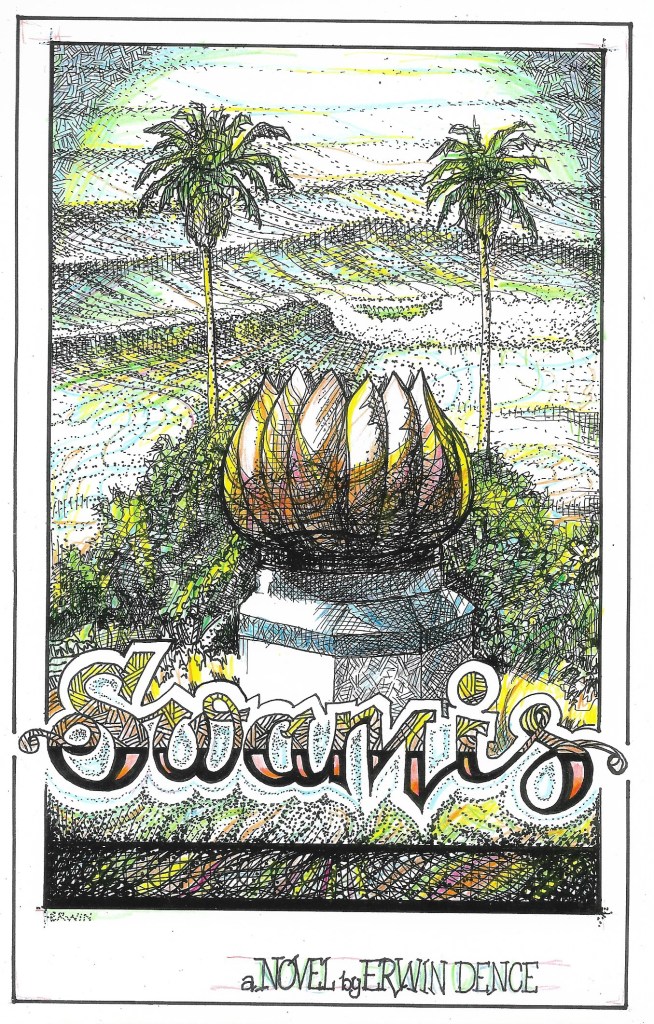




 Real Surfers