WORDPRESS KEEPS STATS on how many folks find my humble (not because I’m particularly humble- though often humbled) blog/site. Lately,affter twelve years of pushing and pumping out eclectic and not-always-surf-centric content, and for no reason I can discern, I’m getting more hits. Significantly more. From all over the world. I’m grateful, and, for no reason I can explain, kind of worried.
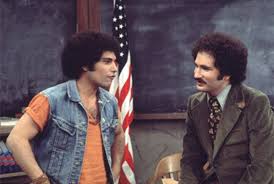
“So, Mr. Kotter; there was a locker check. Am I in trouble?” “Well, I don’t know, Epstein, maybe it was something you wrote in your notebook.” “Oh. No. Nothing to see there.” “Well, Juan, truth will out. Huh?” “Huh?”
ANYWAY; GRATEFUL. THANKS. And, I have finnally gone back to working on my novel, “SWAMIS.” I checked it out, and, surprise, it’s fucking good. Just a few… tweaks and… yeah. Swamis.
I’ve also been working on my competitive poetry. I do have an extensive portfolio, way more songs than upper crust, pretentincous (sp?) poems, Here’s one from way back:
REDEMPTION CENTER
Though Little Joanie’s pregnant, she still dressed all in white, The Bridegroom told me they’d already had their wedding night, Joanie’s Grandma clutched a bag of rice, then threw it, just or spite, And the veil was left out on the Elks Lodge floor, Pardon me, but haven’t we seen this before?
Two Coat Charlie’s asking me for an advance in pay, Charlie ran into Fast Betty, Betty took his stash away, He was naked when he ran out, he was begging her to stay, When he left he must have closed the motel door, Now Betty’s checking at the Family Grocery Store.
I called Ken the Banker sleazy when he disapproved my loan, Kenny sent his cousin Leonard out to disconnect my phone, But I saw Ken at the Tavern, and he was not there alone, He was hanging onto Betty for dear life, I don’t feel so bad now, having done Ken’s Wife.
Reverend Bob was crying for forgiveness at the wake, Bob told us all that it was such a terrible mistake, Still, Bob swears he’d seen the Devil wielding OId Joe Conner’s rake, Now a white cross marks where Debra Conner fell, And I, for one, believe Bob, what the hell.
Seems it’s either sex or money, that is, when the truth gets told, Sometimes drugs are mentioned, though not from whom they’re bought or sold, Me, I told tales in the city, and my business just went cold, Man, the gossip blows like dust right through this town, Hey, you must be new, I ain’t seen you around.
No, the freeway don’t go through here, and the locals congregate, Checking our post office boxes, though the mail is often late, It seems like everyone’s related to at least someone you hate, As it is, we know the players very well, These ain’t half of all the stories I could tell.
Redemption Center, there’s Saints and Sinners, You’ll see us all on Sunday, heads bowed down, Redemption Center, Losers and Winners, But you have to laugh, it’s just like your home town.
NOTES- It’s not, like, viral; just kind of a minor cold. Still, I appreciate it. Thanks, and to all the s, real or otherwise, surf on!
And, of course, I reserve all rights to my original content. Other people’s… thanks for letting me borrow.
This is JAY, a member of the group, tens of people, who follow my… cough… blog. Thanks, Jay. He introduced himself while I was contemplating whether or not I had damaged JEFF VAUGHN’S girlfriend by changing into my wetsuit (sans towel or available dry robe), knowing Jeff was on the beach, between Jeff’s van and a fence, not realizing she was inside. OOPS! Erwin’s ass exposed again. I mean, I got over it, but… sorry.
Jay is originally from Torrence, and because I was trying to coffee up after a session, I sicced him on Jeff, currently and again out of the water with shoulder issues. “Jeff’s from the South Bay.” Jeff, in turn, after discovering Jay grew up in the harbor where Jeff’s father was a harbormaster (I hope I got that right, I was only kind of listening), told dawn patroller TIM NOLAN he should talk to Jay. While Jeff is years younger, Jay is between me and Tim, age-wise, and Tim grew up in Palos Verdes. So… connections.
The short documentary wraps up it second showing this morning. KEITH DARROCK and I may be going. I went to the first showing on Friday night with my daughter, DRU. Her treat. PETE and MOLLY ORBEA, Molly being a lifetime friend of Dru’s, and Pete being a fancy attendee with a season pass lanyard because whatever Port Gamble corporation he works for is a big sponsor, also came. Ripper/artist REGGIE SMART got in for free (of course) courtesy of Pete, and ‘bounced’ after laughing almost uncontrollably during the almost five minutes ‘Erwin’ was on the screen.
Pete and Molly left after the next feature. Dru and I stayed until the end, including the discussion part. Since ANNIE FERGERSON, the producer of the film, wasn’t there, Dru thought I should go up on stage and represent. I didn’t. I should have. I could have said, “Yes, I realize I don’t live up to the sort of self image I would prefer to have; and, yes, the film is… pretty accurate.” I would love to take myself as seriously as the other participants seem to do.
Since I do most of my house painting in Port Townsend, and because I’m kind of competitive, I decided to participate (Reggie is also planning to add something) in the decorating of the fence around Memorial Field. This is the sketch portion of the deal. I had primer and black and white paint with me. More to come, including a couple of encounters with other artists, one of whom, when I offered friendly criticism, gave me an equally friendly, “Fuck YOU!” No, really; friendly and deserved.
Me, being serious. Photo by Jeffry Vaughn. Love the outide indicator going off while I’m navigating a trecherous inside ledge.
Jeff on the beach, Tim in the water.
Old fat guy trimming.
HEY, I have more stuff. If Keith doesn’t decide to go surfing instead, we’ll be checking out the movie. Thanks for checking out realsurfers. Send me shit at erwin@realsurfers.net
NOTE- The surf spot shown is somewhere near Westport.
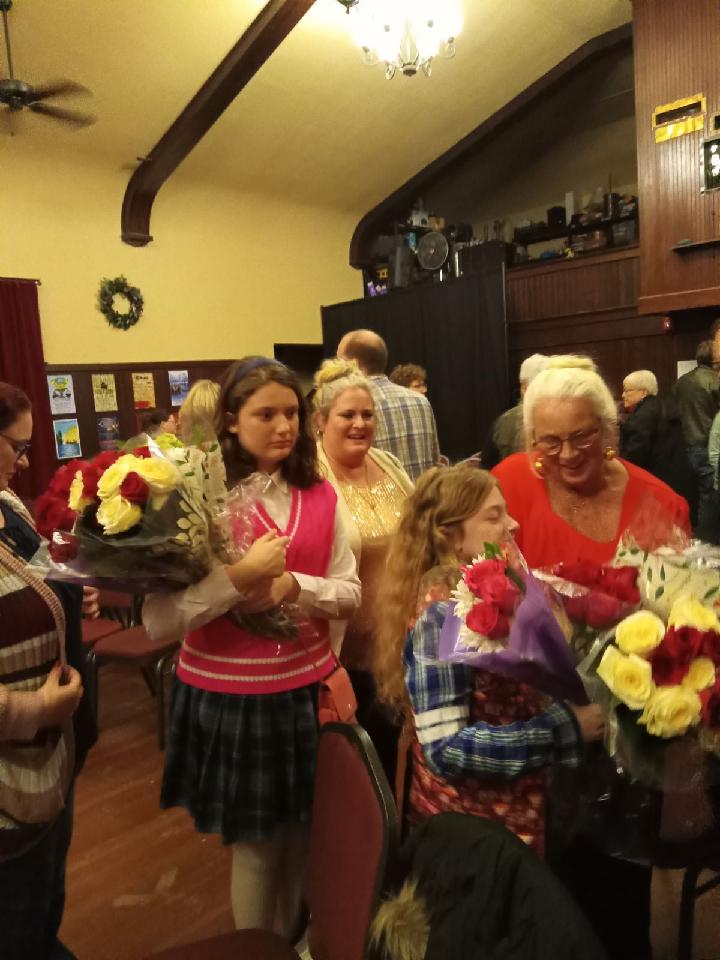
Lorraine and Myrna Orbea after their first performance in “The Best Christmas Pageant Ever,” at the theatre in Port Gamble, pictured here with a couple of aunts and therir grandmother. Lorraine and Myrna are the children of Pete and Mollie, Mollie being, probably, the main reason Drucilla, daughter of Erwin and Trisha Dence, lives in the former mill town on one of the routes between Seattle and the Olympic Peninsula.
Two days after this performance, very well done, incidentally, production-wise, and, particularly, with amazing performances by all the kids, Adam Wipeout James and the Wipeout family cruised down Surf Route 101 to attend an off-Seattle performance of “The Nutcracker” in Shelton.
Yes, it’ community theater season. All of the Dence family members, also including sons James and Sean, participated in various projects in Quilcene (also on Surf Route 101) in the past. Everyone did pretty well. Sean could incredibly well, memorizing and delivering every line perfectly. I had great stage presence and a great deal of trouble remembering my lines.
It was great fun, but I only remember one line from the four or five plays we were in. “This must be the place…” Line. Trish, possibly a bit miffed because she was to play a male’s role (lack of male volunteer actors) asked the director, “So, what’s the deal? I’m supposed to play the Sheriff of Mulecock?
DECEMBER TENTH- I’ve told a few folks that this is the traditional end of paint projects for any given year. Not that I plan or want it to be; it’s just, over the thirty-four years or so that I’ve been out here “on the edge of the ledge” (another seemingly accidental line from Trish), I seem to run out of jobs like… yesterday.
December 10th is also my late sister Melissa’s birthday. She was the first of my three brothers, three sisters, and a half-sister to pass. She was my youngest sibling and, though it’s somehow wrong to say it, closest to me because she was an amazing artist. I continue to think of her whenever I attempt to draw or paint. She once asked me, “Do you want it fast or do you want it perfect?” “Both.” “Yeah, both would be nice.”
I sthought of her briefly yesterday when I was helping Dru hang Christmas lights and decorations. A couple of years ago Melissa and Jerome Lynch’s son, Fergus, was on hand for this task. He seemed to be amazed at how I was free-forming the lighting, this string here, that there. “What?” “Well, it’s… great. My mom would spend… days. Everything had to be precise. And you just…” “Yeah; I do. Just…”
Two works by MELISSA JOANNA MARIA MARLENA DENCE LYNCH. Melissa Jo. Our mother added the rest as a sort of lullaby.
A couple of nights ago I woke up with the lines, “You thought I forgot. I did not.” Middle of the night lines most often disappear. Because, while trying to sell my novel, “Swamis,” I’ve been concentrating a bit on poetry. Not that I’m a poet; more like songwriter, and I can pretty much promise that the words will change, I wrote this with my sister in mind, although it might also speak to loss of friends. Our father died around Christmas.
If I Thought I forgot
If I thought I forgot. I did not.
I could not, cannot, will not forget about you.
I have no desire to.
Of my memories gone, thrown out or abandoned,
Sun-dried into dust,
Plowed under, half buried,
Dissolved in deep waters,
Obscured by mildew or rust,
Illegible scraps
Caught in the brambles,
Too deep in the thicket,
Hidden,
Somewhere, in boxes and closets and drawers,
None are of you.
Some files are too disruptive,
Some memories too painful,
Grief and beauty overwhelming.
Still,
I save them close at hand,
Easily accessed.
Still,
If I trip on some reminder,
Stumble across some image,
The tiniest clue,
Something that, for some reason, reminds me of you,
It all comes back,
Suddenly, painfully, beautifully.
So, no,
If I thought I forgot about you,
I did not.
Thanks for checking out realsurfers. I will have updates on my dead SUPER FUN CAR, a possible replacement surf rig, on waves and rides and gossip and rumor. SUNDAY. And please remember original works on realsurfers.net are protected by copyright, all rights reserved.
Good luck in you search. Focus on the trip as well as the destination. A full memory bank is all we really own.
I haven’t updated my “Previously” recap of my novel, but we’re still at the post funeral memorial or wake for Joey’s father.
I WILL HAVE some photos and comments on my latest session attempt for SUNDAY, but, with elections upon us like a wave we saw on the horizon that is suddenly WAY BIGGER than we were ready for, I, non-political as I am, have some thoughts I’m trying to work through on just why the fuck anyone would vote for the guy, knowing what an absolute example of everything disgusting and vile and hateful any silver-spoon asshole can be. HATEFUL is, possibly, the key. Voters trying to hide behind some phony wall of “Oh, he’s, you know, not all that bad, and anyway…”
IT MIGHT BE that some folks think the guy will punish the “They” and the “Them” these voters hate. They. Them. YEAH, he said he will, and he has thugish backers who have promised to help. ONE PROBLEM might be that, HISTORICALLY, when things go to shit in a country, the whole country gets hit with the shit. AND covered in it.
THERE IS NO AMERICA to save AMERICA. Everyone is an infidel to someone. Everyone is a ‘them’ or a ‘they.’ Good luck, vote your conscience. But first, check to make sure you have one.
THINK IT THROUGH. VOTE BLUE. AND, with this, I apologize for ranting. I would rather talk about surf predictions and post-dictions, and I will. SUNDAY.
CHAPTER SIX- PART THREE- TUESDAY, MARCH 4, 1969
I was sitting on my mother’s little bench on the porch, tying my shoes. Lee Ransom stepped down onto the concrete pad, the part of a sidewalk my father had completed. “Optional today,” I said. “Shoes.”
“I… should have,” Lee Ransom said, “to show proper respect.” We both looked at her practical black shoes. She looked toward the many cars parked on the lawn and in the driveway. She pulled her sunglasses down and over her regular glasses. She pointed at the Falcon. “You just… keep the board on top?” I nodded, stood up, jumped off the part of the porch without stairs. “So, Joey; which one of these cars is your mother’s?”
Freddy, a toy revolver in his hand, ran out the door, past Lee Ransom, jumped off the porch, swung around me, and fired five shots as the younger Wendall brother ducked behind someone’s car, making a mouth sound with each shot, following the volley with “Got ‘cha!”
“I think he ducked,” I said as Freddy crouched and hurried down the lawn and took shelter behind the Wendall family station wagon. Wendall’s kid popped up, took a shot at Freddy. “Dick Tracy model. Snub nose 38.” Lee Ransom and I had made it down to the flatter, gravel and bare earth part of the property. She was still looking at the various cars. “I gave it up. Guns. Switched to…” I went into some version of a swashbuckling stance… “Swords.”
The younger Wendall brother ran in front of Lee Ransom and me. She swiveled, threw back both sides of her coat, drew two fake pistols from fake holsters, and shot at the kid. Two shots from each hand. The younger Wendall kid looked surprised, but instantly grabbed at his chest, both hands, staggered dramatically, and fell to the ground.
“Regular Annie Oakley,” I said.
“Well,” Lee Ransom said, blowing the fake smoke from the end of each fake pistol, “Where I came from, we played cops and robbers with real… cops.” She fake-holstered the fake pistols. “Real guns, too.” She shook her head and laughed.
“I never played the cop, always the… robber.”
We both turned when we heard someone being slammed up against someone’s car. “Surrender, Jap!”
Larry Junior had Freddy off his feet and pinned against the Wendall’s red station wagon. Freddy dropped his pistol and gave me a desperate ‘you have to help me’ look. Larry Junior’s expression, at Freddy and then me, was a defiant ‘do something, Jap’ look. The younger Wendall kid leapt to his feet. Lee Ransom took a step back, then a few more, in the direction of her car, and looked at me.
Theresa Wendall, holding a large Corning Ware serving dish with a glass cover in both hands, came out of the front door. Wendall and Deputy Wilson came around from the back of the house. “Lawrence Oliver Wendall, Junior,” Mrs. Wendall said, quite loudly.
Lawrence Oliver Wendall, Junior looked at his mother, stepping off the porch. He looked at his father. Wendall threw a lit cigarette onto the lawn. He looked at Freddy but did not let go of him. He looked at me, just coming around the front of the car, left hand out, right hand in a fist. He let go of Freddy.
Everyone stopped.
Everyone except Theresa Wendall. Her high heels failed to make the transfer from concrete to lawn. She fell forward, the dish ahead of her. Launched.
None of this happened in slow motion. All of us on the lawn and the porch were frozen when the Corning Ware dish hit the splotchy lawn, the glass lid skimming like a rock on the water before skidding to a stop on the gravel. The contents of the Corning Ware dish belched out she lost control. It hit on one edge and flipped forward just enough to hit the next edge. Then the next. It landed upright, one-fourth full, amazingly close to the lid.
A few moments later, in slow motion, I mentally replayed what I had seen. Ten seconds, maybe. I was standing at the hood of the Wendall’s station wagon, my right hand still in a fist.
Everyone else had moved.
Freddy and Larry Junior and Larry’s younger brother were on their hands and knees, scooping food and bits of grass and gravel into the Corning Ware dish, chipped but unbroken.
Deputy Wilson was crouched down but not helping. He was looking at me. “I said, Jody, I notice you have chickens.” He nodded toward an unpainted plywood chicken coop with just enough of a fenced yard for six hens and a rooster.
“Chickens. Yes… we do.” I looked toward the porch, expecting to see a crowd. No one. I looked at our chicken coop, back at the Deputy. “We don’t let them out, Deputy Wilson. Coyotes.”
Deputy Wilson nodded, stood, straightened the crease in his uniform pants. “Scott,” he said, “Scott Wilson, Jody.” He adjusted the tilt of his hat, turned away, showing his clean hands to the three kids whose hands were lasagna sauce colored.
“Scott,” I said, quietly, “Joey. Joey, not Jody.”
“I worked on cases… not really; I watched… you know. Your father knew his shit.”
“Yeah. He… the chickens… lasagna; they’ll eat it. I mean, the… spilled part. Scott.” Deputy Scott Wilson took the dish from Larry Junior and walked toward the coop.
…
Theresa Wendall was sitting in the driver’s seat of the station wagon, door open. Her husband was standing between her and the door, leaning over rather than crouching. Her left hand was on his right arm. She was crying. Detective Larry Wendall removed his left hand from the door and put it on his wife’s left hand. He kept it there for a moment, then lifted her hand from his arm, shifted slightly, and opened the back driver’s side door.
“I’ll help you turn the car around. Okay?” Mrs. Wendall didn’t answer. “Theresa?”
Theresa Wendall made the slightest of gestures with her left hand before clutching the outside ring of the steering wheel. Her husband waited a moment before coming closer. This time he crouched. “I shouldn’t have talked to her, Larry,” she said. It wasn’t a whisper.
“It’s… all right.”
Deputy Scott Wilson came back with the emptied dish, took the glass lid from the younger Wendall kid, handed it to me. Toward me, as if I should be the one returning it. I looked at the three kids before I took possession of the dish. Both hands.
I approached the station wagon. Theresa Wendall looked past her husband, used the left sleeve of her dress to wipe both of her eyes before regripping the steering wheel. Detective Wendall stood up, stepped back, turned toward me. He looked embarrassed, almost angry. He slammed the back passenger door, reopened it as he passed, turned, and took the dish from me. Lid in one hand, dish in the other. He set them on the roof and turned toward his kids, Freddy, Deputy Wilson, and me. He lit up a cigarette, went around to open the very back door.
“Lasagna and Bermuda grass,” Mrs. Wendall said, breaking into the half-laugh kind of crying. “Probably improved the taste.” She looked at me for some reassurance, some sort of sympathetic response. I barely knew the woman. Cops’ wives. I knew something about what that meant, what it required. “Your mother,” she said. “I am just so… sorry.”
I have no idea what I look like in these situations. Not cold and uncaring is my hope. Helpless is what I was.
A few moments later, I was over by the Karmann Ghia trying to convince Lee Ransom this wasn’t worth taking notes on or photos of. “Personal,” I said. Larry Junior and the younger Wendall kid were in the red station wagon. Mrs. Wendall was attempting to turn the station wagon around with some direction from Deputy Wilson. Freddy was leaning into the back seat window. All three kids were laughing.
Only a small percentage of those coming out of the house had to put their shoes back on. Deputy Scott Wilson was back directing traffic. Wendall lit up a cigarette with the butt of his previous one, waved at his children, and headed back up to the house. Theresa Wendall, eye makeup mostly wiped off, waved at me, and because I was standing next to her, Lee Ransom, on her way out. The younger Wendall kid did a finger shoot at Lee Ransom on the way by.
Lee Ransom jerked to one side, shot back. Just one finger gun, this time. She looked at me. “Regular Annie Oakley, huh?” She looked at the horse that was leaning over the barbed wire and over the front seat of Lee’s car.
“Tallulah,” I said. “My mother’s. Pet. Mostly.”
“Like the actress; Tallulah Bankhead.”
“Yeah. From the old movies.” I stepped over to the small shed adjacent to the covered stall, all constructed of plywood, still unpainted. I pulled out a handful of grain, closed that door, pulled up the plywood cover on Tallulah’s stall. The horse looked at Lee Ransom. Both walked over toward me. “My dad called her Tallulah Bankrupt.”
Lee Ransom held out both hands, cupped together. I transferred the grain. She fed it to Tallulah through the opening, with me still holding the cover up. I stuck the hinged two-by-two onto the sill to prop the cover as Tallulah ate and snorted and Lee Ransom giggled.
“Joey, what do you know about… grass; that whole… thing?
I looked back at the house, looked at the cars passing by. I took out a pack of Marlboros from the inside pocket of what had been my dad’s black coat, lit one up with two paper matches. “I’m the wrong person to ask, Lee Annie Ransom. No one tells me… anything.”
Lee Ransom brushed at Tallulah’s mane, ran her hand down the horse’s face, held the horse’s head up. “Someone told me that… if you…” She leaned over, blew a breath into Tallulah’s nostrils. “They’ll remember you.” She let go of the horse, pointed to my pack of cigarettes.
I pushed the pack toward the reporter, took the cigarette out of my mouth to light Lee Ransom’s. I blew some smoke into the stall, inhaled, blew a semi-clean breath into Tallulah’s nostrils. The horse reared back, hitting my face on the way up and back. I stopped myself from screaming but kicked a hole in the rotting plywood siding. Lee Ransom took a drag on her borrowed cigarette and let out most of the smoke. I pulled and kicked my foot several times before it was freed from the plywood.
Lee Ransom came up very close to my face. She blew a very slight bit of breath toward me. Cigarettes and the vague remains of the whiskey, a bit of the skanky cheese and vinegar from a salad. “I don’t fucking believe you. Joey. You see, you observe.”
“Only what concerns… or relates… People believe I know… things.”
“Aha!” She was close again. “See? That’s something I… I interviewed, sort of, your father… several times. When people think you know more about them than you do… he told me this… They tell you… more.” Lee Ransom took a double hit on the cigarette, held the smoke in for longer than I would have been comfortable doing. She exhaled slowly, down. “I didn’t know shit about you. Now I do.” She inhaled again, the smoke trickling out as she continued. “Now I know more. And…”
“And?”
“Not enough.” Lee Ransom turned away. “Tallulah, lucky Joey didn’t hit a stud, huh.”
“Lucky.” I took a deeper than usual drag, held it longer than usual.
“Joey. When your dad got that… wound… You were there. Correct?”
I crooked my left leg, butted the cigarette out on the sole of my shoe, turned halfway around, twirling the filter between a finger and thumb. “I was five, and… that is the story.”
“The story is your dad saved your life.”
I almost waited too long before responding. “He is… was… it’s his nature to be… heroic.” I turned fully away from Lee Ransom and walked toward the house.
“Good. Quote. Yeah. Thanks. But, Joey, which car did you say is your mother’s?”
“I didn’t say.”
“But Joey… Joey.” I turned around. Lee Ransom had her camera up and aimed at me. “Half stigmata!” She took three photos. Snap, snap, snap.
“SWAMIS.” Copyright Erwin A. Dence, Jr. All rights reserved by the author.
This drawing will, of course, have to be reversed, white-to-black, to go on (future) t-shirts. There are some new hoodies and long-sleeved shirts ready at D&L LOGOS on Monday. I’m pretty excited, as is TRISH. She special ordered one for her, “cost just a little bit more… honey.” “Sure.”
This design, a little larger than the practice ones I had printed. I have to figure out how much they’re costing me, and then… some will be available. I got one xxl, for me, but I may have already sold it.
OKAY, a lot of stuff this week. If your time is limited, SKIP the story. Not classic, all time. Next time… Do read the “Swamis” chapter. Thanks.
IN the ‘every session’s a story’ catagory… I had to go surfing the other day, last chance before my third eye surgery. I was aware, because, despite the rules, news of waves breaking and being ridden spreads, and I missed opportunities because my once-repaired but re-damaged fin box on my beloved but abused HOBIE needed repair, and I was focused on working and trying to buy another board. BUT, the dude with a board within reasonable driving distance wanted too much (as in, it’s listed for $500, out there for 8 weeks, and he won’t take less) for a board that is actually heavier than mine. SO, I purchase resin, hot cure catalyst, and some glass, cut the box loose, fill the hole with glass and resin, slam it back in, half-glass the whole unit in, fin and all. Foolish, knowing how the small waves and big rocks on the STRAIT eat fins.
I did all this on a painting job, the board on the rack of my VOLVO. It dried, I retied it to the rack AND I was ready for the next day’s pre-dawn takeoff. Enroute, I passed an accident on 112, almost to Joyce, a car on its top in the ditch, and it had been there long enough that there were cones and people with signs, and a lit-up display that read, “Accident Ahead.” It turns out three people, none wearing seatbelts, were hurt, two flown out. SO, maybe I should slow down.
AND I DID, but… you know how straps can be noisy? Mine were, increasingly so. It was a while after I arrived at my destinatiion, three people in the water, that I noticed my board was… Ever see people driving down the road with mattresses poorly tied to the roof? YEAH. But I was lucky. And the waves were what we… okay me, what I call FUN. I knew most of the dawn patrollers, met Ian’s wife (forgot her name- sorry; four syllables- don’t want to guess), and KEVIN, a Port Townsend surfer I had heard about. Iron man, stayed out about four hours straight.
SINCE, evidently, surfing is more dangerous after eye surgery than heavy lifting, I can hold on to memories of a decent session until… next time.
BECAUSE IT IS DIFFICULT to go back and pick up the earlier chapters, I am going to provide a recap of “SWAMIS.” Yes, even the ‘catchup’ is a lot of reading.
“Swamis” Recap
CHAPTER ONE -Monday, Nov 13, 1968-
Seventeen-year-old JOEY DeFREINES is talking with his court appointed psychologist, DR. SUSAN PETERS. Joey’s father, San Diego County Sheriff’s Office DETECTIVE LIEUTENANT JOSEPH DE FREINES made the deal following an afterschool incident at Fallbrook Union High School during which Joey put his foot on GRANT MURDOCH’s neck. Dr. Peters asks if, once bullied, Joey has become a bully.
TWO- Saturday, August 14, 1965-
13-year-old Joey tries surfing at PIPES. JULIA COLE is out, already accomplished. She says boy surfers are assholes, surfing is hard, and she stays away from cops and cop’s kids.
THREE- Sunday, September 15, 1968-
Joey tricks SID and other locals in the lineup at GRANDVIEW, gets a set wave. Sid burns Joey and tells him he broke the ‘locals rule,’ that being that locals rule.
Joey, driving his FALCON station wagon, comes upon a VW VAN. Locals DUNCAN, MONICA, AND RINCON RONNY are looking at the smoking engine. They are unresponsive if not hostile to Joey, but Julie (to her friends) asks Joey if he’s a mechanic or an attorney. “Not yet,” he says. There is an attraction between Julie and Joey that seems irritating to, in particular, Duncan.
FOUR- Wednesday, December 23, 1968-
Joey has a front row spot at SWAMIS. He has already surfed and is studying, notebooks on the hood of the Falcon. Arriving out of town surfers want the spot. Joey, hassled by one of them, informs BRIAN that he has a history of striking out violently when threatened, and says he’s on probation. Joey has an episode remembering past encounters, witnessed by the out-of-town surfers and Rincon Ronny, who seems impressed and says those kooks won’t bother Joey in the water. “Someone will,” Joey says, “It’s Swamis.”
FIVE- Thursday, February 27ut-
At breakfast at home in Fallbrook, Joseph DeFreines confronts his son (who he calls JODY) about an acceptance letter from Stanford University Joey hid. Joey’s father is also upset with his wife, RUTH, for some reason, and leaves in a huff, saying he’ll take care of it.
Joey and his younger brother, FREDDY, get a ride home from surf friend, GARY, and Gary’s sister, THE PRINCESS. Ruth is loading the Falcon, says she spoke on the phone with DETECTIVE SERGEANT LARRY WENDALL, and says she will, as always, be back. Freddy blames Joey. Their father calls as their mother pulls away. Joey, looking for the keys to his mother’s VOLVO, speaks briefly, somewhat rudely, with his father. Freddy says he’ll wait for their father. The phone rings. It’s ‘uncle’ Larry. Joey runs toward the Volvo.
SIX- Tuesday, March 4, 1968. PART ONE-
There is a post-funeral wake/memorial/potluck at the DeFreines house. Joey, avoiding the guests, is standing in the big west-facing window. MISTER DEWEY, a teacher at Fallbrook High, says he is surprised that Joey’s ex-Marine, ‘practically a John Bircher,’ father is married to a Japanese woman. “Traditional,” Joey says, “Kill the men, take the women.” Mister Dewey expresses interest in the property Joey’s father never had the time to work on.
A delivery van from ‘Flowers by Hayes’ comes up the driveway, guarded, for the wake, by DEPUTY SCOTT WILSON. The driver of the van is CHULO, a surfer several years older than Joey. Chulo was arrested along with JUMPER HAYES for stealing avocados. Chulo was crippled during the arrest, went to work camp, became a beach evangelist.
Joey has an episode, during which he replays the accident in which, while driving the Volvo, he follows the Falcon and another car around the smoking JESUS SAVES BUS. Joey’s father, in an unmarked car, passes very close to him and pulls off the highway at high speed. JeJ
Chulo was driving the Jesus Saves bus.
Detective Wendall and DETECTIVE SERGEANT DANIEL DICKSON are at a makeshift bar in the living room. ORANGE COUNTY SHERIFF’S OFFICE DETECTIVE LIEUTENANT BRICE LANGDON, dressed in a just out of fashion Nehru jacket and rat-stabber shoes, isn’t popular with the two remaining detectives from the VISTA SUBSTATION, or with the other civilians and deputies from the San Diego Sheriff’s Office.
THERESA WENDALL, putting out food, tries to talk to her husband. He avoids her. Their two boys are running through playing cowboys-and-Indians as Langdon seems to corner Chulo.
CHAPTER SIX- TUESDAY, MARCH 4, 1969
It was still early afternoon. I was in the living room, ignoring everything behind me, facing but not really seeing anything out the west-facing window. A Santa Ana condition had broken down, and a thousand-foot-high wall of fog had pushed its way up the valleys. The house was situated high enough that the cloud would occasionally clear away, the sun brighter than ever. The heat and humidity, raised by the number of people in our house, caused a fog of condensation on the plate glass.
Below me, cars were parked in a mostly random way in the area between the house and the separate and unfinished garage, and the corral. Continued use had created a de facto circular driveway up the slight rise from the worn and pitted gravel driveway, across the struggling lawn, and up to the concrete pad at the foot of the wooden steps and front porch.
A bright yellow 1964 Cadillac Coupe De Ville convertible, black top up, was parked closest to the door. Other vehicles were arranged on the clumpy grass that filled in areas of ignored earth. Later arrivals parked on the lower area. The Falcon was parked close to the county road in keeping with my parking obsession; with getting in, getting out, getting away.
I was vaguely aware of the music coming from the turntable built into the Danish modern console in the living room. Stereo. Big speakers in opposite corners of the room, the volume where my father had set it, too low to compete with the conversations among the increasing crowd, the little groups spread around the room. Some were louder than others. Praise and sympathy, laughs cut short out of respect. Decorum.
Someone had put on a record of piano music; Liberace, or someone. My father’s choice would have been from the cowboy side of country/western; high octave voices capable of yodeling, lonesome trails and tumbling tumbleweeds, the occasional polka. My mother preferred show tunes with duets and ballads by men with deep, resonant voices, voices like her husband’s, Joseph Jeremiah DeFreines.
These would not have been my father’s choice of mourners. “Funerals,” he would say, “Are better than weddings.” He would pause, appropriately, before adding, “You don’t need an invite or a gift.”
Someone behind me repeated that line, mistiming the pause, his voice scratchy and high. I turned around. It was Mister Dewey. A high school social studies teacher, he sold insurance policies out of his rented house on Alvarado. His right hand was out. I didn’t believe shaking hands was expected of me on this day.
“You know my daughter, Penelope,” he said, dropping his hand.
“Penny,” I said. “Yes, since… third grade.” Penny, in a black dress, was beside Mr. Dewey, her awkwardness so much more obvious than that of the other mourners. I did shake her hand. “Penny, thanks for coming.” I did try to smile, politely. Penny tried not to. Braces.
I looked at Mr. Dewey too closely, for too long, trying to determine if he and I were remembering the same incident I was. His expression said he was.
When I refocused, Mister Dewey and the two people he had been talking with previously, a man and Mrs. Dewey, were several feet over from where they had been. I half-smiled at the woman. She half-smiled and turned away. She wasn’t the first to react this way. If I didn’t know how to look at the mourners, many of them did not know how to look at me, troubled son of the deceased detective.
If I was troubled, I wasn’t trying too hard to hide it. I was trying to maintain control. “Don’t spaz out,” I whispered, to myself. It wasn’t a time to retreat into memory, not at the memorial for my father. The wake.
Too late.
“Bleeding heart liberal, that Mister Dewey,” my father was telling my mother, ten-thirty on a school night, me still studying at the dinette table. “He figures we should teach sex education. I told him that we don’t teach swimming in school, and that, for most people, sex… comes… naturally. That didn’t get much of a laugh at the school board meeting.”
“Teenage pregnancies, Joe.”
“Yes, Ruth.” My father touched his wife on the cheek. “Those… happen.”
“Freddy and I both took swimming lessons at Potter Junior High, Dad. Not part of the curriculum, but…”
“Save it for college debate class, Jody. We grownups… aren’t talking about swimming.”
Taking a deep breath, my hope was that the mourners might think it was grief rather than some affliction. Out the big window, a San Diego Sheriff’s Office patrol car was parked near where our driveway hit the county road. The uniformed Deputy, still called “New Guy,” assigned to stand there, motioned a car in. He looked around, went to the downhill side of his patrol car. He opened both side doors and, it had to be, took a leak between them. Practical.
The next vehicle, thirty seconds later, was a delivery van painted a brighter yellow than the Hayes’ Cadillac. Deputy New Guy waved it through. I noticed two fat, early sixties popout surfboards on the roof, nine-foot-six or longer, skegs in the outdated ‘d’ style. One was an ugly green, fading, the other, once a bright red, was almost pink. Decorations, obviously, they appeared to be permanently attached to a bolted-on rack. The van was halfway to the house before I got a chance to read the side. “Flowers by Hayes brighten your days.” Leucadia phone number.
Hayes, as in Gustavo and Consuela Hayes. As in Jumper Hayes.
A man got out of the van’s driver’s seat, almost directly below me. Chulo. I knew him from the beach. Surfer. Jumper’s partner in ‘the great avocado robbery’ that sent them both away, Chulo returning, reborn, evangelizing on the beach, with a permanent limp.
Chulo’s long black hair was pulled back and tied; his beard tied with a piece of leather. He was wearing black jeans, sandals, and a day-glow, almost chartreuse t-shirt with “Flowers by Hayes” in white. Chulo looked up at the window, just for a moment, before reaching back into the front seat, pulling out an artist’s style smock in a softer yellow. He pulled it over his head, looked up for another moment before limping toward the back of the van.
The immediate image I pulled from my mental file was of Chulo on the beach, dressed in his Jesus Saves attire: The dirty robe, rope belt, oversized wooden cross around his neck. Same sandals. No socks.
Looking into the glare, I closed my eyes. Though I was in the window with forty-six people behind me, I was gone. Elsewhere.
…
I was tapping on the steering wheel of my mother’s gray Volvo, two cars behind my Falcon, four cars behind a converted school bus with “Follow me” painted in rough letters on the diesel smoke stained back. The Jesus Saves bus was heading into a setting sun, white smoke coming out of the tailpipes. Our caravan was just east of the Bonsall Bridge, the bus to the right of the lane, moving slowly.
My mother, in the Falcon, followed another car around the bus. Another car followed her, all of them disappearing into the glare. I gunned it.
I was in the glare. There was a red light, pulsating, coming straight at me. There was a sound, a siren, blaring. I was floating. My father’s face was to my left, looking at me. Jesus was to my right, pointing forward.
This wasn’t real. I had to pull out of this. I couldn’t.
The Jesus Saves bus stopped on the side of the road, front tires in the ditch. The Volvo was stopped at a crazy angle in front of the bus. I was frantic, confused. I heard honking. Chulo, ion the Jesus Saves bus. He gave me a signal to go. Go. I backed the Volvo up, spun a turn toward the highway. I looked for my father’s car. I didn’t see it. The traffic was stopped. I was in trouble. My mother, in the Falcon, was still ahead of me. She didn’t know. I pulled into the westbound lane, into the glare, and gunned it.
When I opened my eyes, a loose section of the fog was like a gauze over the sun. I knew where I was. I knew Chulo, the Jesus Saves bus’s driver, delivering flowers for my father’s memorial, knew the truth.
…
Various accounts of the accident had appeared in both San Diego papers and Oceanside’s Blade Tribune. The Fallbrook Enterprise wouldn’t have its version until the next day, Wednesday, as would the North County Free Press. All the papers had or would have the basic truth of what happened. What was unknown was who was driving the car that Detective Lieutenant Joseph Jeremiah DeFreines avoided. “A gray sedan, possibly European” seemed to be the description the papers used.
”The San Diego Sheriff’s Office and the California Highway Patrol share jurisdiction over this part of the highway. Detective Lieutenant Brice Langdon of the Orange County Sheriff’s Office is acting as a liaison with the Highway Patrol in investigating the fatal incident.”
Despite the distractions, what I was thinking was that Chulo knew the truth.
Chulo would be depositing the four new bouquets in the foyer, flowers already filling one wall. I looked in that direction, panning across the mourners. The groups in the living room were almost all men. Most were drinking rather than eating. Most of the groups of women were gathered in the kitchen.
A woman wearing a white apron over a black dress brought out a side dish of, my guess, some sort of yam/sweet potato thing. Because I was looking at her, she looked at the dish and looked at me, her combination of expression and gesture inviting me to “try some.” There was, I believed, an “It’s delicious” in there. Orange and dark green things, drowning in a white sauce.
“Looks delicious, Mrs. Wendall.”
Two kids, around ten and twelve, both out of breath, suddenly appeared at the big table, both grabbing cookies, the elder sibling tossing a powdered sugar-covered brownie, whole, into his mouth, the younger brother giving a cross-eyed assessment of his mother’s casserole.
“Larry Junior,” Mrs. Wendall half-whispered as she shooed her sons out the door. She looked at her husband, leaning against a sideboard serving as a bar. He followed his boys out the door with the drink in his hand, half-smiled at his wife, as if children running through a wake is normal; and was no reason to break from chatting with the other detective at the Vista substation, Daniel Dickson, and one of the ‘College Joe’ detectives from Downtown. War stories, shop talk. Enjoyable. Ties were loosened and coats unbuttoned, the straps for shoulder holsters occasionally visible.
“Just like on TV” my father would have said. “Ridiculous.”
Freddy, out of breath, came out of the kitchen, weaving through the wives and daughters who were busily bussing and washing and making plates and silverware available for new guests. I handed him two cookies before he grabbed them. He grabbed two more.
“They went thataway, Freddy,” Detective Dickson said, pointing to the foyer.
Freddy pushed the screen door open, sidestepped Chulo, and leapt, shoeless, from the porch to what passed for our lawn, Bermuda grass taking a better hold in our decomposed granite than the Kentucky bluegrass and the failing dichondra.
Chulo, holding a metal five-gallon bucket in each hand, walked through the open door and into the foyer. He was greeted by a thin man in a black suit coat worn over a black shirt with a Nehru collar. The man had light brown hair, slicked back, and no facial hair. He was wearing shoes my father would refer to as, “Italian rat-stabbers.” Showy. Pretentious. Expensive fashion investments that needed to be worn to get one’s money’s worth.
Chulo had looked at me, looked at the man, and lowered his head. The man looked at me. I didn’t lower my gaze. I tried to give him the same expression he’d given me. Not acknowledgement. Questioning, perhaps.
Langdon. He must have been at the funeral, but I hadn’t felt obligated to look any of the attendees in the eye. “Langdon,” one of the non-cop people from the Downtown Sheriff’s Office, records clerks and such, whispered. “Brice Langdon. DeFreines called anyone from Orange County ‘Disneycops.’” Chuckles. “They put people in ‘Disney jail’,” another non-deputy said.
“Joint investigation guy,” one of the background voices said. “Joint,” another one added. Three people chuckled. Glasses tinkled. Someone scraped someone else’s serving spatula over another someone else’s special event side dish. Probably not the yams.
Chulo took the arrangements out of the buckets and rearranged the vases against the wall and those narrowing the opening to the living room. He plucked some dead leaves and flowers, tossed them in one of the buckets, backed out onto the porch, closed the door. I became aware that I had looked in that direction for too long. Self-consciousness or not, people were, indeed, looking at me. Most looked away when I made eye contact.
“If you have to look at people, look them straight in the eye,” my father told me, “Nothing scares people more than that.”
Langdon looked away first, turning toward the two remaining detectives at the Vista substation, Wendall and Dickson, Larry and Dan. They both looked at Langdon, critically assessing the Orange County detective’s fashion choices. I didn’t see Langdon’s reaction.
My father’s partners had changed out of the dress uniforms they had worn at the funeral and into suits reserved for public speaking events and promotions, dark-but-not-black. Both wore black ties, thinner or wider, a year or two behind whatever the trend was. Both had cop haircuts, sideburns a little longer over time. Both had cop mustaches, cropped at the corners of their mouths, and bellies reflecting their age and their relative status. Both had changed out of the dress uniforms they’d worn at the funeral
Wendall was, in some slight apology for his height, hunched over a bit, still standing next to the sideboard that usually held my mother’s collection of display items; photos and not-to-be-eaten-off-of dishes. Dickson was acting as official bartender. The hard stuff, some wine, borrowed glasses. The beer was in the back yard.
Langdon had brought his own bottle. Fancy label, obviously expensive wine, cork removed, a third of it gone. Langdon’s thin fingers around the bottle’s neck, he offered it to Dickson. Smiling, politely, Dickson took a slug and reoffered it to Langdon. Langdon declined. Dickson pushed the bottle into a forest of hard liquor and Ernest and Julio’s finest. Langdon shrugged and looked around the room. Dickson displayed the smirk he’d saved, caught by Wendall and me.
Langdon saw my expression and turned back toward Dickson. The smirk had disappeared. Langdon walked toward me. He smiled; so, I smiled.
“I’ve heard about you,” he said. The reaction I had prepared and practiced disappeared. I was pretty much just frozen. “I see you know…” He nodded toward the foyer. “…Julio Lopez.” Langdon didn’t wait for a response. “From the beach?” No response. “Surfers.” No response. “You and I will have to talk… soon.”
I had to respond. “How old are you, Detective Lieutenant Langdon?”
“I’m… twice your age.” I nodded. He nodded. “College. College… Joe.” He smiled.
I may have smiled as I looked around Langdon at Dickson and Wendall; both, like my father, twelve or more years older than Langdon, this assuming he knew I was seventeen. I did, of course consider why he would know this. Wendall gave me a questioning smile. Dickson was mid-drink.
“I don’t know if you know this… Joseph: Your father was involved an investigation… cross-county thing, involving… me.” Langdon was, again, looking straight into my eyes. I blinked and nodded, slightly. “Yes. So… if there is any irony in my being… here, it is that Joseph DeFreines was, ultimately…” Langdon was nodding. I was nodding. Stupidly. “…a fair man.”
Langdon did a sort of European head bow, snap down, snap back, and tapped me on the shoulder. I had half expected to hear the heels on his rat-stabber shoes click.
COPYRIGHT STUFF- All rights to original content reserved by author/artist, Erwin A. Dence, Jr.
THANKS, AS ALWAYS, for checking out realsurfers.net. Get some waves when you get the chance! And remember, sharing is… caring; that set bomb you let some kook take and blow the takeoff on… well, that was nice. OH, and, just remembered, the controversy on whether it’s justified to drop in on someone who took your wave continues. I saw it, I tried it. Twice. AND I felt… kind of justified. AND, when two guys dropped in on an alleged backpaddler, I was left outside with undisputed priority. GREAT!





 Real Surfers