Tomorrow is the fifty-second anniversary of Trish and I getting married with, really, no idea how it would all go. She was nineteen years and ten days old. I was twenty years and two-and-a-half weeks old. Yeah, long time. Not looking for Kudos on my part in this. No one has ever asked me how I could stay so long with Trish; she’s been asked, well, a lot of times.
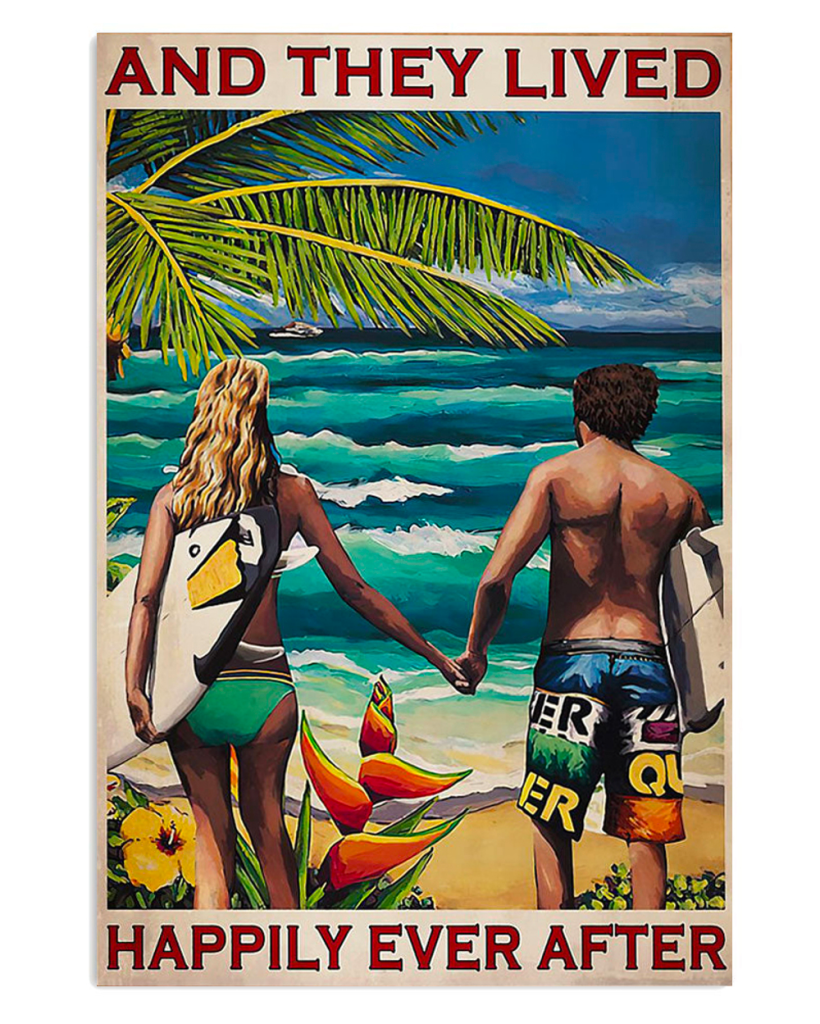
SO, a week or so ago, nine days, probably, marked the fifty-fifth anniversary of Trisha’s sixteenth birthday. There was a party. I was there. It didn’t go well, for me; another suitor was way slicker than I was, but I did, somewhere in the confusion of being barely seventeen, I did ask her if she wanted to go surfing with me the next morning. And she agreed.
Image borrowed from teeuni. Pretty much covers it.
AND, as part of my celebration, I went surfing on the day after Trisha’s most recent birthday, and, lucky me, again the next day. NO, Trish wasn’t on the beach watching her man, getting hit on by other dudes; I mean, really, what kind of woman is willing to do that… over time.
WE have THANKSGIVING coming up, a world in chaos, and I’m trying to decide what to do on a first day without work that HAS to be done, trying to decide where there might be waves, whether to stay home and deal with maintenance too-long deferred. Tomorrow, I’ve cleared the schedule and promised Trish she and I would be hanging out. Let me check the forecast. Oh.
SINCE it kind of relates, here’s a portion of an original poem…. or song, depending…
I’d like to have a day where I can simply vegetate, find my thoughts and store a few away; Nowhere I must go to, so there’s no way to be late, Wish I had a day where I could hide, but I don’t have that day, so let it slide.
I wish I had an ego not as fragile as a glass, shatters when somebody looks askance, I could strut and swagger, I’d exude self-confidence, On my lips, I’d still seem dignified, My ego’s not that strong, so let it slide.
I’l like to have one night that I could spend alone with you, maybe underneath a naked moon; I’d whisper “I love you” probably half a million times, hoping that our wishes coincide; And when we get that night, we’ll let it slide.
Let it slide, slide, slide, there’s no way that I can linger, work to do that must be done today; Let it slide, slide, slide, please unwrap me from your finger, you say you’ll be happy if I just stay, Perhaps for just a while, then… satisfied? Maybe, just this once we’ll let it slide, slide, slide, maybe just this once we’ll let it slide.
THANKS, AS ALWAYS, for checking our realsurfers.net BEST OF LUCK for all your sliding wishes.
“Let it Slide” is from a copyrighted collection of poems/songs, “Love Songs for Cynics,” all rights reserved by the author, Erwin A. Dence, Jr.
AND, and, and, please, in counting our blessings, may we not ignore the truly epic tragedies throughout the world.
There’s a lot I am trying to cover today. May as well start with a strained allusion to “The Wizard of Oz.”
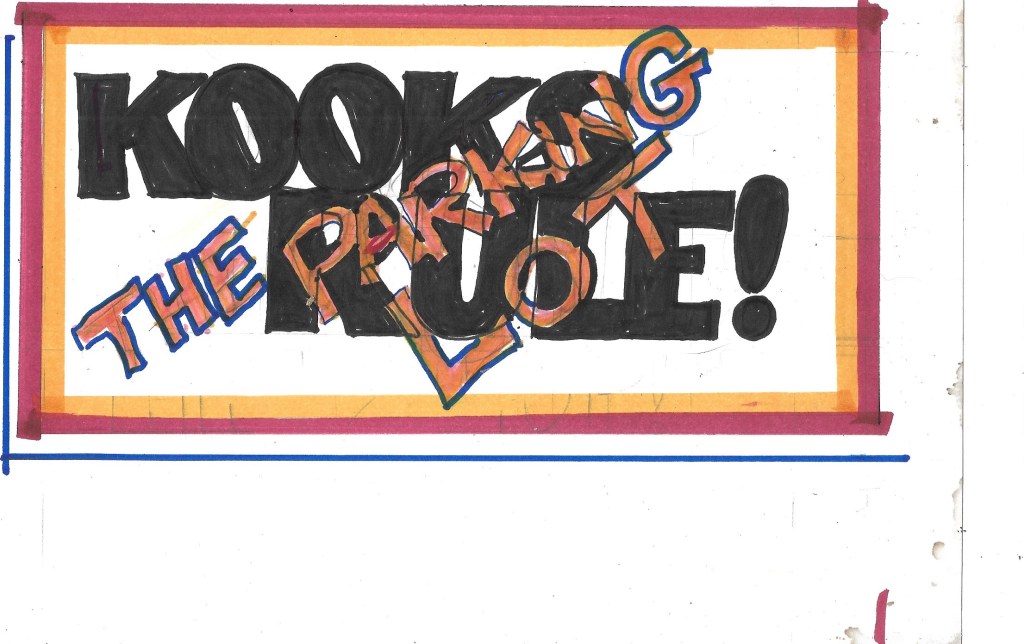
STORY: A friend noted that “some dude in a jacked-up Toyota with lots of stickers” was checking it out at a ‘surf spot’ on the Strait. A prominently displayed decal read, “Kooks Only Not Locals.” My friend, as close to being a local at that spot, responded with, “People who complain about locals obviously have never been local anywhere.” I, someone who has been a local and an inland cowboy at various times, am responding with… well, see above.
I KIND OF wanted it to be, “Kooks Rule the lineup… in the parking lot; not as precise, perhaps, but it goes along with, “Every surfer is a badass… on the beach.”
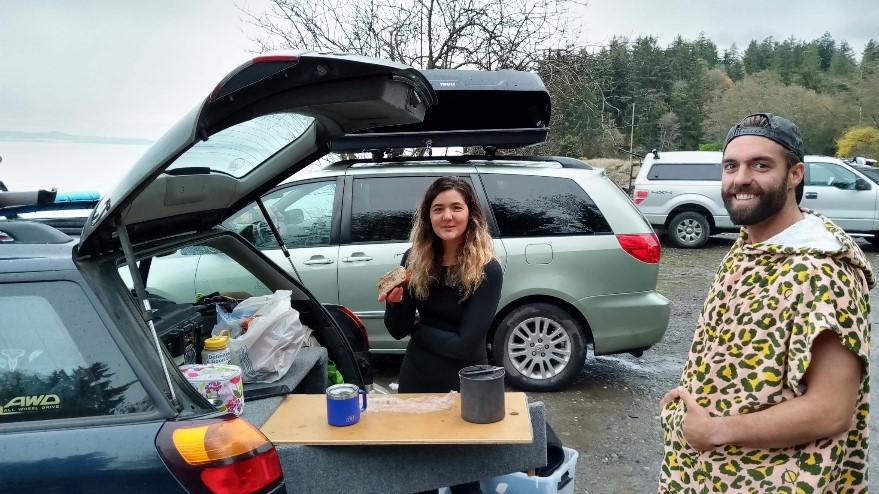
STORY: SUPER BAD ASS SURF RIG in the lineup. I have often pondered the proportion between surf rigs, fancy boards included, and surfing ability, and how much the HIPNESS FACTOR comes into the formula.
“I really wanted to make my car into a van,” this woman said. I really wanted to get a shot of the guy coming out of a sani-can, and I did, his outfit being… well, fun for sure; but this shot might say more. I do bring a thermos and some sort of food when I head out (salad and cookies on this occasion), but I do take note of those who either, one, prepare a full breakfast before surfing, and two, those who see others in the water and automatically suit up. This couple didn’t seem to object to my saying I’m trying to take more photos, particularly of HIPSTERS. Usually those I identify as hipsters deny their hipster-ness.
AGAIN, THE HIPSTER/RIPPER FORMULA.
SPEAKING of which:
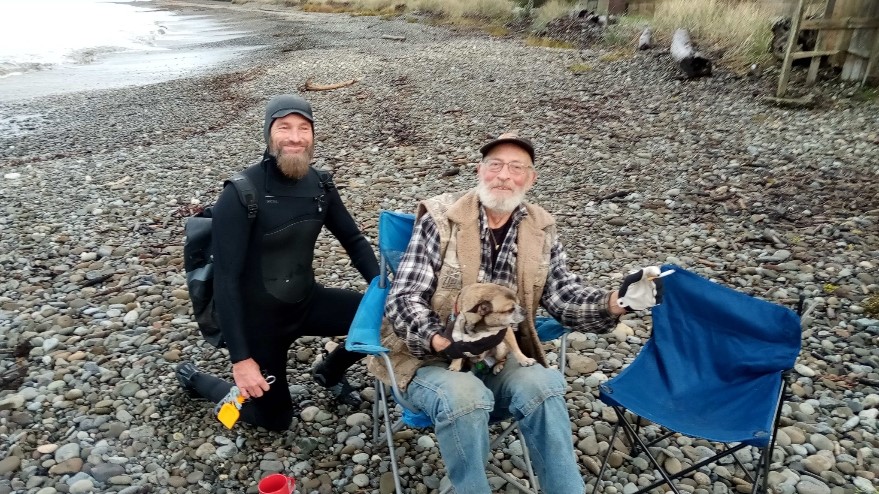
The guy on the left, KURT TICE (or Kirk, not sure) is, by any definition, not a local on the Olympic Peninsula. He is a definite ripper. THE OTHER GUY is a definite local at this particular beach. He doesn’t surf, and I have been identifying him for a few years as the TRUMP LOVING, DOPE SMOKING DUDE, mostly because he used to wear a red Trump hat. It’s legal, as is… you know, smoking. Maybe the Trump hat just kind of, you know, wore out. He’s eighty-years old, says he loves being a local. “What do you do when there’s no surf and no surfers?” “Oh, there’s always someone around.” “Okay.”
STORY: KEITH ran into KIRK/KURT and one or both of his sons, also rippers, at a surf spot. Several times, perhaps. Turns out they are from Newport, Oregon, and know some people Keith, originally from the Oregon coast, also knows. THEN they ran into ADAM “WIPEOUT” JAMES. And then, on one of the times Adam and I headed out looking for surf (and BEARS or deer or cougars or mushrooms for Adam), the ripper family ran into us at the pullout for some difficult to access spot.
AND THEN, I’m out trying to make the best of the occasional waves on an outgoing tide when the ripper dad comes running down the beach with a tiny board, waves, paddles out, and… whoa,, a set shows up. “Thank you,” I said. Then his two sons show up. They ripped. One of them asks if I’m a friend of Adam. “Adam James?” “Yeah, from the Hama Hama. I think we saw you guys a couple of months ago.” It was more like ten months, but, “Yeah.” The father and the sons were so polite on a day when, at its most crowded, few surfers were making eye contact. I get it. GHETTO MENTALITY. I already forgot the names of the two kids. Sorry. NEWPORT RIPPERS will have to do for now.
HERE’S MY TAKEAWAY: Attitudes can change the vibe in the water. It’s like watching a surf music with one kind of music, and then changing the tune. There is something very uplifting about surfers who can be polite, friendly, and enthusiastic. Yeah, yeah, yea!
Make no mistake, this trio could dominate a break. So, the STOKE/RIP FORMULA. Hmmm. I’m not a mathamatician, can’t even spell it, but I do believe there’s something there. See you in the parking lot.
Another chapter or sub-chapter from “SWAMIS” will be available on Wednesday. Thanks for reading.
There were lulls in the water on this afternoon, time when watching the horizon took priority over trying to out-position the other surfers. Images. Conversations to rerun. I surfed an hour and fourteen minutes. I took my time showering and going up the stairs. I stopped at the top and watched Portia and Judith at the Jesus Saves bus. Numerous individuals came up to them. No, they came up to Portia. Judith stood in the doorway to the bus, arms crossed, standing guard. When she looked at me, seventy yards from where she stood, I looked away.
San Dieguito High School would be letting out around three. I pulled up to 101 at two-fifty-five. I did look across and up, beyond the railroad tracks, past several rows of houses. I saw two dormers on the roof of the first Mrs. Cole’s house. One of them must have been Julia’s room. Julie’s. I imagined her looking out the window, seeing lines approaching, the light from the sun or the moon bouncing off moving liquid fields. The car behind me honked. I looked left, right, left again, and pulled out.
The Simon’s Landscaping truck, heading south, passed me just beyond the Sunset Surfboards shop. Both Baadal Singh and I looked to our left.
OLYMPUS DIGITAL CAMERA
CHAPTER 14- MONDAY, MARCH 31, 1969- PART THREE
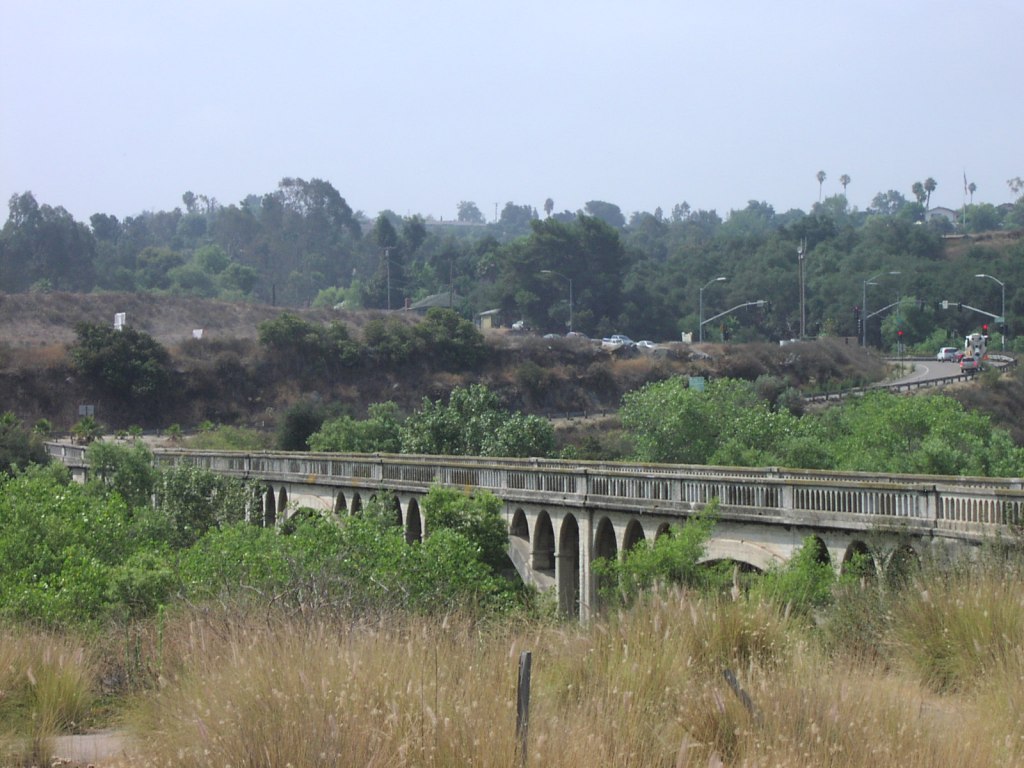
There were three vehicles ahead of me at the stop sign where highway 76 connected with the road to and from Vista, just west of the Bonsall Bridge. Traffic coming down the steep hill had priority. There were two sharp turns. Many drivers, over the years, had mistimed or misjudged the slalom-like run down and around the cliff face and onto the narrow bridge.
There was a pullout to my left. Dirt. Potholed. A truck overloaded with stacks of firewood was parked, idling, driver’s door open. A roughly lettered sign on raw plywood serving as a sort of fence on the sides of the truck’s bed read, “Firewood. Oak. Dry. Split. RA-8-1074. Reasonable.” The woodcutter was out, checking the tires and suspension. He pulled on each of the three ropes that went over the logs. He looked over at me.
I was visualizing my mother in this lot, standing outside the Falcon as I approached from the bridge, coming even with, then pulling beyond the Falcon. I was just jumping out when Wendall’s Buick, red dashboard light spinning, siren wailing, came screaming down the hill. His brakes screeched when he was forced to slow down to make the curve and recurve.
My mother studied my face for a moment or two before she started screaming. Questions. I couldn’t focus. What I heard was, “What did you do?” She was throwing bags out of the Falcon and onto the ground. “Open the trunk!” She was shouting orders I couldn’t process. “Take the back road to Bonsall. Go to town. Fallbrook. Buy some pizza at the, the restaurant… over by Ammunition Road. Make sure they… see you. Keep the receipt. You, you, you… were never here.” I was frozen. “Oh my God! Is he all right?” Still frozen. “Open the trunk. Open the god-damned trunk!” I did. My mom started tossing the bags into the Volvo. “Of course, he’s all right. He’s always all right. Always fine.”
I wanted to visualize, remember, perhaps, if I had observed my mother putting the papers and the bag with the gun under the seat. I hadn’t. It had to have been when she heard the sirens on Wendall’s car, or when she saw the lights. Or both. That had to have been why she pulled over. She didn’t lose control until she saw me. Me. Out of control.
The woodcutter’s truck pulled out. As it hit the last pothole, two split pieces of oak fell off the pile. I looked both ways and continued; hard left, soft right, soft left, and onto the bridge. “Always,” I said, out loud, as I eased into the right-hand corner on the east side of the bridge. “Always fine.”
Why she hadn’t taken the Volvo back to the accident scene was only a vague question I hadn’t thought through. Chaos of the moment. The Falcon was more recognizable. She wanted to protect me. There were other explanations, possibly; she never explained, and I never asked.
…
The yellow Karmann Ghia, top down, was most of the way off the highway on the right-hand side, just beyond the almost completed strip mall. Lee Anne Ransom was standing in front of her car, a notepad and a camera on the hood. The older of two workers, carpenters, was walking away and toward the two vehicles parked in the middle of the lot, a fairly new pickup truck and a fairly thrashed, oversized American car. He looked directly at me as I passed him.
Of course. He recognized the Falcon. I didn’t look at Lee Anne as I passed her. “Fuck!” I pulled into the parking lot at the tavern just under a mile down the road, still contemplating whether to go on or go back.
…
The older carpenter and I exchanged nods when I turned into the strip mall lot. I pulled a lazy u turn, clockwise, on the now-paved surface, parking spaces painted on it. ‘Opening Soon’ signs were painted in bright tempera paint on the windows of the partially painted store fronts. I turned back onto the highway and ten yards past the Karmann Ghia before I pulled in. I didn’t back up to get closer. Both carpenters were walking toward us as I walked up to Lee Anne. Her camera was aimed at me. I put my head down, looked at the scrape marks on the asphalt and the crushed foliage from when my father’s car had been winched twenty feet across the river bottom and twenty feet up to the road.
Perpendicular to the highway, gravel and fill that formed the base for the mall had been covered with topsoil and planted with iceplant and what was supposed to appear to be randomly spaced bushes. A shiny galvanized metal pipe, probably a foot in diameter, came out of the bank, about ten feet below the parking level, and ran above ground and down, at the same angle. The pipe made a bend probably five feet off the flatter bottom of the valley. It extended at an angle five degrees or so off level, and into a square concrete box, three by three, three feet high. A stump of a long dead tree was about four feet beyond the box.
I had read about all of this. I had seen photos. It became real.
When I got close enough that Lee Anne Ransom didn’t have to raise her voice, she said, “Thought you’d be coming the other way, Joey.”
“Thought you’d be, um, working on your yellow journalism for this week’s… edition, Lee Anne. Chulo’s the story. Isn’t it? Not who killed him. Just… him.”
“I’ve got stuff on his funeral, his family. I wanted to get with you on… the guy your father didn’t hit… here, he called us, the paper. He said he didn’t trust the cops. The sun, he said, was…” Lee Anne faced west, put her hand up and in a salute position. “Like now. He just followed other vehicles… around the bus. Even when the… when your father pulled to the right, he thought he was in the clear. So?”
“So?” I can’t be sure I even said that.
“So, trying to avoid the Vista guys, Dan and Larry, and Langdon, my editor took the… let’s call him the Driver… he took the Driver downtown, found out they really didn’t care all that much about who was responsible, and, and the downtown boys turned my editor over to… he was there… fucking Langdon, anyway. He was concerned about Judith Cole, wanting to know what we, meaning me, knew about her. She and her daughter were there, after Chulo was killed. The daughter, Julia, was taking pictures, and Judith was trying to calm… Portia. Langdon was pissed that Wendall didn’t try to get her film, wondered if someone tried to sell it to us.” Lee Anne laughed. “Sell?”
“When did Langdon get to the scene? To Swamis?”
“Soon enough to cart off the mysterious guy, supposedly East Indian, guy who either tried to save Chulo… or kill him. Langdon almost denied the guy existed; said he couldn’t comment on an ongoing… same shit there… but he did ask about you. So?”
I looked toward the sun, closed my eyes, and tried to recall what I had seen. My father looked at me as we passed each other. “So, Lee Anne Ransom, you must have heard I’m kind of slow, so… I have to process.”
“Then, Joey, process.” Lee Anne raised her sunglasses, widened her eyes, bigger with the lenses on her regular glasses. “And… it’s more like… orange journalism. Sensationalist Commie shit. So, orange.” I nodded. “Maybe you didn’t know this. They kept Chulo and Portia here until Langdon got in from Orange County, closed the road for seven hours.”
“Standard. Someone… died.”
“The Highway Patrol is the… usual choice. Right? Standard procedure.”
“My father… knew those guys, their… detectives, too. Also.”
Lee Anne moved in closer to me. “Yeah. That’s the official line from Downtown. But… Langdon was on the scene, here, in fifty minutes. Mario Andretti couldn’t do that from Orange County. And he was at Swamis… my boss has a radio that gets… you know; ten minutes after the initial call.”
“Who made that? The call?”
“Someone, from the phone booth at Swamis. Okay, Fred Thompson. He called the fire department. Point is, Joey, and I’m trying to process all this shit myself, Langdon was already around. It’s all, I’m thinking, about drugs.”
I blew out a breath, took out a cigarette and lit it with my father’s lighter. “With you, Lee Anne Ransom; it’s always drugs and/or corruption.”
“Holy trinity of investigative… anything, Joey; sex and/or drugs, money and/or power, and… corruption.”
“And/or?”
Lee Anne took a breath. “And/or guilt. No, guilt fits in with…. Shit, just tell me what you know about Judith Cole, Julia Cole, the mysterious Indian dude, Portia Langworthy, Chulo Lopez, and yeah, new edition to the list of ‘who the fuck are they?’, Chulo’s old partner in crime, Junipero Hayes.”
“Jumper… Hayes. I… thank you for sharing, and waiting for me, Lee Anne, but, even if I knew… something, I can’t… comment on…”
“Ongoing investigations?” She shook her head. “I’d say ‘Fuck you, Joey,’ ‘cept you’re, what…. Seventeen? And… you might just take it literally.”
“I did say ‘thank you,’ didn’t I, Ma’am?”
“Ma’am? Damn right. Ma’am. And… don’t go givin’ me that ‘I’m slow’ shit Joey.”
THANKS for reading and for respecting the copyright… stuff. All rights reserved by the author, Erwin A. Dence, Jr.
OH, and good luck in finding and riding some waves!
Permission to use this photo, here, was given to me by a client, Lana. It is pretty much the (or a) view one might get traveling to or from the Olympic Peninsula to or from Whidbey Island. I liked the shimmer on the ruffled water, the too-deep-to-be-real sky color, and the gauzy clouds aimed toward distant, partially shrouded mountains. AH, THE JOURNEY.
If you are someone who occasionally makes this journey, you can probably identify where this is.
What I get to see is, hopefully, a dark road, one traffic light, more road, more traffic lights, school zones, curvy roads, maybe that one forty mile per hour town, curves,, log trucks, the possibility of waves.
OR, big ass and blinding sun just over the horizon, lighting up every highway sign in front of me, and I’m trying to outrun the glaring sun on a stretch that is basically in line with it.
OR, the sun hitting clouds and that ragged ridge lines of the Easternmost Olympics, and I’m trying to race it to the corner. At one point, a twisting S curve, dropping, easing into the uphill recurve, there is a perfectly framed image, trees on both sides, and a mountain impossibly high (this is one of my favorite descriptions, used because it is true).
OR, MAYBE, thinking of going to Westport or down toward Chinook, where my father lived, the journey could be broken into its parts: Hood Canal, McClary cutoff, watching the power plant stacks go from distant to even to behind, and then the roads, the speed trap town, the lack of reception, and/or, bays and bays and curves, and, as always, THE ANTICIPATION.
BEAUTIFUL.
STILL, any beauty along the way is tangential; nice, but. I go surfing to surf, and though I will surf anything I can catch, getting skunked is disappointing. OH, I should throw in traveling with someone else. Not something I do often; my tendency to get caught in the Sequim vortex too well known, my tendency to avoid long, steep hikes better known, but conversation does shorten the trip, even if you’re the one of three in the back seat. There is a social aspect to surfing, and conversations on the beach are often the highlight of a trip. Again, not as great as great waves.
CHIMACUM TIM let me know, recently, that he went to every spot he knew, paddled out at one as far as he was willing to go on this day, and caught it good “For about forty minutes. How’d you do?” I was lucky (luckier, perhaps), got forty minutes of mediocre waves (realistic analysis) five miles from where I was working. I was quite happy to get them.
OH, and, the last time I was skunked, the conditions were perfect: Tide, wind, lack of clouds, swell angle; just no waves. OTHERWISE…
Enough rationalizing. What’s important, and I’m not, hopefully, sermonizing, is, coming, going, in the water, to remember that each of us has had moments on waves that we long to repeat. The few times I forgot this and allowed myself to be over-frustrated, are regrettable. Not that many.
THANKFULLY.
LOOK FOR the next installment of “Swamis” on Wednesday. I have to admit to still making changes in chapters I have already posted. It’s all to make the manuscript tighter, more readable, hopefully, saleable. If I get to an acceptable end, I will print up some advanced copies. A pre-first edition, limited number, signed, of “Swamis” would make a great gift for the holiday season. SHIT, I better get on it1
Still morning. Still overcast. The Swamis parking lot was now filled, mostly with non-surfers. All the doors to the Falcon were open. Textbooks and notebooks, two surfboards, several towels, and several pairs of trunks were spread on the hood and roof. A partially filled burlap grain sack was positioned just behind the driver’s side back door.
I raised the back seats. With the seat up, I dropped to my knees, leaned in, started placing empty chocolate milk containers, packaging from donettes, bags from Jack-in-the-box, crumpled notebook pages and other trash into the burlap sack. I reached under the front seat. Some things were stuck in the springs. I pulled out a dirty white cotton laundry bag with a drawstring. Fairly heavy. I set it on the hump for the car’s driveline and opened it. The bag had the unmistakable shape of a pistol. There was, inside the bag, a towel with “Back Gate Bowling Alley” in red letters on yellow. Marine Corps colors.
There were also several pages of legal sized paper, folded in half. I tossed them over and onto the front seat.
An inner bag was velvet, royal blue, with a gold pull string. Inside with the pistol, was a small key attached by a wire to a slightly curved piece of metal. Stamped into the key was ‘121.’ Stamped into the metal was, “In case of emergency, break glass.” Several small metal objects dropped to the bottom of the inner bag as I placed it on the back seat cushion. I felt them. “Bullets.” I counted them. “Five. Twenty-two-caliber. Probably.”
The pistol itself was wrapped, properly, in an oil cloth. I spun the cylinder, popped it open. “Empty.” I pulled back the hammer, pushed the barrel down into the seat cushion, pulled the trigger. “Empty.”
There was movement, a silhouette in the driver’s side back window, opposite and above me. In some portion of a second, the pistol was raised and aimed at the window, my left thumb pulling back the hammer. At the very moment I recognized the silhouette in the window as Gary, I pulled the trigger.
Click.
Gary jerked backward and dropped down, nothing but light behind him.
…
For some indeterminate amount of time, I was back on the floor of my father’s patrol car, 1956. So bright. On some level, collapsed on the floor of the Falcon, I had expected an actual gun shot.
…
The sun had won out over the clouds. Gary and I were, quite casually, half-sitting on the hood of the Falcon. I had my feet on the crushed tape player. The partially filled burlap sack was on the hood behind us. The Falcon’s side doors were closed.
“You and Roger… not hanging with the horsie girls at the base stables?”
“Later. Yeah. Definitely.” Gary looked over at the SRF compound wall. “It’s way different, you know, like nothing bad happened there.”
“It looks… cleaner. New grass, plants. Paint. So, like, no, nothing… bad. Someone burned, maybe… alive.”
“Jeez, Joey.” Gary took out a cigarette from a pack of Winstons. He offered me one with a gesture. I declined with a gesture. He knew I was a Marlboro man. “Um, so, if your mom sells the… mini-Ponderosa, where would she move to?” I shook my head. “For you, here, the Swamis parking lot, it would be… perfect.”
“Oceanside makes more sense for her; closer to the base; she has friends there.” I paused. I was thinking about the revolver. “She… we haven’t been to church since the funeral, which is… fine by me. I’m thinking she might want to…”
“You’re thinking you can’t leave your mom alone. With my dad in Vietnam… I get it. And… Stanford’s a long way away. And no surf.”
“I would have gone. My father would have insisted. I’d have failed… Spectacularly.”
Roger was crossing the parking lot with a large, oil-stained piece of cardboard. “I’m taking your spot,” he said, sliding the cardboard under the back of the Falcon.
I lit up a Marlboro with an oversized flame from my father’s lighter, held it out long enough to light up Gary’s Winston. “Overfilled.”
“If Joey lived in Encinitas,” Gary said, as Roger stood up lit his Marlboro with Gary’s cigarette, “Palomar Junior… Junior College; it’s, like, ‘high school with ashtrays.’”
“Sure,” Roger said, “with other dumbasses from Fallbrook, Vista, and… Mexicandido.”
“Palomar. Yeah, there might be some cute surfer chicks from… here.” Gary looked at Roger before looking back at me. “Huh, Joey?” I shook my head.
“Remember, Joey,” Roger said, when your father… I’m sure your mother made him do it; before we went down to Baja; he took us over behind your house. He was, like, ‘if some guy comes up and offers his sister, for sexual… services, says she’s a virgin…’ We were all laughing. Your mom’s looking out the kitchen window. ‘It’s a trap,” he tells us; “you boys should just find a nice girl around here, have sex with her.’ I said…” Roger was laughing. “I said, ‘I’m always looking, Mr. DeFreines, Sir.’ He laughed.”
Gary and I weren’t paying adequate attention. Roger gave up and joined us, gazing over the Falcon at the water glassing off at the horizon, the waves cleaning up, smoothing out.
The distinctive sound of a Volkswagen engine was unavoidable behind us. Not Dickson’s. Quieter. The car stopped. Gary and Roger turned around before I did. The yellow Karmann Ghia’s top was down. Lee Anne Ransom’s sunglasses were up in her hair, her camera up and pointed at us. Click. Click. She took a photo of the smashed tape deck. “Missed the fun, I hear.”
Gary moved one way, Roger the other. Roger walked past Lee Anne’s car, ran a palm across the hood, gave her his signature smile, said “getting my car,” and hustled away.
“I have to go to work,” I said. “Lee Anne Ransom.”
“Better for my byline, Joey. People know I’m a woman. Possibly white. But, hey, this is me… working. But, in case you’re… interested; Langdon just told the Blade Tribune that Chulo Lopez might have had…”
“Marijuana… connections?”
Lee Anne Ransom shut off the engine. “No. Did he?” She didn’t get out of the car. She did look at Gary long enough for him to walk back next to me. “No, Langdon offered a vague allusion to some sort of beef from Chulo’s time in the County work camp. Finding Jesus, according to Langdon, is not always a popular move.” Lee Anne Ransom lifted her camera quickly, not all the way to her face, and took a photo of Gary. “You Gary… or Roger?”
“Do I look like a Roger?”
“You look exactly like a Roger.”
“I don’t want to be in the paper. Okay, Lee Anne Ransom?”
“No photos,” Lee Anne said, “Okay.” Gary looked relieved. “Question, though, Gary; do you know Jesus?”
Gary looked from Lee Anne to me, shook his head, looked back at the reporter. “I’m a… Methodist,” he said, his words aimed somewhere between the Lee Anne and me.
Lee Anne Ransom laughed. She looked in the rearview mirror. Roger, in the Corvair, was behind her. She restarted the Karmann Ghia, dropped her sunglasses over her regular glasses, revved the engine. She pointed at me and mouthed, “You, Joey, you, you, you.” She pointed toward the phone booth near the highway. “Some… reader called the paper, said cops were roughing you up. Well, some Hawaiian dude’s the way he put it. True?” I shook my head. She revved the engine again, popped the clutch, and smiled as she passed us. “Wish I had a photo of that shit.”
Gary grabbed my left forearm. I pivoted, grabbed the burlap sack from the hood of my car with my right hand, and swung it. The bag wrapped all the way around Gary’s torso. “Jesus,” Gary said, dropping his hold. I dropped mine. The bag fell to the pavement.
“She thinks you know something… about Jesus. Do you, Gary?”
Gary closed his mouth tightly and smiled. “Maybe Roger and I can stop by and see you at the San Elijo Market on our way out.”
“No. It’s glassing-off, Gary, and you have Horsie girls… later.” We both blinked. “Sorry about the bag and the, uh gun.”
“What gun?”
I ran over the tape deck when I drove out. Gary and Roger did not stop by the market. I did get to hear, later, about how I would have loved the waves mid-afternoon, how one of the girls from the base stable had asked about me. Driving around the lot and out and down the highway, I tried not to think about what my friends knew about the obvious coded message, “Do you know Jesus?” I was pretty sure “I’m a Methodist” wasn’t the proper response.
…
When I pulled into the lot for the grocery store, careful not to park too close, I looked at the papers I had pulled out from under the seat. Three pages. I unfolded them and straightened them out. “David Cole, C.P.A.” was printed on the top of each of the pages. Numbers. Dates and numbers. I looked at the number on the bottom of the third page. I refolded the papers, moved the contents of one Pee-Chee to another, put the three pages in the empty Pee-Chee, grabbed my blue lunch sack, and headed for the double glass doors.
Two steps away from the doors, seeing my own reflection, I imagined Julia Cole from earlier, her camera moving up and down. “David Cole’s other daughter,” Wendall had said. “Stay away from that one,” Dickson had said, “A regular prick teaser.” Still, my memory, or my imagination, allowed me to zoom in on her face. Angelic? Teasing? Tempting? Innocent. Perfect.
Someone pushed a cart into the exit door. I looked at my watch as the person or persons passed me. I looked at my watch, tapped it, looked again. Three minutes early.
SURF REPORT/FORECAST- Strait of Juan de Fuca- Confusing, inconclusive, ripe for skunkings w/downed or drowned buoys, data reptng neg.sw.ht, inappropriate wind, out of context tidal shifts, sw. direction too this or too that, and, incidentally, or coincidentally, not taking any calls from Surfline asking for eyes-on reports from Hood Canal, Quil and Dabob Bays. If they were local, they would know. @surfLouie says, “avoid the frustration, ferry waits, ferry wakes, back=paddlers and snakes, stay on the city-side where your safe.” @realLouiedon’tsurfnomore says, “Wha? F U fake Louie I’m gonna bring my converted school bus slash Super Sprinter, and sixteen converts, and we’re hittin it! Hard! Softops rule?” I wrote real Louie, asking exactly where and when they were planning on hitting it hard. I shouldn’t have given him my number. I didn’t take his call. Message: “So you want to join the East Fremont Freeballers? Well, kook, you have promise eternal fealty, sign an NDA, submit a photoshopped photo so’s we know you’re cool, oh, and a properly wrecked piss sample, and, yeah, I need all your pass words, and you have to pass a rigorless test, selected from ‘the Bachelor’ and ‘Survivor.’ Erwin, that a girl name, boy name, they name? Not that I care so much? So, bro or ho or tho; you in or you out?”
OUT. Block.
The original manuscript of “Swamis,” and all edits to it are copyright protected, all rights reserved by the author, Erwin A. Dence, Jr. Thanks for reading.
I really can’t take too much of the coverage of the Hamas/Israel War. It seems as if a surge in violence was predictable and is reminiscent of historic struggles worldwide. The outcomes, however, have varied. Watching MSNBC at the top of any hour guarantees more tales of terror. One analyst, representing this or that organization studying and/or promoting world peace said he expects the situation “Will get worse before it gets even worse.”
The gesture humans have for wonder, whether we are defeated, shattered and questioning; or we are grateful for some hoped for, possibly undeserved, unexpected gift, some surprisingly marvelous ride on a miraculous wave, for example, is the same. The sentiments behind the gesture could not be more different. Opposites Answers and solutions are rarely forthcoming.
“SWAMIS,” CHAPTER 12, PART THREE- SATURDAY, MARCH 29, 1969
All the surfers and non-surfers in the parking lot were in little groups, locals and non-locals, around vehicles or along the bluff. I was writing in a red notebook on the roof of the passenger side of the Falcon. Petey Blodgett and I were the only ones who looked up or over at the stripped-down and noisy red VW bug with flared fenders, primed with red oxide, going down the far side of the lot, counterclockwise, two people inside.
Petey Blodgett turned toward me, nodded, mouthed “Dickson,” His expression had turned the name into a question. I nodded. He whistled, one sharp, three note blast, and made a sort of ‘circle the wagons’ gesture with both hands. Everyone looked at the VW. The younger kids started loading into the Mercedes. Ronny and Duncan looked at me before, in a pace that didn’t appear as casual as they may have hoped, they headed for the Morris Minor.
Julia Cole stepped into the bluff side lane and followed the VW with her camera. When it got to the far end of the lot, she put the camera into her bag. She said, “Cardiff,” to Petey and grabbed Monica’s arm. They hurried, together, Julia Cole’s bag almost bouncing on the pavement, to Ronny’s car. Duncan held the passenger side door open, allowing both girls into the back seat.
The two detectives, Wendall and Dickson, got out of the VW. They straightened their suit pants, buttoned their coats, and walked forward, very slowly. Dickson had a portable radio in his left hand. He raised it, said something, and lowered it again.
The Mercedes, with four boys and Petey Blodgett, backed out and pulled forward. The Morris Minor backed out. Julia Cole, passenger side, back seat, looked at me as the car passed. Duncan may have. I was looking at Julia. She didn’t blink, didn’t move her head. Her eyes moved, left to right. Two seconds, maybe, watching me. Watching me not move.
Two vehicles, almost instantly, moved from the middle row to the front row. Second tier, now first. Three more surfers headed for the stairs.
With my own fake casualness, I lifted the Falcon’s tailgate, cranked up the back window, locked it. I walked to the driver’s door, opened it. I looked around. I heard three distinct Sirens. One was a two-syllable yelp, the other two sirens, three. A Highway Patrol motorcycle and a patrol car, and one cruiser from the Sheriff’s Office, red lights going on each, were blocking the Swamis lot at 101.
The Mercedes and the Morris Minor pulled quick u turns at the original lot and parked next to each other in the middle row, as close to 101 as the blockade allowed. I got in the Falcon, closed the door, set the tape player on the floorboards, set the red notebook on the dashboard next to my father’s oversized flashlight.
The four boys got out of the Mercedes and started running circles around the car and then around other cars. Ronny and Duncan got out of the Morris Minor. Julia Cole got out and started unstrapping boards on the rack of the Mercedes. Monica got out and loosened the straps on the one board side of Ronny’s racks. Julia placed her board on the rack and reattached the straps. Monica resecured the straps on the Mercedes.
Petey Blodgett got out of the Mercedes when the Sheriff’s Office cruiser pulled in front of his and Ronny’s cars. The Highway Patrol motorcycle pulled in behind them. The officer got off his motorcycle, removed the glove from his right hand, and shook Petey’s hand.
Wendall and Dickson were hanging back. Wendall stopped at the edge of the bushes. He disguised taking a leak by lighting a cigarette, his back to the south wind. Dickson took several steps into the open area and raised his walkie-talkie. There was a loud squelch. Wendall took the radio from Dickson, said something into it. Squelch. Both detectives looked at me. I lowered my head.
I pushed down the vertical knob on the front driver’s side door. As I was reaching over to lock the front passenger door, Detective Dickson opened it. He almost threw himself forward and onto the seat. He reached down and put a hand on my tape deck. With some grunting, he pulled himself and my tape deck backwards and out. He ripped out the loose, overlong, taped together wires from the back, set the player on the edge of the roof. He squatted, his eyes level with mine.
“Obviously stolen,” Dickson said before stepping back and standing up. He flicked two fingers toward the obviously stolen tape player, laughed as it fell to the asphalt. He leaned back in, reached for the red notebook. I pulled it toward me.
“Not obviously stolen, Sir. And, if you don’t have a warrant or a compelling…”
“Suspicion? I do.” Dickson was pretty much out of breath. He, quite awkwardly, dropped to one knee, on top of the tape deck. “Bet you can quote me the law. Huh, Jody?”
“Not verbatim, Detective… Sergeant Dickson.”
“With so many of these tape decks getting stolen,” Dickson said, “it’s really hard to figure out who to get them back to.”
“I would guess so.”
“No, it’s under control,” Wendall, just outside the driver’s door, said into the walkie-talkie. He tapped the radio’s antenna on the window. Three times. I must have turned toward him too quickly, looked at him too hard. He slid the radio’s antenna across the glass. “Out.”
Wendall moved with the door as I opened it. He remained just on the other side of it as I got out. He was looking over the Falcon. Deputy Wilson and a very tall Highway Patrol Officer, standing by between the Mercedes and the Morris Minor, were waiting for further instruction. “This isn’t a game, Jody,” Wendall said, still not looking directly at me.
Monica and Duncan and Julia Cole and Rincon Ronny were taking a cue from Petey, looking quite casual, but they were all, definitely, looking at me.
“Kind of looks like a game, Detective Wendall… Sir.”
“You’re not helping here, Jody.”
Dickson pushed the tape deck into the traffic lane with a series of short kicks. “So, Jody, sales receipt?”
I didn’t respond. One of the dawn patrol gremmies was hanging on the racks on the Mercedes. Duncan pulled him off, the kid’s legs pumping. Petey was laughing, chatting with the Highway Patrolman, his hand on the Officer’s shoulder. Three of the four boys were sitting or leaning on the hood of Petey’s Mercedes, looking, if anything, bored. Deputy Scott Wilson was looking at Julia Cole. Monica and Duncan and Ronny were looking at Deputy Wilson. As was I.
Julia Cole, her knees bent, was leaning over the hood of the Morris Minor. Her telephoto lens was aimed at Dickson and Wendall and me. Wendall yelled, “Hey!” He threw out both hands, more in front of his body than straight out. He waved the radio. It was a ‘this is serious’ gesture meant for the motorcycle officer and Deputy Wilson. The CHP Officer shook Petey’s hand and signaled his compatriot in the cruiser. He tapped Deputy Wilson, still watching Julia, on the shoulder. The deputy looked at Julia’s friends, all giving him the same smile. He acknowledged this with an expression I didn’t see but could imagine. Busted.
Julia Cole stood up, never taking her eyes off Wendall, Dickson, and me. She held her camera with the telephoto lens facing up and made four upward thrusts with it. An unmistakable gesture.
I chuckled. Wendall chuckled louder. Dickson wasn’t amused. “Stay away from that one, Jody,” he said. “A regular prick teaser.”
“She’s seventeen years old, Detective Dickson. Sir.”
“Yeah,” Dickson said, jabbing his right hand, in a fist, toward me. Close. I didn’t flinch. He turned toward Wendall. “That is David Cole’s daughter, isn’t it, Larry?” Dickson didn’t give Wendall a chance to answer. “David Cole’s… other, older daughter; she’s the slutty one. Right?” Dickson’s expression was more of a sneer when he turned back. “Surfer girls, huh, Jody?”
Wendall set the walkie-talkie on the roof of the Falcon. He pulled the flashlight from the dashboard, smacking the palm of his hand with it several times. “Gunny… your dad, he didn’t like the ones we were issued.” Wendall turned it on, shined it into my eyes. “Not… impressive enough.” He maneuvered the light into the car, shone it onto a light blue lunch sack in the middle of the bench seat, then turned the flashlight off, handed it to me, smiled. “Lunch, huh?”
I stuck the flashlight back onto the dashboard, took out the light blue lunch sack, set it on the roof. “Habit,” I said. “I could get something at Mrs. Tony’s.”
“When does your shift start?”
“Not yet.”
Dickson walked over to the tape deck. “You wanna pick this shit up, Jody?”
I stepped toward the back of the Falcon, lit up a cigarette with two matches from a book with “Fallbrook, The Friendly Village” on the cover.
Dickson kicked the tape deck as he walked around the front of my car. “So, Jody, your mother know you smoke?”
I opened the lunch sack. I pulled my father’s lighter, a small tin of lighter fluid, and a tiny cardboard box of flints. “Evidently.” I opened the top of my father’s lighter, flicked the wheel. There was a brief flame. “I’m going to add the fluid… when I get a chance.”
Wendall took out a cigarette from a pack in his coat’s lower right pocket. “I know your mom didn’t supply… those.” He pulled out a matching Zippo, held the side with the Sheriff’s Office logo toward me, and lit my cigarette before lighting his own. Camel, non-filter.
Dickson came closer to me. The Sheriff’s Office cruiser passed us, followed by the Highway Patrol motorcycle. Wendall and Dickson gave very informal salutes. “So, Jody,” Dickson said, looking at the locals, all still hanging outside the two vehicles, “You popular around here with the hippies and the… surfers?”
“Not at all. Is the… show over?”
“Think so, Jody,” Wendall said, “just making our presence known.”
“To what end, Detectives?”
Wendall puffed up one cheek, coughed, blew out some air. The portable radio on the roof of the Falcon squawked. A woman’s voice, distorted, said, “Wendall, Vista sub, come in.”
I slid over and grabbed it. “Betty Boop,” I said, “It’s Joey… Jody; lots of fun here at Swamis. Over.”
A man’s voice came over the radio. “Wendall. Is this a joke? Wendall.”
I almost dropped the radio. Dickson shoved me from the side and grabbed it. Wendall took it from him, stepped away. “No. Not a joke. It’s under control. Over.”
“Put the kid on. Over.”
Wendall, shaking his head, stepped toward Dickson and me. Dickson put his hand on my left shoulder and looked over me, toward the cars and the locals. “I’m going to do you a favor, Jody,” Dickson said, removing his hand and smiling as he punched me; short, straight jabs; very quickly, in the solar plexus. Just the way my father taught me. And him.
My cigarette had landed on Dickson’s shoulder with the first punch. I put a hand on his left shoulder, for balance after the third and fourth blows. After the fifth and sixth, Dickson brushed the cigarette off, removed my hand from his shoulder, took the radio from Wendall, held it up to my face and said, “Just say ‘thank you,’ Jody.” He pushed the button.
“Thank you… Sir. Over.”
“Joseph DeFreines, Junior,” the voice on the radio said, “in real life, there are no seventeen-year-old detectives. Over and… out.”
Dickson turned moved his face close to mine. “Now the show’s over.” Between my breaths, Dickson whispered, “And… you’re welcome.”
Wendall picked the cigarette up, put it back in my mouth. Dickson turned away, yelled, “Yeah. You get that, Missy?” He flipped the bird with both hands, spun his body and his hands around. “Not very… professional, huh, Jody?” I didn’t respond. “But then, how would a hick Barney Fife like me know?”
With no answer that would please Dickson, I shook my head.
Dickson set what was left of the tape deck on the hood of the Falcon. Wendall lit a cigarette with the butt of his last one, looked around the parking lot. I flicked my father’s lighter a few times. No flame. “No flame,” I said, flicking it a few more times.
Both detectives turned away and started walking, slowly, toward Dickson’s VW. I heard the tiny engine of the Morris Minor and the diesel engine in the Mercedes start up. I heard both cars drive away. I hadn’t looked that way. I had been afraid. Now I was angry.
“I have… spoken to someone who was here… that night.” Both detectives stopped and turned toward me. They acted as if they didn’t understand, but both looked toward the compound wall. Wendall grabbed the radio from Dickson and turned it off. “The East Indian guy. From London. Not the pretty part. The guy who got singed… in the fire. Wasn’t taken to a doctor. Nephew of the owner of Carlsbad Liquor; the guy you two, or maybe just Langdon, questioned… downtown, for two days. That guy. Baadal Singh.”
This was a reaction caused by anger, I thought, a mistake. Still, I continued, words coming out fast, uncontrolled. “The possible suspect, definite witness… You told him to disappear. I assume you told Gingerbread Fred the same thing.” Wendall and Dickson were both, instantly, angry. I wasn’t displeased. “This must mean… indicate… that you truly believe the killers, in the black car with the loud tailpipes might… return.”
Dickson stepped toward me. Wendall stopped him with a hand, fingers spread, to the chest. “Go on. Jody.”
“Chulo. Was he your… asset; or Langdon’s?”
Dickson was very quickly in my face. “Don’t give a fuck what you truly believe, Jody.”
When Dickson moved his head back, just a bit, I moved my face close to his. “Chulo and Jumper Hayes; when they were arrested, you had to take sides. Butchie Bancroft was… had been your partner. ‘Dickie Bird and Butchie Boy,’ my father said, ‘red on their heads like dicks on dogs.’ I don’t recall whose side you took… Detective Sergeant… Dickson.”
“I wasn’t there, Jody. I might have knee-capped Jumper fucking Hayes.” Dickson held an aggressive expression long enough to see if I would move back. “Quit your recalling,” he said, taking a step back, checking Wendall’s reaction. He moved his lips back and forth a few times before he smiled. Full teeth. “Butchie was a good cop. He… that time, he went too far.”
Wendall stuck his right arm, cigarette in his hand, between Dickson and me. He pushed Dickson back. “We’re detectives, Jody. We were on your dad’s side in that.”
“Didn’t make me and Larry popular with… anyone, really; takin’ an avocado thief’s side. Especially seeing as everyone knew about the marijuana him and Chulo were stealing from… groves. Bonus for them… and the… landowners. That shit, it got… glossed over.”
Wendall was shaking his head. Not at me. At Dickson. “Butchie wasn’t good for the… the Office. It all blew over. As always. You calm now, Danny?”
Danny Dickson wasn’t calm. “So, you got that all wrong, huh? Jody.”
Wendall stepped between his partner and me. “Asset,” he said, “Source.” He didn’t exactly smile. He didn’t nod. His cigarette moved up and down. “Any other theories, Jody?”
“No theories.” There was a pause. “Okay. If Chulo was your… asset… you’d have a better idea who killed him. Still, you have to know who’s involved, locally. Maybe that’s why you’ve let Langdon take over. He doesn’t live here, and… maybe he’s not telling you what he knows.”
Now Wendall seemed the angrier of the two. He broke off eye contact with me just before I would have. He smiled, pointed at me with his cigarette between his first two fingers. “Theories. I am sure you will keep them to… yourself.” I must have looked as if I agreed. “And, Jody, this is all… you’re… you should…” Such pauses were unusual for Wendall. “Your mother and I…”
Full stop. Wendall turned quickly, toward his partner. Dickson dropped his sarcastic smile. Both looked toward me. I wouldn’t allow either the pleasure of reacting.
“Let’s go, Dickie Bird,” Wendall said, walking away. “So glad we took your death trap dune buggy.”
“Undercover, Dickson said, taking a slight detour to push the tape player off the hood of my car. A family station wagon passing by, with three kids in the far back, ran over it. The car stopped. It backed up. A woman stuck her head out the window. Wendall used his badge to wave her on. “Thanks for being here,” she said, the comment aimed at the detective, though she was looking at me. Suspiciously.
“Doing our job, Ma’am.”
Dickson kicked the tape player toward the center of the parking lot, threw his hands out as if he had scored a field goal, and joined his partner, both walking slowly toward the end of the lot, toward where the Jesus Saves bus would have ordinarily been parked.
NOTE: I couldn’t help it. I went back again on previous chapters to keep the continuity, like, accurate.. I am over 100,000 words, but changes now means, hopefully, that I can cut out more later. Yes, I do realize there is a formula successful writers stick to. It’s just… no, I am trying. Thanks for trying to stick with it. “Swamis” and all its variations are protected by copyright. All rights reserved by the author, Erwin A. Dence, Jr.
Autumn and the opportunity for, rather the chance of multiple swell angles, leftover summer pushes, and, of particular interest on the Strait of Juan de Fuca, the possibility that some errant low might produce something. Some thing. Meanwhile, east winds work magic with what might ordinarily be closeout beachbreak. Westport, perhaps? I can’t be sure. I have heard stories.
What the shorter days do to me is, short term, while I’m busily running from here to there, catching up on leftover projects, trying to finish others, and enjoying the days that are actually perfect for exterior house painting, I’m losing out on the time I could be writing. Or drawing. And I do have projects.
Yes, I know that the shorter daytime hours will soon reduce my time outside, rain and fog and all that, and if I just realize that and concentrate on ‘making hay,’ one of my most heard comments by others who do not make metaphorical hay themselves, not that I do; if I am patient, the time to dabble and write and jump into all the deferred projects will come. This is without even mentioning all the home repair projects I have put off, some for years. That leaky spot on the roof, that… and this, and… okay, I’ll stop whining.
And, no, I’m not forgetting surf. It’s coming. But, if you look at the forecasts we all look at, studying them, searching for the right angle and tide level and wind conditions, that, it just seems tough to figure which of several options to make that one strike mission, always hoping waves might show up at a beach adjacent to a work project. Always hoping.
Now, “Swamis,” the manuscript, though I’ve fine tuned chapters ell past Chapter 12, is currently kind of caught in that space. In my endeavor to focus, novelize the overwhelming and only-partially-plot-centric little insights and stories I long to tell, I am… well, working on it. Once done, it will, or should, or must cut down the verbiage later on. I am committed to keeping the manuscript under 100,000 words. So far, after shortening the time span, successful.
I will be posting the final subchapter on Wednesday.
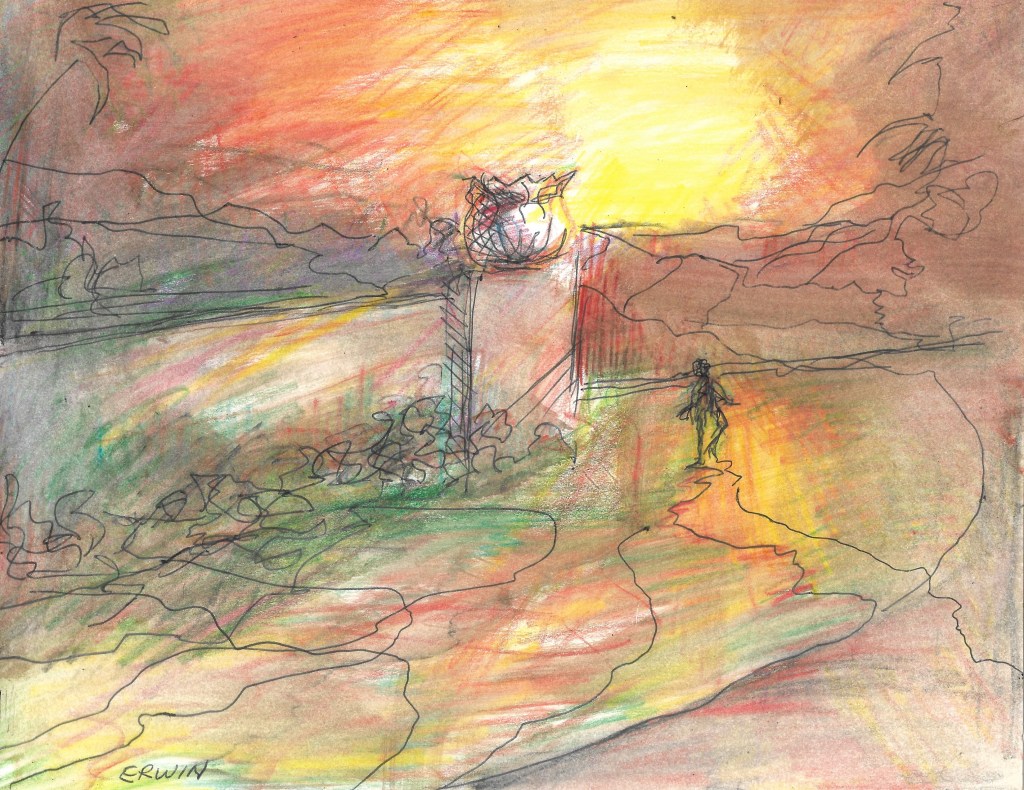
Meanwhile, here are a couple of sketches. Other than my decorating my Volvo and starting on several other to-be-continued projects, this is what I’ve taken the time to do.
It is probably not worth saying these are copyright protected. I will, anyway.
Good luck in finding the waves you want and the time you need. OH, Maybe I’ll post a couple of shots of my formerly stealth surf rig. Wednesday.
Each chapter of my novel corresponds to a single day. THIS is a big day. It isn’t exactly like I’m bogged down here, it is more that I continue to tighten up the plot and the character development. So, Joey is checking out Swamis pre-dawn on a Saturday, almost four days after Chulo was burned to death along the wall of the Self Realization Fellowship compound. He h as already had a connnection with Baadal Singh, a witness to the murder, and possibly a suspect. It’s still early, and with a south wind blowing, the lot is starting to fill up. It’s Swamis… locals and non-locals, and Joey has the optimum parking spot.
CHAPTER TWELVE- PART TWO- SATURDAY, MARCH 29, 1969
It was morning rather than dawn, The south wind still blowing. The Swamis parking lot was filling up. I was standing in the middle of the lot, in the middle of the lane between the middle row of spaces and the single row along the grass. I wasn’t sure how long I had been there, rerunning what I had heard and seen, trying to focus on, to memorize the most important images and words.
Too confusing. If Chulo had been a snitch, a narc, then…. Then what? An image of my father explaining why he was talking to a shady looking guy outside the Vista Foster Freeze broke into my mind. “We need sources,” he said, “Like dictionaries, encyclopedias. Assets.”
If Chulo had been a snitch, a narc, an asset, a source, he was Langdon’s. Had to be.
My fault. Of course, it was. I couldn’t help visualizing the Jesus Saves bus in my rearview mirror, front right tire in the ditch. Langdon had come onto the scene. He had found something.
Of course.
I looked past the latest car to arrive in the lot and toward the bluff. Julia Cole was behind the stack of surfboards stacked on the Mercedes, her telephoto lens between them and the roof. She was taking photos. Of me.
Maybe not. I turned toward the highway. Baadal Singh was gone. His truck was gone. I turned back toward Julia Cole. She waited a moment before pulling her camera back, but kept looking at me. Maybe not. A car was almost even with me, way too close. There were three boards on the rack, two on the driver’s side, one on the passenger side.
It was Rincon Ronny’s car, a late fifties Morris Minor, rather dinged up, the once dark blue paint faded rather unevenly. Rincon Ronny was driving, Monica in the front seat, not quite up against him. Duncan Burgess, in the back seat, flipped me off as the car passed. I nodded and walked toward the Falcon. Duncan turned his body enough to look through the car’s back window. When he saw I was watching him, he flipped me off again, bouncing his middle finger on the window until the Morris Minor parked in the last spot available on the bluff.
Duncan was definitely smiling. I probably was.
Petey Blodgett’s dawn patrol crew members, four boys and Julia Cole, were all gathered at the center of the bluff, in front of the Falcon, an empty Dodge Dart, and the Mercedes. Most of the kids were talking at the same time. The four boys were half-sitting on the hood of my car. Seeing me approaching, two kids slid fully onto my car’s hood. The other two moved to the front of the Dodge. One of them slid a bar of wax across the windshield, just once, before Julia Cole grabbed his wrist. He dropped the wax, then pushed it, hard, with his free hand, across and off the hood.
Julia Cole shook her head, lifted her heavy gray canvas bag from the Falcon’s hood, set it on the pavement, and turned to greet her three friends walking toward her from Ronny’s car.
The surfers from the Dodge Dart, obvious out of towners, had made the decision to go for waves the obvious locals had passed on. Other non-locals were in small groups along the bluff or hanging around their own cars in the middle rows. Second tier surfers, they couldn’t just join in with the locals, and they wouldn’t be invited to.
Nor would I. I unlocked the rear door, rolled down the window, and dropped the tailgate. I leaned into the back of the Falcon, moved my new surfboard to one side and crawled forward over towels and trunks to the back of the front seat. I stretched my body and my arm toward a stack of folders and notebooks on the dashboard. The two boys on the Falcon’s hood moved their faces closer to the windshield. Ronny, Monica, and Duncan looked past them and at me.
If any of them looked amused, I couldn’t tell. “casual” I whispered as I pulled up a red notebook, spiral bound, a pencil in the wires. I started to pull myself back, my left hand on the steering wheel, notebook in my right hand. I heard a click from outside the driver’s side window. Click.
Julia Cole pulled back and lowered the camera. She did look somewhat amused. “Casual,” she said. I mouthed the word. She blinked. I blinked. I would remember her quick smile, quickly dropped, another expression to add to my Julia Cole file.
As I back crawled out of the falcon, the surfers in all the little groups resumed talking. “Fucking south wind,” one of the current members of Petey’s dawn patrol group said, holding back a bit on the ‘fucking.’ Practicing. He was probably about my brother Freddy’s age. Eighth grader. “Fucking wrecking it,” he added, emphasis on the ‘ing’ part. Better. “Fucking!”
“Fucking,” I whispered, equal emphasis on both syllables.
…
Leaning over the tailgate, writing down notes from my discussion with Baadal Singh, trying not to have my thoughts interrupted by another image of Julia Cole, I became aware of comments coming from several speakers in several directions. “Chulo.” “And right here. Swamis.” “Which one was Chulo?” “Limpin’ Jesus.” “Oh, with the big cross thingy around his neck.” “Good surfer, though.” “Barbecued, I heard.” “Shut up!” “Guess he’ll get to know Jesus.” “God!” “What about his woman?” “Portia. What about her?” “Cops know who did it?”
There was a pause in the conversations. I didn’t look around immediately.
“You know Jumper Hayes was busted, few years ago, along with Chulo.” It was someone next to me, standing on the driver’s side of my car. It was Duncan. He was talking over rather than to me. I didn’t look up. He continued. “This asshole Deputy crippled Chulo. They sent him to some work camp in East County.”
“And Jumper Hayes, he ditched out.” This voice came from the passenger side of the Falcon. “They’re not going to bust the son of a big-time flower grower and landowner. Not around here.” It was Rincon Ronny. He was looking at me. He looked away when I looked back.
“No way,” some second-tier surfer said. “I heard Jumper ran off to Canada.”
“San Francisco,” another voice said. “Mexico,” yet another voice added, enough emphasis on the word to make almost anyone believe it was based on fact. “Mainland, not Baja.” More specific. More believable.
“Back off, fucker!” It was Duncan’s voice, directed at one or all the second-tier guys. “Mexico? Really? He was in fucking Vietnam, fucker.” Practiced. Proper emphasis. Impressive,
The “Mainland, not Baja” guy flashed a peace sign and mouthed, “Peace, Brother.”
Duncan flashed his own peace sign, flipped his hand around and lowered his pointer finger. “You don’t know shit. Brother.”
I twisted around and sat on the tailgate. I looked at Duncan, and then Ronny. Both moved together and in front of me. I stuck the pencil back in the spiral binding and closed the red notebook. I started counting the seconds, silently, as I looked at each of the surfers. Evidently my lips moved. Both Duncan and Ronny, after I got to ‘four,’ counted with me. When I got to ten, I said, “Yeah. Marines. Fucking… Vietnam.”
“He was here,” Duncan said, leaning down and toward me. “Jumper.”
Rincon Ronny grabbed the top frame for the back window and pulled himself up an into a kneeling position on the tailgate to my left. “Yeah. Here. Swamis. He and Chulo. Julie got some pictures.”
“Julia Cole?”
Duncan half spit out something like, “Jeez,” before he answered. “Yeah, Julie. Julia Cole.” He spoke loudly, clearly, slowly. Sarcastically. “Jumper. Here, Swamis; the day before. Tuesday.” Duncan sat down to my right. He looked past me, to Ronny. “Tuesday, right?”
“Think so,” Ronny said, pulling himself into a standing position on my tailgate “Yeah, Tuesday. He was talking with Chulo.”
“Tuesday would be the day of,” I said, stepping off the tailgate. “Maybe it was… Monday?”
“No, it was Tuesday,” Duncan said. “Day of.”
“He was all bandaged up,” Ronny said; “Didn’t look too good, I guess, according to Gingerbread Fred.” Ronny pulled Duncan up and next to him and added, obviously for my benefit; “Fred. He comes here, like, every evening. For the… sunsets.”
“Late afternoon, then? Monday.”
Duncan and Ronny both looked toward the water. Ronny spoke without looking around. “After you and your mom left.”
I may have chuckled. More likely I giggled. “What was Jumper… how’d he get… here?”
There was no response. I was thinking, looking between Ronny and Duncan. Staring. I did see them. I didn’t see Julia Cole until she was next to me, looking at me. Not unkindly.
It must have been ten seconds before Duncan, then Ronny, turned toward me. “I told you, Julie,” Duncan said, “Useless.” Ronny jumped down, Monica moved between him and Julia. Duncan jumped down and directly in front of me. “Freak,” he said, crossing his eyes.
“You mean retard, don’t you?” I smiled. Duncan moved back and sat on the tailgate.
Julia Cole stepped closer, put a hand on Duncan’s shoulder. “Pickup. Same one Jumper had… before.” I looked from Duncan to Julia. “I have… photos, but… why’d you ask… that?”
“Curious, Miss Cole. Or, really, no reason.”
Monica moved closer to me. “Portia told me Chulo was returning the flower van. Jumper was supposed to give him a ride back.”
“Never made it,” Julia said, “My dad said the van was over at… not Mrs. Tony’s, the market off of Vulcan. Door was open.” She put her right hand on Duncan’s shoulder. “We think…”
Duncan pushed Julia’s hand off his shoulder, pushed himself off the tailgate, moved forward, crowding Monica and Julia back. He turned toward me. “Fuck you, Junior. Yours and Jumper’s dads; old friends. You do know that; don’t you?”
I didn’t answer.
Duncan turned toward Ronny. “Junior and I… I’m a junior, too. We were born the same day, Balboa. Just before our fathers took off for Korea.”
Ronny stepped off the tailgate. “Duncan. Really?”
“Yeah, Ronny, I’m three hours older than… DeFreines.” Duncan looked from Ronny to me. “His dad came back a hero, mine came back… fucked up. Yeah. But we were all… poor.”
Duncan was looking at Ronny. I was looking at Duncan. “When Joe DeFreines got on with the County, he moved them all up to Frogbutt.” Duncan laughed. “Maybe he thought it was safer.” Duncan turned toward me. “Then some wife beater crashes into the patrol car. Joe fuckin’ shoots him. Meanwhile, Junior there, flying around in the car, gets all…”
I smiled at Duncan, then shared the same smile with Ronny, then Monica, then Julia Cole. Her expression, as blank as the other’s, revealed something close to sympathy.
“Was Jumper in… was he driving the Cadillac?”
“No,” Monica said, “Pickup.” We all looked at Monica. “Same one he always drove.”
“I have the photos,” Julia Cole said.
I visualized Jumper in this very parking lot, 1966. He was leaning on the hood of a Ford pickup from the late 1940s, black paint waxed and shining, exposed metal on the hood waxed and shining, a nine-six Hobie balanced, sideways, across the roof. Jumper was laughing, juggling three avocados, two other, older, surfers and two high school age girls, all entranced, watching him. He held one avocado out toward me as I walked past, catching one, allowing the third one to smash to the asphalt. More laughter.
“Thank you,” I said, and walked to the front of the Falcon. “Jumper wasn’t… here.”
The locals had left. I walked to the bluff. There were five surfer at the peak, one dropping into a choppy peak, another dropping in on him. I walked past the Falcon, took two steps into the traffic lane. Ronny and Duncan were at the Morris Minor, talking. In the other direction, toward the stairs, Julia Cole was standing next to Monica and in front of Petey’s Mercedes. Julia had her bag on the hood and was holding the body of her camera with both hands, the telephoto lens pointed down. She was looking at me. Neutral expression. Monica was looking at her, shaking her head.
I had edited out everything but Julia Cole.
Duncan and then Ronny came from behind me. Duncan, on my right, his left hand in front of my face, waved Julia over. She shook her head. Duncan, stepping around and in front of me, said, “Thousand-yard stare. I’m familiar.”
“I’m sorry.”
There was a chuckle from Ronny, cut short, I guessed, by a quick glance from Duncan. “You. Junior,” Duncan said, close to my ear, “I don’t get you.” I shook my shoulders. I thought the gesture would be taken as ‘nothing to get.’ “You asked about… Jumper, his truck.”
Ronny and Duncan both moved in front of me, blocking my view toward Petey’s Mercedes. I looked from one to the other. Ronny spoke first. “Julie doesn’t know. Monica, she isn’t involved.”
“You’re… protecting. You love Monica?”
Ronny spun around, instantly, yelling “Monica” as he did. “I love you… Monica!”
There were, just as instantly, loud reactions from the various parking lot groups and individuals. Mostly positive. Petey Blodgett raised a fist. Monica put a hand over her face. Julia Cole put a hand on her friend’s shoulder, smiled, kept her eyes on Ronny and Duncan and me.
I exhaled, looked at Duncan for a second. He half-smiled and shook his head. “You don’t know shit, do you?” I copied his smile, reached into my windbreaker pocket for my cigarettes. Duncan put his right hand over mine and pushed, slightly. “The truck? You were talking to that Simon guy. He was there, here, did he see…?”
Duncan pulled his hand back. I pulled my hand out of the pocket and closed my eyes. “Freak!” It was a whisper, but intense, coupled with a shove backward.
“Probably,” I said, catching my balance, opening my eyes. “So, please, kindly, don’t tell me shit I don’t want to know.” Now I did pull out my cigarettes, took one out, put it in my mouth. “Don’t tell me shit, don’t ask me… shit. Why would you?” I half-turned, put my hand on my father’s lighter in my pants pocket.
“We heard you’re… brainy.”
“Closer to freak, Rincon Ronny.” I kept my hand over the Sheriff’s Office logo as I lit up. “Wait.” I stepped forward, took the cigarette out of my mouth, waved it in a big loop, and closed my eyes. “I’m imagining two guys getting out of a pickup truck. They drag Chulo…out.”
Opening my eyes, I aimed the cigarette toward the entrance to the parking lot, watched Julia and Monica move to the far side of the Mercedes. I counted to five, out loud, turned, stepped back until both Ronny and Duncan were in my field of vision. “You know more than I do.” I did a pinching maneuver with my left hand, wiping my eyes. “I shouldn’t have told you that… even.”
“Look, Junior,” Ronny said, “cops have been coming around, talking about how maybe Chulo’s some sort of big deal drug… dealer, drug dealer. Like he deserved… you know.”
“Marijuana,” Duncan said. “Weed. You… familiar?”
“Not… intimately. Not… no, but that, um, diversion, yes, it seems like that is what cops would do. Langdon, maybe.”
“It wasn’t Chulo. He wasn’t… big time,” Ronny said.
“Langdon,” Duncan said. “You think, maybe…?”
I shook my head before I reran the question through my mind. “No. Wouldn’t… suit his… no.” I took another few seconds, shook my head another two times, back and forth. “Thank you both, but… what if I’m a… narc?”
Both Ronny and Duncan laughed. Ronny laughed harder, but not for as long.
“And… I’m not a cop.”
“Not yet.”
“Not ever.”
Ronny followed Duncan’s eyes. I turned around. Petey Blodgett was walking along the bluff. “Hey,” he said, quite loudly, directed to the dawn patrol boys, to Monica and Julia, to Duncan and Ronny and me, and to the second and third tier surfers: “Kids. If you are involved… if you’re into illegal drugs, you’re hangin’ with criminals, and, as a bonus, you are a criminal yourself. Now…”
“Another fucking preacher” the guy who had insisted Jumper had been in Mexico said, instantly silenced with an elbow to the ribs from another second tier surfer.
Petey Blodgett held his right hand up as far as he could, brought it down, licked his finger, raised it again. Everyone shut up and looked at the oldest person in the Swamis parking lot. “South wind,” he said, “not letting up.” He looked at Ronny and Duncan and me.
“Not yet,” Ronny said.
“Not ever,” Duncan said, chuckling after he said it.
Copyrighted material. All rights reserved by the author, Erwin A. Dence, Jr. AND, thanks for reading.
Here is a quote from the speaker of the U.S. House of Representatives Kevin McCarthy after resorting to using Democratic votes to forestall shutting down the government, kicking the next episode of this ongoing drama to a time closer to Thanksgiving: “You can always count on the American people to do the right thing after they’ve exhausted every other option.” No comment, Kev, not even “Get fucked and go back to the valley.”
Here is a quote from Trish after I bought, with her help (so adept at on-line buying), some new (zip up- a surrender move to bone spurs- like, real ones) booties after using some (pull on) not-totally-worn out models borrowed from Keith after I (you may recall) accidentally threw away a bag containing my wetsuit, vest/hood, booties, and my day-glow leash: “How are you doing with gloves?” My response: “Oh, I don’t really need gloves.”
Here is my right hand after being knuckle-dragged across the ‘rock garden’ at a northwest break:
It isn’t just the cuts. If any exposed skin (including the face) hits the rocks at almost any spot on the Strait, there will be cuts. The bruising is an option not exclusive to, but definitely more common among the thinner-skinned less-young. It may get worse among the actually-old.
Here is the scene: The window of rideable waves was closing, the tide was dropping, and I was looking for one last wave. Or another last wave. Just another wipeout, really, but Cougar Keith, who had been too early for the waves, and too late to ride them during this session, was witness to the whole awkward thing; me rolling around, trying to stand up, getting knocked down several times.
Next time, my new gloves (thanks, Trish), will be on. I will sacrifice feeling the water to not feel the rocks.
Odd to me that as hard as I try to be fluid in the water, I look so embarrassingly dorky trying to get back ashore. When I recounted the session story to Adam Wipeout, someone who “Just knew, he said,
“It wouldn’t be an Erwin session without some blood.”
I do have a photo somewhere on when I decided I didn’t need booties. Again, rocks; big crusty rocks. No one got a photo, though everyone in the lineup noticed, when, in my excitement, I bit my tongue on takeoff on a wave early in a session. Evidently a red mustache is noticeable. Cougar Keith may have been out on that occasion. Witnesses. Accounts vary.
WAIT! This is what I really wanted to write about today: An Objective Look at Subjectivity.
AS I WAS waking up this morning, I guessed that it was 6:24. I looked up at the projected time on the ceiling from the clock radio on Trisha’s side of the bed. 6:26. Wow. My brain is just so… I looked at the non-projected time on the other clock radio. 6:29. Oh. I guess I’m just alway a little ahead. OR…
BEFORE I woke up I had this dream in which I was paddling for a wave. There was a sense of urgency. It was a left, and I took off on the shoulder, had an on-the-wave view of the face and the barrel as I rode it, ending with a Hawaiian pullout on the sand. NEW SCENE- I was walking up to someone who was standing by the open trunk of an older American car. “I got a 6.75,” I said, “might have won the heat if I’d gotten another wave.” “Really?” “Yeah. Why?” “Nothing.” “Oh, you just don’t believe I would ever get a 6.75.” “6.25, maybe.”
That’s when I woke up.
We have all noticed that the best waves and the best rides are the ones we didn’t see. Someone else’s story. EPIC. Sometimes, however, the same dreamy setup gets scored… differently when reported on by multiple witnesses. “Longboardable.” “Chest-to-shoulder, bigger on the sets.” Very popular.
I’m never really sure how to respond to reports of epic-ness that I miss. I am prone to believing the person who downplays size and wonderful-ness. Perfection-ness. One surfer I have respect for says, “So, what? A kook on a perfect wave?” And then there’s the “Have you ever seen ______ breaking, with the indicators going off and big roll-throughs and…” “Yes.”
STILL, the opportunities, real or exaggerated, that we miss sometimes stick with us longer than the sessions and conditions and rides we can exaggerate or embellish into the world of EPIC.
Not that I ever have, but, this one time, surfing Upper Trestles, glassy, knee-to-waist, with no one else out… Yeah, I know, it sounds like I’m lying, even though it was 1975, and it is, objectively, true… If someone else told me this, I would be… skeptical.
Look for the next sub chapter of “Swamis” Wednesday. I am thinking about resentment as it applies to surfing. Meanwhile, may everyone, even kooks, score EPIC.
I already posted Chapter 12, Part One, twice. And I’ve done more work on it. I thought I was past it, but it just… keeps… pulling me back. This is possibly THE critical point in the story, and I’m trying to, as always, make it more focused, tighter, better. SO, next time.
I have been trying to take a few more photos of surf spot hipsters. Yes, I’m all about fashion. I was impressed by the Wellies/pig boots and the hat. More impressed when someone wears a boonie hat into the water. By impressed, I mean… curious. YES, this is (bad planning on the angle) a well known spot, but, in my defense, there are obviously no waves. As frequently happens, these two dudes went cruising up the beach and around the corner, as if, maybe, there might be rideable waves there. Big rocks, yes, waves… I don’t know, I haven’t made the walk in a while.
I’m heading off to the Seattle side this morning, Dru’s first post-surgery visit. Maybe I will post Chapter 12, Part 2 later. We’ll see. Hope you’re getting waves. Fall is definitely here.






 Real Surfers