It isn’t, of course, the falling that hurts or kills you. It is the sudden stop. Or it’s what you fall against. Every surfer has fallen, this getting more intense by having a wave actually causing us to fall, with force, and/or falling on us with more force. And then there is what we are falling into and/or slammed against: Reefs, rocks, gravel, and/or a combination of these, with or without added jaggedess. And then there is the added joy of having our board becoming a weapon that can provide blunt force trauma, a cut from a fin, and/or a stabbing-type wound. Might as well add in other people’s boards, and/or other people. Sounds dangerous.
I suddenly feel compelled to list every actual injury that can be connected to ladders in my fifty-six year (in June) career in painting. This excludes cuts and bruises from knives and scrapers, the smacking of a thumb or finger with a misaimed hammer, punctures from splinters, some quite long and quite deep, from sanding straight grain fir, and other injuries too common and/or ridiculous to list. None super serious.
Despite many sketchy ladder moves and spooky positioning, any of which could have had consequences, and the fact (or my line on the issue) that a ladder has 29 ways to hurt a person, and then one can fall, the number comes in at… tabulating… six. The list of injuries includes TWO sprained and/or broken ankles (never got x-rays) from missing a rung on now-illegal extension ladders that had a missing run on the ‘fly’ section; ONE chest-compression injury from trying to carry too much stuff down a ladder, facing out (heels don’t have the ‘purchase’ feet do); ONE ‘legs stretched to ballerinas-only position injury on a three-legged ‘picker’ ladder after one leg sank in a recent backfill, and one of my feet stayed on the rung; ONE injury from a ‘kick-out’ because the ‘stand-offs’ on the ladder were not on the roof (imagine teeter-totter); ONE accident, yesterday, when, and I’m still evaluating exactly what went wrong, I was coming down a ladder with two buckets of paint, avoiding tree branches, with the ladder in a less than ideal (though frequently necessary) position… AND, I swear, I would have been fine in the tumble if I hadn’t hit the edge of a planter pot.
I probably wouldn’t have gone to the JEFFERSON GENERAL HOSPITAL Emergency Room if there hadn’t been so much BLOOD. This is me in the outfit I was wearing when they released me. “Are you attached to these clothes?” I was asked as a nurse cut my two layers of shirts away. “No, they’re attached to me,” I said as I pulled the very long long sleeved shirt out of my pants (just in time, I was thinking). I was also wearing a beanie, but it got kind of ruined by my using it to hold pressure.
It’s actually quite a story, from my perspective, and I have people to thank: My clients- MARTI insisted I go to the ER. “You look like a Texas Chainsaw Massacre victim,” she said. I checked it in a mirror. She was right. ANDY drove me to the ER and waited until the stitching (20) was done, hung out until I was released, and drove me back to my car. Sorry about the blood in your car, Andy. DONITA, a nurse at Jefferson General, who, informed there was a bloodied painter with a head wound, instantly recognized me, from the back of my head. Donita, who Trish and I have known the entire time we havde lived in Quilcene, acted as a liaison with the staff, mostly saying, “No, he’s always like this. It’s (maniacal behavior and joking in the face of imminent catastrophe) normal… for him.” In exchange, I said, “Donita and my wife and I were all EMTs together. Donita always volunteered to be a victim. I never did.”
The attending physician, KEVIN R. BOWMAN, MD, should also be mentioned. As should that none of this bumping and bleeding was actually painful. Sticking needles into my head; that was. MEANWHILE Trish was calling and texting, the ER folks (of various ranks) were looking for the needles and thread and extractors and other tools, mostly unsuccessfully, some persistent but tiny artery was still pumping, and I was saying things, like, “Reminds me, for some reason, of ‘MASH,’ ‘big stitches.’ MEAN MEANWHILE, Dr. Bowman, having revealed he lives in Bellingham, left himself open to me discussing all things surfing. Him admitting he is trying to learn Wing Foiling led to more discussion of surf hierarchies and ‘adult learners,’ and why I find that in any way amusing.
When it was determined that I would survive despite my killer blood pressure, and while Dr. Bowman was still stitching (“Probably won’t leave a scar.” “Will I be sprouting new hair?” “No.”), I was trying to arrange a ride back to my car. My friend, Keith, who had recently received another (I’m not counting) big ass bruise (on his thigh) from bouncing off rocks, agreed to come get me when I was released, but a woman from the front came in and asked me if Andy could come back. “He’s been here the whole time?” Yeah. So he came back, and, while waiting, we chatted about all kinds of deeply and shallowly philosophical stuff, and Bob Dylan (Andy has a gre-eeat story about a friend of his at Newport, 1965, front row tickets courtesy of Joan Baez). I called Keith back.
This morning Keith texted to see if I am okay. I am. Just a cut. “Good. I was a little worried with the last minute ride cancellation and sort of giddiness on the phone.” Giddy? Me?
Since I’m oh so close to getting my novel, “Swamis,” ready to publish, and my songs/poems collection, “Love Songs For Cynics,” I decided to overwrite an overwrought poem. This one:
The bodies still strewn on the battlefield, fires, once flaring, still smoldering, blood, once pumping, pooled or seeping, quietly, from bodies, once soldiers or shoppers or farmers or children of this or some other tribe, the survivors were, briefly, giddy, out of ammo, fingers flexing and relaxing, adrenaline pushing, unrestrained, from every poor, paused a moment before reloading.
It seems to be a thing we participate in, the ranking of surfers based on criteria other than a person’s ability to ride waves. The ranking system varies but usually is skewed toward the person placing each of us into categories. It was once that the ultimate “Waterman” or water-person was skilled in multiple facets; yeah, but… I took this photo of ALLEN mostly because someone on the beach said it’s, with the roof extension lowered in this image, probably a hundred-thousand dollar rig. “No,” Allen bought it used for Forty grand (not sure if that’s with or without the camper). Points for Allen on one scale. “I traded out about fifteen-hundred worth of work for mine,” I said. I’m not claiming bonus points, but for $98,500 I can make a few trips searching for waves. Or maybe I can buy a newer board. Or…
Again, am I judging? Constantly, though I’m trying to quit. I told Trish that, in the movies, someone who hits something like a planter pot and busts upon his head, dies. “No,” she said, “Sometimes they wake up with amnesia.” She laughed. “You might wake up and not know where you are and ask, ‘how the hell’d I end up in this dump?'” It’s a long story, and with every story, I’m working on it.
Thanks for checking out realsurfers.net. Wing Foilers, non-wing foilers, E bike riders, kite surfers, some e foil riders, some kayakers, shortboarders, longboarders, snow riders, skate boarders, any and all learners or almost masters, of any age, of the fine art of flowing and gliding and ripping and falling are welcome.
I am past the pissed off, embarrassed, relieved, and the giddiness phases. I am still cruising in the thankful phase. For every accident we are involved in, there are so many near misses, so many ‘could have beens,’ any of which would change our story. As Andy said, “There are miracles on both ends; we don’t remember our birth, and our death is still a mystery.” Yeah, I told you it was philosophical.
WHOA! This came out kind of bigger than I would have thought. It’s COLE (if I ever heard a last name I forgot it), showing me his pupils aren’t dilated. I’ve seen Cole out on the Strait for years. This is the way it goes in a region that never should have waves, rarely does have waves, and, when there are waves, the dribblers are most likely scalloped or shredded by the fickle winds before they die, unceremoniously, on the jagged rocks.
I almost never search for waves without running into some interesting people I’ve hung out with in the past. Sometimes I meet new folks. It does take me several encounters before I remember most folks. “We’ve spoken before. Erwin.” “Oh. Okay; which one are you again?” Still, most people are friendly ON THE BEACH.
A MEMORABLE QUOTE from Cole from a few years back is,”I haven’t surfed in so long that my gills are dry.” Painful.
LIB TECH FOUNDER MIKE OLSON and Lib-rarian KEITH DARROCK. No doubt frustrated by the lack of surfable waves, Mike has become an ‘adult learner’ on foil boards. The key, he explained, is to do two sessions a day for, if I remember correctly (I was busy trying to take a photo with my phone while being amazed at how tall Mike is [I think I can call him Mike because we sort of bonded after i {allegedly} hit him with my board], while, simultaneously wondering why he’s doing this hand gesture rather than a friendlier shaka), 45 days. So, like 70 sessions and one is a full on foiler.
I didn’t take a photo of Mike attempting to ride his foil in some side-not-offshore wind. I kind of thought the design might be a secret. I would guess that Mike is probably about… No, I don’t want to judge. BUT, perhaps you’re looking forward to getting a genuine LIB TECH foil to add to your quiver.
If you’re considering getting a motorized foil and also considering yourself a real surfer, please reconsider.
Mike Olson from a few years ago, possibly on the day when my board may or may not have done damage to his shoulder, enjoying an overhead (Strait scale) wave while some cheating bastard on a Standup (no, it’s not me- way too thin) considers paddling to Canada. Mike talks at cattle auctioneer speed and always seems to be having a good time.
Coincidentally, on an outing in which Keith took a chance on taking me with him (and yes, the head gasket issue on my VOLVO is almost-maybe fixed), the only other non-kook surfer (counting Keith and me, though I fell over way more times than usual) in the chopped up water with the weak and wobbly waves was a guy who identified himself as PETE. He was riding a ten foot-ish HANSEN 50-50 LONG BOARD, so, of course, I had to ask him where he got it, not failing to mention that I was a SURFBOARDS HAWAII zealot, and that Hansen seems more interested in selling clothes than boards. Pete did, indeed, purchase the board in Encinitas for, like, $400.
IT TURNS OUT that Pete is PETE SAARI, credited as being a co-founder of LIB TECH. Pete must have passed Mike on the highway. Keith, who has surfed with Mike on some sketchier rock breaks, said we’d just surfed with LIB TECH NUMBER ONE. Mike said, “No; I’m still number one,” and explained a bit more of his company’s evolution than I was aware of. But, as part of my relentless and bothersome need to research, I googled and now see that, SHIT, Lib Tech is way bigger than I realized. So, if Mike Olson knows my name… it doesn’t hurt my feelings. Or ego.
Pete, when I asked, said he lives in Seattle but has a house in Agnew. “Oh, you know, the coolest hoodie one can have, other than a HAMA HAMA OYSTER hoodie or an ORIGINAL ERWIN, is one from the AGNEW GROCERY STORE.” “Yeah, I live near it.” Pete recognized Keith and asked me if I was also from Port Townsend, “No, Quilcene.” “Oh, I hear it’s a very hip place to live.” “Yeah. I’ve lived there since 1978, when I was 27, and the hipness is all about these young wanna be farmers, and…” “Okay, I’ll give you credit.”
ALL dialogue is paraphrased but accurate in content.
“SWAMIS” UPDATE- Keith and I also ran into STU (I should have taken a picture). He works part time at the NXNW SURF SHOP in Port Angeles. Stu’s wife has relatives in the San Diego North County area and has surfed some of the local spots. He said they thought of moving down there, but it’s so expensive. “And so crowded.” “Are you ever going to finish ‘Swamis’?” “Yeah.”
I sent out submissions/queries to agents about six week ago. The one I really wanted to represent me, and the reason I’ve been checking my hotmail, like, obsessively, Hillary Jacobson, with CAA, one of the biggies, just passed on my novel. She did, however, wish me the “best of luck finding an agent.” So, yeah, devastated. BUT, if you happen to know Hillary, please tell her it’s a big miss to pass on “Swamis.” Oh, and thanks.
So, yeah, still going. MEANWHILE, putting out some of my songs/poems. Here’s another:
IF IT’S OVER, then it’s over, guess we’re through, there’s no reason I should go on loving you, but you know it’s just exactly what I’ll do… If it’s over, then it’s over, guess we’re through, but I just can’t seem to let go of these blues.
Yes, I treated you unkindly, as you say, but I loved you, love you blindly, still today; it’s a love I’ll likely take right to my grave… If it’s. over, then it’s over, guess we’re through, but I just can’t seem to let go of these blues.
Like the clouds the winds have scattered, my love’s broken but not gone; like the coast the waves have battered, I’ve no choice but to hold on; like a river at the ocean, I’ll give in eventually, but I’ll hold on, long as I can, to the memory.
I can find the broken pieces of my heart; I can build myself a new one from the parts; need a new life, and it’s time for me to start… If it’s over, then it’s over, guess we’re through; but I just can’t seem to let go, gotta find a way to let go; I JUST CAN’T SEEM TO LET GO OF THESE BLUES.
Thanks, as always, for checking out realsurfers.net. Get some waves when you can.
All original works by Erwin A. Dence, Jr. are protected by copyright. All rights reserved. Thanks
FUN CAR UPDATE- I managed to get the new heater control valve into the Engine compartment, after consulting with master mechanic GEORGE TAKAMOTO, with a sleeve on the damaged vacuum advance hose, a minimum of swearing, a bit of ‘I can do this’ self hypnosis, and only a couple of cuts, AND it started, and it didn’t overheat, and… and I was still a bit reluctant to drive it very far. That was probably good. I ran it a little a little later on. Again, it ran okay… didn’t overheat, a bit of steam that cleared up, BUT there had been a concerning ‘clunk’ when I started the engine. Not a ‘click.’
The difference is everything. I’ve driven old vehicles almost exclusively since I started. My father was a mechanic and got me a succession of cars he got cheap. He then got to pick me and the car up, tow it back into the shop for repairs. Or they were dead. Killed. Murdered.
I recently told Trish how much I love my thirty-year-old Volvo. “Don’t say that!” Too late. SO, in daylight, I checked the oil cap and the dipstick. Oil that was properly black yesterday is now the color of coffee with a bit too much milk. Blown head gasket. Not just a guess. Not good.
Relying on my twenty-nine-year-old Ford van with 228,000 miles on it means trips out to chase down waves will be seriously curtailed.
George Takamoto, a friend of Trisha’s and mine for well over thirty years, did tell me that he told a mutual friend that the Volvo probably wouldn’t last… some amount of time… Doesn’t matter, he was right. George is well aware of the trucks and vans and cars I’ve killed outright, and the other rigs that got to the point that whatever was wrong with them was more than the value of the vehicle. I’m hoping this isn’t the case with my Volvo. We’ll see.
LIGHTNING BOLT MYSTERY- Having found some Christmas ‘stuff’ in a little room off of the mud room I had intended to be a tiny art/writing area, I opened one of the many bins now clogging the space and found this. It’s made to fit a board up to six feet, and has a strap on the other side that has “BALIN” printed on it. SOOO… of course, it being Christmas, my being a house painter, it being, like, winter, my never planning on riding a sub six-foot board again, I decided to see what I can sell it for.
THIS LED to some amount of time spent researching. Vintage (as in actually manufactured in that era, early 70s) Lightning Bolt boards go for surprising amounts of money. SO, I contacted a surf shop in (of course) Florida. After some delay, I got a text saying there was no comparative value (‘comp’ to insiders and real estate people, though having a room at a hotel ‘comped,’ different- compensated, maybe) on the bag.
OKAY. I checked out “Balin.” Yes, a dwarf in “The Hobbit,” but also a manufacturer of board bags in AUSTRALIA since (this is important) 1974. NOW, because provenance is everything, as any even sometimes viewer of “ANTIQUES ROADSHOW” knows, is everything, this fits with my story that I got the board bag before I moved up from San Diego at the end of 1978. The question is: Did Balin make bags for Lightning Bolt. Unable to get a workable email address for Balin, I filled out one of those things on their site. This was Saturday morning for me, possibly Sunday night for them. I haven’t heard back. Yet.
I got a text from the Florida shop later yesterday asking about the bag’s condition. “How is the iontegrity? Is it dry rotted? as these things tend to almost fall apart in your fingers after a certain amnount of time.” I texted back, “Perfect.” Now, there might be a bit of smudge from, perhaps, wax from an unbagged board. I’m not cleaning it off. ANYWAY, I’m not sure of the value. MAKE AN OFFER.
QUOTES- Being a hip and modern person, I do belong to several text groups made up of other surfers. I am always trying to have a clever if not funny response, as are others. There’s a quickie response thing I don’t seem to have on my phone that puts out a “laughed at,” or “loved,” or, “was seriously disturbed by” (I’m guessing) followed by a bit of the humorous, lovable, or disturbing text.
ADAM WIPEOUT always seems to like or love comments by Joel or Chris or Keith, giving short shrift to mine. This is only pertinent because I was telling him about a great story of an intense encounter in Yosemite involving surfer and rock climber SHORTBOARD AARON, Aaron’s daughter, and some Kook climber. “It’s a great story, but you’ll have to hear it from Aaron.”
I actually called Aaron because he often sells things on line. And I don’t. In the course of the conversation I mentioned a session Aaron (and Adam) missed and I didn’t. There was a maximum of seven surfers out for a short window, all of whom know each other well. A different mix of personalities in the lineup can, we agreed, change the dynamic dramatically. There was a bit of drama; nothing involving rangers and/or climbing axes. “So, Aaron says, ‘I think I’d rather miss a session than lose a friend,’ and I said, “Well, I’m glad you weren’t there, but I’m sorry you missed it.’ And…” “That’s great! That should be on a t-shirt.” “The ‘glad you weren’t there’ thing?” “No, what Aaron said.” I wasn’t, you know, deeply or seriously disturbed.
TRISH QUOTE- This was from last night, when I still was holding out hope that the Fun Car just needed a new battery. Trish was talking on the phone with our younger son, SEAN: “After 53 years living with your father, out on the edge of the ledge…” Edge of the ledge. LOVE IT!
“SWAMIS” NEWS- I’m keeping track. I sent out seven query letters, three with (as allowed) the first ten pages of the manuscript. I got a rejection from Farley Chase, emailed from New York at 4:30 am, PST; so, perhaps, Farley starts his day giving bad news to hopeful writers. He did say he wasn’t doing much fiction. I wrote back something nice. No, really; ‘chuck you Farley’ was not part of it. No doubt he has received that at some point, perhaps from a fiction writer. So, okay.
The first submission I sent was to HILLARY JACOBSON. She evidently represented some books I’ve actually heard of. One of those was mentioned recently on NPR. AND she says she is interested in books with strong female leads. Yes, “Swamis” has that. So, if you have some influence with Hillary, let her know. MEANWHILE, there’s surf somewhere.
I don’t think I have to put anything about copyright for this posting. If you want to know more about Aaron’s story, ask Aaron. I’ll have more content Wednesday.
TRISHA’S and my older son, older. JAMES JOSEPH MICHAEL DENCE had a birthday yesterday. His caption, texted with the photo, is “Forty-eight never looked so good.” J.J. when he was young, JAYMZ as a stage name, he has been in Moscow, Idaho since college, working and playing guitar with the FABULOUS KINGPINS, all the while leading his own bands, the current version being SOLID GHOST.
SIDENOTE- I just received (yesterday) a reasonably priced front zip wetsuit, replacing the one I’ve thrashed and patched, the one famously (locally) for having the hole in a most inopportune place for someone knee paddling in a crowded lineup. The suit is from NRS, which, I discovered, stands for NORTHWEST RIVER SUPPLY, and, surprise, they are located in MOSCOW, IDAHO. James said he almost went to work for them, a small outfit then, but now worldwide, but “They still pay Idaho wages.” Yeah, well… in this case, I appreciate it.
ADAM ‘WIPEOUT’ JAMES, obvious animal lover, worldwide local, and HAMA HAMA OYSTERS ambassador, is having a birthday TODAY. 47, and choosing which locals are ready to welcome into which lineup. Adam put the ‘local’ in ‘local or lucky,’ (I do take credit for the phrase) seeming to arrive at locations on days that turn out to be EPIC. Example- Cape Kiwanda, the pullback capitol of the world, with the point actually acting like a point break. Almost guaranteed today will be awesome and barrelling. At least, using a phrase often used by Adam, there’ll be a few butt barrels.
SEQUIM VORTEX STORIES-
I’m checking out at Costco. The checkout guy, possibly trying to impress the young woman assisting, says, “Pop a wheelie. On, like, a BMX bike. You’re too young for that one. This guy probably gets it.” “Yeah, I am, but, you know, there’s never a mention of mama wheelie.” “Oh. Is that a thing?” “Probably not.”
I’m headed from Home Depot (for stain) to Walmart (for bird food, mostly, assuming I need a decent excuse for going to either big box, right-wing owned store), and I see this guy at the light with a sign that says, “Looking for human kindness.” I change lanes to avoid eye contact (because I’m a hypocritical liberal who already voted, solid blue, but one who is still working at 73), and because I run a constant stream of ‘what if’ scenarios through my mind, I wonder what reaction I would get from the man if I came back and gave him the gallon of milk from Costco. It might be, “Yeah, that’s exactly what I meant.” Or not.
I’ll skip the in-depth ‘Previously’ for “Swamis” again, but this chapter mostly takes place at GRANDVIEW, JOEY and a guy from Fallbrook High racing over after school. If you’re figuring out that the story is almost more about the relationship between Joey and JULIE COLE… yeah.
CHAPTER SEVEN- FRIDAY, MARCH 14, 1969
Fallbrook Union High School was letting out. Gary and Roger and I were standing in the big dirt parking lot behind the band room. Johnny Dale, in his daddy’s restored 1957 Chevy Nomad station wagon, two girls in the front seat with him, slowed down, then popped the clutch, and spun out directly in front of us. Gary, then Roger, flipped Johnny off, both called him an asshole. Both looked at me when I didn’t participate.
“Witnesses,” I said.
“You?” Gary asked. “No,” they both said. The next two cars that passed got three sets of double eagles, my gesture only waist high, almost happily returned by the car’s occupants.
…
“Friday, March 14,” I said, writing the date into a page about a third of the way through a red notebook sitting on the hood of a yellow 1968 Super Beetle with two surfboards, side by side on the Aloha racks; my bruised and patched nine-six pintail and a brand-new Hansen ten-two. “Finally enough light after school for going. Gary and Roger bailed.”
Roger said, “We’re not bailing, Joey; we have dates.”
Gary mouthed, “Dates” while running his hand along the rail of the board on the driver’s side, adding, “With girls. And it’s fuckin’ Friday! And, anyway, Joey, where’s your date, Doublewide Doug?”
“Doug-L-ass has… art seventh period,” Roger said. I nodded, looked at my watch, wrote a sentence in the notebook without saying it out loud.
“Why is it,” Gary asked, “That Dingleberry Doug has a new fucking car and a new fucking surfboard?”
“Why is it, Gary, that Joey is such a whore that he’ll ride with Dipshit Doug?”
“Why is it, Joey, that everyone’s getting shorter boards, but your buddy, Dipsy doodle Doug, is going full-on aircraft carrier?”
I looked around the lot. “Because, gentlemen, Doug’s… working; one, and his father’s running irrigation for all the new… ranchettes; two, and three, I’m a whore for the surf, and three, again… gas money.” I stepped back from my friends. Both were wearing Levis, Ked’s boat shoes, J.C. Penny’s white t shirts, and nylon windbreakers. As was I. “Why is it that we all don’t have… matching windbreakers like we’re on the Dork Neck Dreever Surf Team?” Both gave me ‘fuck you’ looks. “You guys, with the blonde hair and all. Uninformed people might believe you surf better than I do.”
“Fine with me, Joey. Gary? You?”
“Yeah. Fine, but… Hey, Joey; here comes your date now!”
Doug, varsity offensive lineman, was on the sidewalk, still a distance away, slow running toward us. He had a cardboard art portfolio under his right arm, his left arm out and ready to straight arm anyone in his path.
“Joey DeFreines, surf slut,” Gary said, kissing his right hand, then using a big arm movement to simulate throwing the kiss toward Doug. Roger ran out, putting both hands out as if he might catch this pass.
Doug only saw the last part before Roger bumped into him and bounced away. Doug dropped Roger with his left arm. “Incomplete,” he said, leaning over to help Roger back up.
Gary’s mom’s Corvair pulled in beside Gary and me, trailed by its usual puffs of black smoke. The Princess was driving. There was another girl in the front seat, two more in the back. Sophomore girls. Giggling. The Princess peeled out just as Gary went around the back of the car.
“Better remember to put some oil in it, Princess,” Gary said, pointing to the hood. “One quart ought to do it.”
The Princess popped the clutch, honked as she cut another car off, and pulled out and onto the side road in a cloud of black smoke.
Doug touched his car and leaned against it, breathing heavily. “Made it!” He opened his portfolio, pulled out a piece of drawing paper and laid it on the hood. “Check this shit out!” It was a drawing, pastels, of cartoonish people and cars on the side of a road. A red light was glowing from beyond and below the cars and people. “Pulled over” was written in the same red as a sort of caption.
“It’s from… last week’s Free Press,” I said.
“Where’d you get it, Doublewide Dave?”
” Well… Roger, someone in my art class wanted me to scotch tape it on…” He pointed toward me. “Jody’s locker.”
“Grant Murdoch.”
“Grant fucking Murdoch.”
“Bingo! I told him to fuck himself, Jody, you and I are surfin’ buddies.”
“Surfin’ buddies, Doug-l-as,” Gary said, extending the ‘ass’ part, “Don’t wear that fucking letterman jacket to the beach. Joey wants all the hodads to think he’s from somewhere else.”
“Laguna… specifically,” I said as I rolled up the drawing, using the scotch tape at the corners to secure the roll. “Or San Clemente. Santa Cruz. Just… not… Fallbrook.”
Douglas took a folded piece of paper out of a pocket, the Warrior’s jacket off and tossed it, inside-out, onto the hood of his car.
“Oh, and fuck Grant Murdoch,” Gary said as he and Roger turned and headed toward an almost new Ford Mustang, two girls standing beside it.
Doug looked that way as he unlocked the driver’s door. “Roger’s stepfather’s car, Doug.”
“Yeah, I know, but, Jody, that one girl; I think she’s, maybe, a… sophomore.”
I stepped in front of Doug, blocking his view. “Maybe.” I shaded my eyes and looked toward the sun.
“Maybe she flunked third grade or something. We… You ready?”
I half-danced around the front of the car, grabbing my books and notebooks. “Maybe.”
When I got in the super beetle, Doug slid the paper across the dashboard. “Murdoch. Wanted me to give it to you…” I didn’t unfold it. “Personally. I didn’t look at it.”
I placed the unopened paper into the side pocket of my PeeChee folder. “We going?”
…
Doug was driving. I had a book open, its paper bag cover with unreadably psychedelic pencil lettering. “Civics” and “Grandview” and “JOEY DeFreines.”
“Shit, Jody, I could just cheat off of you.”
“Or… you could… study. I’ll just give you the… shit I think’ll be on the test.”
“Close your eyes, Jody.” Doug pushed the book back toward my face.
I knew exactly where we were; three big corners west of the village of Bonsall, on the last straightaway before the sharp left and the narrow bridge across the wide valley that held the thin line of the San Luis Rey River. I looked over the book and Doug just in time to see the construction site, an elongated building framed up, level with and parallel to the highway on an artificial peninsula of fill.
“Building it quick, Jody.”
“Yes. Quickly.’
“Um, uh, Jody; you know, my sister… she taught me how to drive. She said, if there’s a truck or something coming… on the bridge… she just closes her eyes.”
“Uh, Doug… no. Eyes open. Please.”
We made it across, no vehicles coming our way. A choice had to be made. It was a soft right-hand turn or a steep hill.
“Oceanside’s probably faster,” Doug said. “Cut over at El Camino Real.”
“Faster then, Doug.”
Doug downshifted, made the soft right-hand turn. Thirty seconds later Doug said, “Um, you know; Gary and Roger call you Joey.” I didn’t look over the Civics book. “I’ll call you that if you call me…”
“Dangerous Doug? Or… your choice. Sure.”
“And you can tell Gary and Roger that I’m, you know, really good, surfing-wise. Joey.”
I lifted the book back up to my face. “Or… I can give you a dollar for gas… Doug-ie.”
“Oh. No. That’s all right… Jo-ey.”
…
Doug cut off an oncoming pickup truck as he made the thirty-five-degree turn onto the El Camino Real cutoff, southwest, up and out of the valley, We hit highway 78 on the other side, merged onto I-5, got off at Tamarack Avenue. High tide. Shorebreak. We didn’t even drop into the lower parking lot. Doug missed the turn for Grandview. So, Beacons. Doug pulled in next to a green-gray VW bus with a white roof.
“Last chance, Doug. Sun’s down in… forty minutes.”
The tide was dropping. There were five surfers out, two of them girls. Young women. One of the young women was Julia Cole. There were four guys in street clothes on the beach. Two were watching the young women, one was looking at the flotsam along the tide line, one was doing some sort of surf pantomime, a beer bottle in each hand. He was the one who looked up the bluff at Doug and me.
“Jerks,” I said.
“Fucking Hodads,” Doug said as he opened the trunk on the front of his super beetle. That one in the blazer and wingtips, guaranteed not from around here.”
I moved to the bluff, wrapping Doug’s extra towel around me. A set was coming in and Julia Cole was on the second wave. I turned my shortjohn wetsuit back to outside out, peeled off my Levis and boxers, pulled the wetsuit up partway, wrapped the clothes in the towel, pulled the sleeveless suit up the rest of the way. Right arm through, I connected the stainless-steel turnbuckle at the left shoulder.
“My first wetsuit, Doug, December of 1965, made by a sailmaker at Oceanside Harbor, cost fifteen dollars. Christmas present. This one… seventeen-fifty, plus tax. But they were custom, two weeks from measuring to pick up.”
“Val’s,” Doug said as he unstrapped the boards, “my dad… up in LA.”
“Val’s is… valley, as in… valley cowboy.”
“Not trying to hide it.”
“Good. Noble. I am.” I pulled a cigarette out of the pack, showed it to Doug. He shook his head. I lit the Marlboro with three paper matches. Throwing my clothes into the trunk, I stashed my wallet, cigarettes, and matches in one shoe, stuffed the other shoe inside that one, slid the shoes under my clothes.
“Yes, Jo… Joey; I will lock the car.”
Halfway down the first section of the path, I saw that Julia Cole and her friend were out of the water. The three other Jerks followed the pantomimer toward them. “Monica,” the pantomimer, the Head Jerk, said. Loudly. His crew laughed. He repeated the word, stretching it to, “Mon-ee-ca. We have some be-er, San-ta Mon-e’-ca.”
Monica, her head down, made it to the bottom of the trail. The Head Jerk, walking backwards toward the bluff in front of Julia Cole, blocked the trail access. Julia Cole stopped; her face was very close to the Head Jerk’s. She said something. He put his free hand over his crotch, hopped backwards, throwing his hands out and up, beer sloshing onto his madras shirt.
Julia Cole was ten steps up the trail when he said, “Juuu-li-a. Juuuu-lee-ya; you are so cold. Soooo coooold. Ju’-li-a cold.”
Doug and I, boards under our arms, made the turn at the trail’s upper switchback.
The Head Jerk took several steps up the trail, turned back to his crew. “Come on up, you pussies!” Raising the volume, he added, “Surf broads. You jagoffs liking Monica’a ass better… or Juuu-lie’s?”
If any of the Jagoffs responded, it was more like growling or laughing than discernible words. “Brrrrrrrr,” the Head Jagoff said, Julie fifty feet up the trail, “Is the water cold, Juu-lie? And… I’m wondering if you’ve got anything on under that wetsuit. I saw… skin.”
More laughter. One of the members of the Jagoff Crew said, “Come on, dude; cool it.”
Head Jerk moved both beer bottles to his left hand and shot his right hand out. Pleased that the subordinate flinched, Head Jagoff said, “And don’t fuckin’ call me dude… dude.” He started up the trail. His cohorts hung back, possibly because they saw me, looking quite displeased, and the much bigger Doug, behind me, also displeased.
Monica and I met at the lower switchback. I stopped. Doug stopped. I stood my board up, holding it with my left hand, and moved to the uphill side. Doug did the same. Monica nodded, quickly, but looked down as she passed. Julia Cole had an expression as much determined as pissed-off. Defiant. Looking at me, she didn’t seem to adjust her expression one way or the other. I did notice the chrome turnbuckle on one side of her wetsuit was undone and her bare shoulder was exposed. Skin. She noticed I noticed. Another asshole. Another jerk. Her lower lip seemed to pull in, her upper lip seemed to curl. Disappointment. Or anger. Julia blinked. I didn’t. I couldn’t.
Julia Cole passed me and then Doug. “Joey’ll get ‘em,” Doug said.
“No,” she said. “Not… no.”
I may have been replaying Julia Cole’s expression for the third or fourth time when Head Jagoff approached the tight angle at the switchback. I may have missed the first few words he kind of spit at me.
I replayed his words. “What’s the deal, asshole? Huh? You some sort of fuckin’ retard?”
“Possibly, Dude,” I said. “I do believe, Dude, you owe Julia Cole and Monica… don’t know her last name… a sincere apology.”
“You do,” Doug said. “And… don’t know where you’re from, Jagoff; somewhere east coast; but we don’t fuckin’ call our chicks ‘broads’ around here.” Doug looked at me.
“I believe,” I said, “The Jerk prefers being called Dude… over Jagoff.”
“No, Jagoff seems apropos. That, Jagoff, means ‘appropriate.’ It’s French. Jagoff, which, I might be wrong, has something to do with… you know, whacking the… willy.”
Jagoff looked at Dangerous Doug in his new Val wetsuit, his un-dinged Hansen leaning against his left shoulder, his spotless white towel over his right shoulder. Jagoff looked back down the trail. His cohorts hadn’t moved. “Come on up. We have us a fuckin’ farm boy and some sort of retard Gook.”
“Oh, no. Jody; Willy Whacker called you a Gook.”
“Common mistake.”
“Step aside, fuckers!” Neither Doug nor I moved. “Jody,” Jagoff said, leaning in way too close to my face. “Girl’s name. Well. Fuck Monica! Fuck Julie fuckin’ Cole. And… fuck you, Jo-dee… And your fat-ass friend.”
Doug turned toward me. “I meant… Joey, but. Joey, I don’t think an apology is, you know, forthcoming.”
I let go of my board and extended my right hand, palm up, toward Jagoff. My board fell against the bank. He looked at my hand. He made a sound as if he was hawking up a loogie. I kept my hand out. He spit near but not on my hand.
Doug laid his board, carefully, uphill, against the scrub and ice plant on the bluff. He wrapped his towel around his neck and pointed at each member of the Jagoff Crew, now partway up the lower portion of the trail. “Hey, assholes, come on up and help out your friend. But, warning, Joey’s a, for real, fucking, by-God, Devil Dog!”
Jagoff shook his head. “Devil Dog?” It didn’t register. He looked up toward the parking lot, sneering. He put one of the beer bottles in his other hand. Holding the bottles by the necks, he smashed them against each other. The open one shattered, the remaining beer running down his arm. He held the raw edges against the palm of my right hand. He was smiling. “Fuck you, Gook!”
I closed my eyes. I imagined an eleven-year-old kid. My opponent. He had padded fabric head gear and a heavy pad on his body, a padded pugil stick in his hands. He was sneering. Other voices were cheering. I could hear myself crying. Big sobs, inhaling between each one. My father’s voice said, “Eyes open, Jody! Open!” The kid in the head gear, still sneering, was about to hit me again, this time with the right-hand end of the stick. I could also see the Jagoff, his beer bottle weapon pulled back. My father’s voice screamed, “Get in there! Jody!” I did. I saw my pugil stick connect, saw the opponent fall back. His sneer gone.
As was Jagoff’s.
Both beer bottles were on the path, both now broken. It would be a moment before Jerk/Dude/Jagoff reached for his nose; before the blood started flowing from there and his upper lip. It would be another few moments before the three Jagoffs, frozen near the top of the bluff, continued scrambling for the top.
“Devil Dog,” Dangerous Doug said.
“Devil Pup,” I said, keeping my eyes on my opponent. “Marines, Dude… may I call you Dude? There were tears in Dude’s eyes, blood seeping between his fingers. “Or… your name? No? Well, Dude, Devil pups; it’s kind of like… summer camp… on the Marine base, with hand-to-hand combat.”
Doug pulled his towel from his shoulders and handed it to Dude. “Apology, then, Dude?”
Fluffy towel to his face, Dude nodded. “Not to us,” I said. He nodded again. “Promise?” Third nod. “Okay. And, if you would… pick up the glass. It dangerous. Huh, Doug?”
“Dangerous,” Doug said. “Keep the towel, Dude. Souvenir.”
Looking from Doug to me, Dude pulled the towel away, blood seeping through it. “You don’t know Julia Cole. What she’s really like. You defending her, it’s like…”
“You’re right. I don’t know her.”
“’Cause we’re from Newport, Dude. Huh, Joey?”
Dude was staring at me. His eyes narrowed, then widened. Whether or not this meant he recognized me, I smiled. “Newport… yeah.”
Doug blinked and mouthed, “Laguna.”
…
When Doug and I got to the beach, Dude was still at the same spot, placing pieces of broken glass into Doug’s towel. His friends were in the parking lot, three vehicles over from the VW camper bus. There was a flash of light off glass. Julia Cole was behind the passenger side door. I couldn’t see her expression. I could remember it from earlier.
“Sorry, Doug. You know I’m trying to be all ‘peace and love,’ and not…”
“You shittin’ me, Joey? You’re a fuckin’, by-God Devil Dog!”
When we were knee deep in the water, Doug jumping onto his board early, too far back, too much of his board’s nose out of the water, I said, “Maybe we can keep this little incident to ourselves.”
Doug laughed. “How good am I doing, Joey?”
I jumped over a line of soup and onto my board. “You’re fuckin’ ripping, Dangerous Doug!”
…
I left my wetsuit and my shoes on the porch, stacked my books on the dinette table, and looked back into the living room, all the lights except a lamp by the console off. My mother was on the couch. A World War II era record was playing, a woman singing wistfully about lost love. Seventy-eight rpm. The wedding photo was leaning against the console. The song ended and another record, 33 and 1/3 rpm, dropped onto the turn table. “South Pacific,” original Broadway cast.
My mother got up, adjusted the record speed, and walked into the kitchen. I followed.
“The surfing?”
“Good. Doug is just learning, and…”
“Doug. Who are Doug’s… people?” She turned off the oven and pulled out a foil covered plate, set it on the cast iron trivet on the kitchen table. “Would you like milk?”
“I’ll get it. Doug’s father has the irrigation company. Football player. That Doug.”
“Irrigation. Football. Doug. You and he are… friends… now?”
“Now? I guess so. Surf friends, Mom; it’s… different.”
“Still, it is nice that you have… friends.”
“It’s just… it’s not… Surfing’s cool. I surf. It doesn’t make me cool.” My mother gave me a look I had to answer with, “Yes, mother; friends are… nice to have.” She nodded and walked through the formal dining room and into the living room.
I pulled the paper Doug had given me out of the PeeChee and unfolded it. “It was a drawing of me, from this week’s Free Press. Me in the window, looking out. The pen and ink drawing wasn’t quite a rendering, not quite a cartoon, with un-erased pencil lines. “Grant,” a signature at the bottom, was not finished in ink.
I tried to figure what Grant’s motives were. Intentions. I allowed water trapped in my sinuses to drain from my nose, not wiping at them with a paper napkin for a moment, then blowing as much water as I could into the napkin.
Freddy ran into the kitchen from the hallway, half pushed me against the counter. “She called,” he said. “The reporter. Asked for you… after I told her mom wasn’t here. Are you crying?”
“No. No.” I refolded the drawing. “Who? Lee Ransom?”
“Yeah. Her. Mom was here. Outside, grooming Tallulah.”
“Okay.”
“I told her…” Freddy switched to a whisper. “I told her what you told me to say.” I nodded, tried to push past my brother. He put a hand to my chest. “She asked what kind of car mom drives.” I did one of those ‘and?’ kind of shrugs. “She said she asked one of the detectives, and he pointed to a different car than the one someone else pointed to… not the Volvo.”
“Which one?”
“Which car?”
“Which detective?”
“Boys!” I looked around Freddy. Our mother was in the dining room. I couldn’t tell from her expression how much she had heard. I had to assume too much.
“SWAMIS’ is copyrighted material, all rights reserved by the author, Erwin A. Dence, Jr.
And, in the RELUCTANTLY POLITICAL catagory, please vote the reasoned choice; BLUE. There is no other America to save America from going the way of many another country. There is no reasonable reason to vote for a disgusting example of a human being and wannabe dictator. If you claim some sort of Christian stance, ‘he is redeemable’ kind of bullshit argument, you must not believe Jesus when he said about those who speak the way the orange candidate does, that “the truth is not in them.” Or, perhaps, you put little value in the last book of the BIBLE. Cons con. Liars lie. Grifters grift.
I haven’t updated my “Previously” recap of my novel, but we’re still at the post funeral memorial or wake for Joey’s father.
I WILL HAVE some photos and comments on my latest session attempt for SUNDAY, but, with elections upon us like a wave we saw on the horizon that is suddenly WAY BIGGER than we were ready for, I, non-political as I am, have some thoughts I’m trying to work through on just why the fuck anyone would vote for the guy, knowing what an absolute example of everything disgusting and vile and hateful any silver-spoon asshole can be. HATEFUL is, possibly, the key. Voters trying to hide behind some phony wall of “Oh, he’s, you know, not all that bad, and anyway…”
IT MIGHT BE that some folks think the guy will punish the “They” and the “Them” these voters hate. They. Them. YEAH, he said he will, and he has thugish backers who have promised to help. ONE PROBLEM might be that, HISTORICALLY, when things go to shit in a country, the whole country gets hit with the shit. AND covered in it.
THERE IS NO AMERICA to save AMERICA. Everyone is an infidel to someone. Everyone is a ‘them’ or a ‘they.’ Good luck, vote your conscience. But first, check to make sure you have one.
THINK IT THROUGH. VOTE BLUE. AND, with this, I apologize for ranting. I would rather talk about surf predictions and post-dictions, and I will. SUNDAY.
CHAPTER SIX- PART THREE- TUESDAY, MARCH 4, 1969
I was sitting on my mother’s little bench on the porch, tying my shoes. Lee Ransom stepped down onto the concrete pad, the part of a sidewalk my father had completed. “Optional today,” I said. “Shoes.”
“I… should have,” Lee Ransom said, “to show proper respect.” We both looked at her practical black shoes. She looked toward the many cars parked on the lawn and in the driveway. She pulled her sunglasses down and over her regular glasses. She pointed at the Falcon. “You just… keep the board on top?” I nodded, stood up, jumped off the part of the porch without stairs. “So, Joey; which one of these cars is your mother’s?”
Freddy, a toy revolver in his hand, ran out the door, past Lee Ransom, jumped off the porch, swung around me, and fired five shots as the younger Wendall brother ducked behind someone’s car, making a mouth sound with each shot, following the volley with “Got ‘cha!”
“I think he ducked,” I said as Freddy crouched and hurried down the lawn and took shelter behind the Wendall family station wagon. Wendall’s kid popped up, took a shot at Freddy. “Dick Tracy model. Snub nose 38.” Lee Ransom and I had made it down to the flatter, gravel and bare earth part of the property. She was still looking at the various cars. “I gave it up. Guns. Switched to…” I went into some version of a swashbuckling stance… “Swords.”
The younger Wendall brother ran in front of Lee Ransom and me. She swiveled, threw back both sides of her coat, drew two fake pistols from fake holsters, and shot at the kid. Two shots from each hand. The younger Wendall kid looked surprised, but instantly grabbed at his chest, both hands, staggered dramatically, and fell to the ground.
“Regular Annie Oakley,” I said.
“Well,” Lee Ransom said, blowing the fake smoke from the end of each fake pistol, “Where I came from, we played cops and robbers with real… cops.” She fake-holstered the fake pistols. “Real guns, too.” She shook her head and laughed.
“I never played the cop, always the… robber.”
We both turned when we heard someone being slammed up against someone’s car. “Surrender, Jap!”
Larry Junior had Freddy off his feet and pinned against the Wendall’s red station wagon. Freddy dropped his pistol and gave me a desperate ‘you have to help me’ look. Larry Junior’s expression, at Freddy and then me, was a defiant ‘do something, Jap’ look. The younger Wendall kid leapt to his feet. Lee Ransom took a step back, then a few more, in the direction of her car, and looked at me.
Theresa Wendall, holding a large Corning Ware serving dish with a glass cover in both hands, came out of the front door. Wendall and Deputy Wilson came around from the back of the house. “Lawrence Oliver Wendall, Junior,” Mrs. Wendall said, quite loudly.
Lawrence Oliver Wendall, Junior looked at his mother, stepping off the porch. He looked at his father. Wendall threw a lit cigarette onto the lawn. He looked at Freddy but did not let go of him. He looked at me, just coming around the front of the car, left hand out, right hand in a fist. He let go of Freddy.
Everyone stopped.
Everyone except Theresa Wendall. Her high heels failed to make the transfer from concrete to lawn. She fell forward, the dish ahead of her. Launched.
None of this happened in slow motion. All of us on the lawn and the porch were frozen when the Corning Ware dish hit the splotchy lawn, the glass lid skimming like a rock on the water before skidding to a stop on the gravel. The contents of the Corning Ware dish belched out she lost control. It hit on one edge and flipped forward just enough to hit the next edge. Then the next. It landed upright, one-fourth full, amazingly close to the lid.
A few moments later, in slow motion, I mentally replayed what I had seen. Ten seconds, maybe. I was standing at the hood of the Wendall’s station wagon, my right hand still in a fist.
Everyone else had moved.
Freddy and Larry Junior and Larry’s younger brother were on their hands and knees, scooping food and bits of grass and gravel into the Corning Ware dish, chipped but unbroken.
Deputy Wilson was crouched down but not helping. He was looking at me. “I said, Jody, I notice you have chickens.” He nodded toward an unpainted plywood chicken coop with just enough of a fenced yard for six hens and a rooster.
“Chickens. Yes… we do.” I looked toward the porch, expecting to see a crowd. No one. I looked at our chicken coop, back at the Deputy. “We don’t let them out, Deputy Wilson. Coyotes.”
Deputy Wilson nodded, stood, straightened the crease in his uniform pants. “Scott,” he said, “Scott Wilson, Jody.” He adjusted the tilt of his hat, turned away, showing his clean hands to the three kids whose hands were lasagna sauce colored.
“Scott,” I said, quietly, “Joey. Joey, not Jody.”
“I worked on cases… not really; I watched… you know. Your father knew his shit.”
“Yeah. He… the chickens… lasagna; they’ll eat it. I mean, the… spilled part. Scott.” Deputy Scott Wilson took the dish from Larry Junior and walked toward the coop.
…
Theresa Wendall was sitting in the driver’s seat of the station wagon, door open. Her husband was standing between her and the door, leaning over rather than crouching. Her left hand was on his right arm. She was crying. Detective Larry Wendall removed his left hand from the door and put it on his wife’s left hand. He kept it there for a moment, then lifted her hand from his arm, shifted slightly, and opened the back driver’s side door.
“I’ll help you turn the car around. Okay?” Mrs. Wendall didn’t answer. “Theresa?”
Theresa Wendall made the slightest of gestures with her left hand before clutching the outside ring of the steering wheel. Her husband waited a moment before coming closer. This time he crouched. “I shouldn’t have talked to her, Larry,” she said. It wasn’t a whisper.
“It’s… all right.”
Deputy Scott Wilson came back with the emptied dish, took the glass lid from the younger Wendall kid, handed it to me. Toward me, as if I should be the one returning it. I looked at the three kids before I took possession of the dish. Both hands.
I approached the station wagon. Theresa Wendall looked past her husband, used the left sleeve of her dress to wipe both of her eyes before regripping the steering wheel. Detective Wendall stood up, stepped back, turned toward me. He looked embarrassed, almost angry. He slammed the back passenger door, reopened it as he passed, turned, and took the dish from me. Lid in one hand, dish in the other. He set them on the roof and turned toward his kids, Freddy, Deputy Wilson, and me. He lit up a cigarette, went around to open the very back door.
“Lasagna and Bermuda grass,” Mrs. Wendall said, breaking into the half-laugh kind of crying. “Probably improved the taste.” She looked at me for some reassurance, some sort of sympathetic response. I barely knew the woman. Cops’ wives. I knew something about what that meant, what it required. “Your mother,” she said. “I am just so… sorry.”
I have no idea what I look like in these situations. Not cold and uncaring is my hope. Helpless is what I was.
A few moments later, I was over by the Karmann Ghia trying to convince Lee Ransom this wasn’t worth taking notes on or photos of. “Personal,” I said. Larry Junior and the younger Wendall kid were in the red station wagon. Mrs. Wendall was attempting to turn the station wagon around with some direction from Deputy Wilson. Freddy was leaning into the back seat window. All three kids were laughing.
Only a small percentage of those coming out of the house had to put their shoes back on. Deputy Scott Wilson was back directing traffic. Wendall lit up a cigarette with the butt of his previous one, waved at his children, and headed back up to the house. Theresa Wendall, eye makeup mostly wiped off, waved at me, and because I was standing next to her, Lee Ransom, on her way out. The younger Wendall kid did a finger shoot at Lee Ransom on the way by.
Lee Ransom jerked to one side, shot back. Just one finger gun, this time. She looked at me. “Regular Annie Oakley, huh?” She looked at the horse that was leaning over the barbed wire and over the front seat of Lee’s car.
“Tallulah,” I said. “My mother’s. Pet. Mostly.”
“Like the actress; Tallulah Bankhead.”
“Yeah. From the old movies.” I stepped over to the small shed adjacent to the covered stall, all constructed of plywood, still unpainted. I pulled out a handful of grain, closed that door, pulled up the plywood cover on Tallulah’s stall. The horse looked at Lee Ransom. Both walked over toward me. “My dad called her Tallulah Bankrupt.”
Lee Ransom held out both hands, cupped together. I transferred the grain. She fed it to Tallulah through the opening, with me still holding the cover up. I stuck the hinged two-by-two onto the sill to prop the cover as Tallulah ate and snorted and Lee Ransom giggled.
“Joey, what do you know about… grass; that whole… thing?
I looked back at the house, looked at the cars passing by. I took out a pack of Marlboros from the inside pocket of what had been my dad’s black coat, lit one up with two paper matches. “I’m the wrong person to ask, Lee Annie Ransom. No one tells me… anything.”
Lee Ransom brushed at Tallulah’s mane, ran her hand down the horse’s face, held the horse’s head up. “Someone told me that… if you…” She leaned over, blew a breath into Tallulah’s nostrils. “They’ll remember you.” She let go of the horse, pointed to my pack of cigarettes.
I pushed the pack toward the reporter, took the cigarette out of my mouth to light Lee Ransom’s. I blew some smoke into the stall, inhaled, blew a semi-clean breath into Tallulah’s nostrils. The horse reared back, hitting my face on the way up and back. I stopped myself from screaming but kicked a hole in the rotting plywood siding. Lee Ransom took a drag on her borrowed cigarette and let out most of the smoke. I pulled and kicked my foot several times before it was freed from the plywood.
Lee Ransom came up very close to my face. She blew a very slight bit of breath toward me. Cigarettes and the vague remains of the whiskey, a bit of the skanky cheese and vinegar from a salad. “I don’t fucking believe you. Joey. You see, you observe.”
“Only what concerns… or relates… People believe I know… things.”
“Aha!” She was close again. “See? That’s something I… I interviewed, sort of, your father… several times. When people think you know more about them than you do… he told me this… They tell you… more.” Lee Ransom took a double hit on the cigarette, held the smoke in for longer than I would have been comfortable doing. She exhaled slowly, down. “I didn’t know shit about you. Now I do.” She inhaled again, the smoke trickling out as she continued. “Now I know more. And…”
“And?”
“Not enough.” Lee Ransom turned away. “Tallulah, lucky Joey didn’t hit a stud, huh.”
“Lucky.” I took a deeper than usual drag, held it longer than usual.
“Joey. When your dad got that… wound… You were there. Correct?”
I crooked my left leg, butted the cigarette out on the sole of my shoe, turned halfway around, twirling the filter between a finger and thumb. “I was five, and… that is the story.”
“The story is your dad saved your life.”
I almost waited too long before responding. “He is… was… it’s his nature to be… heroic.” I turned fully away from Lee Ransom and walked toward the house.
“Good. Quote. Yeah. Thanks. But, Joey, which car did you say is your mother’s?”
“I didn’t say.”
“But Joey… Joey.” I turned around. Lee Ransom had her camera up and aimed at me. “Half stigmata!” She took three photos. Snap, snap, snap.
“SWAMIS.” Copyright Erwin A. Dence, Jr. All rights reserved by the author.
It’s almost Wednesday. TO SAVE TIME that might be spent scrolling, the recap/review, the ‘previously’ the “Swamis” So-far follows. Thanks for reading, or attempting to. I’ll have other content on Sunday, probably with updates on local Olympic Peninsula surfers going elsewhere, Meanwhile, find some waves.
CHAPTER SIX- PART TWO- TUESDAY, MARCH 4, 1969
I looked at the mourners as I walked toward the foyer, trying to remember each face. I walked around the borrowed table where our couch would have been. My father’s chair had been moved two feet over from its regular spot, oriented toward the big window rather than the TV in the console. It provided a good place to look at the people in the rooms, foyer, hallway, kitchen, living room.
The oversized lounge chair was, for once, uncovered. The fabric was practical; heavy, gray, with just the faintest lines, slightly grayer. There was, in the seat, a matted and framed portrait I had not seen before, a photograph blown up and touched up and printed on canvas, coated with several layers of varnish. A noticeable chemical smell revealed the coating had not yet fully cured. There it was, my father in his Sheriff’s Office uniform, oversized enough that the portrait was set across the armrests.
The pose was this: Stern expression; arms crossed on his chest, low enough to reveal the medals; just the right amount of cuff extending from the coat sleeves; hands on biceps, a large scar on the palm of my father’s left hand almost highlighted. No ring. My father didn’t wear rings. Rings might have suggested my father might hesitate in a critical situation, might think of his wife and children. White gloves that should have been a part of the dress uniform were folded over my father’s left forearm. Gloves would have hidden the scar.
I didn’t study the portrait. I did notice, peripheral vision, others in the rooms were poised and watching for my reaction. I tried to look properly respectful, as if I had cried out all my tears. Despite my father disapproving of tears, I had.
There was an American flag, folded and fit into a triangular-shaped frame, leaning from the seat cushion to the armrest on one side of the portrait. A long thin box with a glass top holding his military medals, partially tucked under the portrait, was next to the flag. If I was expected to cry, or worse; break down, to have a spell or a throw a tantrum, the mourners, celebrants, witnesses, the less discerning among whoever these people were, they would be disappointed. Some, who had never saluted the man, saluted the portrait. This portrait was not the father I knew, not the man the ones who truly believed they knew him knew.
No. I walked past the detectives without looking at them, went down the hallway and opened the door to what was to have been a den but had become storage. I returned to the living room with two framed photographs pressed against my chest. I did my fake smile and set the portraits on the carpet, face down. I took a moment before I lifted the one on top, turned it over, and leaned it against the footrest part of my father’s chair.
Several self-invited guests moved closer, both sides, and behind me. One of the guests said, “That’s Joe, all right.”
Wendall displaced the person to my right, moved close enough to bump me, said, “Gunner,” and toasted. Others followed suit.
The first, ambered-out photo, was of a younger Joseph DeFreines in his parade garb; big blonde guy in Mexican-style cowboy gear, standing next to a big blonde horse with a saddle similarly decked out with silver and turquoise, holding an oversized sombrero with his hand on the brim. My father’s other arm, his left, was around the shoulders of a smaller man, his sombrero on his head. Both were smiling as if no one else was watching.
There was no wound on my father’s left hand.
“Gustavo Hayes,” a voice said. Another asked, “What’s with Joe in the Mexican outfit?”
I lifted, turned, and leaned the other photo against the footrest. It was a black and white photo. A woman’s voice said, “Oh, Joe and Ruth. Must be their wedding.” Another woman’s voice said, “So young. And there is… something… about a Marine in his dress blues.”
“It was… taken,” Wendall explained, “in Japan, where they… met, color-enhanced… painted… in San Diego.” I looked at the photo rather than at the people. My father’s arm was around his even younger bride. She was in a kimono.
“The colors of the dress,” my mother always said… she said, ‘they are not even close to the real colors.’ She said our memories… fill in the… real colors.”
I had spoken. I wanted to disappear. I was, perhaps, not out of tears.
I backed my way through the middle of the semi-circle and to the window. I didn’t look around to connect faces with questions and comments. I was somewhere else, imagining what magical waves were breaking beyond the hills that were my horizon, trying to perfectly reimagine a photo from a surfing magazine. The view was from across highway 101, above the railroad tracks. across the empty lot just south of the Swamis parking lot. There were, on the horizon, distant swells on a field of diamonds, already bending to the contours of underwater reefs. To the right there were dark green shrubs and trees, palm trees beyond them. Further to the right, large gold lotus blossoms sat atop the corners of a white stucco wall.
I didn’t bother to consider how long I had been detached from the reality of an event as surreal as this wake, or memorial, or potluck. That was me, detached. Everyone seemed to know this. Damaged. Some knew the story, others were filled in. There had to be an explanation for why I was, so obviously, elsewhere.
Standing at the window, all the conversation was behind me; the clattering and tinkling, the hushed voices telling little stories, the sporadic laughter.
The yellow van with the two popout surfboards on top pulled out of the driveway, a black Monte Carlo behind it. I didn’t recognize the car. I looked around the living room. Wendall and Dickson were holding court with one of the Downtown Detectives over by the sideboard, a two-thirds gone bottle of some brownish liquor between them. The Downtown Guy finished off Langdon’s bottle of wine, looked at the label, laughed, and moved the bottle next to the other empties. He looked around the room, and laughed again, louder.
I looked back out the window. A black Monte Carlo seemed about right. Oversized, pretentious. An investment, likely purchased before he made Lieutenant up in Orange County.
A yellow Volkswagen Karmann Ghia, top down, was coming up the hill. It passed the Hayes Flowers van. Different yellows; the car’s color softer, warmer, on the orange rather than the green side. There was a woman at the wheel, very colorful scarf over her head, sunglasses. The Monte Carlo stopped. The VW stopped. Langdon. Yeah, it was him. He had an am out the window. The gesture was ‘turn around.’ The woman in the Karman Ghia gave Langdon a brush back with a raised hand, followed, when the Monte Carlo moved on, with the woman’s right hand, up, middle finger out. She moved her arm halfway back down, then up again.
“Yeah,” I imagined myself saying, “Fuck you… with a half twist.” I may have added the half twist at some later recalling of the day. It doesn’t matter, it’s there now.
Deputy “New Guy” Wilson half-leaned into the Karmann Ghia. The woman looked up. She saw me in the window. She pointed. She waved. I took a second, then waved back. Wilson gave me a gesture, hands out, palms up, chest high. As in, “Really?” I mimicked his gesture, palms facing each other. The New Guy let her proceed.
After several adjustments, the Karmann Ghia was pointed out, getaway position, the passenger side almost touching the two-by-six fencing on the corral. She removed her scarf. Afro. Not huge, but out there enough to make a statement. She looked at her image in the rearview mirror, pushed the sunglasses up into the Afro, prescription glasses remaining.
The woman swiveled in the seat, picked up a thirty-five-millimeter camera with a medium length telephoto attached, used the top of the windshield to stabilize it, and aimed it at me. Snap. Me in the center of the window, my arms out, hands on either side of the opening.
I moved backward and sideways, back into the room, bumping into a man I knew from the PTA or the School Board, somewhere. “It’s that pushy Negro reporter woman,” he said. “Writes for that hippie rag. She did a big… ‘expose’ on the water district. Don’t know how she got past the Deputy.”
“New guy,” I said, suddenly realizing where I had seen the man’s photo. “The hippie rag published that… expose; favorable rates for certain… constituents, as I recall. The Enterprise didn’t run the story for another two weeks. And… you’re still the… director.”
The Water District Director looked at me for a moment before turning away. “Wendall,” he said, brushing past Mr. Dewey. I didn’t look away quickly enough. Mr. Dewey smiled. He may have mistaken my look for a nod. He was already headed my way. I returned to my spot in the middle of the picture window.
“I heard that, Joseph,” he whispered. “Good one. We need an alternative to the war mongering, corporate loving press.” Mr. Dewey was somewhere over half-sloshed, sloshing some sort of orangish-brown liquor in one of my father’s cut crystal glasses. The North County Free Press. I should make it required reading for my Political Science class.” Mr. Dewey leaned in a little too close to me. “I mean…” I leaned away. “…You read it… right?”
I tried to correct my overreaction by leaning in toward Mister Dewey as if I was ready to share a secret. “You know, Mister Dewey…” I looked around the room, back to the teacher. “Most of these people do, too.” I whispered, “Also. And… there’s some… nudity. Sometimes. Hippies, huh?”
Mr. Dewey nodded and went into some forgettable, mumbled small talk. War in Asia, civil rights, threats to the middle class. It was less than a minute later when Mr. Dewey pointed my father’s glass, with Detective Wendall’s whiskey sloshing around in the bottom, toward the photograph of my parents. “Never understood… guy like Joe DeFreines; almost a John Bircher… conservative. He was a Marine… in the Pacific. War hero.” He took another sip. “Korea, too. Also. A war we didn’t win. He fought the Japs, and then, he and your mom…”
Mr. Dewey seemed to realize he had gone a bit too far with this. He tipped the glass up high enough to get the last of the whiskey, and said, “I have a theory.”
“Well, you are the Political scientist, Mr. Dewey.” I turned away.
Mr. Dewey grabbed my arm. “I think, Joseph, that he wanted all the Okies and all the new people to think he was… one of them.”
“Or…” I looked at Mr. Dewey’s hand. He dropped it. “It’s tradition though, really. Isn’t it, Mr. Dewey? Kill the men. Take the women.”
Mr. Dewey looked into my father’s glass. Empty. I looked around the room, past the dining room, and into the kitchen as if I was looking for a particular person. I turned back toward the window. Mr. Dewey followed me, setting the glass on the sill.
“You know, Joseph; your father was a busy man.” Mr. Dewey was looking from the unfinished garage to the unfinished fencing. “I’m not teaching summer school this year.” I shook my head a bit, waiting for more. “I have time. That’s… If I had a place like… this, I…”
“Yeah. Needs… time. Work.”
Mr. Dewey tapped on the window. “The Falcon wagon? That yours… now?”
“I am making… payments.” A chuckle stuck in my throat. “Guess so.” Mr. Dewey cleared his throat. “I passed the… driving tests.”
“You. Of course.”
I whispered, “They didn’t ask, I didn’t admit… anything. I am getting… better.”
“Of course, Joseph.” Mr. Dewey turned and looked at the selections of food that were still on the table as three different women brought in an assortment of desserts. He patted my shoulder as fourteen other men and seven women had done, coughed out some whiskey breath, and headed to where my father’s partners, Wendall and Dickson, were filling glasses no one had yet asked for.
“Better,” I whispered to myself and the window and the cars and the property that needed work. “I better be.”
…
The reporter woman was standing next to my father’s partners. She declined a drink in a fattish sort of glass, three-quarters full, offered by Dickson. “Smooth,” he said, offering it again with a look that was really a dare. She was asking questions I couldn’t quite hear; questions that seemed to make the detectives uneasy.
The reporter was holding out a notepad, three quarters of the pages pushed up, and was tapping on the next available page with a ballpoint pen. Dickson made a quick grab for the notepad. She pulled it back. Quicker. Dickson pulled a very similar, palm-sized notepad from his inside coat pocket, opened it, went through some pages, shook his head, closed the notepad, put it back into the pocket. The reporter closed her notepad.
“So,” the reporter asked, “The official word is no word?”
“Correct.”
Wendall pulled a pack of Lucky Strike non-filters from his left outside coat pocket, a Zippo lighter with a Sheriff’s Office logo, exactly like my father’s, from the right pocket. He opened the top with a forceful snap on his wrist, looked around the room, pointed toward the kitchen. Partway through, Mrs. Wendall tried to stop him. He pointed to the cigarette and headed to and out the open sliding glass door.
I moved a bit closer to the reporter and Dickson. “No, Detective Dickson, I am not getting any help from Downtown,” she said, shooting a look toward the Downtown Guy, who returned a wave and followed Wendall. I moved between the pineapple upside down cake and a plate of frosted brownies. I took a brownie. “You could just tell me how an experienced driver could…”
Dickson looked at me. “Could,” he said, downing one of the pre-filled glasses. “Won’t.”
The reporter looked at me, took a glass from the sideboard, downed it in one gulp, stepped toward me. “You,” she said. “Lee Ransom.” She extended a hand before the alcohol she had thrown down her throat forced her to spread her fingers, lean back, and open her mouth wide enough and long enough to emit a totally flat and involuntary, “Haaaauuuuuh.”
I made a quieter version of the sound she had made, leaned back, only slightly, at the waist, and said, “Oh. The Lee Ransom.”
Dickson laughed and said, “Smooooth.”
Lee Ransom moved closer to me. “Oh?” She paused for the exact same length of time as I had. “Meaning?”
“Oh. As in, I thought Lee Ransom must be…”
“White?”
“A… man.”
“Do I write like a… man?”
“Yes. A… white… man.” Lee Ransom couldn’t seem to decide if I was putting her on or too foolish to edit my thoughts before I spoke. “New journalism, ‘I’m part of the story’… white… writer. Good, though. I read you… your… stuff.” I looked at Dickson. “He reads it.” I made a quick head move, all the way left, all the way right, and back to Lee Ransom. “They all read it.”
Lee Ransom may have wanted to chuckle. She didn’t. She extended her hand again and said, “Thank you, Jody.” Dickson snickered.
I took Lee Ransom’s hand, trying to use the grip my father taught me, the one for women. I imagined him, telling me; “Not too strong, not too long, look them in the eye. No matter what they’re wearing… cleavage-wise.” Lee Ransom was wearing a black skirt, knee-length, with a not-quite-black coat, unbuttoned, over a long-sleeved shirt; tasteful, one unbuttoned button short of conservative. I didn’t look at her cleavage or her breasts. I was aware of them.
“My friends call me Joey.” I did a choking kind of laugh. “Private joke.”
Lee Ransom gave me a ‘I don’t get it’ kind of smile.
“You. My mom. Talking. Probably… not.” I nodded toward the hallway. A woman was leading a couple toward the living room. “Sakura Rollins,” I said, “Since you’re taking notes.”
“Thank you… Joey.” Lee Ransom tapped on her closed notebook. “She and her husband, Buddy, own a bowling alley. Oceanside. Back Gate Lanes.” She nodded toward the couple. “Gustavo and… Consuela Hayes. Flower people. Poinsettias…. Mostly.”
“Flower people,” I said, looking at Lee Ransom until she did a half-smile, half-head tilt.
Sakura Rollins came into the living room from the hallway, stopping close to Dickson. Mrs. Hayes turned to thank her, taking both of Mrs. Rollins’ hands in hers for a moment. Mr. Hayes exchanged a nod with Dickson, declined a drink, put a hand on his wife’s shoulder, turned her toward the door, walked with her toward the foyer. Neither of them looked to their left and into the living room. The husband walked to his wife’s left, between her and the rest of us. They both bent, slightly, to look at the flowers. The woman rearranged the pots and vases, slightly, before they went onto the porch.
Lee Ransom turned toward Sakura Rollins. Her expression blank, my mother’s best friend shook her head before Lee Ransom could ask her anything.
Theresa Wendall walked up to Dickson from the kitchen, leaned around him to look down the hallway, then looked at Sakura Rollins as if asking for some sort of confirmation. Dickson set down a glass and wrapped his right hand around Mrs. Wendall’s upper arm. She took a breath, gave Dickson a look that I didn’t see, but one that caused him to apply some small pressure pushing his partner’s wife forward as he released his grip.
Sakura Rollins followed Mrs. Wendall down the hallway. Mrs. Wendall stopped, allowing Mrs. Rollins to open the door and announce her. “Theresa Wendall.” Permission. Access. Mrs. Wendall went into my parents’… my mother’s room. Sakura Rollins closed the door, leaned against the wall between that door and the door to Freddy’s room, and pointed toward me, twisting her hand and pulling her finger halfway back.
Mrs. Rollins met me halfway between the door and the open area. She put a hand on each of my shoulders. “Ikura desuka,” she said, her voice soft and low. “It means… ‘How much does it cost?’ Not in a formal way. Slang. Soldiers. It is… can be… insulting. Thank you for not asking your mother.”
“I didn’t… ask… you.”
“No, and you wouldn’t.” She tilted her head. “Your mother… she so enjoys having someone she can speak… Japanese with.”
I nodded. “She does, Mrs. Rollins, but… but… thank you.”
“Yes. There’s time.” Sakura Rollins released her right hand. “You’re… doing well, Joey.” She pointed toward the living room. “Your parents… strong.” I wanted to cry. “As are you. We are as strong as we need to be. Yes?”
I backed up, three steps, did a half bow, unreturned, turned, and headed back toward the living room.
Lee Ransom was declining Dickson’s latest drink offer, a half glass this time. She walked over to my father’s lounger. I followed. “Shrine,” I whispered. She looked closely at the scar on the palm of my father’s left hand. “It’s just… just the one hand,” I said. “Half stigmata.”
Lee Ransom may have smiled as she leaned toward the portrait. I almost smiled when she looked back at me.
“Swamis” Recap
CHAPTER ONE -Monday, Nov 13, 1968-
Seventeen-year-old JOEY DeFREINES is talking with his court appointed psychologist, DR. SUSAN PETERS. Joey’s father, San Diego County Sheriff’s Office DETECTIVE LIEUTENANT JOSEPH DE FREINES made the deal following an afterschool incident at Fallbrook Union High School during which Joey put his foot on GRANT MURDOCH’s neck. Dr. Peters asks if, once bullied, Joey has become a bully.
TWO- Saturday, August 14, 1965-
13-year-old Joey tries surfing at PIPES. JULIA COLE is out, already accomplished. She says boy surfers are assholes, surfing is hard, and she stays away from cops and cop’s kids.
THREE- Sunday, September 15, 1968-
Joey tricks SID and other locals in the lineup at GRANDVIEW, gets a set wave. Sid burns Joey and tells him he broke the ‘locals rule,’ that being that locals rule.
Joey, driving his FALCON station wagon, comes upon a VW VAN. Locals DUNCAN, MONICA, AND RINCON RONNY are looking at the smoking engine. They are unresponsive if not hostile to Joey, but Julie (to her friends) asks Joey if he’s a mechanic or an attorney. “Not yet,” he says. There is an attraction between Julie and Joey that seems irritating to, in particular, Duncan.
FOUR- Wednesday, December 23, 1968-
Joey has a front row spot at SWAMIS. He has already surfed and is studying, notebooks on the hood of the Falcon. Arriving out of town surfers want the spot. Joey, hassled by one of them, informs BRIAN that he has a history of striking out violently when threatened, and says he’s on probation. Joey has an episode remembering past encounters, witnessed by the out-of-town surfers and Rincon Ronny, who seems impressed and says those kooks won’t bother Joey in the water. “Someone will,” Joey says, “It’s Swamis.”
FIVE- Thursday, February 27ut-
At breakfast at home in Fallbrook, Joseph DeFreines confronts his son (who he calls JODY) about an acceptance letter from Stanford University Joey hid. Joey’s father is also upset with his wife, RUTH, for some reason, and leaves in a huff, saying he’ll take care of it.
Joey and his younger brother, FREDDY, get a ride home from surf friend, GARY, and Gary’s sister, THE PRINCESS. Ruth is loading the Falcon, says she spoke on the phone with DETECTIVE SERGEANT LARRY WENDALL, and says she will, as always, be back. Freddy blames Joey. Their father calls as their mother pulls away. Joey, looking for the keys to his mother’s VOLVO, speaks briefly, somewhat rudely, with his father. Freddy says he’ll wait for their father. The phone rings. It’s ‘uncle’ Larry. Joey runs toward the Volvo.
SIX- Tuesday, March 4, 1968. PART ONE-
There is a post-funeral wake/memorial/potluck at the DeFreines house. Joey, avoiding the guests, is standing in the big west-facing window. MISTER DEWEY, a teacher at Fallbrook High, says he is surprised that Joey’s ex-Marine, ‘practically a John Bircher,’ father is married to a Japanese woman. “Traditional,” Joey says, “Kill the men, take the women.” Mister Dewey expresses interest in the property Joey’s father never had the time to work on.
A delivery van from ‘Flowers by Hayes’ comes up the driveway, guarded, for the wake, by San Diego Sheriff’s Office DEPUTY SCOTT WILSON. The driver of the van is CHULO, a surfer several years older than Joey. Chulo was arrested along with JUMPER HAYES for stealing avocados. Chulo was crippled during the arrest, went to work camp, became a beach evangelist.
Joey has an episode, during which he replays the accident in which, while driving the Volvo, he follows the Falcon and another car around the smoking JESUS SAVES BUS. Joey’s father, in an unmarked car, passes very close to him and pulls off the highway at high speed. JeJ
Chulo was driving the Jesus Saves bus.
Detective Wendall and DETECTIVE SERGEANT DANIEL DICKSON are at a makeshift bar in the living room. ORANGE COUNTY SHERIFF’S OFFICE DETECTIVE LIEUTENANT BRICE LANGDON, dressed in a just out of fashion Nehru jacket and rat-stabber shoes, isn’t popular with the two remaining detectives from the VISTA SUBSTATION, or with the other civilians and deputies from the San Diego Sheriff’s Office.
THERESA WENDALL, putting out food, tries to talk to her husband. He avoids her. Their two boys are running through playing cowboys-and-Indians as Langdon seems to corner Chulo.
SIX- PART TWO- TUESDAY, MARCH 4, 1969
The wake/memorial continues with various guests praising Joe DeFreines. There is a large portrait on display with the scar on Joey’s father’s left hand showing. Joey’s mother, Ruth, is led to her room by GUSTAVO and CONSUALA HAYES. Those seeking to talk with Ruth are vetted by MORIKO ROLLINS. Theresa Wendall is allowed to go in. Reporter for the North County Free Press, LEE RANSOM, gains access to the property, passing by Deputy Wilson by waving at Joey, in the window, with Joey returning the wave. Langdon seems to be following Chulo away from the property. Lee Ransom questions the detectives on information about Joe DeFreines’ accident.
“Swamis” is copyrighted, all rights reserved by the author, Erwin A. Dence, Jr. Thank you for respecting this. See you. Oh, and Fuck Cancer, and remember, Project 2025 wants to take away porn, even, maybe, surf porn.


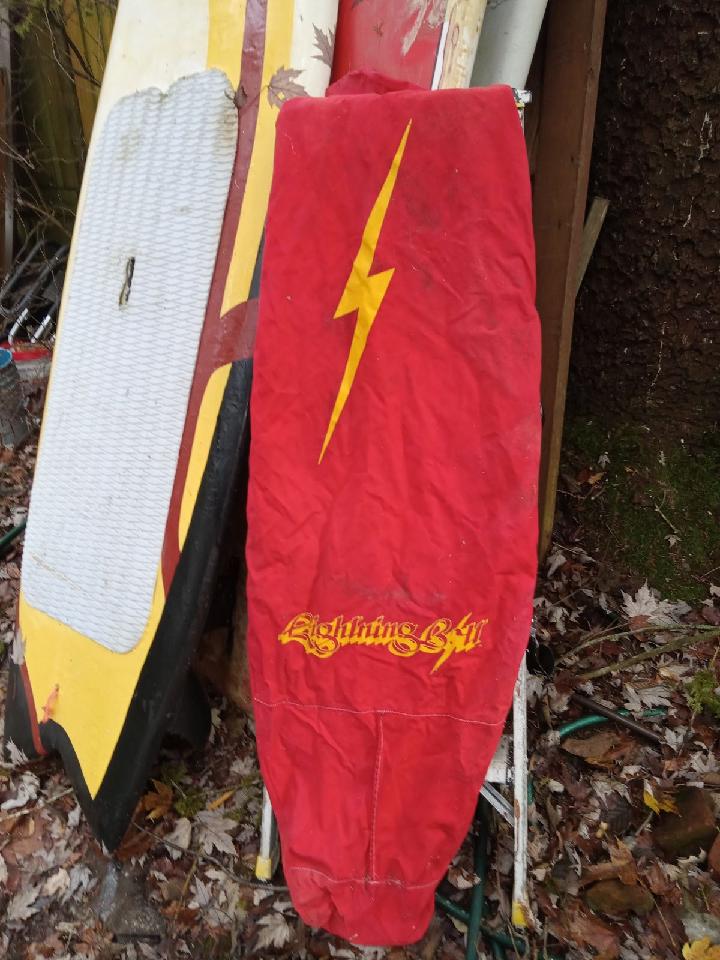
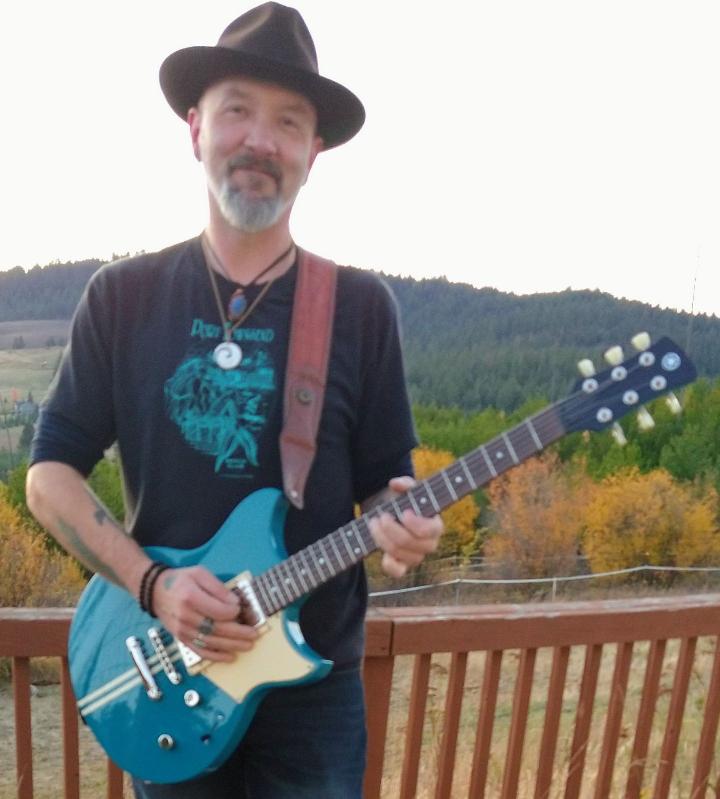

 Real Surfers