The novel is complete… but… HERE is something I tried to write to tie all the stuff together. After the story exposition. Perhaps. The characters have lives after the novel; I’m in the process of deciding that doesn’t have to be explained. I probably will cut Grant Murdoch out of the novel, or at least, edit him down. SIDENOTE- I really didn’t want the dialogue to sound TOO HIP. I read some of my stuff; most likely too hip. Shit!
‘Let me show you my latest acrylic.” Grant Murdoch, Jr. moved his foot against the Costco cooler bag that was leaning against the chain link fence and turned toward the shower between us and the bathroom building.
I pulled two old PeeChee folders, three notebooks in each, from the bag, coughed, and said, “I hope you’re not… perving out, Grant. I don’t want… guilt by association.”
“Because you’re a local?”
“Because it’s… yeah; the local thing. It’s…”
Grant was smiling when he turned back toward me. “So, my father said that what he learned from all the notes was…”
“The notes stolen from me.”
“I thought you said it was a relief.”
“It was. I didn’t know shit. People thought I did and told me… everything.”
“Exactly. You and Grant Fucking Murdoch, Sr. agree. But… then you did.”
“And… I am curious as to who stole my folders.”
“Attorney-client privilege?” Grant nodded. “Inherited clients?” Grant smiled.
I put the folders back into the bag, pulled out the twelve-by-eighteen stretched canvas.
A woman shuffled toward us. She was wearing a spring suit; short legs, full length arms; half-wrapped in a towel and wearing sandals. She leaned a well-used mid-length board against the fence, said, “Boys,” and moved toward Grant for a hug. Not a long one. Greeting length.
“Joey tells me you think he should cut me out of the book?” She didn’t respond. “I don’t move the plot… enough.”
“We’ll see. Joey can’t seem to let the… writing… go.”
I handed the seascape to Grant, pulled a pair of glasses from the pocket of my sweatshirt, and handed them to Julie. She looked at the painting, put one hand on Grant’s shoulder, the other on mine. “You almost caught the magic there, Grant.”
“Almost,” Grant said.
“Magic,” Julie and I said, me just a moment behind her.
COPYRIGHT Erwin A. Dence, Jr. All rights reserved. Thanks for reading. NOW, WHERE are the waves?
“And when he gets to the end, he wants to start all over again.” From “Stagefright,” lyrics by Robbie Robertson. Originally performed by The Band.
“I’d rather be clever than funny.” From “Swamis,” spoken by narrator, Joseph Atsushi DeFreines.
Throughout my third (or fourth) total rewrite of my novel I have been thinking that, when I get to THE END, an ending that was vague and unclear as I wrote; knowing that the denouement (I could just say finale) had to be unexpected, clever, AND another character had to die; I also believed that the changes I was making in an attempt to tighten the scope of the story, to focus on fewer characters in a shorter span; all this would tell me how to end “Swamis.”
And, last night, I got to THE END. Again.
EXCEPT, cleverness and conceit and the desire to produce a novel I can unreservedly be proud of continue to collide. IT’S FIXABLE. It just takes more work. Writing this piece this morning is my way of outlining where I have to go. ISSUES:
The events in CHAPTER ONE occur AFTER the timeline of the novel. Prologue that could be epilogue. Perhaps should be. EXPLANATION- I wanted the story to begin with surfing, with establishing JUMPER HAYES as a suspect in the murder of CHULO. I wanted to establish the narrator, JOEY/JODY/ATSUSHI as a non-local outsider longing to be in whatever culture there is in and around Swamis. I wanted to show that Joey had a romantic relationship with JULIA “Julie” COLE, and that the relationship was strained because of something Joey had done. BUT there was hope.
I have been rather insistent that the novel is told from Joey’s PERSPECTIVE, in his voice. It is not my voice. If “Swamis” is memoir, rather than being overly descriptive, Joey insists on clarity.
MY CONCEIT is that, because obsessive note taker Joey has chased down and documented leads, and has discovered who, from street level dealers to wholesalers to money launderers to detectives, was involved in the growth of marijuana as a cash crop in late 60s Southern California; and we, as readers, have the opportunity to be aware of the clues he has collected; when we get to the end, there is no need to further explain. DROP THE FILES and someone else works it out.
NOT THAT SIMPLE.
If I had intended the novel to be more surf/coming-of-age than mystery or ROMANCE, I have not, probably, succeeded. The love between Joey and Julie is the thread that goes outside the other boundaries of “Swamis.”
Speaking of BOUNDARIES; If 100,000 words is my projected boundary, and I kept track along the way, and I have already cut and moved a couple of novel’s worth of chapters and pages, most recently the PROLOGUE- good stuff; I am not ashamed of it, not sure where to put it.
It would definitely be easier to have thought of “Swamis” as two 65,000 word novels. While I am already considering a sequel, possible title, “BEACONS,” I must now see what must be done with CHAPTER ONE. So… Work.
THANKS FOR sticking with me, and… meanwhile, It may or may not be related to all the drawing I have been doing recently, my GORILLA HANDS clutching skinny ass pens and pencils, but I am dealing with this excruciating pain in my right hand that feels like, if I am clutching anything, all the blood in my body is focused on my thumb, and, if I poked, say, the end of it… Yeah; I can imagine how jokes could so easily be made of this. “Too bad it’s your thumb,” “Clutching, you say,” etc.
To provide more opportunity for humor, when I self-diagnosed with the help of the always-reliable internet, it seems the malady is nicknamed “Mommy thumb.” No, it’s because moms seem to suffer with similar symptoms from holding newborns. And no, I don’t see how that compares to my holding cell phones and writing implements. It is, essentially, tendonitis, and yes, when the swelling finally goes down… relief.
ANYway, since I have some actual painting projects coming up, with rest and Ibuprofen and a splint (which, happily, doesn’t seem necessary when typing), my hand’s condition will improve further by the time some actual waves find their way my way. I do hope you are getting the benefits of the atmospheric river.
There were lulls in the water on this afternoon, time when watching the horizon took priority over trying to out-position the other surfers. Images. Conversations to rerun. I surfed an hour and fourteen minutes. I took my time showering and going up the stairs. I stopped at the top and watched Portia and Judith at the Jesus Saves bus. Numerous individuals came up to them. No, they came up to Portia. Judith stood in the doorway to the bus, arms crossed, standing guard. When she looked at me, seventy yards from where she stood, I looked away.
San Dieguito High School would be letting out around three. I pulled up to 101 at two-fifty-five. I did look across and up, beyond the railroad tracks, past several rows of houses. I saw two dormers on the roof of the first Mrs. Cole’s house. One of them must have been Julia’s room. Julie’s. I imagined her looking out the window, seeing lines approaching, the light from the sun or the moon bouncing off moving liquid fields. The car behind me honked. I looked left, right, left again, and pulled out.
The Simon’s Landscaping truck, heading south, passed me just beyond the Sunset Surfboards shop. Both Baadal Singh and I looked to our left.
OLYMPUS DIGITAL CAMERA
CHAPTER 14- MONDAY, MARCH 31, 1969- PART THREE
There were three vehicles ahead of me at the stop sign where highway 76 connected with the road to and from Vista, just west of the Bonsall Bridge. Traffic coming down the steep hill had priority. There were two sharp turns. Many drivers, over the years, had mistimed or misjudged the slalom-like run down and around the cliff face and onto the narrow bridge.
There was a pullout to my left. Dirt. Potholed. A truck overloaded with stacks of firewood was parked, idling, driver’s door open. A roughly lettered sign on raw plywood serving as a sort of fence on the sides of the truck’s bed read, “Firewood. Oak. Dry. Split. RA-8-1074. Reasonable.” The woodcutter was out, checking the tires and suspension. He pulled on each of the three ropes that went over the logs. He looked over at me.
I was visualizing my mother in this lot, standing outside the Falcon as I approached from the bridge, coming even with, then pulling beyond the Falcon. I was just jumping out when Wendall’s Buick, red dashboard light spinning, siren wailing, came screaming down the hill. His brakes screeched when he was forced to slow down to make the curve and recurve.
My mother studied my face for a moment or two before she started screaming. Questions. I couldn’t focus. What I heard was, “What did you do?” She was throwing bags out of the Falcon and onto the ground. “Open the trunk!” She was shouting orders I couldn’t process. “Take the back road to Bonsall. Go to town. Fallbrook. Buy some pizza at the, the restaurant… over by Ammunition Road. Make sure they… see you. Keep the receipt. You, you, you… were never here.” I was frozen. “Oh my God! Is he all right?” Still frozen. “Open the trunk. Open the god-damned trunk!” I did. My mom started tossing the bags into the Volvo. “Of course, he’s all right. He’s always all right. Always fine.”
I wanted to visualize, remember, perhaps, if I had observed my mother putting the papers and the bag with the gun under the seat. I hadn’t. It had to have been when she heard the sirens on Wendall’s car, or when she saw the lights. Or both. That had to have been why she pulled over. She didn’t lose control until she saw me. Me. Out of control.
The woodcutter’s truck pulled out. As it hit the last pothole, two split pieces of oak fell off the pile. I looked both ways and continued; hard left, soft right, soft left, and onto the bridge. “Always,” I said, out loud, as I eased into the right-hand corner on the east side of the bridge. “Always fine.”
Why she hadn’t taken the Volvo back to the accident scene was only a vague question I hadn’t thought through. Chaos of the moment. The Falcon was more recognizable. She wanted to protect me. There were other explanations, possibly; she never explained, and I never asked.
…
The yellow Karmann Ghia, top down, was most of the way off the highway on the right-hand side, just beyond the almost completed strip mall. Lee Anne Ransom was standing in front of her car, a notepad and a camera on the hood. The older of two workers, carpenters, was walking away and toward the two vehicles parked in the middle of the lot, a fairly new pickup truck and a fairly thrashed, oversized American car. He looked directly at me as I passed him.
Of course. He recognized the Falcon. I didn’t look at Lee Anne as I passed her. “Fuck!” I pulled into the parking lot at the tavern just under a mile down the road, still contemplating whether to go on or go back.
…
The older carpenter and I exchanged nods when I turned into the strip mall lot. I pulled a lazy u turn, clockwise, on the now-paved surface, parking spaces painted on it. ‘Opening Soon’ signs were painted in bright tempera paint on the windows of the partially painted store fronts. I turned back onto the highway and ten yards past the Karmann Ghia before I pulled in. I didn’t back up to get closer. Both carpenters were walking toward us as I walked up to Lee Anne. Her camera was aimed at me. I put my head down, looked at the scrape marks on the asphalt and the crushed foliage from when my father’s car had been winched twenty feet across the river bottom and twenty feet up to the road.
Perpendicular to the highway, gravel and fill that formed the base for the mall had been covered with topsoil and planted with iceplant and what was supposed to appear to be randomly spaced bushes. A shiny galvanized metal pipe, probably a foot in diameter, came out of the bank, about ten feet below the parking level, and ran above ground and down, at the same angle. The pipe made a bend probably five feet off the flatter bottom of the valley. It extended at an angle five degrees or so off level, and into a square concrete box, three by three, three feet high. A stump of a long dead tree was about four feet beyond the box.
I had read about all of this. I had seen photos. It became real.
When I got close enough that Lee Anne Ransom didn’t have to raise her voice, she said, “Thought you’d be coming the other way, Joey.”
“Thought you’d be, um, working on your yellow journalism for this week’s… edition, Lee Anne. Chulo’s the story. Isn’t it? Not who killed him. Just… him.”
“I’ve got stuff on his funeral, his family. I wanted to get with you on… the guy your father didn’t hit… here, he called us, the paper. He said he didn’t trust the cops. The sun, he said, was…” Lee Anne faced west, put her hand up and in a salute position. “Like now. He just followed other vehicles… around the bus. Even when the… when your father pulled to the right, he thought he was in the clear. So?”
“So?” I can’t be sure I even said that.
“So, trying to avoid the Vista guys, Dan and Larry, and Langdon, my editor took the… let’s call him the Driver… he took the Driver downtown, found out they really didn’t care all that much about who was responsible, and, and the downtown boys turned my editor over to… he was there… fucking Langdon, anyway. He was concerned about Judith Cole, wanting to know what we, meaning me, knew about her. She and her daughter were there, after Chulo was killed. The daughter, Julia, was taking pictures, and Judith was trying to calm… Portia. Langdon was pissed that Wendall didn’t try to get her film, wondered if someone tried to sell it to us.” Lee Anne laughed. “Sell?”
“When did Langdon get to the scene? To Swamis?”
“Soon enough to cart off the mysterious guy, supposedly East Indian, guy who either tried to save Chulo… or kill him. Langdon almost denied the guy existed; said he couldn’t comment on an ongoing… same shit there… but he did ask about you. So?”
I looked toward the sun, closed my eyes, and tried to recall what I had seen. My father looked at me as we passed each other. “So, Lee Anne Ransom, you must have heard I’m kind of slow, so… I have to process.”
“Then, Joey, process.” Lee Anne raised her sunglasses, widened her eyes, bigger with the lenses on her regular glasses. “And… it’s more like… orange journalism. Sensationalist Commie shit. So, orange.” I nodded. “Maybe you didn’t know this. They kept Chulo and Portia here until Langdon got in from Orange County, closed the road for seven hours.”
“Standard. Someone… died.”
“The Highway Patrol is the… usual choice. Right? Standard procedure.”
“My father… knew those guys, their… detectives, too. Also.”
Lee Anne moved in closer to me. “Yeah. That’s the official line from Downtown. But… Langdon was on the scene, here, in fifty minutes. Mario Andretti couldn’t do that from Orange County. And he was at Swamis… my boss has a radio that gets… you know; ten minutes after the initial call.”
“Who made that? The call?”
“Someone, from the phone booth at Swamis. Okay, Fred Thompson. He called the fire department. Point is, Joey, and I’m trying to process all this shit myself, Langdon was already around. It’s all, I’m thinking, about drugs.”
I blew out a breath, took out a cigarette and lit it with my father’s lighter. “With you, Lee Anne Ransom; it’s always drugs and/or corruption.”
“Holy trinity of investigative… anything, Joey; sex and/or drugs, money and/or power, and… corruption.”
“And/or?”
Lee Anne took a breath. “And/or guilt. No, guilt fits in with…. Shit, just tell me what you know about Judith Cole, Julia Cole, the mysterious Indian dude, Portia Langworthy, Chulo Lopez, and yeah, new edition to the list of ‘who the fuck are they?’, Chulo’s old partner in crime, Junipero Hayes.”
“Jumper… Hayes. I… thank you for sharing, and waiting for me, Lee Anne, but, even if I knew… something, I can’t… comment on…”
“Ongoing investigations?” She shook her head. “I’d say ‘Fuck you, Joey,’ ‘cept you’re, what…. Seventeen? And… you might just take it literally.”
“I did say ‘thank you,’ didn’t I, Ma’am?”
“Ma’am? Damn right. Ma’am. And… don’t go givin’ me that ‘I’m slow’ shit Joey.”
THANKS for reading and for respecting the copyright… stuff. All rights reserved by the author, Erwin A. Dence, Jr.
OH, and good luck in finding and riding some waves!
I’m so late. I will add some Halloween stuff to this later. Promise. Remember, copyrighted material. Hope last night went, well, well.
CHAPTER FOURTEEN- PART ONE- MONDAY, MARCH 31, 1969
Dr. Susan Peters and I were sitting on opposite sides of the table in treatment room. I had an unopened PeeChee folder in front of me. There were two stacks of manila folders in front of her. She was laughing. She wrote something on a legal pad inside the open top folder.
“Your father telling you to smile, or laugh rather than… punch someone or, um…” Dr. Peters pointed to another folder. “Slam someone’s head into the water fountain. Did you try his, that… technique?” I smiled. Big. Fake. The doctor returned a gritted-teeth smile. “Scary,” she said. We both laughed, her more than me.
“So, Dr. Peters if this neural feedback dude does show up with his own equipment; we… I’m assuming Dr. Dan will be here. Also. We, I’ll do the testing and all; then you three can decide if I’m, what, insane … or damaged?” She fluttered her hand and wrote something else. Two or three words. “Or, I mean…” She looked up. I smiled. Can’t I be both?”
“Of course.” She removed a legal pad from the folder, set it on a clean area on the table, and closed the folder. “Dr. Dan’ll do the, uh, testing… again. The neural feedback; it’s… therapy. As far as… you’re probably neither crazy nor damaged. Just…” She laughed for no obvious reason. “The drunk dad at the baseball game story. Love it.”
“Loving something; it’s neither clinical nor objective. You’re not that kind of… doctor.”
“No. I’m that kind of… person, Joey. Stories. Yes. Just tell me if I’m getting this right.” Dr. Peters was ready to write. “So, Freddy’s on third base, one drunk dad, from the other team’s drunk dads, is hanging on the outfield fence and giving your brother shit, another one jumps in your father’s patrol car. Unmarked, right?”
“Cop car. Instantly recognizable. My mom guilt-tripped my dad into going to the game. The game was in Vista, as is the substation. My dad showed up fifth inning.”
“Out of six.”
“Seven, I believe. Pony league.”
“Your father asked Drunk Dad to kindly get out of his car?”
“According to him. The ‘kindly’ part. I had heard yelling. Not my dad. He never… yelled.”
“You’re running over, outside the fence, your dad yanks Drunk Dad out of the car, and another drunk dad…”
“Handed the guy a baseball bat… with which Drunk Dad hit my father, breaking his arm. Left arm. Radius. Distal.”
“Okay. Technical. I love the ‘with which’ part. Your dad pulls the bat out of Drunk Dad One’s hand, jabs him in the sternum.”
“Below it.” I pointed to a spot just below my rib cage. “Xiphoid process. Straight shot.”
“Ow! Okay. Not trying to kill the drunk dad.” I shook my head. “But Joey; you’re running over, you call out, your dad looks over at you, and that’s when he got… hit.”
“It was.”
Dr. Peters slid her finger up the page. “My question is…” Dr. Peters stood up, walked to the door, opened it, leaned into the hallway. “He here, yet?” I couldn’t hear the answer. It took longer than yes or no. The Doctor pulled herself back into the room, closed the door. “Accident on the freeway. And Dr. Dan wants to wait. So, next time.”
I stood up. “Your actual question: Was my father distracted, and do I feel responsible for my father’s broken arm? He was. I do. Drunk Dad got some sort of settlement… from the County. Eventually. My father got a week off, went back to work with his arm in a cast.”
“Another chapter in the… the legend,” Dr. Peters said. I may have smiled. “Should I have said ‘myth?’”
“My father was everything anyone says he was.” She had purposefully and successfully provoked me. Shit. “Not, Dr. Susan, everything everyone says.”
Dr. Peters stepped toward the door; made a fist she probably didn’t think I saw. She opened her hand before she turned back around. “Then, Joey, next week; I would like to… revisit… the accident… Perhaps we can catch one of your… spells.”
“You think you caused, induced it, that you’re… responsible… for it?”
“No. Maybe. Sorry. Yes, but… maybe you allowed it, rather than you couldn’t control it. You try so hard to… Can you describe what it’s like? I mean, that kind of… self control, you with the impulsive… behavior.”
“Shocking.”
“No, not even surprising. Your… pauses. I put them into two categories. Short ones, you’re doing the one step forward, two back thing, considering the previous moments. Six to ten seconds. The absences, where you visualize some event, and you can still be aware of… where you are, whatever else is… those are longer.”
“The double-exposure thing? Yeah, I’m still… there… in those. Present. Aware.”
“But the one I… witnessed. It was… intense. Whatever you were seeing, was everything else… gone?”
“Gone.” I put both hands up to my face, palms in, fingers tight.
Dr. Peters sat down, pointed to a chair on the opposite side of the table. She pulled a second, empty legal pad closer. I didn’t sit down. “I talked, on the phone, to the professor at UCLA, the neural feedback… dude. I told him I thought you… you observe… everything. If you had an overload of… input. I mean, the absence thing, being gone. Maybe it’s…”
I sat down in the chair she had offered, slid the Pee-Chee folder over and in front of me. “These spells. The one you saw. They’re different than… when I had seizures. They’re like, like an 8-millimeter movie. Really, I couldn’t tell you if it was a dream or a memory.”
“Let’s call them… visions. Visions?” I nodded. “Are they in color?”
I had to laugh. “Oh, because men, supposedly, dream in black and white. So… no. But… what did the feedback dude say about your… theory?”
“Not total bullshit, actually. He said anyone, with that much… stimulation, be it from epilepsy or another neurological disorder, would be on the ground, most likely in a fetal position. Gone.”
“And I wasn’t… I mean, on the ground.”
“No, just… gone. As you said. Yourself.”
“I do… try to, to not react. Not have a spell, not end up… gone.”
Dr. Peters wrote a few more lines, slipped the notepad into a folder. I opened my Pee-Chee folder, opened the notebook, spun the enlargements Julia Cole had left on the Falcon around and toward her. “What do you believe being an actual witness to something like this would do to that person?”
“Holy fuck!” The doctor pushed away from the table. Too forceful a push, she had to grab the edge to keep from going over backwards. “Joey! Fu…uck! Where’d you get these?”
I shook my head and blew out whatever air I had in my lungs.
…
Dr. Peters followed me to where the Falcon was parked, still shaded by the overhanging eucalyptus trees. She looked back toward the building and pulled a single cigarette from the bottom left-hand pocket of her lab coat. I set my folders on the roof, lit her cigarette with my father’s lighter, took out a Marlboro, lit it.
“Our secret, Joey?”
“Client/Doctor… sure.” We both inhaled. Twice. Susan Peters inhaled deeper, held the smoke in longer, let it out more slowly. “My mother,” I said, “not sure you knew this; she works in the photo lab. Camp Pendleton. Secretary. I’ve been there… a few times. The photographers are Marines or ex-Marines. The older ones were at every landing, every battle. Most are… so… sad, so… damaged. Ruined.”
“Most, not… all?”
I leaned against the driver’s door of the Falcon. “Hard to say. People… hide it.” Dr. Peters raised the lower back of her lab coat and leaned against the bumper. “I’m hoping, since I do… I do remember images, do file them, rerun them; I do… maybe I’m just… weird, and not…”
“Next week, Joey; we’ll know more.” I shook my head and arms as if I was electrified. Dr. Peters dropped her cigarette butt, stepped on it, stepped away from the bumper. “It’s just like that. If your… friend, with the… photos, needs to talk…”
Dr. Peters pulled a business card from her coat, offered it to me. I took the card, stuck it into the Pee-Chee. “I know your number, Dr. Peters.”
“Susan. Please, Joey.” I looked at the cigarette butt until Dr. Peters picked it up, held it out toward me, and closed her hand around it.
“Susan,” I said as I unlocked the door, “In the parking lot… yes, Susan.”
“Yes?”
“Yes. Susan, I’m not gone, but I am… going.” Dr. Peters didn’t respond. “It’s a joke. You’re supposed to… smile.” Dr. Peters smiled.
…
It was just after noon. I was on 101. I had seen decently sized waves at the various low spots. I could see, over the guard rail between Pipes and Swamis, unbroken sets. Still, I glanced several times to my right and up the hill. I passed Swamis, turned right at D Street. Cars were parked on both sides. The door to David Cole’s office was open. I couldn’t really see inside. I turned right again on Vulcan.
I drove slowly past Julia Cole’s mother’s house. No Jesus Saves bus. The VW bus was in the driveway. Two houses down, I could see waves forming in the kelp beds, but I couldn’t see the actual lineup at Swamis. I could see the entrance to the lot, the gold bulbs on the white walls. I considered turning around and going past the house again. A car came toward me from the south. It may or may not have slowed down. Their neighborhood. I looked down, allowed the car to pass, pulled back out.
…
My remaining change, eighty-five cents, was arranged in three stacks on the little corner shelf in the phone booth, along with my keys and wallet and cigarettes and my father’s lighter. The handset was perched on my right shoulder. I was in my trunks and a t shirt; barefoot. I put the handset to my face. “No, I just want you to… tell Mr. Greenwald. Hello? Oh. Hi. I was trying to explain that it’s late and…” I took a step back, testing the length of the cord. One foot out of the booth, one in. “No Sir, they are not with me. No, I do not know where my surf friends would be.” I looked past the small parking lot to the larger lot. Two thirds full. Most were not surfer’s vehicles. Neither Gary’s nor Roger’s cars were among them.
“Am I going to surf? Possibly.” The Jesus Saves bus was at the far end of the lot, the door open. I didn’t see Portia. “You know, Mr. Greenwald, there’s this thing about doctor/patient confidentiality, but… Sir, I have to tell you…”
The operator interrupted. “Deposit thirty-five cents for the next three minutes, please.”
“I believe this doctor is the craziest one yet.” Click.
…
I went through the trees and the old outhouse and to the stairs. My board was leaned against the fence and my towel was draped over the top rail. There was a woman next to my board, sitting on the lower cross member of the fence, the top rail crossing her back, just below her shoulders. Her arms were outstretched, hands twisted, fingers on the top of the top rail. She waited until I got very close to her before pushing herself forward and standing up, moving between me and the surfboard. “This is Sid’s board.”
“It was.”
The woman moved close enough that I stepped back. Tall, thin, her hair quite long for a woman over thirty; very straight and very blonde. There was something solid, white, in her hair on where it went over her left ear. Solid. She noticed I had focused on it and reached for it with her left hand, a large diamond on the ring finger. “Might be paint, she said,” moving strands of hair against each other, slightly breaking up the gob.
“Paint. Yes.” The woman was wearing a dress, mid-knee length, and a sweater, connected near the neck with a short length of tiny beads. Another strand, with larger beads, was rather tight to her neck. Her sandals were on the concrete next to her. I had seen this woman before.
I closed my eyes. The grocery store. Customer. She was wearing a dress that time also, talking to Mrs. Tony between the middle and the south register. Mrs. Tony had three account cards, slightly splayed, in her left hand. Her pencil was out of her hair and in her right hand. The woman was placing bills, in three stacks, on the ledge on top of the rack. Mrs. Tony looked at me as I passed. She moved her head, quite sharply, toward the middle counter. The woman looked at me. I looked at the three cards and three stacks and kept walking.
That image faded.
“I see what they mean about you, Junior.” I opened my eyes. The woman’s eyes were blue, very light. “Judith.” She left room for my response. I didn’t. “Julie’s mother.” She didn’t move back. I didn’t move away. “You drove past my house. Yesterday… evening.” She looked up and in the direction of her house, a little to the right from straight across the highway. I didn’t follow her eyes. Her house wasn’t visible from where we were standing. “The Falcon wagon…” She looked toward the smaller lot where the Falcon was parked and partially visible through the trees. I didn’t look. I did nod. “Used to be your dads, then your mom’s. Ruth. I don’t know her, but everyone knows Joe DeFreines. Knew. She took you surfing. It’s your car now?”
I wanted to answer quickly. “Three more payments to my… No. Yes. Mine. Now.”
Julie’s mother backed away, flipped her right hand out and to her right, to the south. “Before they opened the state park.” She kept her eyes on mine. “Third stairway down. You were just learning. You and my younger girl, Julie; you both must have been around… eleven.”
I didn’t remember seeing this woman. I did remember waves so thin and clear that, walking out, pushing a surfboard, it seemed I could see through them. Transparent. I did remember the girl, laughing, standing, riding more than the soup. I remembered being surprised when a wave hit me, chest high, while I was watching this woman’s younger daughter. Julie.
“You know, Junior, I… we, we were there. That night. Chulo.”
I looked around, hoping something might keep me from having to respond. “Yes. Mrs. Cole. With… Julie. Julia. It must have been…”
“Horrible. Yes. Julie saw the fire. I saw the lights.” Mrs. Cole turned away for a moment, wiped her eyes. She turned back. “Chulo. I knew Chulo… most of his life.”
Realizing I had been squeezing coins in my left hand, I placed them into my wallet, already stuffed with little notes and receipts and twenty-three-dollars in bills. “Sorry.” I pulled my towel off the top rail, wrapped my keys and my wallet in the towel, put the bundle under my left arm. I nodded toward the water. “Surfing,” I said, looking toward the water. “Going. Mrs. Cole.”
“Ex Mrs. Cole. Or… first Mrs. Cole.” I looked back at the first Mrs. Cole. “Judith. Non-Jew Judith to David Cole’s… people. The current Mrs. Cole, Gloria… goes by Glor…” Judith swung her head around, pushed the hair away from her face with both hands. “Uppity. East Coast. Old money. Glor would prefer it if I went back to my maiden name.” Judith waited as if I was supposed to ask something. “Sweet. Judith Sweet. Fuck Glor, I’ve never been… sweet.” Judith looked to see if I was shocked. “Anyway, Junior; what do… you… know?”
“Joey.” Perhaps in response to Judith’s move, I used the fingers of my right hand to pull my hair forward, over my ears, right side, then, awkwardly, the left. “Nothing. What I know.”
“Nothing?”
“Nothing.” I reached for my board with my right hand.
Judith put her left hand over mine. “Joey, your father understood how things… are. It was under control.” Judith caught me looking at the oversized diamond on an oversized ring. “Second husband.” Moving her lips side to side, the look she gave me was intended to say something like the second husband wasn’t her first choice. “Mooney. I pronounce it ‘money.’ Nice guy.” Her hand still over mine, she moved her face even closer. “Chulo; that was… so… wrong.”
“Wrong.”
“Your father and Chulo, Chulo’s family; there’s… history.”
“Yes. From the parades.”
Judith responded with an obvious scoff, moved her hand to my left forearm, looked at my clouded watch, smiled, and looked into my eyes. “And Chulo; he is another… surfer. Was.”
“And good. When I started… Chulo and Jumper… they ruled.”
Judith pulled her hand off my arm, looked away, stepped back. I followed her eyes. Portia was coming toward us along the bluff. I took the first three steps down the stairs.
“Portia wasn’t asleep, Joey.” I dropped down three more stairs. “And she spoke with your mother. Ruth.” I stopped. I turned fully around. Portia was next to Judith, nothing but sky above them. “I’m just trying to protect my friends and my… daughters.” Judith put her right arm around Portia’s shoulders. “Like your mother is trying to protect… you.”
I knew I had to look at Portia. She pushed back her shawl, put her hands on her belly, slid each hand away from the center, looked at her hands, and then at me. “Your mother calls you Atsushi.”
“Lately. Yes.” I moved back up my most recent three steps. “She, um, your real name… it’s… Patty?” Portia smiled. Perhaps because I had dared to look at her directly. Fully. She seemed more Patty than Portia.
“It was. Patty Long.” She waited a moment. “Back when I came… here, when I first… met your, um, daddy.” She twisted her lips into what was almost a kissing position. She twisted them back, sucked them in, possibly remembering some part of her real story she didn’t want to discuss on the stairs at Swamis. “Teenage runaway. Don’t know if you knew that.”
There was a delay before I answered. “No. Sorry. I mean…” I moved my hand around to try to suggest she had chosen the right place to run to, gave her an expression I hoped conveyed that I really knew nothing about her past. “You’re here… now. Portia Langworthy.”
“Your mother; she said her… real name is… was Moriko. I understand the biblical reference. Ruth. ‘Your people will be my people,’ all that. She told me she tried so hard… we all do; she wanted to… Portia inflated her cheeks and twisted her lips. “To blend in.”
Judith Cole-Mooney snickered and said, “Like, good fucking luck with that,” checking to see if I was offended. I wasn’t. I was, undoubtedly, moving my eyes between the two women at the top of the stairs. Still, I couldn’t help but overlay Julia Cole’s serious expression on her mother’s snicker. No. I wouldn’t allow it.
Judith put her right hand on Portia’s stomach. “So, Atsushi… Joey; are you going to help us sort this shit out, or what?”
I looked at Portia. “Because I am my father’s son?”
Portia gave a weak smile and mouthed something. “All will be revealed.” Possibly.
“My father said, ‘There are no real mysteries. You just have to ask the right person.’ Persons, maybe. That’s not… me.” Both women gave me quizzical looks. “When I don’t know what to say, I quote him. Sorry. Look, the detectives don’t want me involved. They’re…”
“Handling it? Dan and Larry?” Judith leapt down two stairs and stood directly over me. Her expression showed real anger, real frustration. “You don’t fucking get it, Junior. Langdon’s… not… going to stop.”
Looking into Judith’s eyes, equally as light as her daughter’s, blue rather than green, didn’t help me in maintaining any semblance of coolness. “You’re… right.” I took a step down, backwards. Losing my balance, I pulled my board closer, twisted my body, threw out my free hand, took two more steps. “He… won’t.” I was now facing down the stairway, toward the water. I didn’t turn around.
“All right,” Judith said. “Jumper’s getting better. Fuckin’ Gooks couldn’t kill him. He’ll… help.” Judith’s voice got louder. “It just got too big, too… too fast. David’s… we’re all getting out of this… shit. It’s… real estate. Glor’s got David all involved in it.” I did look around and up. “I mean, fuck, Joey, look around. People want to be part of this. California. Magic!”
Judith was almost dancing, up a stair, down, her hands moving around in the air, all rather unevenly. She stopped with her left foot on the stair tread Portia was on, her right foot on the tread below it. She kept her hands up as I went back up, stopping one tread below her She studied my eyes. I kept them open. “Magic,” I said. “We’re all looking for… the magic.”
“Yes,” Portia said, “We are.”
That Portia and Judith were studying me seemed to give me permission to study them. Portia had heavy black eyeliner and shadow around light gray eyes. There were freckles on her cheeks and forehead. The hair in front of her ears was blonde. The hair that framed her face and softened her cheekbones was one-tone black. Dyed. Artificial.
I looked several seconds too long. Portia blinked, self-consciously pulling at a section of her hair. “Disguise. Costume,” she said, moving her hands to the opposite shoulders. “Still playing dress-up.”
“it’s, hopefully, a forgivable sin… Portia.”
“Not the Portia I… imagine. Not yet.”
“God. Portia, Patty; just tell Joey here what you actually fucking saw.”
“I got there too late. I’d been… waiting.”
“No, Patty.” Judith took a step down, turned around, put her arms around Portia’s waist. “I meant… sorry, at the bridge.”
Portia looked over Judith and at me. “I saw… an accident.
“Fuck.”
I looked past Judith. Portia looked at Judith. “It’s what I saw. Cars made it past… us.” Portia looked at me. “There was room, there was… time.”
I turned and started back down the stairs. “Jumper. I heard… He’ll help you. I’m sure.”
Judith blurted out, “Julie gave you… the pictures!” It was more a plea than an argument. “She… we shouldn’t have gone down there. She shouldn’t have seen… that.”
I didn’t answer. I didn’t turn around.
Too many questions, too many images bouncing around my head. Stopping at the platform, I tried to count the surfers in the water; eleven, one coming in, two going out. I looked at the diamond reflections on just one outside wave as it approached. Too many to count, they merged into one shimmering white line. I imagined the intensity of the light spots, the blackness of the shadows. Flash cards. Seven. “Waiting for you,” the note had said.
When I looked back up the stairs, the two women were gone.
Still morning. Still overcast. The Swamis parking lot was now filled, mostly with non-surfers. All the doors to the Falcon were open. Textbooks and notebooks, two surfboards, several towels, and several pairs of trunks were spread on the hood and roof. A partially filled burlap grain sack was positioned just behind the driver’s side back door.
I raised the back seats. With the seat up, I dropped to my knees, leaned in, started placing empty chocolate milk containers, packaging from donettes, bags from Jack-in-the-box, crumpled notebook pages and other trash into the burlap sack. I reached under the front seat. Some things were stuck in the springs. I pulled out a dirty white cotton laundry bag with a drawstring. Fairly heavy. I set it on the hump for the car’s driveline and opened it. The bag had the unmistakable shape of a pistol. There was, inside the bag, a towel with “Back Gate Bowling Alley” in red letters on yellow. Marine Corps colors.
There were also several pages of legal sized paper, folded in half. I tossed them over and onto the front seat.
An inner bag was velvet, royal blue, with a gold pull string. Inside with the pistol, was a small key attached by a wire to a slightly curved piece of metal. Stamped into the key was ‘121.’ Stamped into the metal was, “In case of emergency, break glass.” Several small metal objects dropped to the bottom of the inner bag as I placed it on the back seat cushion. I felt them. “Bullets.” I counted them. “Five. Twenty-two-caliber. Probably.”
The pistol itself was wrapped, properly, in an oil cloth. I spun the cylinder, popped it open. “Empty.” I pulled back the hammer, pushed the barrel down into the seat cushion, pulled the trigger. “Empty.”
There was movement, a silhouette in the driver’s side back window, opposite and above me. In some portion of a second, the pistol was raised and aimed at the window, my left thumb pulling back the hammer. At the very moment I recognized the silhouette in the window as Gary, I pulled the trigger.
Click.
Gary jerked backward and dropped down, nothing but light behind him.
…
For some indeterminate amount of time, I was back on the floor of my father’s patrol car, 1956. So bright. On some level, collapsed on the floor of the Falcon, I had expected an actual gun shot.
…
The sun had won out over the clouds. Gary and I were, quite casually, half-sitting on the hood of the Falcon. I had my feet on the crushed tape player. The partially filled burlap sack was on the hood behind us. The Falcon’s side doors were closed.
“You and Roger… not hanging with the horsie girls at the base stables?”
“Later. Yeah. Definitely.” Gary looked over at the SRF compound wall. “It’s way different, you know, like nothing bad happened there.”
“It looks… cleaner. New grass, plants. Paint. So, like, no, nothing… bad. Someone burned, maybe… alive.”
“Jeez, Joey.” Gary took out a cigarette from a pack of Winstons. He offered me one with a gesture. I declined with a gesture. He knew I was a Marlboro man. “Um, so, if your mom sells the… mini-Ponderosa, where would she move to?” I shook my head. “For you, here, the Swamis parking lot, it would be… perfect.”
“Oceanside makes more sense for her; closer to the base; she has friends there.” I paused. I was thinking about the revolver. “She… we haven’t been to church since the funeral, which is… fine by me. I’m thinking she might want to…”
“You’re thinking you can’t leave your mom alone. With my dad in Vietnam… I get it. And… Stanford’s a long way away. And no surf.”
“I would have gone. My father would have insisted. I’d have failed… Spectacularly.”
Roger was crossing the parking lot with a large, oil-stained piece of cardboard. “I’m taking your spot,” he said, sliding the cardboard under the back of the Falcon.
I lit up a Marlboro with an oversized flame from my father’s lighter, held it out long enough to light up Gary’s Winston. “Overfilled.”
“If Joey lived in Encinitas,” Gary said, as Roger stood up lit his Marlboro with Gary’s cigarette, “Palomar Junior… Junior College; it’s, like, ‘high school with ashtrays.’”
“Sure,” Roger said, “with other dumbasses from Fallbrook, Vista, and… Mexicandido.”
“Palomar. Yeah, there might be some cute surfer chicks from… here.” Gary looked at Roger before looking back at me. “Huh, Joey?” I shook my head.
“Remember, Joey,” Roger said, when your father… I’m sure your mother made him do it; before we went down to Baja; he took us over behind your house. He was, like, ‘if some guy comes up and offers his sister, for sexual… services, says she’s a virgin…’ We were all laughing. Your mom’s looking out the kitchen window. ‘It’s a trap,” he tells us; “you boys should just find a nice girl around here, have sex with her.’ I said…” Roger was laughing. “I said, ‘I’m always looking, Mr. DeFreines, Sir.’ He laughed.”
Gary and I weren’t paying adequate attention. Roger gave up and joined us, gazing over the Falcon at the water glassing off at the horizon, the waves cleaning up, smoothing out.
The distinctive sound of a Volkswagen engine was unavoidable behind us. Not Dickson’s. Quieter. The car stopped. Gary and Roger turned around before I did. The yellow Karmann Ghia’s top was down. Lee Anne Ransom’s sunglasses were up in her hair, her camera up and pointed at us. Click. Click. She took a photo of the smashed tape deck. “Missed the fun, I hear.”
Gary moved one way, Roger the other. Roger walked past Lee Anne’s car, ran a palm across the hood, gave her his signature smile, said “getting my car,” and hustled away.
“I have to go to work,” I said. “Lee Anne Ransom.”
“Better for my byline, Joey. People know I’m a woman. Possibly white. But, hey, this is me… working. But, in case you’re… interested; Langdon just told the Blade Tribune that Chulo Lopez might have had…”
“Marijuana… connections?”
Lee Anne Ransom shut off the engine. “No. Did he?” She didn’t get out of the car. She did look at Gary long enough for him to walk back next to me. “No, Langdon offered a vague allusion to some sort of beef from Chulo’s time in the County work camp. Finding Jesus, according to Langdon, is not always a popular move.” Lee Anne Ransom lifted her camera quickly, not all the way to her face, and took a photo of Gary. “You Gary… or Roger?”
“Do I look like a Roger?”
“You look exactly like a Roger.”
“I don’t want to be in the paper. Okay, Lee Anne Ransom?”
“No photos,” Lee Anne said, “Okay.” Gary looked relieved. “Question, though, Gary; do you know Jesus?”
Gary looked from Lee Anne to me, shook his head, looked back at the reporter. “I’m a… Methodist,” he said, his words aimed somewhere between the Lee Anne and me.
Lee Anne Ransom laughed. She looked in the rearview mirror. Roger, in the Corvair, was behind her. She restarted the Karmann Ghia, dropped her sunglasses over her regular glasses, revved the engine. She pointed at me and mouthed, “You, Joey, you, you, you.” She pointed toward the phone booth near the highway. “Some… reader called the paper, said cops were roughing you up. Well, some Hawaiian dude’s the way he put it. True?” I shook my head. She revved the engine again, popped the clutch, and smiled as she passed us. “Wish I had a photo of that shit.”
Gary grabbed my left forearm. I pivoted, grabbed the burlap sack from the hood of my car with my right hand, and swung it. The bag wrapped all the way around Gary’s torso. “Jesus,” Gary said, dropping his hold. I dropped mine. The bag fell to the pavement.
“She thinks you know something… about Jesus. Do you, Gary?”
Gary closed his mouth tightly and smiled. “Maybe Roger and I can stop by and see you at the San Elijo Market on our way out.”
“No. It’s glassing-off, Gary, and you have Horsie girls… later.” We both blinked. “Sorry about the bag and the, uh gun.”
“What gun?”
I ran over the tape deck when I drove out. Gary and Roger did not stop by the market. I did get to hear, later, about how I would have loved the waves mid-afternoon, how one of the girls from the base stable had asked about me. Driving around the lot and out and down the highway, I tried not to think about what my friends knew about the obvious coded message, “Do you know Jesus?” I was pretty sure “I’m a Methodist” wasn’t the proper response.
…
When I pulled into the lot for the grocery store, careful not to park too close, I looked at the papers I had pulled out from under the seat. Three pages. I unfolded them and straightened them out. “David Cole, C.P.A.” was printed on the top of each of the pages. Numbers. Dates and numbers. I looked at the number on the bottom of the third page. I refolded the papers, moved the contents of one Pee-Chee to another, put the three pages in the empty Pee-Chee, grabbed my blue lunch sack, and headed for the double glass doors.
Two steps away from the doors, seeing my own reflection, I imagined Julia Cole from earlier, her camera moving up and down. “David Cole’s other daughter,” Wendall had said. “Stay away from that one,” Dickson had said, “A regular prick teaser.” Still, my memory, or my imagination, allowed me to zoom in on her face. Angelic? Teasing? Tempting? Innocent. Perfect.
Someone pushed a cart into the exit door. I looked at my watch as the person or persons passed me. I looked at my watch, tapped it, looked again. Three minutes early.
SURF REPORT/FORECAST- Strait of Juan de Fuca- Confusing, inconclusive, ripe for skunkings w/downed or drowned buoys, data reptng neg.sw.ht, inappropriate wind, out of context tidal shifts, sw. direction too this or too that, and, incidentally, or coincidentally, not taking any calls from Surfline asking for eyes-on reports from Hood Canal, Quil and Dabob Bays. If they were local, they would know. @surfLouie says, “avoid the frustration, ferry waits, ferry wakes, back=paddlers and snakes, stay on the city-side where your safe.” @realLouiedon’tsurfnomore says, “Wha? F U fake Louie I’m gonna bring my converted school bus slash Super Sprinter, and sixteen converts, and we’re hittin it! Hard! Softops rule?” I wrote real Louie, asking exactly where and when they were planning on hitting it hard. I shouldn’t have given him my number. I didn’t take his call. Message: “So you want to join the East Fremont Freeballers? Well, kook, you have promise eternal fealty, sign an NDA, submit a photoshopped photo so’s we know you’re cool, oh, and a properly wrecked piss sample, and, yeah, I need all your pass words, and you have to pass a rigorless test, selected from ‘the Bachelor’ and ‘Survivor.’ Erwin, that a girl name, boy name, they name? Not that I care so much? So, bro or ho or tho; you in or you out?”
OUT. Block.
The original manuscript of “Swamis,” and all edits to it are copyright protected, all rights reserved by the author, Erwin A. Dence, Jr. Thanks for reading.
I was driving my mother’s 1964 Volvo four-door. Because I never told the DMV I had a history of seizures, I did get a license, I did drive. Because my mother believed I was getting better, she allowed me to drive. Still, she looked in my direction frequently. Because my father believed I was getting better, he taught me. If I did, indeed, have some kind of brain damage, I could force myself, will myself to control the freezes my father called ‘lapses,’ and the outbursts he called ‘mistakes.’
There are stories for each sport I was pushed to try, each team I did not become a part of. Each story involved my lack of attention at some point of time critical to practice or a game. More often, I was asked to leave because, while I had not been what my father called ‘fully committed,’ I had committed violent and unsportsmanlike attacks on an opponent. Or a teammate.
I was, initially, pushed toward surfing. My father’s answer to my fears was, “If you have a lapse, you will drown. So… don’t.” It was the same with driving. “Concentrate. You’re always thinking behind. You have to think ahead. Got that, Jody?”
We were heading down the grade and into La Jolla. “Favorite part of the trip, Mom; the ocean’s just spread out… so far.”
“Eyes on the road, please.” I glanced past her, quickly, hoping to see some sign of waves around the point. She gave me her fiercest look. I laughed, looked at the road, but looked down and out again on a curve. Scripps’s Pier. Waves. “Are they testing you again, this time?”
“I don’t think so. The new doctor. Peters. She’ll, I guess, analyze whatever they found out last time with the wires and the fancy equipment.” I looked over at my mother as we dropped down through the eucalyptus trees at the wide sweeping right-hand curve that mirrors the La Jolla Cove. “So, maybe we’ll find out; either I’m crazy or brain damaged.”
“Eyes on the road, please.”
…
I was in the examination room, standing under a round ceiling light installed a few inches off center. I had a history book and a notebook set on a long, thin, empty walnut table. Both were closed. The cabinets on two of the walls were cherry. A tile countertop featured double sink. Porcelain. This was a rented space, easily converted.
The six windows on the south wall extended from about a foot-and-a-half from the floor to eight inches from the ceiling. Four of the windows offered a view of tropical plants up against a mildewed redwood fence, eight foot high, no more than three feet away. The light that could make it through the space between the eves and the fence hit several, evenly spaced, colored glass and driftwood windchimes. The sound would be muted, nowhere near tinkly.
The fourth wall had a door, hollow core, cheap Luan mahogany; with a thin frame, and several white lab coats hanging on it. There was an added-on closet, painted white, with another mahogany door, this one rough at the hinge side. Cut down and re-used. There four framed copies of diploma certificates from three universities. Two unmatched wingback chairs, each with an ottoman, were canted, purposefully, toward each other, facing the window wall.
Group practice. Shared space. I had seen two of the other doctors. One of them had done the tests; electrodes, wires, multiple requests to “just relax.” Results pending.
The mahogany door opened. Dr. Peters entered, carrying a large stack of medical records folders. She kicked the door closed, dropped the stack on the table. She removed her white lab coat, hung it on the door, turned and pointed, with both hands, at the Gordon and Smith logo on the t shirt she was wearing.
“More of a San Diego… city thing, Dr. Peters.”
“Susan. I met Mike Hynson once,” she said. “He was in ‘Endless Summer.’ I figured you’d be either put at ease or impressed.”
“Once? Mike Hynson? Professionally?”
She shuffled through the stack, breaking it into thirds. Roughly. “Funny.”
“Is it?”
“No. It’s… funny you should come back with… that. If he was a… client, I couldn’t say so. I nodded. “So… I’m not saying.”
“No.”
Dr. Peters shook her head. “I went to his shop. Really cool. It’s not like I surf or… I am petrified of the ocean.” She pulled out a folder from what had been the bottom third of the stack. “You?”
“Sure. There’s… fear, and there’s respect. A four-foot wave can kill you.” She may or may not have been listening. “Is that my… permanent record?” Dr. Peters laughed as if the remark was clever or funny; it wasn’t either. I didn’t laugh. She looked at me, nodded, and let the laugh die out. We exchanged weak smiles.
“Okay.” She pulled an adjustable stool, stainless steel, on rollers, from the corner on the far side of the closet. She motioned toward it. An invitation. I shook my head. “Or… we can both stand.”
“If it’s… okay with you, Ma’am. Dr. Peters.”
“Call me Susan. What do your… friends call you?”
“Trick question?”
“Maybe. Okay. Trick.” We both shrugged. Dr. Susan Peters waited for an answer.
“Surf friends. A couple.” Her reaction was more like curiosity rather than disbelief. “Friends call me Joey. So… Joey, Dr. Peters. I… I’m not… accustomed to calling my superiors or my elders by their first names. Respect.”
She leaned in toward me. “I’m fucking thirty… thirty-one. Joey. Okay?”
“Now I am… impressed and at ease. So… okay.” The Doctor squinted. “But, uh, Dr. Peters; you’re, I’m guessing, my doctor of record?” She nodded. “Seventh… by my count.”
Dr. Peters restacked the folders. “Court mandated. Your, um, your father set that up. How do you feel about that?”
“I was too close to turning eighteen. This was a… choice. An option. He and I… discussed it. How do you feel about… another smart ass trying to get off easy?”
“Me? Fine. Job. Most of the smartasses I deal with aren’t so… smart.” I nodded. “So, okay, Joey… your dad. He didn’t want to…” Dr. Peters backed away from the table. “No what he called ‘Psycho drugs.’” She sat down on the larger of the two wing chairs. She used one foot to pull the ottoman into position and put both feet up on it. She looked at the other chair, then at me. Another invitation. I remained standing.
“How long since you had an episode? Full?” I glanced at her folders. “Okay; three years ago, lunchtime, evidently out on the square at Fallbrook High School. Embarrassing?” I shook my head. I must have smiled. “Okay. Different topic. When you… took this option… November of last year. You had another student pinned down, foot on his throat.”
“Grant Murdoch.”
“And he was… faking a seizure?”
“He wouldn’t have done it if… I never went to Friday night football… activities. My surf friends… persuaded me… to.”
“So, you took the… prank thing… personally?”
“Prank? Yes, I did.” I closed my eyes, envisioned the episode. Ten seconds, max. I sat on the metal stool, spun around several times. “He was… really good at it. Foaming at the mouth and everything. I was… Dr. Dan, the ‘electrode man.’ Do you have any… results?”
“Inconclusive.”
“You’re… disappointed?”
“No; but skipping over how you just now called another doctor, a grownup, by his first name… the tests. it was… bad timing.”
“Because I didn’t have, like, a seizure, or even… a… spell? So, by inconclusive, you mean normal.”
“Pretty much.”
“That is… disappointing. Maybe it’s like the doctor, two doctors back, said.” I pointed to the files again. “He insisted I was just faking it.”
“Are you?”
“Inconclusive.”
“You didn’t have a… you know about the most common seizure, right?”
“Petit’ mal. Absence. Thousand-yard stare. Yes.”
“Of course. You study… everything.”
“No. Things I’m interested in.”
Dr. Peters looked toward the stack of files. She took a breath, looked at the plants outside the windows, at the chime swaying slightly and silently, then back at me. “You went back into… regular, public school, in the third grade. Tell me about that.”
“One of the… teachers… decided maybe I might not be a… retard; maybe I’m… a genius.” I waited for her reaction. Her expression was hard to read. Blank. I danced the stool around until I faced the windows and the plants and the mildewed fence. “I’m not.”
“That’s why you turned down the scholarship?”
I made the half spin back toward the Doctor, waited for her to explain how she knew that. “School records came with a note.” She had to add more. “Vice Principal Greenwald.”
“Sure.” I spun around one more time before I stood up. “I turned it down because I am a faker, a phony. I… memorize.” I gave the seat of the stool a spin. Clockwise. It moved up about three inches. “I wouldn’t be able to compete with assholes with real brains. Susan.”
Dr. Peters leaned forward, then threw herself back in the chair. “Okay. We’ll… forget about the competition aspect… for now. This… memorization. Yes. In medical school, I had to… so much is repetition. Rote, little mnemonics, other… tricks.”
“Tricks.” I swept one hand back toward the table. “Files. Pictures. Little… movies. I… wouldn’t it be great if we could…?” I walked closer. Dr. Peters pulled her feet from the ottoman. She leaned toward me. I continued. “There are the things we miss. They go by… too quickly. If we could go back, just a few seconds, get kind of a repeat what just happened. See what we missed.”
“And you can?”
“Can’t you? Don’t you… you take notes, you… Do you… rerun conversations in your mind, try to see where you were… awkward; where you… didn’t get the joke?”
“I try not to. I’m more of a… casual observer.”
“That’s me, Dr Peters; Casual.”
“Observant.” Dr. Peters stood up. The ottoman was between us, but she was close. Too close. She was about my height. Her eyes were what people call hazel. More to the gray/green color used in camouflage. “Tell me…” she said, quite possibly making some decision on the color of my eyes, “I’m trying to determine if there’s a trigger, a mechanism. Tell me what you remember about… the accident?”
“The… accident?”
“When you were five.”
“I don’t… remember that one. I was… five.”
“No, Joey, I believe you do.”
…
This wasn’t a brief remembrance of past events, this was a spell I couldn’t avoid, couldn’t think or will myself out of, and couldn’t stop. I stepped back, turned away. I shook my head as if that would keep the vision from taking hold. I tried to concentrate on… plants, the ones outside the window. Ivy, ferns, the mildew, the grain of the wood… “Like Gauguin,” I told myself, “Like Rousseau,” I said, out loud. “There’s a lion in there… somewhere.”
“Can you tell me what you remember, what you… see?”
I could not. The Doctor stepped between me and the window. She started to say something but stopped. She looked almost frightened. The image of the Doctor faded until it was gone. I was gone.
Everything I could remember, what I could see, was from my point of view.
I pulled down my father’s uniform jacket that been covering my face. I was in my father’s patrol car. Front seat. He took his right hand off the steering wheel and put it on my left shoulder.
“Our secret, huh Jody boy? Couldn’t put you in the back like a prisoner.” I didn’t answer. “Too many of you Korean War babies. I can’t believe… if they’re gonna have half-day kindergarten, they should have… busses both ways.” No answer. “Best argument for your mother getting her license.” No answer.
The light coming through the windshield and the windows was overwhelmingly bright. There was nothing but the light outside.
My father yelled something, two syllables. “Hold on!” His hand came across my face and dropped, out of my sight, to my chest.
His arm wasn’t enough to keep me from lurching forward. Blackness. I bounced back, then forward again, and down. Everything was up, streams of light from all four sides, a dark ceiling. My father was looking at me. His shadow, really, looking over and down. “You’re all right. You’re… fine.” He couldn’t reach me. The crushed door and steering wheel had him trapped. His right hand seemed to be hanging, his fingers twitching. He groaned as he forced his arm back toward his body. “We’re… fine.”
There were three taps on the window beyond my father. “Stay down,” he said. I could see my father’s eyes in the shadow. He looked, only for a second, at his gun belt, on the seat, coiled, the holster and the black handle of his pistol on top.
“You took… everything!” The voice was coming from the glare. “Everything!”
The man stepped back. The details of the man’s face were almost clear, then were lost again to the glare. Like a ghost.
“If we could just…” my father said as the suddenly recognizable shape of a rifle barrel moved toward us. Three more taps on the window. “If we could… relax.”
I could hear a siren. Closer. I tried to climb up, over, behind my father’s shadow.
“Everything!”
“No!”
There was a shot. My father screamed. Glass in front of and behind me shattered. The pieces that didn’t hit my father, seemingly in slow motion, blew at me. A wave. Diamonds. My father’s left hand was up, out. A bit of the light shone through the hole. I could hear the siren. I could see a red light, faint, throbbing, pulsing. The loudness of the siren and the rate of the light were increasing. I could see the man’s face, just beyond my father’s hand. His eyes were glistening with tears, but wide. Open. His left cheek was throbbing. I could see the rifle barrel again. It was black, shiny. It was moving. It stopped, pointed directly at me.
My father twisted his bloody hand and grabbed for the barrel.
I could see the man’s face. Clearly. His eyes were on me. Bang. The second shot. The man looked surprised. He blinked. He fell back. Not quickly. He was a ghost in the glare, almost smiling before he disappeared.
Tires slid across gravel. The siren stopped. The engine noise was all that was remaining, that and something like groaning.
“Gunny?” It was a different voice outside the car.
“I’m fine,” my father’s voice said.
“Bastard!” It was the new voice, followed by a third shot.
Dr. Susan Peters came back into focus. She looked quite pleased.
…
My mother was driving. I was looking past her, out at the horizon, down at the pier. I couldn’t help but catch her eye as we approached the top of the hill. “UCSD,” she said, “You could go there. Second semester, maybe, if it’s too late for fall.”
If I gave a verbal response at all, it was weak and meaningless agreement.
We were going down the hill at the north end of Torrey Pines when my mother said, “It’s the waiting rooms. I’ve spent too much of my life… waiting.” She reached over and patted my shoulder. This was unusual. We were both aware of this. “Next week, you can drive yourself.”
She swept her hand across the dashboard, as if touching my shoulder had been incidental. I nodded and smiled. If I wanted to reach over to touch her shoulder, I didn’t.
“Mom,” I said, somewhere near the one traffic light in Del Mar, “Would you prefer to have a son who is crazy, or one who is… damaged?”
“I have two sons,” she said, with a sound that was almost like someone clearing his or her voice, my mother’s version of a laugh. Controlled, as if she would be embarrassed to show real emotion. I laughed. Semi-controlled. “You are neither. Gifted, I would prefer to call you.” She cleared her voice. “Gifted.”
Out on the flat area north of Solana Beach, approaching Cardiff Reef, my mother said, “We could have met at Mrs. Tony’s. Then you could have surfed. Are the waves… good?”
“Pretty good. Not crowded.” The waves, at a medium tide, were really good. “She… Dr. Peters, did ask me about… when I was five?”
“Of course.” Almost to Swamis, waves visible even in the northbound lane, my mother added, “Your father does… did… take responsibility for your… problems. Blame is… different.”
“I should take responsibility for…”
“No.” She wasn’t looking at me. “We are sticking with the plan. You weren’t… there.”
“But…”
“I believe Larry is trying to… protect me.”
“Larry?”
She looked past me and out the window as we passed the Swamis parking lot. “There are very few cars. So, the waves aren’t… the way you like them?”
Before I could visualize the variety of surf conditions I had faced, from flat to out of control; glassy to blown-out; fog-bound, gray-bound, to brilliantly blue, to glaring white, I said, “Actually, Mom, the waves are exactly the way I like them.”
…
I couldn’t find an image in a quick search that showed the building when it was the Surfboards Hawaii shop back in 1969. In real life, it was my favorite, not that I didn’t feel like a kook at it or any other shop. Probably the Surfboards by Heck shop in Carlsbad was one where I felt a little more at ease. When Trish and I lived in Encinitas ’74-77, we did frequent the La Paloma, usually with guests. We saw “Harold and Maude” several times. Only recently did Trish admit she hated the movie. She did like the lay out seating.
…
Mrs. Joseph DeFreines and I were in the lobby at the Surfboards Hawaii shop. There were a few dazzlingly shiny surfboards leaned against the walls; each, regardless of the color of the tint, with perfect rail overlap lines. There were three nine foot and longer boards, on sale. The new ones were in the seven-to-eight-foot range, still long board thick. There were v-bottoms, the big thing from the previous year, and several twin fins. I had to touch the red twin fin. Six-eight. Concave under the rounded nose, downrail to fifty-fifty to downrail at the tail. Slight V-bottom.
My reaction to the board may have seemed like lust to my mother. She looked around the rest of the lobby. There was a display case with an already thumbed-through copy of the latest “Surfer” bi-monthly on the counter. There were stickers inside, including the newest one for Surfboards Hawaii; with an outline of, I guessed, the island of Oahu. There were bars of wax designed just for surfing, spray cans of Slipcheck, a few colorful fiberglass fins, removeable.
There were posters and photos on the back wall. Hawaii, mostly; a couple of framed shots of locals at local breaks. One was of Sid, hanging ten. There was a photo of Jumper Hayes doing a stylish drop-knee cutback. 1966 or so. Another photo, black and white, was of Julia Cole, arm back, leaning back, in position on a back-lit, almost transparent wave. Perfect.
My mother was looking around the shop. I had it memorized. The young woman working the front was new; attractive, of course. Surfer’s girlfriend was my guess, though her slightly softer version of the hairspray-stiffened sixties bouffant may have been to make her appear more professional. Maybe.
In past visits, some with Gary and Roger, others with embarrassingly kooky friends of theirs, the lobby area was staffed by teenagers, locals, automatically cool, and presumably, because they worked in a surf shop, good surfers. Usually there were friends of the duty sales guy hanging out. They always stopped talking when I or we came in. Judgment in a surf shop, or at any surf spot, is harsh and instantaneous. Someone else’s word, a reputation, are not enough. Proof of proficiency is required.
Despite the young saleswoman’s hip outfit, this wasn’t a boutique surf shop. Surfboards were being shaped and glassed in the larger, back part of the building.
When my mother was looking for a parking spot, three guys were sitting out on the south side of the building, white foam dust all over them, squatting or sitting, leaning against the wall in the afternoon sun. A kid, younger than me, was nearest the open side door, drinking a coke. Rodrigo. Little Rod. Half Hawaiian, half Portuguese. We had discussed our heritage in the water at Grandview. Music and foam dust were coming out of the darkness of the doorway. Enviable work, I thought. I wouldn’t have even nodded if Rodrigo, or any of the three, had looked up. That would have forced someone to acknowledge my existence or shine me on, to admit or deny ever having spoken to me.
This sounds overdramatic now. Then, it was critical.
The shopkeeper didn’t have charm to waste on kooks and hodads and teenage cowboys who come in with their mothers. Dismissive. She was sitting on a stool in the corner farthest from the front door. She had looked up from her reading when we entered, mumbling some version of, “just look around.”
It was the North County Free Press in her hands. She put it down when my mother and I approached the display case. I had waited for any sign that the young woman recognized my mother or me. She tried to hide that she had. I pointed to the closed door behind her. “Used boards,” she said, “and consignments. Go on in.”
The young woman noticed me looking at the photos on the back wall as I stopped at the door. “Sid,” I said.
“Sid. Yeah. Team rider.” She reluctantly got up, walked over, and opened the door. Doesn’t much care where he surfs.”
“He… yeah, Sid has that reputation.” I turned away, half hoping she might wonder what else the cop’s kid might know.
My mother slipped the keys to the Volvo and some cash into my hand as we followed the young woman into the back room. It was stuffed with boards; all sizes, most with dirty wax still clinging to them. The young woman walked over to the long boards; three stacks; four in one, five in the other. She looked up, spread her arms between the stacks. I tried to give the money back to my mother. She closed her hands into fists.
The young woman looked a bit disappointed when she turned around and I had pulled a quite thrashed six-eight single fin out and was leaning it against several other boards. “Sid’s?”
“Sid. And he’s called dibs on the red board you were looking at. Twin fin. Latest thing.”
“Maybe I should wait until Sid trashes that one.”
The saleswoman wasted a second determining whether I was joking. Patronizing smile.
“Do you sell trunks?” My mother looked at me to see if she had pulled a surf shop faux pax. By this point, it didn’t matter.
“We don’t,” the young woman said, with an expression my mother would later describe as ‘prissy face,’ “but… Hansen does.”
…
The surfboard fit in the back seat of the Volvo, the nose sticking out of the passenger side window. I looked at the young woman, standing outside the shop, as I loaded it. “Good,” she said, “I wasn’t… sure.” The phone rang inside the shop. She went back in.
I replayed the time at the counter: Money offered, change returned; complimentary bar of Surf Research wax and one of the rectangular Surfboards Hawaii decals. The young woman caught me looking at the photo of Julia Cole. “Julia Cole,” I said. “You must know her.”
“If I must, then, I… must. Sure. Julia. Surfs with, and kind of like… the guys.”
My mother was already in the car when I got in. “Miss Prissy doesn’t surf,” she said. “It would… damage… her hair.”
I laughed first. My mother couldn’t help herself. It wasn’t a big laugh, but it was real.
…
Wearing my new nylon Hang Tens, I paddled my new-to-me trashed and patched board all the way to the outside peak. Two surfers had caught waves on the last set. One surfer remained. “Hey, that’s Sid’s board.” It was a kid, younger than me; blonde, freckled, sunburned, and obviously ditching school to get one over on pretty much everyone.
“Was. He, uh, broke it in for me.”
“Ha.” That was it for actual conversation. Uncrowded waves were available for a short period of time before school got out and work got over. Four surfers, three wave sets. We shared, pretty much; the older guy got the best waves. All too soon there were fifteen surfers in the lineup. No hoots, little eye contact, but I was in a rhythm, ride, paddle, short wait, ride. I had some decent rides, a couple of memorable ones; and I finished up with one from the outside peak to a calf-high but fast section on the very inside.
My mother had been left in the parking lot long enough for me to feel a bit guilty. I could make out her silhouette at the edge of the bluff as I stepped over the slippery rocks and onto the sand. A woman walked up to her; a woman who made my mom seem smaller than I knew her to be. Her long dress, her shawl, her dark hair, all were moving in rhythm with the updrafts. Portia.
The silhouettes were lost as I hurried to the stairs. When I reached the top, out of breath, my mother was waiting, holding one of the towels she kept in the Volvo “to protect the seats.” Portia was at the far end of the bluff section, talking to a young couple. Beyond them, the Jesus Saves bus was parked at its usual spot, squaring-off the far end of the lot.
“You spoke to her.”
My mother followed my eyes. “Patty? Yes, yes, I did. She’s very… she’s nice.”
“Portia.”
“She spoke to me. Yes. I meant… Portia. Yes. She’s… waiting.”
“Waiting. Oh, for Chulo. Yes.”
“Yes. Flowers. Portia told me there’s an A&W here… in Encinitas.” I looked at Portia and the couple. She was taking something from the young man. Money. Change dropped from a fist; several bills unfolded and placed into Portia’s palm. An offering, perhaps. Portia pulled her hand back, put the offering into a pocket on her skirt, gave the young girl a kiss, gave the young man a hug. “Freddy,” my mother said, “We can get something for Freddy.”
“What? Yeah. Food. Freddy. Yeah.” I took the towel, moved to the edge of the bluff, felt the moisture in the whisps of air coming up the bluff.
My mother came up beside me. She followed my eyes. We looked at the crowd spread between the inside and the outside lineup, the kelp a bit farther out, the water starting to shimmer if not sparkle. “I see why you like it here,” she said.
“Portia; did she try to evangelize… you?” My mother smiled and shook her head as if the very notion was ridiculous.
“I’ll drive.”
“Do you know how to get to the A&W?”
“I know how to get to the Jack in the Box in Carlsbad. Gourmet fast food.” She shook her head. “And Mom…” She turned back toward the water; as did I. “You can pay for Freddy.”
My mother walked toward the Volvo. She opened the driver’s door and waited until I was almost at the front of her car. She pointed at the white walls of the compound, following them from where they disappeared into the shrubbery to our left, to a series of angles and large gold flower sculptures on higher sections at the highway.
“Tulips,” I said.
“Lotus blossoms.”
“Lotus. Yes.”
“Yes. I took you there. Inside. You and Freddy. He was a baby. It was… before. You were four years old, so… you probably don’t remember.”
I didn’t. I followed my mother’s eyes. Gingerbread Fred Thompson was riding his one speed bicycle from 101 and onto the grass alongside the wall on his one speed bicycle. He extended his left hand as if he was on the road, dropped over the slight curb and onto the parking lot. He cut straight across to the bluff.
“Gingerbread Fred. He comes here… every evening,” I said. “Sundown. Ritual.” My mother tilted her head and squeezed her lips together in a gesture that usually meant something was a good thing. “That’s what religion is,” I added. “Mostly. If you do something religiously, faithfully, when you’re afraid not to do it, it’s more ritual than… belief.”
My mother looked back and forth between Gingerbread Fred and me several times, then just at me. I was aware. Still, I scanned the lot again before I refocused on her. “Everyone, Atsushi, all the religions… it is merely people trying to find some answers in some… much larger mystery.”
“No, Mom, you’re… right.” I leaned over, tapping all my fingers on the roof of my mother’s car. “We… don’t… know.”
My mother held a single key, jangled the others a bit, smiled, moved into the driver’s seat. I looked at Gingerbread Fred for a moment. He was scanning the horizon. Ritual.
I DO HOPE everyone got some waves in the recent past. I DID. So, next time…
“SWAMIS,” copyright 2020, and all rights to any and all changes to the manuscript are claimed by the author, Erwin A. Dence, Jr. THANK YOU for honoring this.
Fallbrook Union High School was letting out. Gary and Roger and I were standing in the big dirt parking lot behind the band room. Johnny Dale, in his daddy’s restored 1957 Chevy Nomad station wagon, two girls in the front seat with him, slowed down, then popped the clutch and spun out directly in front of us. Gary, then Roger, then I flipped the asshole off. I used both hands. “Double eagles,” I said.
The next two cars that passed us got three sets of double eagles.
“Friday, March 14,” I said, writing the date into a page about a third of the way through a red notebook sitting on the hood of a yellow 1968 Super Beetle with two surfboards, side by side on the Aloha racks; my bruised and patched nine-six pintail and a brand-new Hansen ten-two. “Finally enough light after school to go to, at least Oceanside. Gary and Roger bailed.”
“We’re not bailing, Joey; we have dates.” Roger mouthed, “Dates” while running his hand along the rail of the board on the rack on the driver’s side.
“With girls,” Gary added. “Friday night! And besides, where is Doublewide Doug?”
“Doug-L-ass has… art seventh period,” Roger said. I nodded, looked at my watch, wrote something in the notebook.
“Why is it,” Gary asked, running his hand down the rail of the Hansen, “that Dingleberry Doug has a new fucking car and a new fucking surfboard?”
“Why is it, Gary, that Joey is such a whore that he’ll ride with Dipshit Doug?”
“Why is it, Joey, that everyone’s getting shorter boards, but your buddy, Ditchdigger Doug, is going aircraft carrier?”
I looked around the lot. “Because, gentlemen, Doug’s… working, one, and his father’s running irrigation for all the… new ranchettes, two, and three, I’m a whore for the surf, and three, again… gas money.” I stepped back from my friends. Both were wearing Levis, Ked’s boat shoes, J.C. Penny’s white t shirts, and nylon windbreakers. As was I. “Why is it that we all don’t have… matching windbreakers like we’re on the Dork Neck Surf Team?” Both gave me ‘fuck you’ looks. “You guys, with the blonde hair and… people who don’t know better might just believe you surf better than I do.”
“Fine with me, Joey. Gary? You?”
“Yeah. Fine, but… Hey, Joey; here comes your date now!”
Doug, varsity offensive lineman, was on the sidewalk, still a distance away, slow running toward us. He had a couple of notebooks under his right arm, his left arm out and ready to straight arm anyone in his path.
“Joey DeFreines, surf slut.” Gary blew a kiss toward Doug with a big arm movement. Roger put both hands out as if expecting a pass. Doug didn’t see it. Gary’s mom’s Corvair pulled in between us, trailed by its usual puffs of black smoke. Gary’s sister, the Princess, was driving. There was another girl in the front seat, two more in the back. Sophomore girls. Giggling. The Princess peeled out just as Gary went around the back of the car.
“Better remember to put some oil in it, Princess.”
The Princess honked as she cut another car off, pulled out and onto the side road in a cloud of black smoke.
Doug touched his car, leaned against it, breathing heavily. “Made it!” Neither Gary nor Roger acknowledged Doug. He laid a piece of drawing paper onto the hood. “Check this shit out!” It was a drawing, pastels, of cartoonish people and cars on the side a road. A red light was glowing from beyond and below the cars and people. “Pulled over” was written in the same red as a sort of caption.
“Where’d you get that?”
“Well, Roger, someone in my art class wanted me to scotch tape it on…” He pointed toward me. “Jody’s locker.”
“Grant Murdoch.”
“Grant fucking Murdoch.”
“Bingo! It’s from one of the pictures of Jody in the Free Press.”
“Hey, um, Doug-l-as,” Roger said, extending the ‘ass’ part, “Don’t wear that fucking letterman jacket to the beach. Joey wants all the hodads to think he’s from somewhere else.”
“Laguna… specifically,” I said as I rolled up the drawing, using the scotch tape at the corners to secure the roll. “Or San Clemente. Santa Cruz. Just… not… Fallbrook.”
Douglas yanked on the Warrior’s jacket, tossed it, inside-out, onto the hood of his car.
“Oh, and fuck Grant Murdoch,” Gary said as he and Roger turned and headed toward Roger’s stepfather’s Mustang.
…
Doug was driving. I had a book open, paper bag cover with unreadably psychedelic pencil lettering. “Civics” and “Grandview” and “Joey DeFreines.”
“Shit, Jody, I could just cheat off of you.”
“Or… you could… I’ll just give you the… shit I think’ll be on the test.”
“Close your eyes, Jody.” Doug pushed the book back toward my face.
I knew exactly where we were. Three corners west of the little village of Bonsall, the last straightaway before the sharp left and the narrow bridge across the wide valley that held the thin line of the San Luis Rey River. I looked over the book and Doug just in time to see the construction site for a strip mall.
“Building it quick, Jody.”
“Yes. Quick. Doug.
“Um, uh, Jody; you know, my sister… she taught me how to drive. She said, if there’s a truck or something coming… on the bridge… she just closes her eyes.”
We made it across. No vehicles coming our way. A choice had to be made. It was a soft right hand turn and a straightaway or a steep hill. “Which way? Vista or Oceanside?”
“Oceanside’s faster… I think.”
“Faster then, Doug.”
Doug downshifted, made the soft right-hand turn. We were thirty seconds or so along when Doug said, “Um, you know; Gary and Roger call you Joey.” I didn’t look over the Civics book. “Instead of Jody.” I did look over the Civics book. “I’ll call you that if you call me…”
“In the name of world peace,” I said, lowering the book, “I will, in the future, always refer to you as… Dangerous Doug. Okay?”
“And you can tell Gary and Roger that I’m, you know, really good, surfing-wise. Joey.”
I lifted the book back up to my face. “Or… I can give you a dollar for gas… Doug-ie.”
“Oh. No. That’s all right… Jo-ey.”
…
Doug cut off an oncoming pickup truck as he made the thirty-five-degree turn onto the El Camino Real cutoff, southwest, out of the valley. So, no Oceanside. We hit the highway on the other side, merged onto I-5, got off at Tamarack Avenue. High tide. Shorebreak. We didn’t even drop into the lower parking lot. Doug missed the turn for Grandview. So, Beacons. Doug pulled in next to a green-gray VW bus with a white roof.
“Last chance, Doug. Sun’s down in… forty minutes.”
The tide was fairly high but dropping. There were five surfers out, two of them girls. There were four guys in street clothes on the beach. Two were watching, one was standing, one was doing some sort of surf pantomime, a beer bottle in each hand.
“Jerks,” I said.
Doug opened the trunk on the front of his super beetle. I moved to the bluff, wrapping Doug’s extra towel around me. I turned my shortjohn wetsuit back to outside out, peeled off my Levis and boxers, pulled the wetsuit up partway, wrapped the clothes in the towel, pulled the sleeveless suit up the rest of the way. One arm through, I connected the opposite shoulder with a stainless-steel turnbuckle. Custom, from a sailmaker at Oceanside Harbor. The first one, December of 1965, cost fifteen dollars. Christmas present. This one was seventeen-fifty, plus tax. But they were custom, two weeks from measuring to pick up.
Doug unstrapped the boards. I pulled out a cigarette, showed the pack to Doug. He shook his head. I lit the Marlboro with three paper matches. Throwing my clothes into the trunk, I stashed my wallet, cigarettes, and matches in one shoe, stuffed the other shoe inside that one, slid the shoes under my clothes.
“Yes, Jo… Joey; I will lock the car.”
Halfway down the first section of the path, I saw that the two young women surfers, Julia Cole and her friend, were out of the water. The four Jerks had moved halfway across the sand. The pantomiming Jerk, apparently the leader, the Head Jerk, was saying something to his friends I couldn’t quite hear. They all laughed. Loudly.
“Monica,” Head Jerk said. Loudly. He repeated the word, stretching it to, “Mon-ee-ca. We have some be-er, San-ta Mon-e’-ca.”
Monica, her head down, pushed past the Head Jerk, looked the other three Jerks off. The Head Jerk, walking backwards toward the bluff in front of Julia Cole, stopped at the bottom of the trail. Julia Cole stopped; her face very close to the Jerk’s. Monica, three steps up the trail, stopped and looked back. Head Jerk stepped aside.
“Juuu-li-a. Juuuu-lee-ya; you are so cold. Soooo coooold. Ju’-li-a cold.”
Doug and I, boards under our arms, made the turn at the trail’s upper switchback.
“What you think, boys; Monica’a ass, or Juuu-lie’s?” The Head Jerk increased the volume. If any of the boys responded, it was more like growling or laughing than with any discernible words. “Brrrrrrrr. Water’s got to be as cold as you, Juu-lie. And now, I’m wondering, if you’ve got anything on under that wetsuit. I saw… skin.”
More laughter. One of the three other members of the Jerk Crew said, “Come on, dude; cool it.”
Head Jerk moved both beer bottles to his left hand and shot his right hand out. Pleased that the subordinate Jerk crew member flinched, Head Jerk said, “And don’t fuckin’ call me dude… dude.” He started up the trail. His cohorts hung back, possibly because they saw me, looking quite displeased, and the much bigger Doug, behind me, also displeased.
Monica and I met at the lower switchback. I stopped. Doug stopped. I stood my board up, holding it with my left hand, and moved to the uphill side. Doug did the same. Monica nodded, quickly, but looked down as she passed. Julia Cole had an expression as much determined as pissed-off. Defiant. Looking at me, she didn’t seem to adjust her expression one way or the other. I did notice the chrome turnbuckle on one side of her wetsuit was undone and her bare shoulder was exposed. Skin. She noticed I noticed. Another asshole. Another jerk. Her lower lip seemed to pull in, her upper lip seemed to curl. Disappointment. Or anger. Julia blinked. I didn’t. I couldn’t.
Julia Cole passed me and then Doug. “Joey’ll get ‘em,” Doug said. No response.
I may have been replaying Julia Cole’s expression for the third or fourth time when Head Jerk approached the tight angle at the switchback. I may have missed the first few words he kind of spit at me. I did catch, ‘fuckin’ retard.’ It was in the form of a question.
I replayed his words. “What’s the deal, asshole? Huh? You some sort of fuckin’ retard?”
“Possibly, Dude,” I said. “I do believe, Dude, you owe Julia Cole and Monica… don’t know her last name… a sincere apology.”
“You do,” Doug said. “Jerk.” Doug looked at me. I mouthed, “dude.” He said, “Dude.”
Dude looked past me and at Dangerous Doug in his new O’Neill wetsuit, his custom Hansen leaning against his left shoulder, his spotless white towel over his right shoulder.
“Okay.” Dude looked back down the trail. His cohorts hadn’t moved. “Come on. We have us a fuckin’ farm boy and some sort of retard Gook.”
“Oh, no. Jody; Dude there called you a Gook.”
“Common mistake.”
“Step aside, fuckers!” Neither Doug nor I moved.
“Jody,” Dude said, leaning in way too close to my face. “Girl’s name. Well. Fuck Monica! Fuck Julie fuckin’ Cole. And… fuck you, Jo-dee… And your fat-ass friend.”
“Oh. I’m sorry, Joey. The Jody thing. And… I don’t think Dude is gonna apologize.”
“I wish he would.” I extended my right arm out, my palm toward the Head Jerk. I allowed my board to fall against the bank.
Doug pushed the tail of his board into the decomposed sandstone, laid his board down, carefully, uphill, against the scrub and ice plant on the bluff. He wrapped his towel around his neck and pointed at each member of the Jerk Squad, now partway up the lower portion of the trail. “Devil Dog, assholes! Come on up and help out your friend here. Dude. But, warning, Joey’s a, for real, fucking, by-God, Devil Dog!”
Devil Dog didn’t register with Dude. He looked up the bluff for a moment. I would describe his expression as a sneer. Holding the two beer bottles by the necks, he smashed them against each other. The open one shattered, the remaining beer running down his arm. He held the raw edges up against the palm of my right hand. He was smiling. “Gook!”
I closed my eyes. I imagined an eleven-year-old kid, sneering at me. My opponent. He had padded fabric head gear and a heavy pad on his body, a padded pugil stick in his hands. He was sneering. Other voices were cheering. I could hear myself crying. Big sobs, inhaling between each one. My father’s voice said, “Eyes open, Jody! Open!” The kid in the head gear, still sneering, was about to hit me again, this time with the right-hand end of the stick. I could also see Head Jerk, his beer bottle weapon pulled back. My father’s voice screamed, “Get in there! Jody!” I did. I saw my pugil stick connect, saw the opponent fall back. His sneer gone.
As was Dude’s.
Both beer bottles were on the path, both now broken. It would be a moment before Dude reached for his nose; before the blood started flowing from there and his upper lip. It would be another few moments before the other three Jerks turned and ran.
“Devil Dog,” Dangerous Doug said.
“Devil Pup,” I said, keeping my eyes on my opponent. “Marines, Dude… may I call you Dude?” There were tears in his eyes, blood seeping between his fingers. “Or… your name? No? Well, Devil pups, Dude; it’s kind of like… summer camp with hand-to-hand combat.”
Doug pulled his towel from his shoulders and handed it to Dude. “Apology, then?” The Head Jerk, Dude, fluffy towel to his face, nodded. “Not to us.” He nodded again. “Promise?” Third nod. “Okay.”
“And, if you would, pick up the glass. Dangerous. Huh, Doug?”
“Dangerous,” Doug said. “Keep the towel. Souvenir.”
When we got to the beach, Dude was still at the same spot, placing pieces of broken glass into Doug’s towel. The other three Jerks were partway up the bluff, climbing through the patches of ice plant.
“You going to cry, Joey?”
“I thought about it.” I looked up at the parking lot. There was a flash off a window on the VW bus. An open door. Julia Cole was behind the passenger side door. It was too far away. I couldn’t see her expression. I could remember hers from earlier.
“We surfing, or what, Jody?”
“I thought, Dangerous Doug… you said you’d call me Joey.”
“We surfing, or what… Joey?”
…
I left my shoes on the porch, stacked my books on the side table in the foyer. My mother was on the couch, listening to some blues record. Seventy-eight rpm. The photo of her husband was leaned up against the console. She may have been looking at it as the record ended and another one dropped onto the turn table. “South Pacific,” original Broadway cast.
She got up, adjusted the record speed, and walked into the kitchen. I followed. “Doug. Who are his… people?” She turned off the oven and pulled out a foil covered plate, set it on the cast iron trivet on the kitchen table. “Would you like milk?”
“I’ll get it. Doug’s father has the irrigation company. Football player. That Doug.”
“Irrigation. Football. Doug. You and he… you are… friends, now?”
“It’s just… it’s not me. Surfing’s cool. I surf.” My mother gave me a look I had to answer with, “Yes, mother; friends are… nice to have.” She nodded and walked through the formal dining room and into the living room.
Freddy ran into the kitchen from the hallway, half pushed me against the counter. “She called,” he said. “The reporter. Asked for you… after I told her mom wasn’t here.”
“Lee Ransom?”
“Yeah. Her. Mom was here. Outside, grooming Tallulah.”
“Okay.”
“I told her…” Freddy switched to a whisper. “I told her what you told me to say.” I nodded, tried to push past my brother. He put a hand to my chest. “She asked what kind of car mom drives.” I did one of those ‘and?’ kind of shrugs. “She said she asked one of the detectives, and he pointed to a different car than the one someone else had pointed to… not the Volvo.”
“Which one?”
“Which car?”
“Which detective?”
“Boys!” I looked around Freddy. Our mother was in the dining room. I couldn’t tell from her expression how much she had heard. I had to assume too much.
MEANWHILE, in the real world, I’m cruising around (still cautiously) in my still super secret stealth surf rig, alternator purring properly, new gas filter and fuel additive added (thanks George Takamoto and Stephen R. Davis), waiting for the new hubcaps Trish ordered, and waiting for some waves, even on the coast, somewhere over knee high.
REMEMBER, new content on Sundays.
“Swamis” and revisions to the original work are protected by copyright, all rights reserved by the author.
I received this comment on my latest post, more from the serializing of my novel, “Swamis.”
Going through your posts is like Deja Vu. Graduated Vista High 67. Moved to Leucadia 69 on Phoebe street. Surfed Beacons daily. Surfed off and on until my early 60s. Dad we a Sheriff/Detective in Vista. Took me for first surf at Oceanside harbor and a baseball career went poof. Our group surfed Carlsbad north and south. Jeez, the stories. Love your Art and writing. Randy
My first response: Whaaat?
The narrator of “Swamis,” Joey, is the son of a detective stationed in Vista. So… What? Wow! Here is my somewhat calmer written response:
Randy,
Thanks for the comment. Very excited by your father having been a deputy/detective with the San Diego County Sheriff’s Office AND (even more so) by your not saying I was way off in anything I’ve posted from “Swamis” so far. I want the story to seem authentic. My wife, Trish, worked as a records clerk for the Sheriff’s Office downtown, at the jail, starting out on graveyard shift in the mid-70s. When I began writing the novel, I thought the most obvious folks to put suspicion on for the (upcoming) deaths were detectives. Because she worked around some of the detectives there at the time (may have dealt with your dad at some point), Trish said, “No way,” and, perhaps, made me promise that none of the fictional detectives would be responsible in my (fictional) manuscript.
I’m sort of keeping my promise, bringing in the detective from Orange County and others as suspects.
I did have some interaction with the Sheriff’s Office in real life; got busted with some dickhead Fallbrook surf friends for heading over to South Carlsbad State Park to look for girls. Curfew violation, we were busted mostly because 15-year-old Billy McLean shot off his mouth. Five of us in the back of a CHP cruiser and taken to Vista. Also, because Trish wanted to move up, I took a couple of night classes in Police Science (mostly to protect my wife from other cops/students). From Police/Community Relations class I did discover some cops and cop wannabes had some issues.
My vision (fancy word for idea) of Joseph DeFreines is of someone dedicated to his job, old-school cop, who, like a lot of fathers from our dads’ generation, worked long hours to provide for his family. I included in earlier versions the stuff that once happened in Fallbrook on Halloween, kids gathered downtown and egging passing vehicles. I participated once, 1968; got busted with Bill Birt and his stash of rotten eggs by, if memory serves, a plainclothes cop and a deputy before we made it to Main Street. We got to break all the eggs and go our way, with a comment/warning by the detective that he knew both of our fathers. On my way to the school library, where I had told my parents I was going, two of my brothers jumped out and egged our family station wagon. I made them wash it the next day.
Hey, Randy, I was busy studying and surfing and having a girlfriend and working. Still, at probably one the most revolutionary times in surfing, I did know times were changing, rapidly, more like catching up with the North County. One of my brothers followed friends to Northern California for ‘farming,’ another eventually went to work for ICE. The other brother may have taken a few too many hits of something. Blissfully unaware, I worked and surfed and got married and had kids.
I will be posting more from “Swamis,” taking this opportunity to do a, hopefully, final polish on the manuscript.
It is very important to me that the characters and what they do seems real. If you read anything that just seems wrong, feel free to write. Or write anyway. Because I wasn’t planning on writing this extensively, and because, with an even more than usual lack of nearby surf, I am going to post this on my site. Again, thank you so much for the comment.
Oh, Wait! My next posting, Wednesday, will feature an incident at your spot, Beacons. Fiction, of course. Erwin
SURF RIG UPDATE- I am hoping that, with my stealth surf rig sporting its first new alternator since it was new, 1994, and three faulty rebuilds back at O’Reilly’s, and four new tires (went in for two- got too good a deal on a full set) to replace the Michelins that stayed too long under the car under a tree (sidewall blowouts are not fun), and a new fuel filter, and a repurposed, industrial strength rack on top, maybe the timing might just, just work out. Waves. Yes. Please.
I would include a photo, but I’m going to wait until I get a few sessions in.
MEANWHILE, I’m working on a flyer to go with the board now on display at the PORT TOWNSEND PUBLIC LIBRARY. The ‘plankholders’ are, left to right, Keith Darrock, Joel Carbon, me, and Adam James.
It is a one-of-a-kind. Guaranteed. The current thought is to sell it, with half of the proceeds going to the nonprofit FRIENDS OF THE LIBRARY (and Libraries do need friends right now), and half going to the (also nonprofit) OLYMPIC MUSIC FESTIVAL (which, full disclosure, my daughter, Dru, works for).
I’m thinking $3,000.00. You are free to think whatever you want. Yes. But, if you want to make a sincere offer, contact the library. We’ll see. Raffle? Hmmm.
The plan was for me to talk at the recent SURF CULTURE ON THE STRAIT OF JUAN DE FUCA AND THE SALISH SEA EVENT, with my stealth plan to recite a poem I wrote when I still was thinking the show of a wide range of surf-centric art would be part of something bigger, bringing in other lovers of the Pacific Northwest waters, scientists and environmentalists and people who fish or harvest oysters, tugboat captains, and we had some of those… but they weren’t talking about their special connections… and either did I.
Chickened-out. Or, throwback to the 60s, “Haired-out.” I did talk, kind of off the cuff. Here, and I’m not saying it would have been better, is what I wrote:
photo courtesy of Sideslip Surfboards
Art, Surfing, and Barrel Dodging
IMAGINATION connects surfing and art. Surfers imagine how they’re going to cruise or glide or dance on waves… or rip them up. Artists look around, or they, perhaps, stare at a blank canvas and imagine some piece of artwork. It starts with the IMAGE.
The image is, quite possibly, perfect, perfectly rendered, real. Or there are variations, slight or major changes, embellishments, color, perspective, shape, shading, formatting.
REALITY. This is tougher. Image to reality.
Surfing requires getting your gear together and heading out. Maybe you have reason to believe there will be good waves. EXPECTATION. ANTICIPATION. Even if someone broke a major rule of etiquette and called you, you can’t be entirely certain the waves are chest high and perfect. So, you’re anxious, excited.
You arrive, gear assembled. It’s time for the GREG NOLL MOMENT. Not at third reef pipeline. I’m sure you have that image cataloged in your brain somewhere. Every surfer takes that moment, mind surfing a few waves, putting yourself in the picture. You will wait for a lull, jump in and… surf. Timing, timing, COMMITMENT. You either wade or you leap.
For a writer or an artist, a blank page or an empty canvas can be daunting, even frightening. Getting started can easily be put off with real life chores and commitments. Eventually you make the first sketchy strokes. Wading. Or leaping.
It shouldn’t really be surprising that things don’t go as you hoped. Your words or colors or that six wave set that catches you inside, or wave selection, or just plain PERFORMANCE don’t go as you had imagined. Almost never. Still, you’re doing… okay.
Okay. Let’s say you have a piece of art that you’re pretty satisfied with. Not fully stoked, not ready to sign your name to it. You could do more to it, maybe improve it. But you could also, by continuing, destroy it, lose some quality you almost accidentally, but happily achieved.
Twisting and squeezing this metaphor; you’re surfing down the line, high on the wave face. The wave is getting critical. You could tuck into a barrel you may not make it out of, risk getting pitched over the falls, or you could drop down, attempt to go under and around that section, maybe connect back with the green wave face on the other side.
BARREL DODGING. The result is a less than memorable, could-have-been great ride. And you still might have been wiped out by the broken wave.
The rides that are memorable, the ones that make whatever sacrifice we tell ourselves we’re making to surf, or write, or pursue some sort of artistic accomplishment, are the sections we didn’t think we would make, barrels we didn’t think we would come out of. But we did. Sometimes, even if we didn’t make the wave, we were in there.
I believed I would be a successful artist, or writer, or both, at about the same time I started surfing. If I was grateful any time I got a good ride, I wasn’t satisfied with anything but getting better. I would get frustrated and even angry when my performance in real life, hard, tedious, overwhelming, that Cinerama, surround-sound, twenty-four-seven real world didn’t live up to my great expectations. Pretty standard story.
There are waves, specific rides I remember. Name a spot I’ve surfed, and I will tell you my best ride there, or a perfect wave on which I blew the takeoff, or I didn’t grab the rail when I might have made it if I had; or, here’s an example: Warmwater Jetty, 1970. I pulled out, over the top of a steep section, and watched from behind it peel off perfectly for fifty more yards.
There are things I drew or painted or wrote that I hold, or held, in high regard. And there are all the other drawings and paintings and stories. If I go back and check out works from my past, I am occasionally surprised. Time has given me a chance to be more objective. Some are good enough I can’t believe I did them; others are not.
If we actually had movies, videos, some actual real-time, real-life visuals of any of us surfing, we would learn something our mental GoPro misses. Not as smooth, not as graceful, not as deep in the barrel as we imagined.
With art, there is something to read, or look at, or touch. Almost none of it is perfect. Or sacred. The truth is almost nothing is perfect. If we insist on perfection to be happy or satisfied, we won’t be. Still, we don’t want to settle for ‘good enough.’ We can set a project aside, repaint, redraw. Or we can hit ‘save as’ and keep writing, keep editing. Or we can take that step of putting the brush or the pen or the pencil back onto the surface, boldly going somewhere just past where our imagination has taken us. Or we can tuck in and hang on.
Wipe out or come out.
Either way, the possible gift is another moment we might remember. Art, surfing, life. If our memories aren’t as tangible, as real, as any story or song or painting or sculpture or assemblage, our mental images are what remains, and almost all that remains, of anything we’ve seen or read or experienced.
As surfers, as workers, as artists, as people who are in this real world with other real people, we seek to form new images, future memories.
The best memories, of the near perfect and near-weightless, blissful moments, allow us to forget the anxiety, the fearful and the hateful times we’ve experienced, the real and psychological pain we’ve felt.
These images are our personal art collections, and, hopefully, they last as long as we do. If there’s a message in here it’s this: Be brave when you can.
STEALTH SURF RIG UPDATE: First, the GOOD NEWS: The ladder racks that never really fit on my work van, with some blacksmithing and cursing, fit on my (equipped with gutters) surf rig. Heavy duty, yes, but the racks I bought for the van were only $65, and I couldn’t find any surf racks for anything near that. BAD NEWS: My second rebuilt alternator developed a high-pitched squeal (not of delight), first heard when I took George Takamoto to Dialysis. “Bad bearing,” George said, with no slack given to me for purchasing cheap. I took it to the auto electric specialist the next morning. He agreed with George. I took it around the corner to O’Reilly’s. Their guy tested it, said it was working, noise (varied in intensity- pretty quiet at this time, must be from something else. SOMETHING ELSE! WHAT?! Later that day, I started the car, opened the hood, stuck my finger on the back of the alternator. I could lessen the squealing. Stephen Davis and I went down with the info to Colin (I’m just going to spell his name the M-Word accepted way). He agreed the alternator was the problem. I went around to O’Reilly’s. The manager agreed, ordered another one. NEXT DAY, third alternator installed with the usual amount of drama and irritation. Worked fine… for about twenty miles. Maybe.
Same squeal. Same lack of compassion from George, same shock from Steve, same questioning from Trish. SOOO, checking out the ratings (now) on the rebuilt alternator, I discovered it has a one out of five. SOOOO, I ordered a supposedly new one through Amazon, four-plus rating, though it looks suspiciously like the ones that failed. To be delivered Monday; the bad part being if it’s another bad part, I don’t think I can exchange it. Should have listened to George. “I’d have bought the BOSCH… Erwin.” “Of course you would have… George.”
I will update on WEDNESDAY when I add the next pages from “SWAMIS.” Hopefully, neither the car nor I will be squealing.
All rights to original work on realsurfers are reserved.
It was still early afternoon. I was in the living room, ignoring everything behind me, facing but not really seeing anything out the large, west-facing window. A Santa Ana condition had broken down, and a thousand-foot-high wall of fog had pushed its way up the valleys. The house was situated high enough that the cloud would occasionally clear away, the sun brighter than ever. The heat and humidity, raised by the number of people in our house, caused a fog of condensation on the plate glass.
Below me, cars were parked in a mostly random way in the area between the house and the separate and unfinished garage, and the corral. Continued use had created a de facto circular driveway up the slight rise from the worn and pitted gravel driveway and across the struggling lawn to the concrete pad at the foot of the wooden steps and front porch.
A bright yellow 1964 Cadillac Coupe De Ville convertible, black top up, was parked closest to the door. This was the car my mother and brother and I rode in from the funeral. Other vehicles were arranged just off the driveway, on the clumpy grass that filled in areas of ignored earth on its own. Later arrivals parked on the lower area.
Parking. I have some sort of obsession with getting in, getting out, getting away.
I was vaguely aware of the music coming from the stereo radio and turntable built into the Danish modern console in the living room. I was slightly more aware of the conversations among the increasing crowd. Little groups were spread around the room, some louder than others. Praise and sympathy, laughs cut short out of respect. Decorum.
Someone had put on a record of piano music; Liberace, or someone. This would not have been my father’s choice of music. His would have been from the cowboy side of country/western; high octave voices capable of yodeling, lonesome trails and tumbling tumbleweeds, the occasional polka. It wasn’t my mother’s choice, either. She preferred show tunes with duets and ballads by men with deep, resonant voices, voices like her husband’s, Joseph Jeremiah DeFreines.
These would not have been my father’s choice of mourners. “Funerals,” he would say, “Are better than weddings.” Pause. “You don’t need an invite or a gift.”
Someone behind me was repeating that line, mistiming the pause, his voice scratchy and high. Not high, just not my father’s voice. “Joseph,” the man said. I turned around. Yes, it was Mister Dewey. A high school social studies teacher, he sold insurance policies out of his rented house on Alvarado. His right hand was out. I was not shaking hands on this day. I didn’t believe it was to be expected of me. “You know my daughter, Penelope.”
“Penny,” I said. “Yes, since… third grade.” Penny, in a black dress, was beside Mr. Dewey, her awkwardness so much more obvious than that of the other mourners. I did shake her hand. “Penny, thanks for coming.” I did try to smile, politely. Penny tried not to. Braces.
Remembering an incident in which Mister Dewey was involved, I stared at him too closely, for too long, trying to determine if he was remembering it. Also. I believed he was.
Ten seconds, maybe. When I refocused, Mister Dewey and the two people he had been talking with previously, a man and woman who wasn’t Mrs. Dewey, were several feet over from where they had been. The woman and Penelope Dewey were looking at me. Mr. Dewey and the man were not. I smiled at the woman. She half-smiled and turned away. She wasn’t the first to react this way. If I didn’t know how to look at the mourners, many of them did not know how to look at me, troubled son of the deceased cop.
If I was troubled, I wasn’t trying too hard to hide it. I was trying to maintain control. I moved, more sideways than backwards, to the window. It was not a good time for me to freeze, to disappear into a memory at the memorial for my father. The wake.
Too late.
“Bleeding heart liberal, that Mister Dewey,” my father was telling my mother, ten-thirty on a school night, me still studying at the dinette table. “He figures we should teach sex education. I told him that we don’t teach swimming in school, and that, for most people, sex… comes… naturally. That didn’t get much of a laugh at the school board meeting.”
“Teenage pregnancies, Joe.”
“Yes, Ruth.” My father touched his wife on the cheek. “They change lives. But…”
“Freddy and I both took swimming lessons at Potter Junior High, Dad. Not part of the curriculum, but…”
“Save it for college debate class, Jody; we grownups… aren’t talking about swimming.”
Taking a deep breath, my hope was that the mourners might think it was grief rather than some affliction. Out the big window, a San Diego Sheriff’s Office patrol car was parked near where our driveway hit the county road. The uniformed Deputy, Wilson, assigned to stand there, motioned a car in. He looked around, went to the downhill side of his patrol car. He opened both side doors and, it had to be, took a leak between them. Sure. Practical.
The next vehicle, thirty or so seconds later, was a delivery van painted the same bright yellow as the Cadillac. I noticed the surfboards on the roof as the Deputy waved it through. Two fat, early sixties popout surfboards, somewhere around nine-foot-six, skegs in the outdated ‘d’ style. One board was an ugly green, fading, the other had been a bright red, now almost pink. Decorations, obviously, they appeared to be permanently attached to a bolted-on rack. The van was halfway to the house before I got a chance to read the side. “Flowers by Hayes brighten your days.” Leucadia phone number.
Hayes, as in Gustavo and Consuela Hayes. As in Jumper Hayes.
A man got out of the van’s driver’s seat, almost directly below me. Chulo. I knew him from the beach. Surfer. Evangelist. Reborn. Jumper’s friend before the incident that sent them both away.
Chulo’s long black hair was pulled and tied back; his beard tied with a piece of leather. He was wearing black jeans, sandals, and a t-shirt with “Flowers by Hayes” in almost-chartreuse, day-glow letters. Chulo looked up at the window, just for a moment, before reaching back into the front seat, pulling out an artist’s style smock in a softer yellow. He pulled it over his head, looked up for another moment before limping toward the back of the van.
The immediate image I pulled from my mental file was of Chulo on the beach, dressed in his Jesus Saves attire: The dirty robe, rope belt, oversized wooden cross around his neck. Same sandals. No socks.
That wasn’t enough. I looked into the glare and closed my eyes.
Though I was in the window with forty-six people behind me, I was gone. Elsewhere.
I was tapping on the steering wheel of my mother’s Volvo, two cars behind my Falcon, four cars behind a converted school bus, “Follow me” in roughly painted letters on the back. The Jesus Saves bus. It was heading into a setting sun, white smoke coming out of the tailpipes. We were just east of the Bonsall Bridge. The bus was to the right of the lane, but moving forward. One car passed, the Falcon passed, the car behind it, all disappearing into the glare. The cars in front of me were going for it. I gunned it.
I was in the glare. There was a red light, pulsating, coming straight at me. There was a sound, a siren, blaring. I was floating. My father’s face was to my left, looking at me. Jesus was to my right, pointing forward. This wasn’t real. I had to pull out of this. I couldn’t. Not immediately. The Jesus Saves bus stopped on the side of the road, front tires in the ditch. I was looking at the ditch, at the bank beyond it. I backed the Volvo up, spun a turn toward the highway. I looked for my father’s car. I didn’t see it. The traffic was stopped. I was in trouble. My mother, in the Falcon, was still ahead of me. She didn’t know. I pulled into the westbound lane, into the glare.
When I opened my eyes, a loose section of the fog was like a gauze over the sun. I knew where I was. I knew Chulo, the Jesus Saves bus’s driver, delivering flowers for my father’s memorial, knew the truth.
…
Various accounts of the accident had appeared in both San Diego papers and Oceanside’s Blade Tribune. The Fallbrook Enterprise wouldn’t have its version until the next day, Wednesday, as would the North County Free Press. Still, the papers had the basic truth of what happened. What was unknown was who was driving the car that Detective Sergeant Joseph Jeremiah DeFreines avoided. “A gray sedan, possibly European” seemed to be the description the papers used. Because the San Diego Sheriff’s Office and the California Highway Patrol had shared jurisdiction, a task force had been formed with officers from the Orange County Sheriff’s Office. Detective Lieutenant Brice Langdon was heading the unit, actively seeking the driver of the gray sedan.
Chulo knew the truth.
Chulo would be depositing the four new bouquets in the foyer, flowers already filling one wall. I looked in that direction, panning across the mourners. The groups in the living room were almost all men. Most were drinking rather than eating. Most of the groups of women were gathered in the kitchen. One woman brought out a side dish of, my guess, some sort of yam/sweet potato thing. Because I was looking at her, she looked at the dish and looked at me, her combination of expression and gesture inviting me to “try some.” There was, I believed, an “It’s delicious” in there. I returned the favor with a “Sure thing” gesture and smile.
I wouldn’t. I didn’t. Yams and dark green things, drowning in a white sauce. No.
Two kids, around ten and twelve, Detective Lawrence Wendall’s sons, Larry Junior being the elder sibling, were shooed out of the kitchen by Mrs. Wendall. She looked at her husband, temporarily promoted to Detective Lieutenant, leaning against a sideboard with a drink in his hand. He was chatting with the other detective at the Vista substation, Daniel Dickson, and one of the ‘College Joe’ detectives from Downtown. War stories, shop talk. Enjoyable.
Wendall waved his glass toward his wife as if kids running through a wake is normal. Mrs. Wendall noticed me and pointed to the food and the plates and smiled. Again, I went with the “Sure thing.” Response. Freddy ran out of the kitchen, past Mrs. Wendall, and toward the door. Normal.
Mrs. Wendall may have wanted me to notice that the concerned neighbors and friends were using real plates that members of another group of wives and daughters were busily bussing and washing and making available for new guests. She may have been checking to see if I was doing anything other than “Holding up.” I mouthed “Fine,” and nodded, and made gestures suggesting I was already full, and that the food was delicious.
If it was expected that children of anyone only recently deceased should let mourners know they shouldn’t let our sorrow ruin their day, I was trying.
Freddy pushed the door from the foyer to the porch open, sidestepped Chulo, and leapt, shoeless, from the porch to what passed for our lawn, Bermuda grass taking a better hold in our decomposed granite than the Kentucky bluegrass and the rapidly failing dichondra.
Chulo, holding a five-gallon bucket in each hand, walked through open door and into the foyer. He was greeted by a thin man in a black suit coat worn over a black shirt with a Nehru collar. The man had light brown hair, short and slicked down, and no facial hair. He was wearing shoes my father would refer to as, “Italian rat-stabbers.” Showy. Pretentious. Expensive. Fashion investments; need to be worn to get one’s money’s worth.
Langdon was my guess. He must have been at the funeral, but I hadn’t felt obligated to look any of the attendees in the eye. “Langdon,” one of the non-cop people from the Downtown Sheriff’s Office, records clerks and such, whispered. “Brice Langdon. DeFreines called anyone from Orange County ‘Disneycops.’ Especially Langdon and his… former partner.” Chuckles. “They put people in ‘Disney jail’,” another non-cop said.
Langdon looked across the room. Chulo lowered his head when their eyes met.
“Joint task force,” one of the background voices said. “Joint,” another one added. Three people chuckled. Glasses tinkled. Someone scraped someone else’s serving spatula over another someone else’s special event side dish. Probably not the yams.
Chulo took the arrangements out of the buckets and rearranged the vases against the wall and those narrowing the opening to the living room. He plucked some dead leaves and flowers, tossed them in one of the buckets, backed out onto the porch, closed the door. I became aware that I had looked in that direction for too long. Self-consciousness or not, people were looking at me. Most looked away when I made eye contact.
Langdon didn’t. He gave me a sort of pained smile.
“If you have to look at people, look them straight in the eye,” my father told me, “There’s nothing that scares people more than that.”
The other two detectives at the Vista substation, Wendall and Dickson, Larry and Dan, did not look away from me. They looked at Langdon. I didn’t see his reaction. My father’s partners were wearing their funeral and promotion suits, with black ties thinner or wider, a year or two behind whatever the trend was. Both had cop haircuts, sideburns a little longer over time. Both had cop mustaches, cropped at the corners of their mouths, and bellies reflecting their age and their relative status. Both had worn dress uniforms at the funeral.
Wendall was, in some slight apology for his height, hunched over a bit and leaning against the far wall next to the sideboard that usually held my mother’s growing collection of trinkets. Dickson had moved some of my mother’s collectibles and was acting as official bartender. The hard stuff, some wine, borrowed glasses. The beer was in the back yard.
Langdon had been carrying a bottle of obviously expensive wine, as if he was cool enough to not need a glass. He offered Dickson a drink. Shared, no glass. If you were cool, you’d take the offer. Dickson took the bottle, took too long a drink, and handed the bottle back, almost empty. Dickson saved the smirk until Langdon turned away. Wendall and I caught the smirks. Langdon finished the last of the bottle, set it on the main table next to the yams, and walked into the kitchen.
Wendall and Dickson looked toward me and smiled. So, I smiled. My father had been on some sort of investigation in Orange County involving Langdon. If there was an irony in his being at my father’s memorial, I was only partially aware.
I looked at the mourners as I walked toward the foyer. I would try to remember each face. I walked around the borrowed table set where our couch would have been, to my father’s chair, moved two feet over from its regular spot, oriented toward the big window rather than the TV in the console. It provided a good place to look at the people in the rooms, foyer, hallway, kitchen, living room.
The lounge chair, oversized, for once, was uncovered. The fabric was practical; heavy, gray, with just the faintest lines, slightly grayer. There was, in the seat, a matted and framed portrait I had not seen before, a photograph blown up and touched up and printed on canvas, coated with several layers of varnish. A noticeable chemical smell revealed the coating had not yet fully cured. There it was, my father in his Sheriff’s Office uniform, oversized enough that the portrait was set across the armrests.
The pose was this: Stern expression; arms crossed on his chest, low enough to reveal the medals; just the right amount of cuff extending from the coat sleeves; hands on biceps, a large scar on the palm of my father’s left hand almost highlighted. No ring. My father didn’t wear rings. Rings might have suggested my father might hesitate in a critical situation, might think of his wife and children. White gloves that should have been a part of the dress uniform were folded over my father’s left forearm. Gloves would have hidden the scar.
I didn’t study the portrait. I did notice, peripheral vision, others in the rooms were poised and watching for my reaction. I tried to look properly respectful, as if I had cried out all my tears. Despite my father disapproving of tears, I had.
There was an American flag, folded and fit into a triangular-shaped frame, leaning from the seat cushion to the armrest on one side of the portrait. A long thin box with a glass top holding his military medals, partially tucked under the portrait, was next to the flag.
If I was expected to cry, or worse; break down, to have a spell or a throw a tantrum, the mourners, celebrants, witnesses, whoever these people were, the less discerning among them, they would have been disappointed. Some, who had never saluted the man, saluted the portrait. This portrait was not the father I knew, not the man the ones who truly believed they knew him knew.
No. I walked past the detectives without looking at them, went down the hallway and opened the door to what was to have been a den. By that time, it was more storage than den. My father’s oak desk, originally belonging to the U.S. Postal Service, was elsewhere, out in the garage. I returned to the living room with two framed photographs pressed against my chest. I did my fake smile and set the portraits on the carpet, face down. I took a moment before I lifted the one on top, turned it over, and leaned it against the footrest part of my father’s chair.
Several self-invited guests moved closer, both sides of me and behind me. One of the guests said, “That’s Joe, all right.” Wendall said, “Gunner,” and toasted. Others followed suit.
This was my father. An ambered-out photo of a younger Joseph DeFreines in his parade garb; big blonde guy in Mexican-style cowboy gear, standing next to a big blonde horse with a saddle similarly decked out with silver and turquoise, oversized sombrero at his chest. My father’s other arm, his left, was around the shoulders of a smaller man, his sombrero on his head. Both were smiling as if no one else was watching.
There was no wound on my father’s left hand.
“Gustavo Hayes.” Another voice. Another asked, “What’s with Joe in the Mexican outfit?”
I lifted, turned, and leaned the other photo against the footrest. It was a black and white photo. A woman’s voice said, “Oh, Joe and Ruth. Must be their wedding.” Another woman’s voice said, “So young. And there is… something… about a Marine in his dress blues.”
“It was… taken,” I said, “in Japan, color-enhanced… painted… in San Diego.” I looked at the photo rather than at the people. My father’s arm was around his even younger bride. She was in a kimono. “The colors of the dress, my mother always said, ‘are not even close to the real colors.’ She said our memories… fill in with the… the real colors.”
I had spoken. I wanted to disappear.
…
“Swamis” copyright 2020 Erwin A. Dence, Jr. All rights reserved

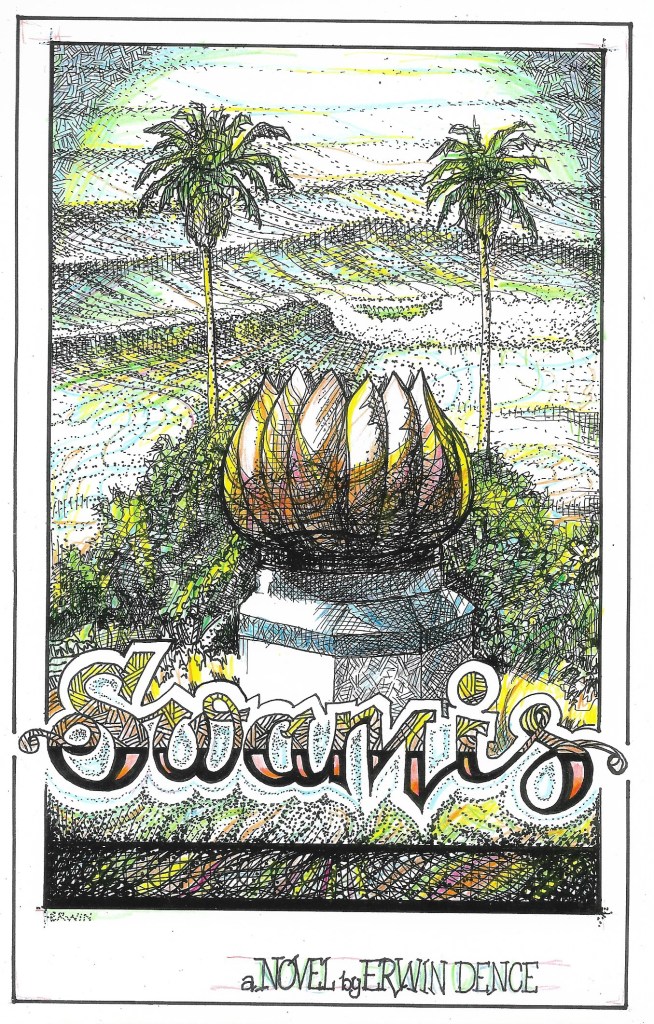
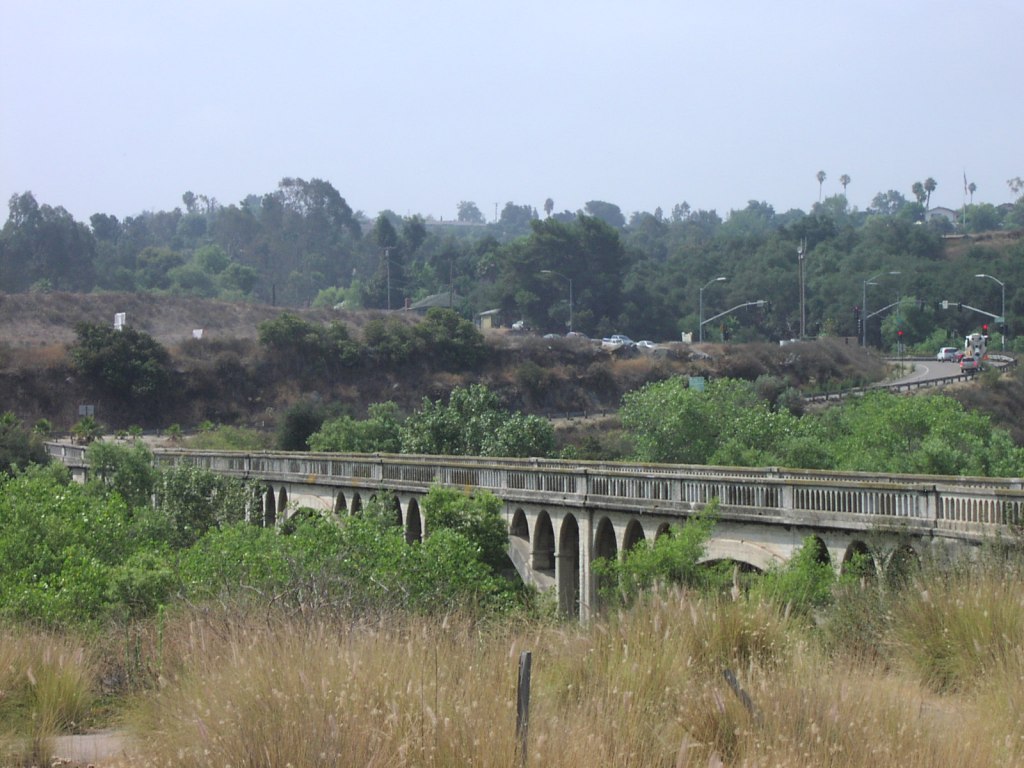


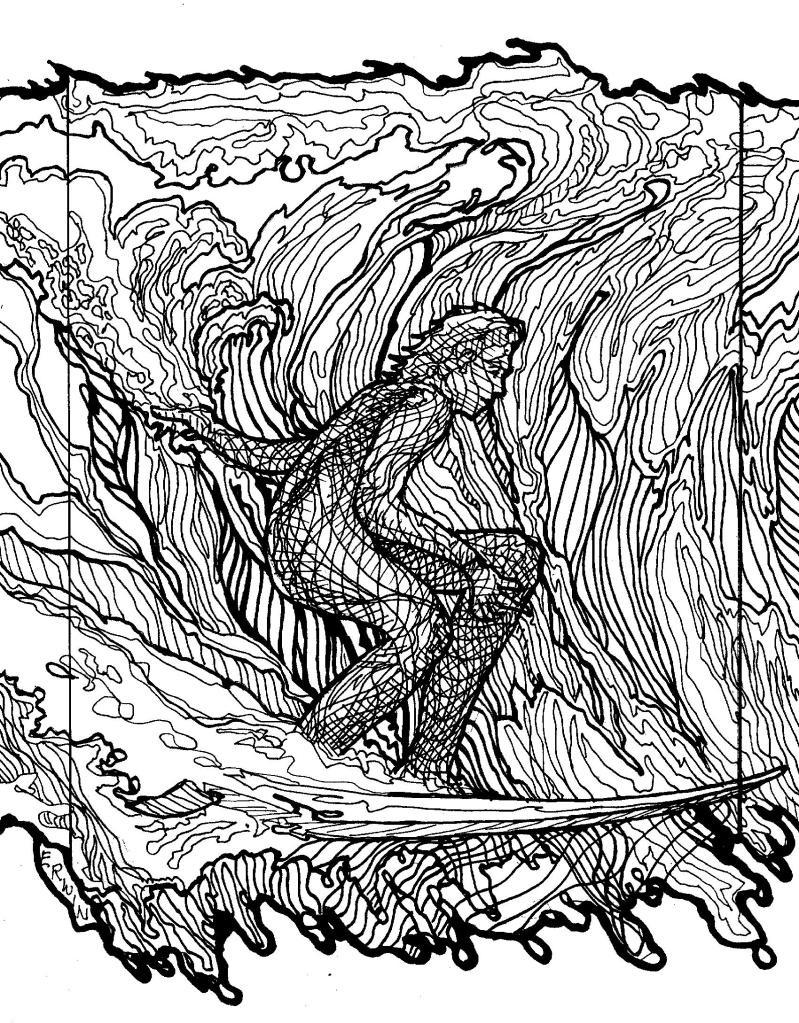
 Real Surfers