“SWAMIS” Chapter One, Part One

CHAPTER ONE- FRIDAY, JUNE 6, 1969

            There was something almost comforting about the darkness, about not having a horizon to worry about. An oversized flashlight in my hand, the words on the pages of the palm-sized notepad, open and pushed up against the steering wheel; this was all I could really see. Notes, in cop shorthand, detective code. Still, I could hear the steady sound of waves, the rhythm occasionally changed with what had to be an outside set. I had felt, when I pulled into the lot and got out of the car, the push of night wind hit me, pass me, and get lost, dispersed in the vastness beyond the bluff. Offshore. Perfect.  

I was in the driver’s seat of my car, mine, the hand-me-down Ford Falcon station wagon, new in 1964. The Falcon was parked in the optimum location in the Swamis parking lot, dead center, front row, facing the bluff. When it got light enough, I would be able to watch the waves wrap around the point. There would be a moment where I would know I would be dropping down the stairs and paddling out. If Swamis was at all decent, it would get crowded.

            It was not nearly light enough. I closed the notepad, thumb holding my place, and tried to repeat what I had transposed from a days’ worth of my father’s notes. I opened the pad, reread the third of any pages that had real action, real adventure. A break-in, chase, and arrest. Vista, October 1967. I recited the words. I checked again, for accuracy. Close. Or closer.

I shined the flashlight on the seat beside me. A black metal file box with other note pads and a spare t shirt, for later, three scuffed and dirtied, formerly dirty-orange Pee-Chee binders, three college-ruled notebooks inside each one. I put the notepad into the pocket of the top binder, middle of three. I pulled out the bottom Pee-Chee, opened it, took out the middle notebook. Wire bound, with serrations, tear out pages. Not that I would. I pulled a ballpoint pen from the wire, left a space between the previous day’s notes, wrote, “Free. These are days where freedom and peace and war and revolution are often used in the same sentence.”

            I repeated my words. “’Love.’ I should add ‘love,’” I told myself. “People say it, don’t mean it.” I didn’t. I added, “School day. Work day. Not for me. Free! And… it sounds like Swamis is actually breaking. Got my spot. Optimum location. No one else here. Yet.”

            Putting the pen back into the binding, adding the notebook to the stack of Pee-Chee binders and notebooks, a waxed cardboard quart of chocolate milk trapped behind them, I reached into the small wooden box of eight track tapes on the driveline hump, fingered my way to the third one down, flipped it to the proper direction, and inserted it in the dash-mounted player.

            Legal. At least this one looked legal. The player would work without the car running because the guy I bought it from, Mark, friend of a friend, hooked it up the way my father’s Sheriff’s Office radio had been wired.

Mark claimed if this tape deck was stolen, he hadn’t stolen it. My surf friends Gary and Roger, and several of their friends, claimed he did, and I should have known. “Just don’t let the cops fuck with this one,” Gary said. “Get some better tapes,” Roger added.  

I pushed in “Aerial Ballet.”

I was listening, and then I wasn’t. Asleep, perhaps. I didn’t hear the two vehicles pull in, one on either side, didn’t hear the doors close, wasn’t aware two people had met at the front of the Falcon.

Wham!

The flashlight was up, instantly stuck between the spokes of the steering wheel and pointed at the man leaning toward me, straight across the hood, the flat palm of his right hand raised and ready for another slap.  The light hit the curve of the fogged-up windshield, bounced back. I turned the flashlight off. I still hadn’t recognized the man.

“It’s still fuckin’ dark, man,” he said. I recognized the voice. Sid. I would have, should have recognized the sound of his van, seven out of eight pistons firing. I must have been asleep.

“Yeah. Dark.” I didn’t recognize that voice. “Okay, Sidney; five waves and I have to go.”

“No, man, I’m doing the delivery. It’s still my job. And… I have some… green stamps I need to… redeem.”

“No. Not today. Man. Five waves and…” I waited for a completion of the sentence. “And, you know what, you aren’t going.”

“No? Just you? Fuck it, then, man; five for you means ten for me.”

Wham! Flat palm on the hood. A different hand. Passenger side. “Break of dawn, DeFreines.” There was humming. Military cadence. “Jody’s got Sid’s surfboard, got his Daddy’s Falcon, too; no sense feelin’ lonely, no sense feelin’ blue.” The cadence continued the with a lighter tapping on the hood. One finger, maybe two.

I filled in the rest in my mind. Silently. “Sound off, one, two; sound off, three four…” I stopped myself. “Jody,” I thought, “He called me Jody.”

“Jody.” A face was at my side window, close to the glass. I was startled into an uncontrollable upper body twitch. Still, I didn’t turn to look until the man was a darker shadow in the dark. “Redemption day, Jody, and… and you’re going with me.” He hit the window with a flat palm. The shadow receded.

Junipero Serra Hayes. Jumper.

I didn’t get out of the car until two metal doors slammed on the vehicle to my right, until Sid’s vague shadow passed. Other cars, headlights on, were coming into the lot from 101.

It was a pickup truck to the left of the Falcon; step-side, late fifties, brownish red and rusty red. Farm truck. I brought up a mental image of where I had seen this truck. Grandview Street, off 101, right hand side. Farmhouse, barn, greenhouses, a little shop with “Flowers by Hayes” over the sliding glass door. Jumper. Junipero Hayes.  

Everyone knew Jumper was back in the North County. No one had seen him in the water.

The mid-sixties Chevy van on my right, Sid’s, was a light gray. Factory color. It was jacked-up in the back, with overwide tires, accommodated by Sid having cut the wheel wells and glassed-on the red-primed, flared fenders. No windows. Surfboards Hawaii decal on the driver’s door. Sid. Team rider. Another asshole in the water. Of course, they were friends, Sid and Jumper. Locals. 

            I opened both driver side doors, tossed a damp beach towel over the back door, used the cover to strip out of my Levis jeans and into my driest trunks. I stuck my towel onto the roof, pulled my wallet out of the jeans, set it on the towel. I grabbed a pack of Marlboros and a Zippo lighter off the dashboard, placed them into the inside pocket of my windbreaker. I folded my boxers in with the Levis, set them on the floor in front of the driver’s seat. I set my shoes, socks already inside them, on top of my Levis. I pulled my latest board, formerly Sid’s board, out of the back of the Falcon, set it on the roof racks. I opened, locked, and closed all the doors, circled the Falcon again, making sure all the doors were locked. I wrapped my keys and wallet into the towel, clutched it to my chest with my left hand, slid the board off the racks with my right hand, stepped away and pivoted it, wax side out, into position under my arm.

            I took three breaths and walked toward the stairs.

            …

It was still dark enough that the water, other than a silver-green line at the horizon, was more black-and-white than any sort of discernible color. Carrying the surfboard that had, indeed, once belonged to Sid, I took two steps at a time down the top flight of the wooden stair system at Swamis. I stopped on the platform where the stairs made a ninety degree turn and dropped, parallel to the beach, the rest of the way down.

The platform was approximately six feet by eight feet and offered a perfect view of the lineup and the point. Because it was at a particularly steep portion of the bluff, probably sixty feet or more above the beach, galvanized chain link fencing, eight feet high, the metal posts attached to the wooden posts and railings, had been added to two sides of the landing.

The ocean, forty minutes before dawn, was horizontal streaks of grays. Still, Swamis was, obviously, lined up. Someone was getting a ride. New streaks, breaking the plane. Another surfer was on the next wave. My guess was that Jumper Hayes, on a longer board, drawing traditional lines, had been on the first wave. This was Sid. I knew Sid’s style: More turns, more aggressive turns. I could hear hoots between the only two surfers in the water, locals. Not would not have been acceptable behavior for Kooks and non-locals. Rules. Code. Etiquette. Rather rigid, strict; constantly broken, only occasionally enforced; as with all codes.

Running my hand along the horizontal railing on the downhill side of the platform, I felt the letters carved into the wood gone smooth with time and thousands of hands. I knew the words. “Old men stop here.” It was true. Not that a seventeen-year-old paid any attention to surfers over twenty-five, and definitely not to surfers over thirty. Old men.

There was movement on the upper stairs. Vibration, just short of rocking. Two more surfers were coming down. Both were laughing, bouncing, hurrying. I pushed closer to the corner, let them pass. I didn’t look at them, they didn’t acknowledge me.  

Taking two stairs at a time, I almost caught up with those two surfers at the bottom deck. They were on the beach and running for the water as I got to the lower platform, running like extras in a “Beach Blanket” movie. Kook move. The foundations for the supports of the six step stairway were showing, the winter waves and tides having pushed the sand south. Summer swells would return it. I leapt off the bottom step. Silent hoot.

I stuck my towel in the tangle of roots and dead lower branches of some scrub, six feet or so above the beach and fifteen feet beyond the lifeguard tower. I took off my windbreaker and t shirt, draping the red jacket over the rest of my stuff. There was, I still believed, a code that kept surfers from stealing from other surfers. Still, I wanted my valuables somewhere it was obvious they were there on purpose, somewhere I could possibly see them.

            In what had become my pre-surf ritual, I pulled a pack of Marlboros, box, not soft pack, from the windbreaker. I took out the Zippo lighter. Chrome. Freshly filled, new flint. Big flame. I lit up, clicked the lid shut. I ran two fingers over the lighter’s raised logo. “San Diego County Sheriff’s Office.” Gold on chrome.

            I inhaled, popped the lid open by hitting a corner on my other hand, and looked at the flame. Smaller. In the brightness I saw, or imagined I saw, red lights, spinning, flashing in three second intervals, coming closer. I blinked, looked to my right. I saw a painted image of Jesus, the red lights distorting his calm countenance. I followed his arm to his fingers, pointing forward, into the lights, into the sun. Blinding. I turned through the brightness and to my left, the vehicle that was the source of the lights. A reflection-distorted image of my father was in the windshield, then the open window. He was very close, passing very slowly. I couldn’t quite focus on his expression. He turned his head away. Forward.

            The flashing lights moved past me leaving only the brighter light. I blinked. I popped the lid on my father’s lighter shut. “Ten seconds,” I said. “Maybe eight. Concentrate. Can’t do this.”   

My stuff was re-wrapped and re-positioned, my cigarette was still in my mouth, and I was into the ragged line left by the high tide when a surfer on a long board took off from the outside peak. Jumper Hayes. A bit slow on the takeoff and popup, jerky on the bottom turn, he cruised through the first wall and into the slow section. With a series of subtle stalls, he lined up the inside section, and, rather stiffly, shuffled toward the nose. He hung five, pearling and spinning into a Hawaiian pullout. His board skittered in a ways before it was released by the soup and popped up. It must have been Jumper’s fifth wave. He flipped his board over, skeg up. Pulling his board up by a rail, he trudged alongside it through the rocks and eel grass toward the beach, stepping carefully, ready for the holes in the rock ledges.

Yeah, it was Jumper. He was fifty feet or so up the point when a spent wave hit my shins. He pulled the board up under his right arm and stared at me. “You,” I imagined, was the word he almost whispered, I almost heard.

“You.” I looked away. The next wave came in without a rider. Sid, on the wave after that one, made three upper body movements before he hit the trough, cranked a turn that brought him to the top of the wave and five feet down the line. Unweight, half-slide, hit the middle of the wave, crouch, hand in the wave face. Stall, stall, let go and get a partial coverup. A lot of work. Sid. If Sid was showing off for Jumper, it was wasted. Jumper was still staring at me, still moving forward.

Thigh deep, I looked back as Sid, thrashing forward, caught up to Jumper in six inches of water. Sid reached for Jumper’s shoulder. I looked away. For a second. Sid must have said something. Maybe it was just, “Hey!”

I turned back. Sid was in the air, feet over his head. So quick. Down. Sid was on his back. Jumper’s board beside him. Jumper was holding Sid’s board, like a spear, at his friend’s chest. They seemed to be frozen in these positions.

It was a definite “Hey!” Sid was scrambling, crablike, up the curve of the beach. “It’s me! Jumper! Me!”

I froze, my back to the ocean. Though I could still see the two surfers, I replayed what I had just seen in my mind in a sort of double exposure. Reach. Touch. Reaction.

A wave hit me, only temporarily affecting my balance, but wiping the image away. I was back to real time. Jumper raised Sid’s board, twisted away, and threw the board toward the higher beach. The full length of the board landed on a rail, flipped onto the other rail, and landed skeg up. I replayed those movements as I watched the two surfers.

Sid was sitting just above the scalloped high tide line, the fragments of driftwood and seaweed. Jumper was crouching next to him. Jumper may have been crying. I couldn’t tell. I looked away when Jumper, and then Sid, looked in my direction. If I expected anger that I had been a witness, what I saw was more like embarrassment.

Maybe that was more imagined than real. I turned away, threw board and my body into an oncoming wave, and paddled out.

REMEMBER, “Swamis” is copyright protected, all rights reserved by the author, Erwin A. Dence, Jr.

INCIDENTALLY, I GOT THIS very interesting comment from JAMES IREDELL MOSS: “My grandma (Ida May Noonan) lived on Noonan Point till her house burned down in 1893. They did not rebuild. Eventually SRF (Self Realization Fellowship) bought the point and established the temple. Now it is called Swamis. I went to San DIeguito with Cheer Critchlow, that is what eventually led me to your site.”

Thanks, James. In researching, and, yes, I have researched, I got Swamis Point listed as NONAME POINT. That it is actually NOONAN POINT is so fantastic. It doesn’t mean I’m changing the title to “Noonan’s,” but I love inside scoop. If you were a classmate of Cheer Critchlow, you and I are contemporaries. I think I had to cut Cheer out of the main manuscript, but I did take a night SPEECH class he was also taking at Palomar. Main memory of that, other than he was way more confident at public speaking than I was: Cheer said he had tried to be a professional surfer, there just wasn’t enough money for such a career. 1969, no; nowadays he would be, as he was in the pretty insular North County surfworld, a star.

Also, the Sid name if not the character is loosely based on a Surfboards Hawaii team surfer whose last name I once knew. He was featured, hanging ten, in a small ad. I did, indeed, look at a board he had thrashed in with the other used boards. “He doesn’t really care where he surfs” was the actual comment. I didn’t buy the board. Fictional Joey does.

SO, OKAY, now that I am burning potential content, Sundays are for content, WEDNESDAYS ARE FOR “SWAMIS.”
“Swamis,” Not Processed, Processing

MY NOVEL. Erwin’s Opus. It seems like I’ve been working on it forever. Writing, writing, editing, cutting, reworking. With tens of thousands of words sliced and phrasing polished, side stories removed, characters dropped, the timeline shortened, the storyline tightened, a hundred little inconsistencies fixed, I am almost, for at least the fourth time, approaching the end.

DO I have some faith that this version of the manuscript is reader friendly, like, commercial, like, perhaps, some novel you might consider for a casual read?

NO. Put it down to stubbornness, perhaps. My acceptance that I had to make changes to make “Swamis” readable is in a battle with my desire to make the fictional real.

I HAVE DECIDED TO start publishing “Swamis” in serial form on this site. BECAUSE I have committed to doing content on Sundays, I will start with the INTRODUCTION and post pages on WEDNESDAYS.

                                    “SWAMIS” INTRODUCTION

It was a conceit, I now can see, my belief that I had a gift. I could visualize, actually see, in my mind, what I had just witnessed. I could store this visualization, file it with others, bring it back into my mental vision at will. Memories. Not all memories. Important ones. Images of things I’ve seen, audio of words heard. Or overheard.

Ridiculous. We all seem to have this ability. If developed, it becomes a skill. My not realizing my own ridiculousness when I was seventeen may have been to my advantage.

Or maybe that’s just how I remember it.

My father was a detective. “What do you see?” That was always the question. Little things: A bent spoon, spilled milk, eyes that evade, words that contradict. Clues. Evidence. “What does it all mean?” The tougher question. “The greatest theory,” my father would say, “is nothing compared to the tiniest truth.”

Still, I noticed as many of the little things as I could. I tried to notice everything. Partially because I trusted my selected groups of clues, my biased interpretations, even less than I trusted the words and motives of others, I kept notes. Years and years of notes.

If I can’t seem to pull some vague memory out of my files… notes. 

 Memories, I have come to believe, have lives; a pulse of their own that we, as hosts, can push aside or ignore, try to forget, or try to pretend some memories were not real; we can place a memory in with enough other memories and dreams and fictions and secrets and lies that we can, briefly, convince ourselves that, at some time, in some situation, under some condition, the truth of that repressed memory will not come back to hit us, full force. If the truth of that secret, that lie, is revealed, we fear, our lives will be changed. Full force.

We cannot, continuing my overthinking, completely delete or erase even a pleasant memory, a mundane memory. All memories are somewhere.

I had an image, in some place between dream and awake-ness, of little containers, something to hold a bar of soap on a quick trip. Plastic, lid fitting over a tray. There were many of these containers, some larger than others, moving up and down vertical lines, something more like ropes, three strands, weaved. The containers were white because, supposedly, men lack enough imagination to dream in color. The ropes, I would swear, were greens and reds. The background was definitely black. 

It was a dream. I knew that. i did have enough imagination to convince myself that these containers held memories. Why not? There was movement, forces from the side, a wind, possibly, bumping one line into another, that one into the next one. Not chaotic but almost controlled movement. Almost a dance. And there was a beat. Background. The pulse thing. Almost music.

Trying to stay in the dream; trying to hold the moment; I theorized that memories are as much in our blood streams as in our brains; definitely not as cataloged and compartmentalized as we tell ourselves, and definitely not as controlled.

Perhaps, if I opened this one container…

I couldn’t. Or I woke up before I could open it. I was aware of my surroundings. Saturday, December third, two thousand and twenty-two. Briefly aware. I slipped from dream to memory.

I was paddling as hard as I could. A wave, already breaking to my left, was bearing down on me. I felt the wind push the top off the foam on the already lifting surface of the water, the remnants of the larger wave before this one coming up the face. I was aware of the heaviness and the speed of my breathing. I felt the lift and the drop and the weightlessness and the catching of my weight on my board. Instant rebalancing, pressure with my right foot on the inside rail. Swing. I turned. I had to rise, had to go faster. I did. Again, weightless, the low sun flashed off the wave face. Gold, white, too bright. The curve of the wave, yards ahead of me, was impossibly steep, the lip feathering, throwing itself forward, lace and diamonds and rainbows. I had to keep my eyes open. Had to. I was in the tube. I was elated. The very few seconds were magical and terrifying.

The knock down was not as violent as I would have thought. Had I thought. The lip hit me. There was no recovery. My board slipped and skittered and went sideways. It was six feet down to the trough, sideways to upside down to down, six feet of wave pushing me. My body was curling and straightening under the power and the weight, pushed six feet under water, to the bottom, tumbling, caught in the surge, and struggling. Uselessly. I came up fifteen feet over and twenty feet closer to shore. Another broken wave hit me before I could cough out and take in another breath.

Three rides on a day that would become legendary was enough. I stood up in the shallows, the sea grass covered rock ledges that were like ever extending fingers from the cove to the point. I would pick my way to shore, collect my board, and head for the stairs. Three rides. Two on waves other surfers had fallen on, one magic tube ride on a wave that was just mine. Magic. No shame.

No board. I looked around. There were other surfers on the beach, those who had failed and those waiting to build enough nerve to go out. The steep cliff was still in a shadow that extended halfway out to the inside peak. I looked up. There were silhouettes, trees and a line of people, spectators at the stadium. All of them seemed to be pointing out and yelling in unison. I couldn’t quite hear them. Three surfers on the beach joined in. “It’s in the rip! It’s in the rip!”

I had to swim back out. Had to.

The same rip current that had taken my board, down the beach and around the biggest of the waves, created enough of a channel that surfers whose skills did not match the conditions could get to the lineup. Fools and heroes. Just witnessing great surfers on great waves was enough for some of them. Five surfers would back off as another, thirty yards deeper, would scream toward and then under and then past them, Santana winds blowing back fifteen feet from each breaking wave. Occasionally a fool would take off in front of someone who just might make the wave. Fools and heroes and witnesses, spectators with cameras on the bluff.

 I had just reached my board. It was floating, right side up, just beyond the regular takeoff spot for the inside peak. Someone yelled, “Outside!” Everyone started paddling, desperately, toward deeper water. A young woman dropped in, two stroke takeoff, on the first wave, fifty yards out and forty yards up the point from me. She seemed to be standing, effortlessly, she and her board separately freefalling to the bottom third of the wave. She landed, toes first, and rebalanced, moving her right foot back. She cleanly and gracefully leaned into the wave, her body stretched, her left arm pointing down the line. Despite the strength of her turn, she seemed to glide up to the top third of the hollow pit. She crouched, tight, disappeared even from my view, in the glare and the gold and the diamonds and lace. She reappeared, sideslipped, put her right hand into the face of the wave, reconnected, and, with the lip of the wave throwing itself out and over her head, and with the biggest smile possible on her face, she looked directly at me and screamed, “Joe-y!”

I screamed, “Ju-lie!” Julia Truelove Cole. Swamis. Tuesday, December second, nineteen-sixty-nine. Fifty-four years ago, as I write this, and…  And Julie made the wave.

I am fully awake now. I can visualize all of this in living, vibrant, real-to-life color. It is real to me.

“Swamis” is a memoir, of sorts, memories of Joseph Atsushi DeFreines. “Swamis” is not a surf novel but a surfer’s story. “Swamis” does not fit comfortably in the detective/mystery genre. Writing and rewriting “Swamis” would have been so much easier if the narrator hadn’t been caught up in the back stories and the side stories, the tangents and the overlapping circles. After countless hours remembering and thinking and writing, editing and deleting, of trying to fit what I want to say in some format a reader would recognize, I might have to say “Swamis” is mostly a coming-of-age/romance novel set in a very specific, magical and terrifying time and place.

I apologize in advance for telling too much about minor characters, for side trips into the periphery. I refuse to apologize for the enjoyment I have had, so many years on, opening and reopening those containers. Of those I stories I have deleted: They’re somewhere, some backup file, some thumb drive. Of those I so feared opening: I have opened them now. I had to.

“Swamis” is copyrighted. All rights reserved by Erwin Dence.

Vivid Covid Dreams

Maybe this piece is self-explanatory. Anxiety has hit us like a, um, wave; enough so that I was just thinking, yesterday, trying, as always, not to panic (in this case I was about twenty-five feet up on a ladder stuck, improperly at a bit of a left-of-straight angle that allowed me to, hopefully, paint trim up on a roof- it worked), that maybe being manic-depressive is normal.

NORMAL. Moments of bliss are, yeah, moments; and, while most of life is just kind of a glide, maybe a bit of an uphill grind, there are moments where things would cause just about anyone to… to be rightfully depressed.

MOMENTS, only, hopefully. It’s not that I’ve been more depressed than anxious, but I have been waiting to use some of my manic-ness on some waves. SOON.

I did do a video reading of this piece, tried to send it to Keith Darrock, PT ripper and librarian. I’m scheduled to do a ZOOM thing in August, connected with my novel, “SWAMIS” and I thought this might be a sort of prelude. BUT, e-mailing videos, I’ve discovered, is actually kind of tricky.

I am considering UPGRADING MY WORDPRESS ACCOUNT. This would get rid of pesky ads (for which I receive no compensation), and might allow me to post occasional videos. WE’LL SEE.

                Not Out, Just Put Away

In these anxious times, I have heard and read that many are afraid to dream while others have wild, vivid, Corona fever dreams, even without the fever.  Last night’s dream was, then, one of those, and I am writing about it before it fades into the early morning drizzle.

Write, because that’s what I do; that’s how I cope.  Whatever trauma or drama is going on, I can and mostly do think of it as part of some bigger narrative.  If dreams are meant to make some sense out of chaos… writing is dreaming; and I write.

It is, quite obviously, some sort of party.  People in nice clothes; some women in dresses, some men in sports coats.  It is one of those large rooms with a high ceiling on one side and a loft on the other, view of the water through the two-story bank of windows, sliding doors open to a deck.  Weekend cabin, second home along the Canal.  I’ve painted many through the years.  There is a large countertop toward one end of the great room, food spread out.  Party food.  Trays- cheeses and crackers, various.  Casserole dishes- various.  Three bottles of wine with interesting labels- open, glasses adjacent.  Sparkling sodas and colas in a cooler to the side; plastic cups on a corner of the counter.  Real plates, real silverware.

So, not a potluck, but guests, as is proper, have brought side dishes, bottles of wine with interesting labels.

This dream is all taking place from my point of view (POV), my perspective.  Of course.  Dreams.  I’m on one side of the room, scraping the last of some sort of dip onto my last cracker.  Not guacamole.  It might be red, though Trish claims men don’t dream in color, and, though I’d prefer her to be wrong; she is almost surely correct.  Still, I’m saying red; and there’s enough dip left that I consider either getting more crackers or scooping it up with one side of a finger.

Manners.  Leave it.

Trish isn’t here.  No, it must be one of those events where I will almost surely do something, say something embarrassing; me with my loud voice and big gestures.  She has obviously sent our daughter, Dru, in her place.  For some reason, our friend George, who avoids potentially awkward social situations more often (and less apologetically) than Trish, is here, more leaning than sitting on the edge of an overstuffed chair.

I start to say something to Dru about how soon we can leave when two men approach me.

This is the setup part: “I hear you’re a writer,” one of them says.  He is quite a distinguished looking fellow, and the statement is made without the condescension my reaction to it might suggest.

“Who would have told you that?”

This is when Dru moves away and I’m faced with two faces, my POV moving between them.  There is some sort of writing competition they are both aware of, submission deadline this very evening, and maybe I should consider entering.  At the least, they would be interested in hearing about what I write.

Here is the analysis part: I’m writing a novel.  Yeah.  And?  And when I’d written enough to get to an actual ending, I edited it, completely, first line to ‘The End.’  Then, so excited, so sure it was the genius work of a genius; I sent it out to several people to read.

This is when someone crazy enough to consider him or herself a writer gets truly crazy.  Out of his or her control, the manuscript must face the world on its own.  Waiting.  Waiting. 

Waiting for someone else’s assessment.

You only get one chance at a first impression.  I had overshot, overthought, overdone; and, as I feared, as I probably knew, early feedback made it obvious that I need to seriously edit the work; ruthlessly cut out so many of the peripherals, clarify the changes in time and place, simplify… it became obvious my manuscript might not actually be the genius work of a genius writer.

So, okay; I’m working on it; two-thirds of the way to the end; again.  But, doctors, counselors, friends, readers; now that I have eighteen point headings for chapters, fourteen point subheadings; now that I have moved whole blocks of words to where they should be, chronologically; now that I have deleted thirteen thousand or so words out of one hundred and twenty-three thousand; the tension now, the anxiety, in addition to all the other anxieties of real life, is this: Publishing, selling, getting the novel sold, published, out there.

Out there.

I must have said something abrasive and offensive and off-putting; the distinguished gentlemen are now at the far end of the room, leaning on the wall near the stairway to the loft.  George asks a question of the woman who, evidently, owns the house.  “I invited you over many times,” she says.

“Okay,” I say, full room voice, “I have songs, and a few poems, and short stories, and a couple of screenplays, and… don’t know where the other one is… two almost complete novels; so, now what?”

They don’t seem to have heard me.   Dru walks between me and them.  She gives me a look I know to mean I didn’t handle this well, and, additionally, I have just provided another story to share with her mother.  Proof. 

Time break.  I’m looking at the food on the counter.  The casserole dishes have lids or are covered in saran wrap, contents of the two-thirds-full dishes visible.  “I never got a chance at the real food,” I say.

“They’re not out of food,” Dru says, “It’s just put away.”

The woman who spoke to George appears.  She peels back one corner on a dish.  Noodles and cheese, the cheese on the top seared perfectly, only a few holes dug into the glaze.  There also might be green beans.  I’d guess green.  The homeowner looks over at the distinguished gentlemen.  “Good thing I didn’t say anything,” she says, “my daughter’s a writer and…”

“Oh,” I ask, “What kind of thing does she write?”

Dream’s gone.  I spent time I could have used on my manuscript.  Still, I have to get ready; get to Costco before the best selection of meat is gone.

Stay safe, stay sane, avoid panicking when you can, stay tuned.

The New Now

Several times a day I check the Washington State Coronavirus stats, looking and hoping for single digits in the deaths category. Really, zero would be great. The numbers are declining and things are opening up. Still, places one can surf on the North Olympic coast and the Strait of Juan de Fuca, even if surf does magically appear (and it’s always magic), are even more limited than usual. If you venture to Highway 112 you will be greeted with an official road sign with a message that says, not “Local Traffic Only,” but “Locals Only.”

Whoa!

SOCIAL DISTANCING has been working. I wasn’t an instant convert, but I am enough of a convert that I get annoyed when I see people cruising around in stores seemingly unconcerned about how close they get to others and without (at least) masks. This is arrogant and irresponsible, and says “I don’t care about you and whether you live or die.” People who refuse to wear masks don’t, evidently, realize that the masks are not to protect them, but to protect others from them.

Add possibly dangerous and stupid to arrogant and irresponsible. Now, unfortunately, one characteristic of stupidness is an inability to realize one is stupid, as in actually saying, “A lot of folks are saying this is all a hoax.”

A certain sense of entitlement and self-righteousness and a quickness to anger might be others. Might be.

Yeah, I know. I don’t feel entitled or self-righteous; I’ve broken and/or not lived up to protective protocol, I’m not trying to sound preachy, I am trying to PRACTICE SOCIAL DISTANCING; but, being competitive by nature, I might want to go pro level. SIX FEET. Back the fuck up!

MEANWHILE, here’s my latest contribution to the Quilcene Newsletter.

  “WHAT’S YOUR HURRY?” AND OTHER QUESTIONS FROM THE UNIVERSE

Many of us have a certain work ethic; we place a high value on work.  Work first.  Perhaps you have been described as someone who lives to work, a workaholic.  I have.  Not wrongly; it’s long (if fifty years of working is long) been my policy (sometimes stated) to try to do, say, five days work in three. 

This requires a certain optimism.  “All I have to do to paint this house is bleach, wash, cut back plants, mask windows, put out dropcloths, mix paint, etc. etc. etc.”

I could say youthful optimism.  The difference fifty years makes is the increased difficulty one has in self-generating this same enthusiasm.  “Oh, man; in order to paint this house I’ll have to…”  It’s the same list.

Different attitude.

All the little things that slowed the ahead-of-schedule schedule: Broken equipment, wrong-color of paint, rain squalls, etcetera; were irritating setbacks, not, as I once perceived them to be, little hints and shoves and roadblocks from The Universe meant to give me a bit of a handicap, because, otherwise, everything going to plan, I’d be wailing out the jobs, making real money.

Now, of course, I have age and cranky joints as real handicaps, and, thank you Universe, I still have many of the previously mentioned issues.  Not all at once, of course.

BUT WAIT, in the NEW NOW we have new issues. Work is something many are not allowed to do; at least not the old version of work.  I’m not retired, I have some work, and I have an overwhelming list of things I can do around the house, but, if the current situation is something like retirement…

Aaaaaaaahhhhhhh!

Okay.  Okay.  I’m okay.  Actually, I am kind of annoyed with myself because my best excuse, which used to be that I’m too busy working or we don’t have the money (because I’m not busy working), is, in the NEW NOW, “What’s the hurry?” 

If questioned, I refer back to the Universe, possibly having to add that I have my own ideas on what I’m referring to as The Universe, but in no way do I want to keep anyone from having his or her own. 

I do have a few grievances: I am annoyed by the spread of overly sentimental news stories (not the ones about good people dying) about how together we all are.  Really?  Maybe back when one’s personal space was somewhat less than six feet, back when the look in someone’s eye was mild tension rather than abject fear that another human being might come in for a hug.  Fistbump?  No.  Kiss?  Mace.  If the message of togetherness is actually an advertisement, double the annoyance. 

You are also, possibly, less than thrilled to watch comedians and singers and reporters and pretty much anybody who is coming to us live (or recorded) on any screen, from a basement or back porch or private luxury yacht.

Here’s something: Every month Bob lets me know that I’ve gone past the official deadline for submitting something for this very newsletter.  Here it is… let me check… April 30, 2020… wow, I thought it is the twenty-eighth… Thursday?  Good.  No call, no text, no email from Bob.  I called him.  Left a voicemail.  He, so far, hasn’t returned my call.  I mean, whoa; is he all that busy?

It’s okay; I’m writing one anyway.  Work ethic.   Still, it’s shorter than usual.  Stay safe and you might not die.  Yet.  See?  Not sticky, gooey, sugary, oversentimental.

Here’s BONUS material, written by me, alone, at my computer:  I’ve been thinking about some future when some random COVID 19 SURVIVOR (and they’ll all being wearing hats thusly labeled, inside their bubble headgear) says, “Yeah, man; at the concerts, back in those days, we’d be watching the groupies on the side of the stage while the bands played; and we’d crowd down into the mosh pit and just get so crazy…”

Concerts? Groupies? Bands? Crowd? Mosh Pit?  Crazy.   

Stay safe, stay back, save lives.

More “Swamis?” Yes, More “Swamis”

If you haven’t checked out realsurfers in a while, I’m posting pages from the manuscript in a reverse order.  There are some non-“Swamis” posts between this and the next parts, the plan being, that, when I get back to the beginning, one can read them in order, with, again, the interruptions.  Much like real life, spurts and moments and interruptions.  I have been continuing to re-re-re-edit the manuscript and have recently been moving chunks around in order to make it less confusing.                                                                         This doesn’t mean that the fictitious writer of the fake memoir, Joseph Itsushi (Jody) DeFreines, Junior, doesn’t take a probably-annoying number of narrative side trips, despite my attempts to control him.  OKAY, we just jump in about here and…

I moved closer to the screen. I was pretty sure I saw Ginny Cole in with a couple of the San Dieguito High School crowd, surfers, but the pan of the crowd passed too quickly. No rewind.

“Ginny,” I said. “Ginny Cole,” I whispered. Ginny.

No, I had my own rewind. Words. Images. Blink. Remember.

“And now, the weather…”

PART TWO

SATURDAY, MARCH 15, 1969- THE OPTIMUM VIEW

-Pre-dawn Swamis. South wind. Great parking spot. Checked out murder scene. All cleaned up. Carlsbad Liquor matches. Clue? Wally’s crew there. Ginny Cole. Rousted by Dickson and Wendall. Found pistol. Surfed 1-2 ft Swamis beachbreak w/Ray & Phil. Fallbrook house sold. Profit. Escrow.

The damaged section of the wall at the Self Realization Fellowship was back to white when I next went to Swamis, against my mother’s warnings, two days after Chulo’s murder. It was a Saturday. Weekend. Barely light. I got there early enough to park the dust bowl tan 1964 Falcon station wagon in the choicest spot; a little toward the stairs, but front row, and offering the optimum view of the lineup. It was the same car my Mom had used to drive us to swimming lessons and church and Doctor visits, and to the beach; surf mats and Styrofoam surfies and whining Freddy, maybe an annoying friend of his; the factory installed (optional upgrade) roof racks now pretty much rusted in place.

A predicted swell (this gleaned from other surfers and pressure charts in the Marine Weather section of the newspaper) hadn’t materialized and a south wind was blowing. Cars with surfboards were passing each other up and down 101.   Surfers were hanging out in parking lots and on bluffs and beaches, talking surf, watching the few surfers bobbing in the side chop. Maybe it would clean up, maybe it would actually get bigger.

So, I would wait. Waiting is as important a part of surfing as trying to be in the water before the best conditions hit. My shift, at my new, weekend-only (at that time) didn’t start until ten-thirty; about the time the onshores typically get going. Different with south wind. Perfect. Maybe. I could wait. I had my notebook, college-ruled; I had the probably stolen (not by me) four and eight track tape player under the passenger’s side of the seat; and I could do some studying.

Read, recite, memorize. Study.

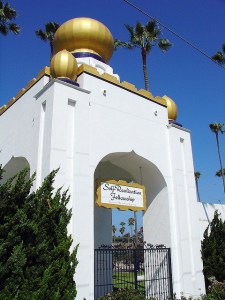
I really wanted to sneak over to the crime scene, the thick, high, stucco-finished walls, gold flower bulbs perched above them. There was (and is) a wrought-iron gate in the higher, arched entrance, also topped with the flower (though it could as easily be a flame, not dissimilar to the top of the statue of liberty). This is not the actual entrance to the Self-Realization Fellowship (SRF) compound, a place where people go seeking enlightenment, a realization of the true self.

THE OUTSIDE THE WALL GUY

I did walk over. Had to. I expected more. I expected some explanation. There was a man by the wall, wheel-barrowing soil from a pile near the highway to the wall. I had seen him before. I have already mentioned him. Dark skinned. East Indian I presumed. I also presumed him to be the outside-the-wall SRF gardener. He was dressed in a long-sleeved shirt, white, with faded blue workman’s pants, rubber boots, and heavy leather gloves. Most of his face (and I knew he had a beard) was covered in what appeared to be an overlarge (plain cloth) bandana, a standard bandana (they came in red and blue- still do) around his nose and mouth, and a tropical straw hat (quite different from the cowboy style Mexican farmers and landscape workers preferred). He dropped the new soil around newly transplanted, but full-sized plants.

There was no explanation, no evidence that something horrific had occurred. The new paint blended perfectly. The plants looked… it all looked the same as it always had; as it did even in the late 1950s. Exactly the same. Perfect.

If I blinked, I thought, it might be like taking a picture. I might remember details. I might remember better.

Blink.

NOW ANALYZE

“What do you see?” This is what my father would always ask me. I would know it was coming; any time he was around, anywhere. It’s the first thing I remember him saying to me. I always tried to be ready, tried to see everything, determine what it meant. I was never ready; never saw enough.

But, and maybe it’s a good thing, my father would point out the things I had missed; clues; someone’s expressions that were evasive, someone’s words that were lies, patterns and random things that weren’t random, things that meant something.

“Okay,” I would say, “I see it now.”

“Do you? Great; now analyze.”

“Analyze?”

“There’s what you see, and there’s what it means.”

“Analyze.”

CLUES

There were cigarette butts, quite a few of them, forming a half circle, a perimeter, cleaner areas where the structures that held the police tape had been set. No one had bothered to clean up outside the police line. I positioned myself dead center, optimum view, pulled the pack (box, not soft pack) from my windbreaker’s pocket, pack of matches inside, lit up a Marlboro.

“Power of suggestion,” I said to myself, throwing the now-empty pack of matches down with the line of butts. “Peer pressure.”

There was an opened pack of matches on the ground. Half the matches were gone, removed left to right. “Left-handed,” I thought. I picked the pack up, tried one of the matches. Nope, too soggy. Rather hip lettering on the cover, red on black, read, “Carlsbad Liquor.”

Clue?

Yes, I did think it might be a clue; one missed clue. Important. I knew the place. Carlsbad Liquor. Coming north to south, it was just before you would see the ocean. It was there before the 7-11, good place to get snacks. My friends said there were dirty magazines in a back room. One of the Billys (Bigger Billy), supposedly, snuck in; got run out, but not before he saw some, as he described, “sexy, almost disgusting stuff. Close ups.” Closeups? “Adults only,” he said with some sort of indiscernible accent. Hey, it was a liquor store. Adults only.

I put the pack inside the Marlboro box, that in the windbreaker’s inside chest pocket.

The groundskeeper dropped the wheelbarrow in the center of the already-cleaned, formerly roped-off area, threw a wood-handled, metal lawn rake onto the strip of lawn (maintained, I assumed, by the State of California), took out a stiff-bristled push broom, and started sweeping the asphalt along-but outside the crime scene.

He was close enough that I felt I had to say something. “How’s it going?”

He nodded before he spoke, looked at me, looked at the other cars in the lot, the surfers gathered at the edge of the bluff. He didn’t pull down his bandana. “Nasty business, this,” he said.

I probably made that sort of ‘smells bad’ expression, one that he, it seemed, returned. “I was informed that it would be permitted. Clean up. ‘Okey dokey,’ one of the detectives told me.” He pointed a gloved hand, vaguely, toward the compound. “Today.”

I probably stared. It was a bad habit I was, mostly, unaware of. His eyes were darkest brown, bloodshot, and there was something about his eyebrows. I was thinking; thinking about his accent; Indian, of course, but his English, not American-learned; British. Of course.

“I didn’t do the initial… work.” He pointed toward the wall. “Professionals. Contractors (emphasis on the ‘ors’ syllable).” He pulled the bandana down, awkwardly, because of the gloves, looked at me, said, “Sunburn. Even I… one must wear the hat.” He had a bit of trouble pulling the bandana back over his nose. “Sun.”

“You, um, work… (my hands mimicking the sweep of the walls) here? Swamis?”

“Voluntary, one would say; work, yes; compensated; not really; not in… dollars.” I nodded. He went back to sweeping. I stepped back, out of his way. He stopped, looked up. “You’re a surfer. Yes?”

I nodded. “Yeah. I mean, yes. Um, so, um… voluntary; like… like, um, like penance?”

He laughed. “Perhaps. No, they teach… we are taught that hard work is good. We strive to…” He leaned the broom against his body, made a gesture like an expanding circle. “Perfection. Realization.”

“Well; the grounds are… perfect. I’ve been inside. Every rock, the paths, the garden up on the very point… the, I guess, meditation garden. Good place to see… surf.”

“And, yes; meditation, surf vantage point; so many benefits of having a committed volunteer labor force.”

“So, um, are you, like, the only one who does this?” I made a gesture I thought indicated working on the outside of the compound. “I, um… (short, embarrassed laugh) thought you were… your hair and beard… I’ve seen you before. I thought you were, um, older.”

He laughed. “With all the people nowadays sporting longer hair, people doing what they want to…” He stopped. “Surfing. Swimming. People.” He paused again. “I do feel, sometimes… older.”

We both stood there a few moments longer. I had questions. He started sweeping. I nodded toward the bluff, he nodded in the same direction. I did a little bow, felt stupid instantly, but he returned it.

SINNERS LOVE COMPANY

When I approached the bluff, surfers I recognized as locals, all about my age, three guys and one girl, Ginny Cole (you always knew the names of the few girl surfers), were sitting on the guard rail, two other guys standing on the parking lot side of it, directly in front of my car, and, in fact, leaning against it.

Sure. Optimum view. This was their spot; the land equivalent of the apex of the peak in the water; they wouldn’t give it away to some tourist; they were less willing to give it to me.

Ginny and one of the guys, who had been watching me, evidently, turned back around after I gave a bit of a gesture that I meant to say, “Yeah, I looked at the crime scene; so what?”

Maybe I looked too long at Ginny Cole. Evidently. At least the guys on either side of her seemed to think I had. I had. Of course. I was forced, by the rules governing adolescent encounter, to give each of them (the guys) the “yes, I looked” look.

Then, as required, I looked away.

Ginny pulled her coat and an over-sized gray bag (I would say purse, but surfer girls were way too cool for that) off the hood of my car. Not in an apologetic way. Two of the guys continued to lean the just-past-comfortable distance between the railing and my car.

Fine. I probably would have been sitting on the hood if they weren’t there. Casually. Observing. Analyzing. If I were someone else, if I was observing someone else, I’d say posing. Posing. Posturing.

Each surfer had a small carton of orange juice or a quart of chocolate milk in his hand, maybe a cold piece of pizza. One might have had a large coffee from the 7-11 down toward Cardiff. One very well could have had a mason jar of juice, carrot always an ingredient, some color from sick green to sick orange; always willing to share. Not with me. Maybe once. Later. Months later. Only once because I turned the offer down. Green.

None of these surfers were smoking. These weren’t my high school friends, so anxious to learn how to smoke; starting out with, Parliaments, maybe, cigarettes for beginners, moving on to Marlboros or Winstons, arguing about which was better; urging me to be cool, to not be a pussy. Tobacco evangelists.

Sinners love company, I had thought, and I put off starting the very same habit my father had only participated in in secret, or at work, never around his children.

Still, we knew. Camel non-filters. My mother kept his last half pack in a dresser drawer with his badge and empty holster. Nothing else. Occasionally she would open the drawer. Leather and tobacco.

I squeezed the cherry out, tossed the butt through the opened driver’s side window and onto the floorboards, grabbed my fairly-full quart of chocolate milk and my half-gone package of donettes off the seat, went into a practiced lean, a slouch, against the backseat door, driver’s side.

Frosted, never chocolate.

Posturing.

DOWNRAIL SPEED MACHINES

It seems wrong to me, now; it’s obviously wrong; but, somehow, when I was a teenager, it seemed all surfers were somewhere around my age. Some younger kooks, some older surfers. Not many of those; or maybe I just didn’t focus on them; only the ones who were well known, who had been in “Surfer” magazine. If someone like that showed up, his name would spread quickly through a parking lot or lineup: L.J. Richards or Rusty Miller at Pipes, Mike Doyle at Stone Steps, Skip Frye at a contest at Tamarack; surfers you would, definitely, watch, keep track of, give way to in the lineup; just to see if they were all that good. Better. They were better.

How much better?

But these were days of evolution in surfing; shorter boards, more radical moves, backyard soul shapers, V bottoms and downrail speed machines; and the new heroes were younger; more like my age; s-turns and tube stalls and 180 cutbacks.

The first 180 cutback I ever saw, with an off-the-foam-to-bottom-turn, was at Swamis, from that landing two-thirds the way up the stairs; the one with the metal screen, ‘Old guys stop here’ carved into one of the rails. The stance, so solid, the moves, so controlled, so fluid, one to another, seamlessly, were performed by Billy Hamilton, on a longboard; smooth and stylish. He was older, maybe even ten years older. Still, older.

Chulo Lopez was, or, rather, had been in this group. Older. Aggressive, stylish, and dominating, back-foot heavy; always pivoting off his good (right) leg. Surfers who dominate a lineup, who get their choice of waves, are respected and hated, sometimes almost equally. If they take a wave you thought you should have been on… your opinion would swing more toward hate.

Chulo had once, on a glassy evening at Pipes, given me the signal to go on the first wave of a set. Two other surfers in position to go didn’t go. Wouldn’t. Chulo looked them off. No need to yell. Then he looked back at me, said the second of the two things he ever said to me. “Go!” I had to go. I did.

So, more respect than hate.

“SWAMIES”- INSIDE THE LINEUP

I continue to be baffled by computers, and get tangled and confused even with tasks I’ve previously performed successfully; like transferring something from the 35,000 plus words I’ve written so far on my novel, “Swamis.”

BUT, this particular chapter with actual surfing in it, which was set earlier in the narrative, had to be moved, just to lessen confusion for readers, from around page 42 to somewhere in the high 50s.  I was able to highlight, copy, and transfer the words, intact, but three attempts to move it from the thumb drive too realsurfers, doing some refining each time, failed.

AND I lost the changes.

SO, here I am typing it onto the site.  I do have some other actual surfing in the manuscript, and plan on writing more, and (spoiler alert) the novel will come to some sort of conclusion during the famous December 1969 swell, though probably not on Big Wednesday.  Maybe on ‘Still Good’ Friday.

REMEMBER, although I surfed Swamis every day during the swell, with varying degrees of success, “Swamis” is still a work of fiction.  That is, the story and characters are fictional, mostly; THE WAVES ARE REAL.

INSIDE THE LINEUP

Jumper was the farthest surfer out, sitting on the Boneyards side of the outside peak, looking at the horizon.  There was a pack on the safer side of where most waves would start to break. As always. Swamis.  There was that string of surfers, with another pack in the vicinity of the inside peak.  At this tide, probably a third, or so, of the waves, the bigger waves, would connect all the way across.

Jumper seemed to feel someone approaching, or he heard the splash and glide of my paddling. He didn’t look around, but rotated his board enough to catch me in his peripheral vision.

“You didn’t call… could have called Tony; given me a head’s up.”

“Figured you’d know.”

I did. “I did. Of course. Cardiff’s… the parking lot is full, and…”

“So it must be good. Huh?”

A line on the horizon started to thicken, darken, take form; a wall, the peak of it fifty yards over from me, farther for Jumper. I could see the lineup come alive; surfers dropping to prone, paddling out and toward us.

“Number three,” Jumper said. “Block for me.”

“Fuck you, Jumper,” I said, stroking hard, out and toward the first wave.  I looked-off three guys also trying to get in position, turned, sank the tail of my board, stroked hard, and took off. I dropped in, made the down-the-line bottom turn, knowing, if it didn’t look like I would make the first section, shoulder-hoppers would take off.  If they didn’t kno0w wave etiquette, didn’t know who I was, or didn’t care, some fool might drop in anyway.

Some surfers, taking off from the outside (weirdly enough, called the ‘inside’ position- closest to the peak) will whistle at the attempted interlopers, or yell something like, “I’m on it!”  Or something harsher. I tried to resist those urges; but I had been known to come as close to any surfer dropping in that… maybe it was an intimidation tactic. Maybe.

I was more likely to just yell, “Go!”

I leaned hard into another bottom turn, looking off two new scrappers. I aimed for a place high on the steepening wave; hit it, tucked into a short tube. Then, while I’m trying to deal with the board speed on a weakening shoulder, someone did drop in.

“Fuck!” I tried to cutback, couldn’t, fell sideways, awkwardly, trying to fall onto my board, or, at least, close enough to grab it.

Nope.  The guy who dropped in, totally unaware (probably) that he was almost hit by my board, (probably) had one of the best rides of his surf life; while I hoped my board would pop up within a swimmable distance before the second wave of the set hit. Nope. Almost there, then… whoosh; more swimming.

Three kooks were sharing the second wave, which had, as I would have predicted, swung wider, more toward the inside peak.  The guy in front stayed in front, the guy in middle tried to stay in position, the back guy (who should have had priority) got (and this is pretty standard, though, sometimes the front guy pulls out- etiquette)  knocked off the wave. I ducked under rather than (and this would have been good etiquette) making a grab for his board.

The third wave, number three; that was the wave. Of course. I just stopped swimming, turned around, bouncing in the eel grass on the ledges, keeping my head above water. I watched Jumper backdoor the peak; tucked-in, covered; emerging, still high on the wave, most of his body above the lip, backlit for a mind-extended moment; then unweighting, redirecting, s-turning while dropping to the bottom. He leaned forward and into the wave, body stretched-out, front hand pointing down the line.

As the inside section formed, he kick-stalled (another freeze-frame-moment in the flow), crouched, and disappeared again.

Some gremmie retrieved my bo0ard, shoved it out to me, just as Jumper finished his ride with an in-the-closeout island pullout, the tailblock of his board coming quite close to me.

He brushed back the water, pulled the hair out of his eyes. “No, fuck you, Jody.”

“Nice ride, man. Number three. Outside peak. Why’d I doubt?”

“Because you, my friend, lack faith.”

“”We’re not friends.”

Another set caused us both to wait, reef-dancing on the finger ledges. “We are. I am the best fucking friend you’ve got.” He tapped me on the chest. A little too hard; looking for my reaction.

“Then, friend; why didn’t you tell me?”

“You’re the detective.”

“Fuck you… again, man. You heard Dickson. ‘There ain’t no eighteen-year-old detectives.’ Right? Stoolies, narcs, informants. Undercover, um, agents.  Not interested. But you…”

“Yeah, me. Me; I am interested. Stoolie, narc, informant, undercover… yeah.  And you, you need to stay away.” My expression, evidently, changed. Way too readable. “You aren’t going to… stay away.” Nope.  “You should.”

We both saw the break in the waves, the chance to paddle back out. We both leapt onto our boards. Jumper almost instantly jumped off his, blocked me from paddling. “First of all, Joseph; you were interested. Second, it was me who said ‘eighteen-year-old detectives.’ Dickson thought you were still seventeen. Friends.”

Image (91)

Jumper got back onto his board, paddled through a wave and toward the channel. He paddled toward the pack at the inside peak, past the shoulder-hoppers and the scrappers, past the sitters, the channel markers, those folks afraid to go on set waves, afraid to get caught inside.  Those who knew who Jumper was would, if in his direct path, move aside, their feet moving like ducks, rotating.

I tried to paddle out inside (closer to shore) the pack, and got caught by a four wave set. I had almost made it past and through to the outside when an older guy (probably pushing thirty), but an obvious beginner (stink but stance, big arm movements) from Escondido (at least that’s where his license plate frame said he bought his flashy black Monte Carlo), wearing out-of-date, out-of-fashion jams over his wetsuit (for modesty, perhaps, but totally impractical- they wouldn’t ride up, almost instantly rip out) had to fall on his flashy board to avoid hitting me.  His anger only added to mine.

“Fucking paddle around, Kook,” he yelled. Hand signals were added; big arm movements. “Don-cha-fuckin’ know nothin?”

I chose not to be angry. “Sorry, sir. You were… (I made a smooth hand/forearm gesture) surfing so very well. Sir.” Nice guy/apologetic smile.

“Um. Oh. Well. Oh? Yeah?”  I nodded. He smiled.  Now he had a story. “Well; next time…”

I was already paddling, again, taking the inside route.


Illustration for “Swamis”

If I get up early enough, I do some work on the novel; but I rarely get up early enough to get very far past the pages I’ve already written. Editing, changing; maybe adding another page.

And then, while working, I think about where it’s all going, think of new plot twists, new names for characters. I actually love this part; it’s like thinking about past surfing sessions, checking the forecast for the future.

It’s interesting how a pretty mediocre session, over time, over time without waves, gets a higher rating in the memory loop. Rides were tighter, turns were hit harder, waves were longer, a little bigger.  One difference here is, I can go back and edit, change, hopefully improve the drawings and the writing.

Past sessions. Yeah, those just get better with age

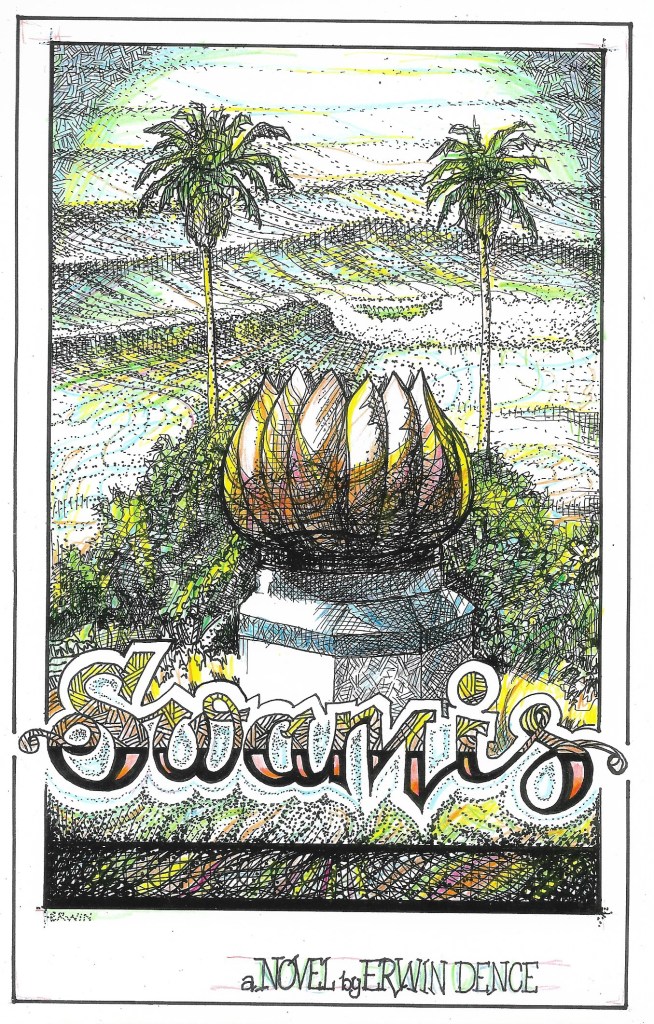
Here’s my illustration, the first, actually, for “Swamis.”

Image (91)

Subject to change, of course

SWAMIS- In Progress

SWAMIS

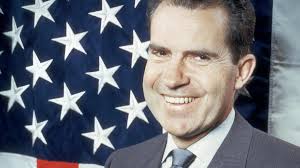
nixon

On June 8, 1969, President Richard M. Nixon said 25,000 troops would be out of Vietnam by August.

SECOND WEEK OF JUNE, 1969

Almost leaping from stair to stair, I was looking at the water, the fuzzy horizon, the lines; counting, then recounting the surfers already in the water; trying to beat any other surfers who missed the true dawn patrol. Swamis was, finally, it seemed, breaking; tide dropping; swell, hopefully, increasing. It would get crowded.

Two surfers were walking from halfway up the point, along the water’s edge. I wasn’t focused on them; they were shapes, so familiar; surfer and board, nose-up or nose-down, more-or-less crosses in the grainy light, the shadows of the bluff. One was walking faster, trying to catch up. “June,” I heard, or thought I heard; then, more like a question, “Junipero?” Then, closer to the guy in front of him; “Jumper.”

“Jumper,” I thought. Jumper. Now I almost focused.

Almost. It was a moment, still just a moment, between a surfer reaching for, and touching the other man’s shoulder- it was Sid, reaching; Sid, a locally-known surfer; Surfboards Hawaii team rider; known to thrash his boards; known to take on crazy waves, to burn valley cowboys and out-of-town surfers, even Orange County magazine surf stars down to trade crowded beach breaks for a chance at Swamis point break magic- Sid, featured in a small, grainy, black and white ad in “Surfer” magazine.

I must have blinked. Sid was flat-out, on his back, parallel to that line where the sand turned hard with the receding tide. His board was floating in the shallows, Jumper’s board pressed, nose-first, to his neck; Jumper’s foot on his chest.

Jumper. Fucking Jumper. He was back in town, back at Swamis.

If we could just ‘backspace’ time ten seconds, not all the time, but for those moments we witnessed but couldn’t immediately process. Maybe ‘replay’ is more accurate. Ten seconds.

Fifty years gone, I’m trying to replay moments, bits and fragments and images and strings; strings of time; so many strings; some tangled, some free.

Oh, I broke free of the North County scene years ago; lost my contacts, forgot names, confused and overlapped stories from Grandview and Pipes and Cardiff Reef. I do still remember specific rides among thousands; remember, almost precisely, the times I was injured; held down, hit the bottom, was hit by someone else’s board; but, and I’ve tried, I can’t remember Sid’s last name.

But I remember Jumper.

In another moment, with me even with them, trying to be cool, to not look, both surfers were sitting on Jumper’s board. Peripheral vision. No, I probably did turn my head. Never was cool.

Jumper’s hair was shorter than mine, but, even with the patchy start of a beard; he was recognizable, the same guy from, probably, four years earlier, back when I was just switching from surf mats to boards; back when he caught any wave he wanted any time he showed up.  The Army or prison; stories about his disappearance varied; rumors among high school friends who quoted various upper classmen, scattered pieces from other people’s beachfire conversations.

“I heard he moved to Hawaii,” or, “No, Buttwipe; Australia. Or New Zealand.” Or, “Chicago.” “No fucking way.”  “San Francisco, then.” “Nooooo.”

Then someone would go into a Jumper surf impression, with play-by-play commentary, on any nearby surfboard; Right arm back, elbow cocked, hand like a conductor’s, flowing with the up-and-down movements on the imagined wave; subtle, the left arm lower, hand out flat; punctuated with, rather than the classic cross step to the nose, the quick shuffle, the jump; then a crouch and a shift to a more parallel stance, right hand in the wave, left hand grabbing the outside rail. Twist, weight forward; the fin would pop out of the sand.

“Island pullout.”

Someone else would repeat the performance, only, left foot on the tip in a solid five, upper torso shifting to face the wave, arms spreading wide; he would pull the skeg, make the rotation, yell, “Standing island pullout”, and shuffle back on the board, casually drop to his knees, ready to paddle out.

Yes, I participated in this. Yes, I tried to develop that “Jumper” conductor-dancer flow on my skateboard, pivoting, slaloming down my block, on inland hills, miles from the ocean. I had a long enough board, eventually, to go with the cross step; more like Phil Edwards, Micky Dora.

Style.

Jumper was probably my second surf hero. Maybe third. Heroes dominated lineups, kooks and kids gave way, gave waves, watched them.  Now Jumper was, quite possibly, crying, one hand on Sid’s shoulder, one of Sid’s on his. It was Sid who looked around at me with a ‘fuck off’ look.

Peripheral. No, I’d looked back.

I looked away, kept walking.  Still only a short distance away, I did what every surfer does, and always has; studied the ocean for a moment before committing; disciple before the alter.

When I looked back, from out in the water, from my lineup, the inside lineup, Sid and Jumper were half way up the stairs. Sid was one step ahead, one above. When two guys came down, Sid, probably because he didn’t know them, or because he did, made the down-stair surfers split up and go around.  Jumper moved behind Sid’s block.

A set approached. Surfers, who had been straddling their boards in the lull, dropped to prone, started paddling. At this tide, some of the waves from the outside peak were still connecting all the way through. The first one didn’t; the surfer on it lost behind a section. Two surfers went for the shoulder as I stroked past. The second wave swung wide, peaked-up on the inside. I had it to myself; another takeoff, drop, turn, cutback, back and forth to the inside inside, fitting my board into and through that last little power pocket, peeling over the palm of the finger slabs that opened to the sea. A little standing island pullout into the swampy grass. Swamis.


THIRD WEEK OF JUNE, 1969

1948-Noahs-Ark-Cafe

If the Noah’s Ark trailer park wasn’t still there, there on the north end of Leucadia, yet another trailer park squatted up against yet another bluff along 101, protected from the south winds; if it wasn’t still there in 1969; it had been there on those trips with my family, down the coastal route to San Diego.

I understand there’s a jetty there now; Ponto.

I also can’t clearly remember if the fields north of Grandview, the original Grandview, the fields along those bluffs were fields of tomatoes or strawberries. I know there were no houses. There were the Leucadia greenhouses. Flowers. It was what Leucadia was known for. Poinsettias.

Maybe not these particular greenhouses.

Turning off 101, I drove past several. One, and this had been pointed out to me by several of my high school surfing buddies, belonged to the family of Jumper Hayes. On this morning, still dark, what the forecasters called ‘early morning and evening overcast,’ or ‘June gloom’ hanging on, almost misty; I saw Jumper’s old pickup, almost-flat paint a weird shade of green in the light of the yard lamp, parked outside one of the greenhouses. Only the tail, fin over the tailgate, showed this farm rig was a surfer’s vehicle.

I gave myself a bit of a self-congratulatory nod, a quick smack on the shifter, three-on-the-tree; double-clutched down to second, gunned it.

It had become my workday predawn move, up and down Neptune, checking out Grandview, Beacons, Stone Steps; possibly surfing whichever one had a more consistent peak. Or a peak at all.  If it was bigger, big enough, I would push the fourth-hand Chevy four door farther, along the bluff, the increasingly-fancy houses blocking any view of the water, past Moonlight, down and around the Self Realization compound, to Swamis.

Or, depending on my hours; if it was still light when I got off work, I would turn onto 101 at Cardiff reef, pass the state park, try to get a glimpse of Swamis over the guardrail. If it was breaking big enough, you could see it. I would hit the parking lot and get out. Even if it was dark, I’d check the view from Boneyards, past what my high school friends and I called Swamis Beachbreak, onto and beyond Pipes.

And then back. And repeat. Maybe there’d be some last-lighters, still hanging in the parking lot; their stories of new and past glories punctuated with a hoot or a laugh; headlights and streetlights in a descending darkness and a dim glow from the horizon.

Swamis was where I wanted to surf. June gloom or bright offshore glare; breaking or not. What I felt, and was totally aware of feeling, was that my choice of route and destination was mine, mine alone; that I was pretty fuckin’ close to being free.

Within reason, of course.

NOTE: For a short period of time, but right about this time; well past ‘groovy,’ way past anyone remotely cool (or young) calling anyone a ‘Hippie,’ I made the adjustment, from ‘fuckin’, dropping the ‘ing,’ to Fuck-ing, emphasis on the ‘ing.’ This was after running into a guy, Gordie, from my high school at a liquor store in Vista. He now, suddenly, sporting long hair (longer- Fallbrook had a dress code and we’d just graduated), parted in the middle (of course), and clothing that denied his quite-upper class upbringing. “We just don’t fuck-ing see each other, man; like, like we used to.” And he was, obviously, stoned, an even more-stoned girl, possibly still in high school, headband, boutique-chic top, nodding, eyes unable to focus, next to him. Gordie put a hand on my shoulder. I looked at his hand, put my package of Hostess donettes and quart of milk on the counter, pointed to a pack of Marlboros, turned back to Gordie. He sort of gave me a look when I scooped up the cigarettes. “I know man, Gordie; you probably don’t fuck-ing smoke… cigarettes.” He and the girl both giggled. So uncool. “Peace, man.”

Yeah, flipping the peace sign was probably pretty much over, also.

My relative freedom isn’t, perhaps, relevant to the story. Maybe it is; these were times when ‘freedom’ and ‘peace’ and ‘revolution’ were frequently used in the same sentence. For someone just out of high school, working various shifts at a supermarket with a view of the ocean; joy and loneliness and a sense of being part of some magical mystery could all be felt in a very short span of time; and repeated, randomly. Mysteries.

Why, I had been asking myself, did Sid call Jumper ‘June,’ with a hard J; not a H sound. If his real name was Jesus; well, anyone would instantly know it’s not Jesus, like Jesus Christ, but Hey-Seuss, like Hey, Doctor Seuss, dropping the ‘doctor.’

Mysteries ask to be solved. Beg, perhaps. Rumors. Surfing, waves, surfing waves was a mystery. Board surfing was more than just drop and hang on. Tamarack was obvious; one peak in front of the bathrooms on the bluff, a bit of a channel; a parking lot at beach level. Good place to learn; sit on the shoulder; wait, watch, study; move toward the peak; a bit closer with each session. Get yelled at; get threatened; learn.

Eventually, you would have to challenge someone for a wave.

But there were always rumors of better waves, great waves, magical and secret spots, places uncool  freshmen kooks weren’t supposed to know about, weren’t supposed to show up at.

Grandview was fairly easy to find. There was a Grandview Street off 101 in Leucadia. Still, when I showed up there with my friends, now sophomores, we got looks. Punks, Kooks; not ready for Grandview.  The hardest looks were from other San Marcos, Vista, Fallbrook, Escondido surfers; other inland cowboys.

ANOTHER NOTE (SORRY): Inlandness was in direct proportion to distance from the coast. Where I lived we called Escondido Mexican-dido. That was, of course, insensitive; maybe; but I understand Meth-condido has replaced it.

As with, probably, anywhere, in order to fit in, you had to persist. I did. As my contemporaries and I searched out new locations; San Onofre, occasionally Oceanside; as some dropped surfing, traded it for parties fueled with liquor purchased by Marines, marijuana bought from friends of friends, I had become another surf addict; and Grandview was still on my route.

By the end of my senior year, I had become accustomed to going surfing alone.

And now, here I was, almost a local, slipping and sliding down the more-sand-than-sandstone between houses, original Grandview, the real Grandview; and ahead of the ultimate local, back after four years or so, Jumper Hayes.

Just ahead.

Peace and freedom and revolution.

MAY OF 1969-

I have to drop back for a moment. The story hinges on this. Chulo Lopez had been killed, murdered. His real name wasn’t Chulo; nickname; I can’t remember his real first name. It was in the paper, even on the San Diego TV news.  “Horrific” the reporter said.  “The Sheriff’s Office said he was probably dead… probably… when his body was ‘posed’ against the thick white walls of the Self Realization Fellowship compound, doused with gasoline, and set ablaze. Set ablaze.”

The reporter stepped aside. The blackened areas on the white white walls formed a sort of outline, similar to that around a candle. The TV camera followed the burn marks up to the gold bulbs atop the wall. There was a sort of symmetry, a repetition.  “Set ablaze.”

The walls were back to white when I next went to Swamis, against my parents’ warnings, two days later. It was a Saturday. Weekend. A predicted swell hadn’t materialized, a south wind was blowing. Maybe it would clean up, even get bigger. So, wait. Surfers I knew well enough to give or return a half-nod, four of five guys, one girl, were sitting on the guard rail; a small carton of orange juice or chocolate milk in their hands; maybe a cold piece of pizza; one or another of them glancing back toward the compound.

I lit up a cigarette, noticed none of them were smoking, squeezed the cherry out, pulled the donette package out of my windbreaker pocket. Frosted, never chocolate.

It seems wrong to me, now, it’s obviously wrong; but, somehow, when I was a teenager, it seemed all the surfers were somewhere around my age. Some younger kooks, some older surfers. Not many; or maybe I just didn’t focus on them; maybe the ones who were well known; names spread through a parking lot or lineup: L.J. Richards, Mike Doyle, Rusty Miller; surfers you would definitely keep track of; just to see if they were all that good. Better. Were they better?

How much better?

But these were days of evolution in surfing; shorter boards, more radical moves, backyard soul shapers, V bottoms and downrail speed machines; and the new heroes were younger; more like my age; s-turns and tube stalls and 180 cutbacks.

“Chulo,” someone said. In my memory there was a sort of muffled chorus, “Chulo,” from the surfers on the guardrail. “They’re saying it’s some sort of cult thing. Maybe it’s related to… you know, those monks burning themselves up over in Vietnam.”

May of 1966, in protest of corrupt Vietnamese Regime…

It was an older man, Wally; who threw pots for a living; sold them wholesale up in L.A. He had walked from the direction of the outhouse (still there at that time) and the stairs (probably two other systems since then), stood between the bluff and the guardrail surfers. There were a couple of us in the parking lot. Second tier.

“Jesus freaks,” someone said, actually more like a question…


Inside Break- Reboot

INSIDE BREAK- SOMETHING CLOSE TO NON-FICTION
THIS IS AT LEAST THE FOURTH TIME I have attempted to write this story. I always got stuck on the fact/fiction thing, partially because I didn’t want to get too personal with people who might not want this intrusion; partially because any attempt at biographical non fiction, because of memory lapses, point of view skewed in one direction or another, detail editing, many other reasons, becomes fiction. So, fine; I will attempt to remain as truthful as possible.
WRITING IS REMEMBERING as much as it is creating; maybe more. Forgotten events, suddenly, while thinking of/writing a particular story, spring loose from whatever kink or coil of brain wiring they were stuck in: Example I stole (one way of looking at it) Phillip Harper’s car (an oil-burning/leaking Corvair) in Baja (Easter Break, 1968) while he was sick and our other friends were unwilling get up early to try (again) to surf the rock-strewn closeout beachbreak out in front, or to leave the big and over-crowded tent to surf one of several legitimate point breaks we’d seen on the way down.
Though I remembered we were staying at a place on the beach, featuring a trailer park, a motel, and a cantina that looked like a gas station, which it may also have been, I couldn’t immediately remember the name of the place. We were actually mostly staying in someone’s parents big tent just outside the trailer park. Though Phillip’s stepfather had the use of a trailer for Phillip, his brother Max, stepbrother Mark, and invited friends Ray, Melvin, and me; because Dana and Billy and Mark had invited themselves along) earlier, I couldn’t remember the name of the place when I started writing this, but, because I was sure I’d driven the borrowed Corvair to K-54, but wasn’t sure that was actually correct, I went to the computer.  Cantamar. Or course. Still there.                                                             Hmm; was it K-55? Surfline claims that K-55 is a reef break, and I’m sure this was a point break. I did, perhaps, catch a few waves; pretty big ones, then lost my board trying to roll under one (term, at that time, ‘turning turtle’). I can, actually, vividly recall the board (the 9’9″ Surfboards Hawaii noserider, ‘found’ buried in the sand at Tamarack by some member of the Brooks family, from down Debby Street from my house, when they were grunion hunting, and given to me by Wendy Brooks’ father, over her objections, when they moved back to Texas) getting ripped from my hands; the lesson being, ‘keep your grip tight but your arms flexible.’
Just to finish this part of the story, Phillip wasn’t too sick to join up with the others, Dana’s old Corvair wagon and Ray’s (actually, as with my house a few sentences back, the cars may have been owned by parents, though they were pretty crappy vehicles) Ranchero suddenly, and dramatically pulling into the dirt lot, skidding, stopping near me, six highschool age (most of us were juniors, Billy, younger brother of a contemporary for whom surfing didn’t stick, may have been a sophomore, even a freshman) surfers bailing out as I secured the board with the newly-acquired ding onto the Aloha racks. “Your mom said I could take it,” I said Or may have; something to the effect. “You were in the motel with your mom and sister (Trish. not my Trish, but prominent in the bigger story); she didn’t want to wake you up.” This was interrupted and followed by a chorus of “fuck you,” that, eventually, by “How was it?” and “How did you do?”                                                          They hadn’t brought boards. We caravanned back to camp, later surfed some blown-out beachbreak south of Ensenada; though, maybe the next day, in the afternoon, the usual closeouts at Cantamar were lifted by genuine offshore winds.                                                    Better. Much better. I had convinced/forced Max and Mark, into filming; mostly me, with my super 8 camera.
Later, I put some of the footage together, showed it at school, several times; narrated by, of course, me. “Hanging ten? Hard to tell in the glare. Let’s say…yes.” There was a part where some of us are hanging out around a table outside the trailer. This was just after (not caught on film) Trish played footsie with me, and I, shocked, jumped; and she asked Ray, “How’s he ever going to get a girlfriend?” and I said (or should have, or could have, or wish I had), “Well, try it again;” and Ray, of course, sided with her on the girlfriend issue. And there was no way she’d ever do it again. No.                                                                               So, a bit of smoke from an unseen cigarette (this was before I’d had my first one) is visible in the movie version, to which I always said, “It was very cold down there.” It got a laugh; though not, after the first showing, from Ray.

insidebreakgoodversion 001

OBVIOUSLY I GET SIDETRACKED too easily. SO, I’m going to get to, and try to stick to the story of one trip from Fallbrook, across Camp Pendleton, to San Onofre, with one of my first surfing heroes, BUCKY DAVIS. This was in the spring of 1967. Things were escalating in Vietnam, the base was crazy busy, and we, just wanting a few good waves, were edging ever closer to making critical personal decisions on life and love and war and surfing.
BUT, don’t expect a laser focus. There’s just too much overlap with other trips and other stories. I’m at this moment, stuck on whether or not Bill Buel was on that trip to Cantamar. I’ve long replaced him in my own version of the San Onofre trip with Ray, with whom I made many other surf trips (mostly because I never liked, and even had some resentment or fear of Bill Buel).                                                                                                           And, once it was Ray with Phillip and me, me riding (for once) shotgun, in Bucky’s VW bus; the story definitely became fiction. So, Bill’s back in. This should be easier.
SO, NEAR-NON-FICTION.

Susceptible

“‘The music,’ he said, he always said, always said, ‘is in the words. Pause. The words, one, the words, one, two, the words. Pause. The music, one, is in, one two, the, one, two, three, words.’ He was right.”
“No. No. I’ll, uh, admit… he had the genius thing you and I didn’t… poor us; had to earn shit; but he was always… I’ll pause here, not to sound, um, musical or anything, always… susceptible. It’s why he got screwed up originally, why he became a Jesus Freak, it’s why he got back into drugs again. Enlightened. Geez. Like, because he could drop too much acid and still seem, uh, lucid, lucid to his drugged-out and, on drugs or not, dumb-ass friends. Geez. Assholes. White trash… He thought; on the drugs thing… God, man; I don’t know what he fuckin’ thought. He thought it was easy. He thought it was all good fun. He thought wrong.”
“You’re right. Susceptible. I always thought; always believed, maybe, he… he was… was he, maybe, ni-eve? Or maybe we were because we believed in the whole ‘work hard and you’ll succeed’ bullshit.”
“Oh. Oh; yeah; yes. Definitely. Us not him. Sure. Sure, but, man; we’re still alive, still struggling. Moreover… is ‘moreover’ the right word here?
“Probably. Moreover?”
“Moreover, what he was was, mostly, he was…susceptible.”
“Susceptible? (there’s a long pause here, during which my youngest brother and I look at each other, look at several surfboards leaned up against a wall in my garage) Yeah, sure. Susceptible.”
SUSCEPTIBLE
My brother, our brother; no, he wasn’t a musician, wasn’t a poet’, maybe; probably wasn’t more than a guy who wanted to form some kind of life that included surfing whenever it was good. I don’t have to argue with our other brother about this; he’s right. Sidney took the easy way out. Well, what he thought was easy. It worked for him; for a while. I still have the board Sid gave me; classic Surfboards Hawaii pintail; no longer the clean white with the fine pin stripe at the overlap, the dings from a couple of sessions at that reef break that really wasn’t a surf spot (but was never crowded) still not patched. Still, since I have this outlet, such as it is, before I go over the story (and it’s a story I’ve told, I’ve written, I’ve re-written); let me publish something my brother did write. Maybe it is poetry. Maybe it’s just words and pauses, that, if read out loud, as poetry should be read; and, say, try this- slur over the words, because, and my brother also believed this, even the actual words aren’t as important as the music- maybe it is music.
CAR CHASE
A car door will not stop a bullet;
A door and a femur will,
There is pain; the numbness, alleged, promised, that is a lie;
Another lie.
With every car that passes I feel, or hear;
No longer able to discern a difference;
The sound of a wave;
That first sound.
Oh, that’s it, that’s right;
The same bullet that only pierced the front windshield,
My car charging the roadblock, my head down,
Hoping the motor might stop a bullet or two;
That bullet (or those bullets) took out the back window;
Collapsed: diamond chunks not blown out crumbled.
And now, headed for the sea; whoosh;
I hear the sea, whoosh; I hear the sea.
Closer.
*Syd

That was fiction. He’d left the back hatch open on his van, imagined the rest. He knew he was running. Or, more correctly, he felt like he’d been running, though he was really just hiding a darker reality behind his visible life with whatever screen** and story*** and as much sheen he could afford. For a while, it was all pretty damn shiny; surf trips, friends with names we might read in a magazine or hear on TV, vehicles that were so impractical, surfboards one should hang on a wall ridden and given as gifts. Secret gifts too good to give back. Or up.
*Changed, by Sid, from Sid, short for Sidney. Yeah; of course. **I’m thinking the facade of a house just west of 101. ***Fictions about background, actual income sources, actual investments, actual relatives; just about everything.
Oh, and I must now say this is fiction. Just a story. Don’t go looking for real life equivalents, for ‘based-on’s, though, yes, the ‘whoosh’ from Sidney’s piece (he only thought he was being chased, only imagined being shot); I did use that in a piece already posted, on the sounds of a rainy Seattle. I stole it; sure; but really, I remembered it, and I believed it to be true. Truth.

SUSCEPTIBLE-     Part One- The Devil and the Fear of Darkness
I couldn’t save Sidney. Roger couldn’t save him. By the time Roger called me about the desert airplane drop and the intercept of the small plane, and the attempted bust and the shootout and the escape, Sidney not among the bodies at the… he called it a ‘showdown,’ two guys in a four wheel drive at the junction on miles of dirt roads and the only highway back, two bodies and bags of recovered drugs when the showdown was over; when he realized the escaped member of the party, the guy the other guys tried to kill when they thought he had ratted them out; when he just knew that guy had to be Sidney, possibly wounded, but not at the scene…
“Hi, Laurie; Roger. How’s everything? You barbequing?”
“No. I know you think that’s what we suburbanites…”
“Is my brother around?”
“What’s wrong?”
“Nothing. Nothing.”
But it was something.
“Don’t fuck with me, Roger. What is it?” The pause here is probably twenty seconds. That’s a long telephone pause. Still pausing, waiting. “It’s Sidney. Sidney, isn’t it?”
“Yeah. So… yeah. Is Mikey around or not? I don’t have time to…”
“MIKEY!”

Years earlier, Sidney turned to Jesus when he decided his life had sunk low enough; about the time, he later told me, when he gave up sniffing glue, not so much because he could hear (or feel) his own brain cells popping, but because his partner-in-sniffing, both sharing the tube and the paper bags, had popped enough that Sidney could no longer understand him. “He was gone.” I should say ‘turned back to Jesus,’ since we all had enough of a religious upbringing to share the beJesus out of us, to convince us that we were probably, most likely, doomed. Because I like to wrap things up in some terse phrase, I began to claim that “we learned guilt and hypocrisy at an early age.” Because I was the oldest, I had to hide or deny (hypocrisy) my intense fear of the dark; because Sidney possibly learned more of the verses of the Bible, or paid more attention, he developed a fear of the actual Devil. Because Roger was much younger, and because our father died while he was younger, and because our mother met up with several (two, really) future step-fathers who couldn’t care less about religion (I was old enough they had little influence on me or my fears), Roger developed only a fear of failure. Intense, actually.
It was cool, in those days, to announce your love of the risen savior, the redeemer, the Lord; but the religion was mixed in with so many other notions that…I shouldn’t discuss religion, really; I had become free (by circumstance more than will) of the trappings and the niceties and the hypocrisy. The Jesus Freaks offered a simple message; as Jesus had; it just became more complicated when groups were formed, organization was needed.
Somewhere in this complexity, Sidney moved up, and, when other simple believers lost their enthusiasm and fell off, he moved on to other groups; cynics, paranoids, studious zealots who could find scripture to back up their own fears. And Sidney could study deeper, explain the subtleties in a seemingly-clear way. Groups became smaller; Sidney moved higher. And funds were needed. Money. The Devil Incarnate; in various incarnations; but real.
Now, it might be easy for you to compare what I just wrote about my brother did in impressing other druggies by merely being able to somewhat communicate. Fine, but, I, the brother with the fear of the dark, still think him a genius; and still feel the loose-but-real restraints of the morals I was taught, the things I believed; goodness and evil and redemption; I held to my fear of the dark; almost savored it. And, after all, my father told both of us how, back in the war, he had seen The Devil. In the Dark.