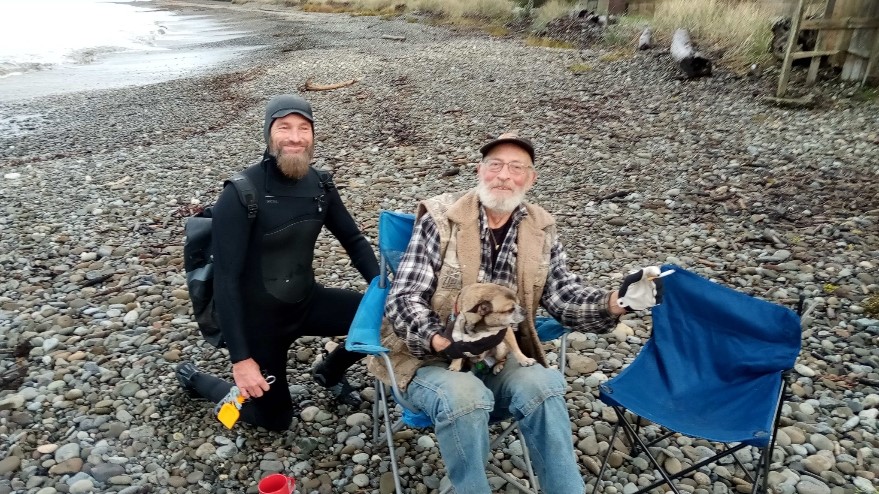
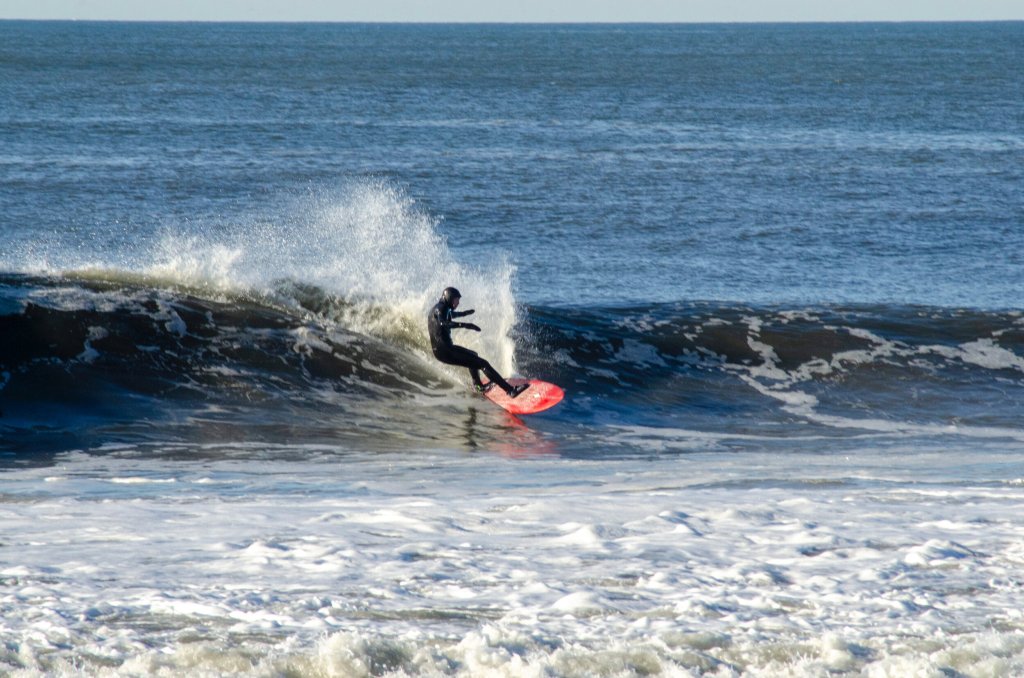
These folks are featured in the previous post. Scroll down to check it out. The two guys are brothers. Formerly of Sequim, they are currently living in Yakima. I didn’t ask why, but I did insist they put the boonie hats back on for the photo. The one on the left helped me with my wetsuit. They were all in the water for at least four hours.
…for dealing with a lack of surf and/or a lack of opportunities to surf. Subtle difference, same result: Surf Withdrawal Syndrome (SWS).
I HAD THIS DREAM last night, so this image coming from “DREAMTIME” copyright theirs, is quite appropriate, though, in my dream, rather than the Great Smokey Mountains (where, incidentally, my mother was raised), and in my dream, that evidently, in a dream-typical way, seemed to sort of tell a story in which I was supposed to go surfing with this guy, possibly based on Olympic Peninsula surf pathfinder Darrell Wood, BUT… THERE WERE COMPLICATIONS; we had to check out some house where the dude there (couldn’t pick him out in a lineup) wanted to add on to his house AND was having trouble with a son who was getting in trouble. The Darrell character had advice on both, but I was aware that I had to call TRISH and give her an update, and that it was getting late, surf trip-wise. SO I ASKED the homeowner if he had a phone. HE DID, but he was on it. LANDLINE. I chased him through a really big house, at one point asking him if there was a bathroom, all while he’s unfurling phone cord behind him. “Do you really need to add on, man?” SUDDENLY, I’m outside, and I’m getting into a vehicle with ADAM “WIPEOUT” JAMES, and I’m asking him if it’s too late to surf. “If you ride with someone else…” he said as we drove toward a setting sun over low mountains, the Pacific Ocean somewhere over them.
“If you ride with someone else… WHAT?”
INCIDENTALLY, 45 years ago, when I first ran into Darrell Wood, he said he’d invite me to go to spots he knew of, but, if he called, I had to be out the door within 15 minutes (or so), his house being 45 Hwy 101 minutes away from mine. So, I got to ride with him… once. I was late, but when we got to waves I thought were spectacular, Darrell turned them down, saying it gets way better. “When?” “Sometimes.”
My guess, my analysis of my dream, based on various couldhavebeen surf attempts in which time ran out is… I don’t know; FRUSTRATION? I’m currently dealing with an injury, knowing I have missed some opportunities, and, looking at the forecast for the STRAIT, ALWAYS IFFY, is not encouraging.
ALSO, I have had SUPER, MAGICAL SESSIONS riding with Trish, with our kids, with friends (including ADAM WIPEOUT) to find surf. It’s not always the SURFING, sometimes it’s the trip.
ENJOY THE TRIP. It is part of the story. AND there’s always a story.
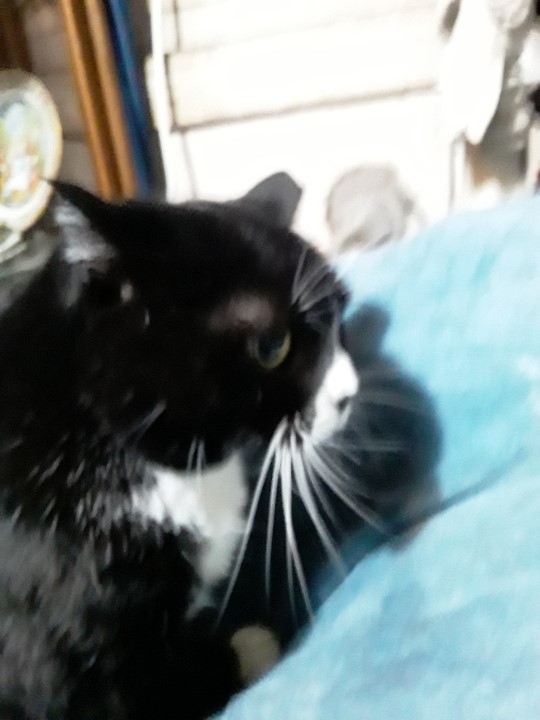
It’s our cat, ANGELINA, quite disappointed if not super pissed-off, resting on MY pillow (darker blue in real life), in the living room, because it’s the room with (some) heat, that provided by space heaters powered by a very noisy generator.
Not to argue whether or not there is a surf season on the Strait, but… Oh, first, I’m posting this a day later than the days I am trying to get folks used to, Sundays and Wednesdays, due to the power panel in my, hm, hmm, cottage, pieced together and added onto since the 1930s, kind of, um, having an issue.
AN ISSUE is my explanation for reduced power and… I AM working on it.
Not this skinny, of course, but rideable waves and no surfboard… frustrating.
Again, not discussing (potential, possible, hypothetical, possibly imagined) waves I can’t get to for a reason other than the usual, ‘got to work,’ thing. A few years ago it was the water leak between the pump house and the, you know, house I couldn’t find, even cutting holes in the floor to track it down, not finding it leading to the pump fifty feet down going out. Yes, I missed some waves I would have, according to reports that included, “You would have loved it, Dude,” and “Where were you?”
The thing is, these kind of issues, quite a ways outside of my knowledge zone, my limited areas of expertise; OR the use of professionals to solve the issue being way outside of my budget; just make me so… tired. Disappointed, pissed-off, frozen in body and mind. Rather like Angelina.
BUT, I am making some moves. It’s only been about thirty hours with no coffee and inadequate heat. I felt pretty good that I replaced the burnt-out main shutoff switch (not fun). I’ve done testing, possibly closing in on the areas of extended damage. Always tough. Electrical logic is way more involved than painting logic (paint is a liquid, gravity is involved). I have some ideas. YES, I am aware almost any problem is solvable if one throws enough money at it.
YES. This drama, something short of a tragedy, will be a story. Eventually. Not yet.
MEANWHILE, I did discover I can’t run a space heater AND a coffee maker at the same time.
NOW, I DO have some new artwork, several possible t-shirt designs, more from “Swamis” I wanted to post, AND I WILL, once I’m back to full power. So, soon. I’ve got to work.
If you do happen to get a few waves; it’s fine; I’m sure they’re the kind (rideable, possibly makable) I would love, Dude; it’s fine if you let me know. Good luck. May all your breakdowns, breakups, accidents, tragedies, meltdowns, panic attacks, mind freezes, etc., happen when the waves aren’t going off
A few years ago I wrote a series of stories and, yes, poems that I put together in a collection I titled, “Mistaken for Angels.” Yes, I got a copyright. Vanity. Ego. Just in case. As with everything I have written, my plan for a novel or interconnected stories lost some of the connective-ness, random ideas popping in to complicate matters.
The underlying premise was that the story is more important than the telling, the style and the proper adjectives and structure less memorable than the absolute desire each of us has to tell our story.
It’s not my story; it’s fiction; and my remembering this story caused me to search through multiple thumb drives. The current portion of ancient struggles caused me to remember that I had written it; not about a particular place or time, but of many places and many times.
Tragedy begets tragedy.
I was raised to be a pacifist; yet, turning the channel, turning away, I do nothing. Nothing except, perhaps, to try to calm if not control my own confusion, my own outrage, my own anger.
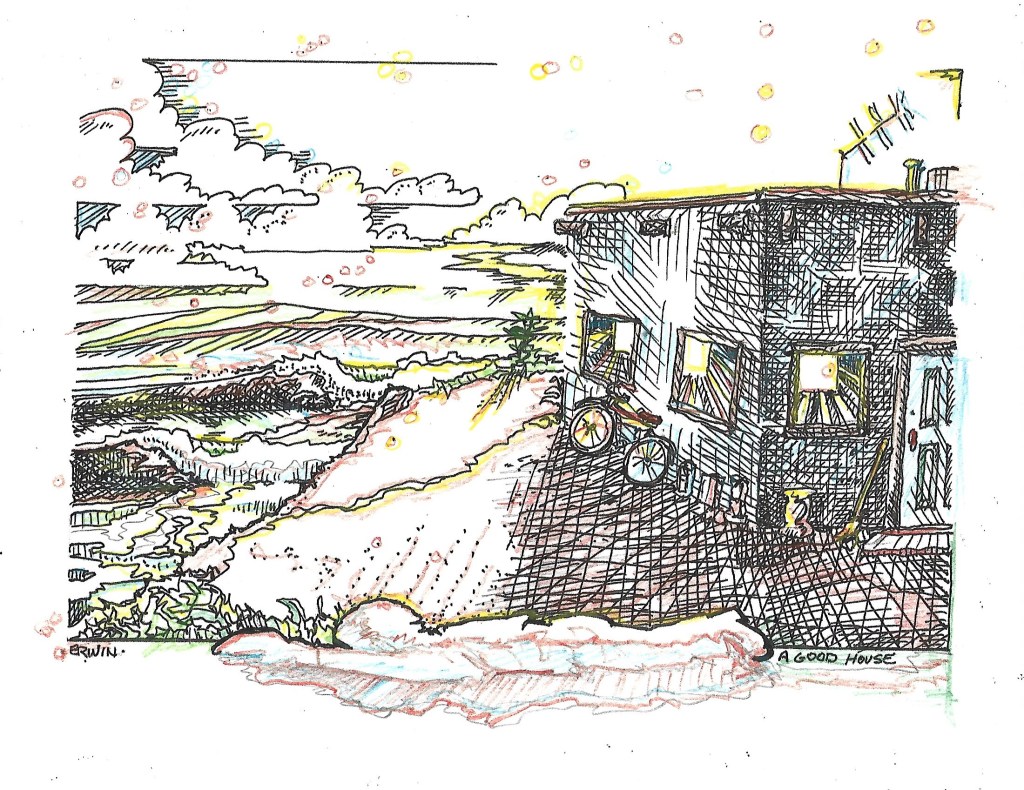
OH, since the location could be anywhere, on this (new) illustration (sketch if you must), I put in some waves in the background, making, possibly, A GOOD HOUSE that much better.
A Good House
We had a good house. This, you see, was the problem. It was, also, too close to the border. Some, those who think themselves brave, who think others will follow them, they call the disputed land on which the good house sits the ‘frontier.’ I call it ‘bloodlands.’ There has always been trouble. Wars go this way, then back; like waves on a lake.
My Father, he went to war- one of the wars- he pushed forward very bravely (so we were told), but came back very broken. The next wave took him for good.
Wave. Yes. Like a wave. We all knew he was already drowned. He was waiting for the next wave to wash his body away from… This is difficult to explain. “No faith left” he would say, staring toward the horizon.
My Mother, she had faith, and, with it, that certainty… I have heard it called fatalism. Ah, fancy term, that. It’s that knowledge that the darkness comes to each of us, to all of us. Fate and faith, they are, I think, related. “To have faith,” my Mother told us, my Sister and me, after our Brothers went, or were taken, made to fight, “you must have faith.”
This means, I think, that you must believe that having the faith sometimes works. Sometimes what we have the faith in, that things will be all right, can happen. I don’t know if I do believe this. My Mother did. Truly.
The snipers had done damage to the troops from our country. That is why they, our Soldiers, took to the houses. “Like a jar of water,” one of them told my Grandfather, who was weak and old, and had survived, he said, by never flying anyone’s flag, never taking a side. The Soldier held my Grandfather’s head against the rocks of the fireplace. He tapped it with a branch meant for the fire. He, the Soldier, explained this thing to my Mother, who, because she refused to cower as her Mother was, obviously was in charge.
He threw his hands apart to describe how a sniper’s bullet reacted with a soldier’s skull. “pheuuuuuuuh!” Then he laughed and let my Grandfather go.
“Okay,” he said, “your land; you don’t care what country it’s in. Fine.”
There was blood on this Soldier’s uniform. It (blood) dries almost black on the green. He smelled of gunpowder and body odor and death. They all carried sometimes multiple guns, and each had what you might call a machete. They called them something that would be more like ‘sword,’ and attributed a certain righteousness to its use. The Soldiers burned the blood from the blades in our fire, ate our food, complained about my Sister’s crying, and waited.
Soldiers, I now know, spend much time waiting. This is where their brains tell them many stories of why they should be afraid. They tell each other that they are not afraid, should not be afraid, they are and must be men. Yet, I could see these Soldiers had fear. Fear, someone else’s, looks like anger. I could feel my own fear. Like the Soldiers, I would hide it. I made my fear look like calmness. I could see everyone’s fear. Except my mother’s. She had the faith. I wanted to have the faith. I was ashamed to have, instead, the fear.
Fear is like a prayer, I think; or, maybe like a heavy, dark blanket, wrapped like a cloak, ready to be cast off, cast off quickly, when it is bravery that is needed.
Bravery, I’m afraid, is the ability to disregard what is known to be right. Bravery is a vicious thing. I no longer wish to be brave.
For some, it is better to be dead than brave.
Sorry. I must laugh a bit. The brave and cowardly are often thrown into the same grave.
“This is a very nice house,” another of the Soldiers said. He stood close to the window, lit a cigarette. “I think,” he said, “after the war, when we are free, I will take this house.” It was then the sniper’s bullet hit his neck. Both sides at once, it seemed. He was still smiling his dirty smile when his head snapped back. He rocked only a bit, and fell, crumpled, beside me where I sat. The cigarette was still in his mouth.
The first Soldier, and the others, ran outside, then away, leaving the dead one, blood splattered on our walls, making pools on our floor. We could hear guns going off, closer, then farther away. We thought, we hoped we were safe.
Briefly, we were.
These were the, it gets confusing; you might call them counter-insurgents. At dawn the insurgents came closer. Same smell, same uniforms (I thought at the time), different caps. They laughed when they saw how poor we were at trying to drag the body out. They kicked at it, shot it several more times, took things from it, threw it onto a truck with other bodies, some not in uniforms.
You can tell when the soul is gone, when a person becomes a body. Less. Almost nothing.
I don’t know where a soul goes. Somewhere better. I have seen those whose souls are gone, their bodies still…walking, eyes too wide open, too squinted down.
We would have been all right if the war had not slowed, the fighting ‘bogged-down’ in the hills; if the troops of our country had not fought so fiercely; if we had not had such a good house.
We had new guests not of our country. They thought themselves of a better country; bigger, older. This was not actually true, the bigger part, except for this short while. How small and pitiful our country must be, they said, to be so easily conquered.
I have no patience to explain why things went wrong. My Sister cried too much. It became night. Perhaps it was the darkness, the length of the nights. One of the soldiers said his grandfather might have worked on the masonry on our house, back when our country was still grand.
“If so,” my Grandfather said, “I would have paid him well. I always paid the workers well. They ate at our table.”
The mason’s Grandson looked at our table, smiled, but not nicely. Another Soldier, suddenly angry, perhaps because of how his Grandfather was treated, because of where his Grandfather took his meals, grabbed my Grandfather and pulled him outside. My Mother knew what this meant, and begged for her Father’s life. The Soldier slapped her for begging. Because she stood at the door and screamed “Butchers, murderers,” my grandmother was also pulled into the darkness. My Sister, holding onto our mother, kept crying. My Mother did not.
This is the fatalism of which I spoke, the belief that all will be tested.
And most fail.
I also did not cry. This is the faith, faith I had because my Mother had faith. The mason’s Grandson pulled my Sister away, shoved her toward me, told me, in my own language (they are really only slightly different) to keep her quiet. He moved his face close to my Mother’s, touched her breast. He said, Whores beg. Are you, then, a whore?” This was to humiliate her further.
I have learned this from war: To kill is not enough for some. To only, to merely kill is not enough to make the anger and the fear and the hatred cease.
“If I must be,” she said.
At this he laughed. “I am also the whore,” he said.
“My Children,” my Mother said to him. It was like a question. He, and the other Soldiers, now back from outside and leaning against our walls, shrugged and laughed together. The mason’s Grandson took his pistol belt off, holding the pistol in his left hand, moving it close to my Mother’s cheek.
“God will send a miracle,” she said to me. “Turn away,” she said.
I almost cried out at this moment. My Sister did. I put my hand over her mouth and prayed that I could have a man’s strength.
Prayers. Excuse me for laughing; just a little. Prayers are not answered as we expect.
It’s rare, I have learned, that a first mortar round can hit precisely. This one did, precisely where it was intended to land, and when I asked for it. The Soldier’s Grandfather had not been a roofer. No, not at all. Ha!
Like a jar of water, burst.
I kicked at his body when it was over, when the others ran, when more mortars rained down on the houses on the frontier.
Of prayer, I should add, speaking of the partial nature of the realization of prayer; my Mother did not survive this…this…I don’t know what they call this. It’s a tide, a tide, and we are the shore. I carved our Family’s name onto the mantel, underneath, to mark a claim when I return. I took the Soldier’s machete. After I’d chopped him with it; splattered his blood with it, I burned his blood from the blade in the fire.
By the time the Peacekeepers came, the roof was already patched, by my Grandfather and me. We also buried my Mother, dragged the soldiers’ bodies away from the house. My Grandparents would not leave. This was their home. That they were not soldiers was honored. That time. My Sister became one of the many refugees. Refuge means safety, of course. I prayed she would be safe. Yes. I told myself she was safe and fed and happy. That was my hope. Perhaps it is partially true. I became, as you know, a Soldier, a brave one, they say. I am still a Soldier; I wait, but I do not fear. I no longer even hate. I know what bravery is.
Oh, I see you don’t believe there could have been two miracles, two dead Soldiers in one house. Well, perhaps I lie. The results would be the same; the dried blood as black. Prayers answered.
When I was captured that first time, taken like a fool during one of the many truces, they called me John Doe number four hundred and thirty-four. I was, I now guess, eleven years old.
There’s a lot I am trying to cover today. May as well start with a strained allusion to “The Wizard of Oz.”
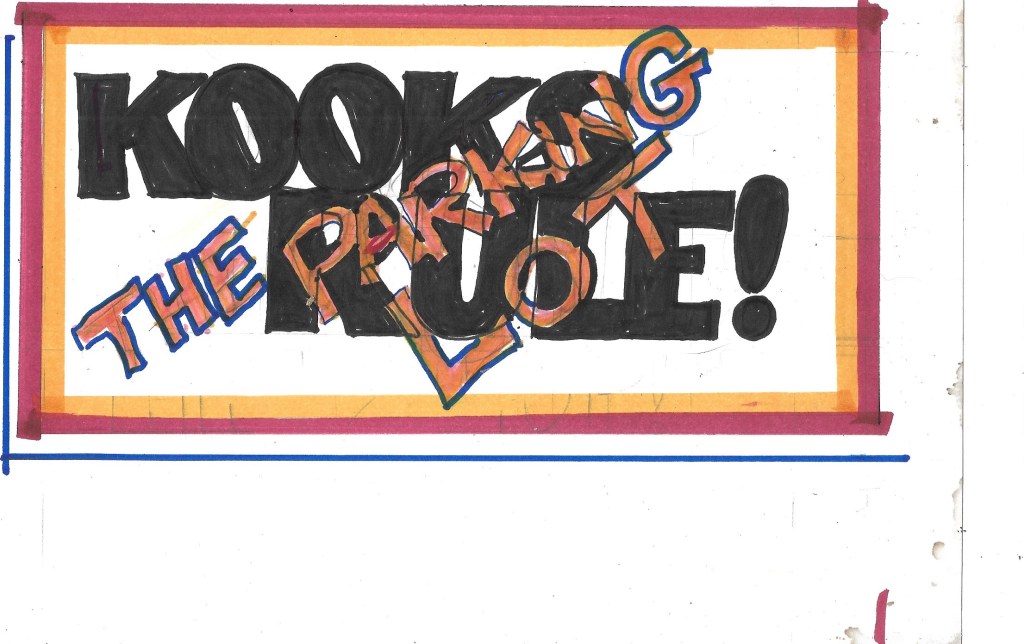
STORY: A friend noted that “some dude in a jacked-up Toyota with lots of stickers” was checking it out at a ‘surf spot’ on the Strait. A prominently displayed decal read, “Kooks Only Not Locals.” My friend, as close to being a local at that spot, responded with, “People who complain about locals obviously have never been local anywhere.” I, someone who has been a local and an inland cowboy at various times, am responding with… well, see above.
I KIND OF wanted it to be, “Kooks Rule the lineup… in the parking lot; not as precise, perhaps, but it goes along with, “Every surfer is a badass… on the beach.”
STORY: SUPER BAD ASS SURF RIG in the lineup. I have often pondered the proportion between surf rigs, fancy boards included, and surfing ability, and how much the HIPNESS FACTOR comes into the formula.
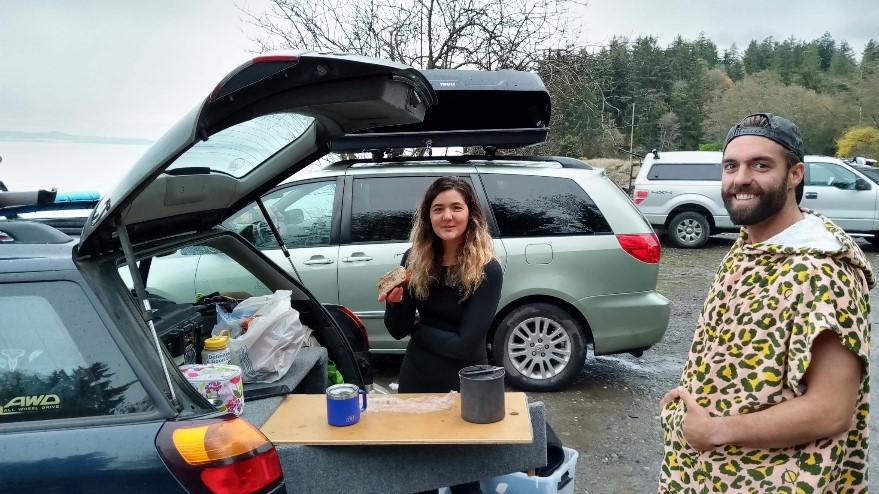
“I really wanted to make my car into a van,” this woman said. I really wanted to get a shot of the guy coming out of a sani-can, and I did, his outfit being… well, fun for sure; but this shot might say more. I do bring a thermos and some sort of food when I head out (salad and cookies on this occasion), but I do take note of those who either, one, prepare a full breakfast before surfing, and two, those who see others in the water and automatically suit up. This couple didn’t seem to object to my saying I’m trying to take more photos, particularly of HIPSTERS. Usually those I identify as hipsters deny their hipster-ness.
AGAIN, THE HIPSTER/RIPPER FORMULA.
SPEAKING of which:
The guy on the left, KURT TICE (or Kirk, not sure) is, by any definition, not a local on the Olympic Peninsula. He is a definite ripper. THE OTHER GUY is a definite local at this particular beach. He doesn’t surf, and I have been identifying him for a few years as the TRUMP LOVING, DOPE SMOKING DUDE, mostly because he used to wear a red Trump hat. It’s legal, as is… you know, smoking. Maybe the Trump hat just kind of, you know, wore out. He’s eighty-years old, says he loves being a local. “What do you do when there’s no surf and no surfers?” “Oh, there’s always someone around.” “Okay.”
STORY: KEITH ran into KIRK/KURT and one or both of his sons, also rippers, at a surf spot. Several times, perhaps. Turns out they are from Newport, Oregon, and know some people Keith, originally from the Oregon coast, also knows. THEN they ran into ADAM “WIPEOUT” JAMES. And then, on one of the times Adam and I headed out looking for surf (and BEARS or deer or cougars or mushrooms for Adam), the ripper family ran into us at the pullout for some difficult to access spot.
AND THEN, I’m out trying to make the best of the occasional waves on an outgoing tide when the ripper dad comes running down the beach with a tiny board, waves, paddles out, and… whoa,, a set shows up. “Thank you,” I said. Then his two sons show up. They ripped. One of them asks if I’m a friend of Adam. “Adam James?” “Yeah, from the Hama Hama. I think we saw you guys a couple of months ago.” It was more like ten months, but, “Yeah.” The father and the sons were so polite on a day when, at its most crowded, few surfers were making eye contact. I get it. GHETTO MENTALITY. I already forgot the names of the two kids. Sorry. NEWPORT RIPPERS will have to do for now.
HERE’S MY TAKEAWAY: Attitudes can change the vibe in the water. It’s like watching a surf music with one kind of music, and then changing the tune. There is something very uplifting about surfers who can be polite, friendly, and enthusiastic. Yeah, yeah, yea!
Make no mistake, this trio could dominate a break. So, the STOKE/RIP FORMULA. Hmmm. I’m not a mathamatician, can’t even spell it, but I do believe there’s something there. See you in the parking lot.
Another chapter or sub-chapter from “SWAMIS” will be available on Wednesday. Thanks for reading.
It isn’t that I want to ridicule or make fun of or hate on people who want to engage in the exciting world/culture/sport/lifestyle, imagined or real, that is SURFING. I just want to understand some of the folks I see heading for waves, or hanging out near or on the beach, bobbing and/or weaving in the water.
Motivation. I know mine. I just want to ride waves.
Not party waves, and most likely better waves, bigger waves, and as always, I want to ride them better. “Better than whom” is a good question. Better than me. Mostly. Better than you. Yes, if possible. BUT, if you rip, great; I am always ready to identify and appreciate and applaud shredding and ripping and cruising and flowing; surfing done well. I’m really, and this has been true throughout my surfing, uh, life, trying to surf as well as I can during any session and given any and all other factors.
And yes, I am aware of my limitations, and that, to some young hipster I might seem worthy of… let’s say, assessment.
Fair game. See you in the water.
SO, I have been missing a bet by not photographing some of the people I see. Particularly ones I have some conversation with. I have the stories; I need the images.
This is a non-rendering of the guy I saw recently; walking across the entire length of the parking area to, maybe, check out whether there were some waves up thataway. There weren’t. In doing the drawing, I didn’t allow room for his sidekick. Now, It isn’t like anyone can really tell if someone is a good surfer by their outfit, or posture, or by what they say. BUT, if I judged this Grizzley Adams dude harshly, despite his tricked-out surf rig, with overhead sleeping deal AND bike/cooler/campstove rear bumper setup, and his quiver of board-bagged boards, and I shouldn’t have, I did judge his sidekick as a, um, newcomer. Neophyte in, potentially, neoprene. Hard to say. Dudes paraded back across, hopped in the rig, and skedaddled. Maybe you saw them.
Okay. So, yeah, something that connects most of us is a desire to be considered/judged as cool/hip, maybe even rad/whatever the current word is WHILE also trying to be… better. Me too. WHEW! Wow, confession is so… so something. I’m thinking about that. But, Coolness; never achieved it; still trying to get, you know, like, better at it.
Meanwhile, thanks for checking out realsurfers.net and remember that the next chapter of “SWAMIS” on Wednesday. I think we’re up to Joey going to Swamis a few days after Chulo was killed. If so, because I have each chapter covering a single day, that chapter is a three-parter, mostly so it doesn’t not overwhelm any potential reader. Be one of them. And another thanks.
All content on realsurfers.net is covered by copyright protection. All rights reserved by the author/artist.
Some people come to the bluff at Swamis just for the sunsets. Carpenters and insurance salesmen mixed in with the surfers, just out of the water, who had to have one more look. On this afternoon, I was one of those.
“After school, after work surfers. Medium crowd. No hassles. Sunset watchers took over the bluff. One lady, business outfit, thanked LA smog for nice orange sunset.”
It was through this crowd of sunset watchers that Portia walked, right to left, from the Jesus Saves bus at the far west end of the parking lot, to the new brick bathroom and shower facility on the 101 side of the stairs. With something bulky under her left arm, she walked as a dancer, perhaps, would, right hand out, palm down, as if floating across the horizon.
Portia was wearing a blouse that went lower than her hips, set off with a cloth sash, wide, purple. Her skirt stopped just above her ankles. Her feet were bare and tan. Portia’s two main pieces of clothing were in dark and almost competitive prints, Gypsy/Peasant/Hippie look. Her hair was long, straight, dark brown, almost black, accentuated with a band around her head that almost matched the sash. No jewelry, just a smaller version of the cross Chulo wore, hers a conveniently shaped piece of driftwood, hanging from hemp twine.
What I couldn’t describe, at that time, was Portia’s face. Pretty from a distance, she seemed to defy a closer look. Inexplicable. Or perhaps it was that, if you were close enough, she was looking at you with an intimidating intensity you couldn’t match.
You might look at her mouth rather than her eyes.
In the very middle of the pack of sunset watchers, Portia stepped between the sun and a man straddling a bicycle undersized for him. Gingerbread Fred. Portia blocked his view of that moment just before the sun exploded and spread at the horizon. It took another moment before she hugged him. I could see her face over his right shoulder. Dark, shadowed. She looked at me for another moment. Blue. Her eyes were a blue that didn’t match anything else about her.
I saw her, there, and I saw an overlapping image of her from another time. Mid-day, I was taking a break from surfing, just around Swamis Point at an area called Boneyards. Lying on the largest, flattest of the big, soft edged rocks, I was close to being asleep. Portia’s shadow blocked the sun. “Do you know Jesus?”
I didn’t open my eyes. “Whose version?”
“Yours,” she said, without any hesitation. She dropped a pamphlet on my chest and moved back, allowing the sun to hit me full on, again. I blocked the sun with a hand and opened my eyes. The pamphlet was hand drawn, hand lettered, eight-and-a-half by eleven, folded, with some vague message about some vague but wonderful Jesus. I sat up. Portia backed away, turned into the glare, danced up to two young women in street clothes, handed them pamphlets, and danced into the shallows.
This Portia, on the bluff, held Gingerbread Fred’s hand as she stepped away. I would save this image: Hands stretched between them, nothing but light behind them.
I had heard stories about Gingerbread Fred. Almost myths. Tijuana Sloughs, breaks outside of Windansea; Fred was on a list of names of surfers from the pre-Gidget past. Legends: Simmons, Blake, Holder, Edwards, Richards; their stories further enhanced with each retelling.
This was the current version of the man. He was damaged, burned out, not fully there. Korea was the rumor. Or Vietnam. Or both. Yet he was here, the bluff at Swamis Point, as he was, seemingly, religiously, for the sunset.
Legends are one thing, parking is another. Someone pulled a car out of a space two spots over from the optimum location. I ran to the Falcon, parked on the far side of the center row. Not taking the time to retrieve my notebooks and binders from the hood, I unlocked it, got in, and eased, counterclockwise, around the other cars and past the Jesus Saves bus, narrowly beating someone else, coming in clockwise, for the spot. Exciting. A little victory.
I was aware that something had blown off the hood. I opened the door carefully, to avoid hitting the car to my left, and got out. A man was holding that week’s edition of the North County Free Press, eight pages, stapled in the middle, open and up to his face.
There was an ad for a farm cooperative on the back page, a photo of me on the front. Me, behind the plate glass window. “Local Detective Killed in Mysterious Car Accident.” The heading for the lead story, right side, balanced by the photo, was “Joseph J. DeFreines, Heroic by Nature.” The by-line was “Lee Anne Ransom.” I had chuckled when I read that the first time.
I imagined what the man was looking at; the coverage and the photos from the funeral. In the featured photo, top right, page five, my mother was looking down, holding the folded American flag with Freddy, on one side, crying, me, on the other side, looking at my mother and not crying. Or he could have been looking at the photo of the crowd, San Diego County Sheriff O’Conner and a group of detectives and deputies, all in uniform, Detective Wendall holding the department’s show horse, a magnificent Palomino, the saddle empty. Wendall looked honestly broken. Or the man could have been reading the testimonials. Or he could have been reading the article on the bottom right, “Is Marijuana Now the County’s Top Cash Crop?” Also written by Lee Anne Ransom.
The man lowered the paper, held it out, still open, with both hands. He was of East Indian descent, I guessed. I had seen him before, different setting, different clothes. He was, on this afternoon, wearing workman’s clothing, heavy blue-gray pants with worn and wet knees, lace up boots with the toe areas scuffed, a long sleeve shirt with the sleeves rolled up. He had a faded red bandana half hanging from his left front pocket. His hair and beard were black, both reaching just below his collar.
I looked at the man long enough to take in those details. He looked more at the paper than at me. “I can get another… copy,” he said. “They are, of course… free.”
“No. Keep this one. I have… another copy.” I shook my head. “Free. The free thing.”
“Then, thank you so much.” The man folded the paper, folded it again, tucked it under his arm, did a slight forward tip of his head. “I do some… gardening.” He moved his left hand behind him, pointing. “Outside the compound.” I returned the head tip. “Volunteer.” I did notice an accent. English accent with East Indian rhythm. Perhaps.
“Oh,” I said, looking along the white stucco wall of the Self Realization Fellowship compound, and suddenly remembering where I had seen him, “You’re a… member.”
He smiled, one of those half face smiles. Right side in this case. “Member?” He shook his head. “Loosely… connected.” English, for sure; but I couldn’t discern anything more about place or status. “I saw you once. Inside.” He nodded toward the compound, but out and up, toward the point. “The… meditation garden.”
I tried not to visualize. It didn’t work. I closed my eyes, opened them again. It was the double exposure thing, the vision. I could still see the volunteer gardener, along with another version. Same man, this one dressed in a robe. He was standing next to an older man, with even longer hair and beard, gray, and dressed in a robe made from a silkier, more colorful fabric. That man was possibly an actual Swami, or Yogi, possibly even the Swami. They were smiling. At me. Appreciative smiles. I didn’t want to explain. Anything. I jumped up from the bench and ran, down the manicured paths with hand-set stones, perfectly cared-for plants, flowers year-round.
I blinked. I opened my eyes. “I… ran.”
“You did. Yes, you do remember.”
“I was… studying. Not… anything else.”
“Perfectly fine. Meditation is… one’s own time.”
I followed the man’s eyes back to the bluff. Portia was returning from the bathrooms with a different bundle under her arms, with different clothing, a very different look. Braided strands from the front of her hair were wrapped around to hold the rest in place. There was, perhaps, a ribbon. She was wearing a loose top, long, with long sleeves, a subtly patterned or even one-color Pendleton, with bellbottom pants and sandals.
Portia was walking behind the sunset watchers. “Conservative,” I said, pretty much to myself, but expecting some comment from the volunteer gardener. No. He was gone. He was crossing the lawn by the white stucco compound wall; and was halfway to Highway 101 when the Hayes Flowers van entered the lot.
…
From FLICKR under “Sunsets at Swamis images.” Great photo. Love the glow.
I walked back to the bluff, slightly behind the row of people watching the burnt orange in the wispy cirrus clouds at the horizon fade, toward Portia. Watching the yellow van go down the far row, she took three quick steps and then stopped. I was watching Portia. The van stopped at the squared off end of the asphalt, engine idling, next to the Jesus Saves bus.
I stopped, turned, walked back ten paces, squeezed past the door on the car to the left of the Falcon. I opened the front door to my car. I stood there too long, watching Portia. She was not moving closer to the bus and the van. Waiting. She glanced toward me. I am certain she smiled. Something about our shared hesitancy.
Because I had to say something, I said, “I got a good… spot.”
“Good,” she said. “Great sunset.”
“Yes.” I glanced toward it, then back toward Portia. Her face was shadowed, but this Portia, in regular clothes, seemed younger.
“Chulo… and I, we have to go to Balboa, the, uh, Naval hospital. His friend… you must know him. He surfs. Surfed. Juni. That’s what Chulo calls him.”
Portia walked closer. She set her bundle on the hood of the Falcon. I kept the door between us. “Jumper. Jumper Hayes. He’s… there? Balboa?” She nodded. “He all right?”
“He’s alive. He was transferred there… here, from Hawaii.”
Portia, keeping her eyes on me, moved closer. Sunset watchers beyond her were looking toward the Jesus Saves bus and the Hayes Flower van. Two men, raised voices, short bursts back and forth, not quite distinguishable words. I didn’t look around.
“I have never met him. Jumper.” Portia came up, even closer. Her eyes were, with her usual dark eye makeup gone, that surprising blue color. Her hair was not naturally black. It was, at the roots, lighter. “We’re going… with Mr. and Mrs. Hayes… their car. Good citizen car. It’ll get us through the front gate.”
“The Cadillac. Yeah. That’ll work.”
Portia had to say something or walk away. The muffled back and forth at the Jesus Saves bus continued. “Your father…” I kept my eyes on her. “Chulo and me…” She touched my left hand, slid her right hand on top of it, both of our hands resting on the top edge of the door. “He… introduced me and Chulo. ‘Troublemakers,’ he called us. Got me a job. Then I got on with Mrs. Hayes. Consuela. Arrangements, mostly. Shop work.”
Portia paused to make sure I was listening or that I understood. “The religious thing. That was Chulo. Converted and all. Work camp.” She had a ‘taste’s bad’ expression, just for a moment. “Jail. East County.” You probably knew about that.”
“In Fallbrook it was known as, ‘The Great Avocado Robbery.’”
Portia laughed. She was younger than I’d thought, barely over that line I’d set between me and adulthood. “They love their avocados,” she said.
“They do. Chulo and Jumper and some mysterious guy from… somewhere. A buyer. Supposedly. Never caught him. I got that from the papers. Never… my father didn’t tell… ‘war stories.’” I laughed. “Of course, he did; just… not to me.”
Portia moved her hand to the vertical edge of the door. “Your father…” I was trying to think of a word for the look she was giving me. Earnest. Sincere. “Chulo says he did his best. The Deputy… Bancroft… Well, sorry God, but… fuck him.”
It was my turn to speak. I didn’t. I was picturing Deputy Bancroft from the few times I had seen him at the Vista Substation. Once was before he had crippled Chulo, all smiles and backslapping his fellow deputies, once, looking worried and angry, when he was trying to get the other deputies to support him. Most of them did.
The light had become grainy, the smog-enhanced colors at the horizon had gone gray. The few lights around the parking lot, just coming on, had to compete with the advance of night. The sunset show was over. Most of the watchers moved away from the bluff and, at various speeds, toward their vehicles. A few stayed on as if, perhaps, they were waiting for closing credits.
Not yet.
“Really?” It was loud. There was a softer, muffled response, followed immediately by, “Fuck you then, Chulo!” Loud and clear. Both Portia and I looked over. The Hayes Flowers van blocked the view of Chulo and the other man, but one occasional column of cigarette smoke raising up beyond the two popout surfboards revealed where the man doing the yelling was standing.
A skinny man wearing a cowboy hat went up the stairs of the Jesus Saves bus, closed the doors, started the engine, revving it quite unnecessarily.
“Asshole,” Portia said. She looked up and whispered, “Sorry. Again.”
The guy in the cowboy hat was honking the Jesus Save bus’s horn, flashing the headlights. The running lights and the inside lights in the driver’s area were flashing between the honks. The bus’s engine was racing. The Asshole rode the clutch, then popped it.
Chulo limped around the front of the van, and got in. “Different clothes,” I said. The engine was still running. He pulled the van forward and started down the bluff side lane. Counterclockwise. I stepped back, closed the front door, walked to the back of the Falcon to allow Portia room to get by. The van stopped, front doors even with me.
Chulo nodded. I nodded. “Get any… good ones?” he asked through the open passenger side window.
I could hear the Jesus Saves bus heading north on 101, grinding again between second and third gear.
“A couple,” I said, to Chulo, as Portia walked past me. She opened the van’s passenger door, set her bundle of clothes on the bench seat, held the door open, and looked at me as if she expected me to ask a question. “Different clothes,” I said, more to Portia than Chulo. “I mean,” I said, looking directly at Chulo, “this is not the, um, Jesus look.”
“People get that wrong,” Chulo said. “Jesus, way classier dresser. It’s more like, it’s a John the Baptist look.”
“Oh. Sure. Jesus. Whole cloth. Yeah.” I stepped away.
“You know the gospel.”
“Partially by choice.”
“Holy Spirit, man,” Chulo said, moving his fingers like a piano player. “Mysterious.” Portia closed the door. Chulo looked at her before he looked past her and at me. “I told them, Jody; Wendall, the State Patrolman, everyone… Plymouth. Gray Plymouth. Old guy, I said; probably didn’t even realize… what happened.”
“What about Langdon?”
“I can handle… Langdon. God… God love him.”
“He means ‘fuck Langdon,’” Portia said. “Asshole.”
“That’s how I… interpreted it.” Portia looked at me I looked away and then up. There was something about the popout surfboard on the right side of the van. It was blue, darker on the top, fading out on the rails. Different board. I took a step back to check out the skeg. “I mean… God love… him.”
“Assholes… everywhere.” Someone was beside me. Directly in front of the closed door. Gingerbread Fred. Threadbare sweater over a once white t shirt; maximum fade on his Levis, sewn-on patches of different fabric at the knees; no shoes; long and once-red hair, I assumed, grayed-out and as stringy as his beard; glasses patched and listing to the left; Gingerbread Fred was looking up. He was looking beyond the blue surfboard, beyond the palm fronds. I had to follow his eyes.
A gauze of cloud had caught the last of the day’s sunlight, impossibly mixing pink and blue in a colorless sky. Gingerbread Fred had been watching me, he had moved close to the passenger side door, and was looking between Chulo and Portia. At me.
“Boy gets it,” he said.
“Fred,” Portia said in the kindest sort of voice. “Fred’s here for the show.”
“As always.”
“Fred Thompson, the legend,” Chulo said. “Fred. Man, me and Portia; we have to get going. Juni… Jumper, he’s… they got… overrun. His platoon. He’s… wounded. He’s in Balboa.”
“Oh,” Fred Thompson said, “so Petey was right. That cocksucker DeFreines did get Jumper to fuckin’ join up. Semper Fi, motherfuckers.”
Neither Chulo nor Portia looked at me. Chulo looked at Portia. She shook her head. Chulo said, “It was supposed to be a secret, Fred.”
Fred Thompson’s expression said he wasn’t surprised. “At least Jumper had a… choice.”
“Mister Thompson. I heard… sorry; I heard you went back in.” I realized, even as I was saying the words, that I had said too much.
“Mistake. Crashed twice, shot down once.” Fred Thompson seemed to drift away for a moment. I had to look, had to see what that looked like. He came back with a snap. “Sometimes, like, the right wave can make the wipeout and the swim in… just part of the price. Worth it.” He looked at me. I nodded. He shook his head. “Sometimes… not.”
“Bad knee or not, I still wouldn’t have chosen the Marines, Fred.”
Gingerbread Fred Thompson said, “I’m no Catholic, but…” He made the sign of the cross, then threw his right hand out, fingers spread. “I do like the gesture.”
“It is a… good one.” Chulo shook his head, only slightly, did a version of the sign of the cross between the steering wheel and his chest, and revved the engine. “He’s coming back.”
“Jesus?”
“Yeah, Fred,” Chulo said, laughing. “Him too.”
Portia kissed the palm sides of the fingers on her right hand before folding them into a fist. She tapped her fist on the middle of her chest, three times, opened her hand, placed it over her heart. After five or six seconds, she wrapped her fingers around Fred Thompson’s right hand for another five or six seconds.
…
As the van pulled away, Fred held out his right hand. He looked at it, refocusing on me, beyond it, as if, perhaps, he was supposed to know who I was; as if we had, perhaps, spoken before. “We come back. We just don’t come back the same.”
I copied Fred’s smile.
“You one of their… followers?” He pointed roughly toward the highway. I shook my head. His hand staying in pretty much the same place, he turned the rest of his body toward the remains of the sunset. “So, you’re here for the… finale?”
I wanted to ask Fred Thompson about Tijuana Sloughs, about Windansea and Simmons’s Reef and San Onofre before foam boards, about Malibu and surfing before ‘Gidget,’ about Korea and Vietnam, helicopters before they were gunships. I wanted to ask why he went back in the Army after Korea.
I didn’t. I followed him through the now-empty space next to the Falcon and to the bluff, his bicycle on the ground, too close to the edge. When Gingerbread Fred looked up, I looked up. “It’s darkness, for sure, but it’s not… night. We’re in the… shadow.”
Fred Thompson, facing the horizon, extended his left arm and hand forward, level, cocking his hand back at the wrist. He extended his right, creating an almost ninety-degree angle. “Perpendicular,” he said, holding that position for a second before throwing both arms back until they were straight out at his sides. “Parallel.”
He clasped his hands behind his back. I had to step back as he spun around, one, then another revolution. “You’ll get it,” he said, regaining his balance. “You know why?” I shook my head. “Because you… are… looking.” He turned to what was left of the sunset colors.
“Shadow,” I said.
“Ha! Yes. Shadow.” Gingerbread Fred came close enough to me that I could smell his breath. Milk, perhaps, soured. I tried not to react. “You probably heard. I’m… crazy.”
“There’s… a lot of that going around, Mister Thompson.”
“Yes!” He stooped down a bit, still too close to me. “You get it.” I nodded. “This one night, clear, like now. Now, I was raised on the Bible. Not a Catholic. Not a heathen, either.” He made the sign of the cross, laughed, and raised his right hand straight up. “An explosion. There was a… rainbow. So high up… the zenith… that high. The sun was still on it. ‘Every eye shall see him,’ the Book says. End of the world. People here, in this very parking lot… they were panicked.” He lowered his right arm, stretched out his fingers, brought his arm back until his hand was between us. He, then I looked at his palm. He lowered his hands just enough to look at me. “None of us are ready for that… that Jesus.”
“I saw it! Here! I was… here, Mr. Thompson! Swamis!”
“Whoa-aaaa-ooooo!” Fred Thompson’s voice dropped from rather high to gravelly. He closed his eyes and looked up. “Can you still… see it?”
“I can.”
I couldn’t see it. I could remember, perfectly, what I saw from the back of Gary’s real dad’s Chevy Ranchero in the Swamis parking lot. My back was against the back of the cab, three towels wrapped around me, ballast for three longboards, stacked, longer to shorter, and extended out the back. Gary, Roger, and Roger’s second girlfriend were in the front, the girlfriend in the middle. I was the only one to see the bright glow, expanding, somewhere between the clear sky and space, the zenith; high enough the sun was still on it. Rainbows.
I had thought about Jesus, returning in glory, as advertised. I was sixteen. I wasn’t ready.
When I was dropped off, I peered into the cab of the Ranchero and pointed to the spot in the high sky. I described what I had seen. Roger and Gary and the girlfriend got out and looked up. The glow was almost gone, a ghost of what it had been. I got a ‘sure,’ an ‘okay,’ and a ‘sorry I missed it.” The girlfriend. She was nice. She didn’t believe me, either.
I opened my eyes. Gingerbread Fred Thompson was six feet away. “I’m sure you know this,” I said. “Vandenburg Air Base. Rocket. Explosion.”
“Sure.” He turned toward the stairs. “I have chosen to believe it was a… a glimpse at what is… beyond, that it was a tear… in the shroud.”
“I’m… fine with that. But… we… you and I, we saw it.”
“We did.” Gingerbread Fred twisted the frames of his glasses, put a finger in his left ear, and yawned. He pulled at his sweater. He clawed at his hair. “I do hope you will excuse me. I am going to… quick dip. Therapeutic.” As he was dropping down the stairs and out of sight, I looked back up at the highest part of the sky. Zenith. Shadow. Stars, planets. Closing, and later, opening credits for the next show. “A tear in the shroud,” I said, out loud.
I repeat the phrase often.
THERE ARE NO UPDATES ON SURF ON THE STRAIT. Maybe, like, October.
REMEMBER to check out realsurfers.net on Sunday. Maybe there will be an update; or some hope for waves. MEANWHILE, there are always waves somewhere, just not, like, near here.
I transformed a rusted, ugly-color-painted lamp post into this, something that Trump (or Trump devotees) would definitely give a second look, probably a wink, and possibly a touchy/feel; all in exchange for a twenty-nine year old vehicle that had been parked under a tree for a couple of years. This car will soon, hopefully, be my new surf rig, latest in a long line of old cars and vans, most of which died of blunt trauma or were just driven until the cost of repairing the latest mechanical dealie to fail (and they all fail eventually) was greater than the replacement cost.
Or… maybe not. My last surf rig, a hard-to-kill Toyota, gave me well over a hundred thousand miles of mostly worry free driving (discounting when it broke down in front of Frank Krippen’s NxNW surf shop, mice damage in the dashboard, and I had to bribe the repair shop to get someone to reach a hand in there) before the waterpump (YouTubed as an expensive repair) went out and… yeah, if I were in any way mechanically inclined (not even a latent gearhead), or if I could get someone to work on it, I would probably not have given it to my favorite local tow-truck driver (shout out to Kirky).
What seems like MAGIC is when something that should work the first time actually works the second (or third) time.
SO, happy as (going through a list of possible metaphors, almost all of them too political) can be, I picked up the newly revived rig, drove it straight to JiffyLube, got a couple of lightbulbs replaced, oil change, new wipers, and advice on replacing the cap for the pressure relief bottle (the only way to refill the radiator on this model- weird). OKAY. So, fresh gas and on to O’Reilly’s, where, magically, they had the part AND it worked.
Drive home, wash the car, open all the windows so some of the overwhelming mildew smell might dissipate. NEXT DAY, move it over by my work van to transfer some tools. NOPE, wouldn’t start and was stuck in the driveway. OKAY, break out the Costco jumpstarter box. Started. Move it out of the driveway, call GEORGE TAKAMOTO, longtime friend and mechanic now with medical issues that backup his desire to not be working on and under other people’s broken rigs. ADVICE, yes. NEW BATTERY. “That should do it. Definitely. One hundred percent.” Okay. Costco. In the work van.
NEXT DAY (or the day after), the new battery installed, take the rig, surfboard on top on a (hopefully temporary) SOFT RACK. Cruise here, there, work, everything’s fine. Go to check out a sort of surf spot, down where the cell phones don’t work, and all these lights start coming on, the gages start failing.
SO, not the battery. ALTERNATOR, surfers who are also disappointed at the lack of even hope of something rideable say.
I’m skipping the part where I was afraid to drive it back to Quilcene. In the old days, yes, but even this car will start running rough (then not at all) if there isn’t enough juice to the COMPUTER. So, I parked it at a friend’s house, called my daughter, DRU, to rescue me for the (she and Trish keep count) sixth time. Trish did rescue me in Port Angeles with the surf shop breakdown. Trish said this was too much to ask, why didn’t I call my friend STEPHEN R. DAVIS for a ride home. Okay. Thanks, Steve.
So, order an alternator from O’Reilly’s, pick it up the next day, jump start the car at the previously mentioned and unnamed (because he wasn’t thrilled at my rig being there, even less thrilled that I might want to work on it there) friend’s house, cruise it over (barely made it- computer shutdown) to Steve’s place, install the rebuilt alternator. Not as easy as the last one I replaced myself, 1975 Chevy truck.
LITTLE HICCUP HERE. The cheaper alternator came without a pulley and, try as Steve and I did, we couldn’t get the old one off. SO, I went to three different places to see if they could. NOPE. OUT TO LUNCH. Okay, so I went to a guy who specializes in car electric shit, and he zipped the pulley off, no problem, said, “It doesn’t have a fan,” and added it would burn out quickly without one. SO, he added a turbo fan, reinstalled the pulley. Shout out to COLLINN (yeah, two ‘n’s, just like on his shirt, not sure about the ‘l’s).
Install. Hook up the battery and the tester. Boom. Worked. WAIT! No. NOOOO!
TESTING, testing. The next plan was for me to install the evidently-not-dead and recharged old battery, and either George or I would drive it to Quilcene after his dialysis appointment (part of the reason for his reluctance to wrench). BUT FIRST, test. “NOPE, alternator’s dead.” We left it, again, still, at Steve’s.
NEXT DAY- Back to O’REILLY’S. Trade out. Tomorrow. Morning.
I would have given COLLINN the pulley and the turbo fan, but he doesn’t work Fridays and doesn’t accept walk-ins after 12:30 on the days he does work. Too much chatter, not enough work.
I would give a shout out to O’Reilly’s for not charging me extra for the upgraded alternator, with fan and pulley, but that would mean forgiving them for selling me a bogus part the first time (and this wasn’t the first time- bad fuel pump for my van- drop the gas tank a second time- nightmare).
REINSTALL. Check the feedback with the tester thingie. PERFECT. 14 amps, even with everything on.
MAGIC! So, I’ve now driven it to Port Townsend and back. I am going to get it over to Takamoto’s house for a full going-over, but I am feeling a bit more confident. OH, AND I would have posted a photo of my new rig if I didn’t want to go stealth a few times before it’s too easily identified.
BEST OF LUCK TO YOU with your surf and non-surf rigs.
Remember to check out the next installment of “SWAMIS” on Wednesday. I am almost ready to attempt to have a second page at realsurfers.net to accommodate my novel.
A reminder- “Swamis” is fiction. I will be attempting to put the chapters on another page, and will continue to post on Wednesdays with other content on Sundays.
CHAPTER FOUR- THURSDAY, FEBRUARY 27, 1969
Our house in the hills between Fallbrook and Bonsall was a split level, stucco house, aluminum sash windows, composite roof. Someone else had started building from some plans purchased from a developer. My parents could save money, they were told, by finishing the lower level and the garage. They could replace the plywood shed at the edge of a corral with a small barn, room for a horse, a side area for hay and tack. New fencing. More trees. A garden. A covered patio off the kitchen, or, perhaps, a bay window.
My father promised the patio, and then the bay window. He was working on it, but he was working. Working. There was, outside the sliding door, a concrete slab, with paving stones leading around the corner and down to the driveway. The two-story portion of the house featured a plate glass window, four foot high and eight feet wide, in total, with crank out, aluminum sash windows on either side. This window offered a view to the west, over scrubby trees and deep arroyos, of the hills, some rounded, others more jagged, with ancient boulders visible on all of them. Mission Avenue was hidden below and between. Mission, the road that linked Fallbrook with Bonsall, Vista, Oceanside, everywhere west, everywhere worth going to.
Looking out this window, I felt almost level with the hills, a yellow light descending from the ridgeline. Morning. There were, I knew, waves of hills in irregular lines between my hills and the unseen ocean. I had spent time, looking away from my studies, imagining the hills in timelapse, the sun setting at one place in winter, another in summer, lines off clouds held back at the ridgeline, breaking over the top, torn, scattering. I had imagined the block as transparent, the ocean visible, late afternoon sunlight reflected off the water and into the empty skies.
…
I was at the dinette table in the kitchen, head down, a bowl of oatmeal, a tab of butter on top of it, in front of me. There was a glass pitcher of milk between my setting and the other two. There were four lunch sacks on the counter. Two were a light blue, one was a shade more orange than pink, the fourth was the standard lunch sack brown. My mother, already dressed and ready for work, took a carton of Lucky Strikes from a cupboard, put a pack into the brown lunch sack.
She looked out the window over the sink. She sniffled.
My father, in one of his everyday detective suits; coat unbuttoned, tie untied; leaned over from the head of the table. “Go get it, Jody.” The ‘now’ part of the command was unspoken. His voice was calm. Almost always. I didn’t move. I didn’t look up from my oatmeal. “You didn’t think they’d send a copy to the school? Jody?”
I stood up, lifting my chair up high enough that the metal legs, even though they had plastic shoes at the bottom, wouldn’t scrape the oak flooring. I looked at my father. He was looking at my mother. She sniffled, again, but didn’t turn around.
My bedroom was at the end of the hallway, past my parent’s and my father’s den on the right, the guest bathroom, Freddy’s room, then mine on the left. There were pictures taken from surfing magazines on several walls, a cluttered desk between the closet and a bunk bed, the bottom bunk converted into a space for books and toys and cardboard boxes taped and marked, stuff from our house in Fallbrook, the middle-class starter home. The Magarian Tract.
Though we had been at the ranchette for more than four years, and because I really didn’t need the stuff, and because the garage had never become water and weather tight, most of the boxes in my room remained stacked and taped and marked. Grease pencil. Yellow, mostly. Some black. I lifted one marked “Cowboy stuff” and took out the legal sized envelope.
As I walked up the hallway, I heard my father ask, “You thought I’d just sign this, Ruth?”
“You always have.”
My parents almost never raised their voices. My father didn’t have to, my mother just… wouldn’t. I’ve been asked about my parent’s relationship many times. Japanese war bride, ex-Marine. My answer will always be, “They had a certain dynamic.” The answer could as easily be, “It wasn’t what you think.” Whatever they thought.
My parents were standing at the counter to the right of the double sink. I placed the envelope on the tablecloth, next to my father’s plate. Sausage and eggs. Uneaten. Cup of coffee. Half full. I sat down. I looked over. My father signed at the bottom of two pages. My mother refolded them into thirds and put them into an envelope. She set the envelope on the left side of the sink and said, “thank you.”
My father was looking at several other pages. Legal size. He looked toward his wife. Her back was to the sink, both hands behind her on the edge of the counter. She looked at my father’s hands as he folded those papers in half. He took in a breath, took two steps toward her, let out the breath slowly. He handed her the papers with his right hand. She took them with her left, picked up and handed him the brown lunch sack with her right.
“Not mine, Ruth. Never was. You could… this could give you… freedom. Ikura desuka?”
My father almost never spoke Japanese. My mother froze. My father’s expression was one of instant regret.
“Freedom, Joe?”
I replayed the words. “E’-kew-rah des-kah.” Again. “E’-kew-rah des-kah.”
…
My mother and the envelope and the papers were gone. My father set the brown lunch sack onto the counter, took two more packs from the carton of Lucky Strikes from the cupboard, unfolded the two folds on the lunch sack, put them in, refolded the sack. Not as neatly. He took two steps toward the sliding glass door, looked at his feet. “Socks,” he said. “Jody, you won’t be surfing… or working at Mrs. Tony’s; none of that shit.” He paused, looked at the envelope on the dinette table. “Stanford.” He threw his left hand out and down, ends of his fingers touching the Stanford logo. “You… you earned this. You’re going.”
“Going?”
My father looked toward the hallway, looked at me. “It’ll be… she’ll be fine. I have to…”
“Go. Yes.”
Freddy came into the kitchen. “Daddy?” Our father responded with a weak sideways nod. Freddy followed him through the living room, into the foyer, out onto the front porch. The front door slammed.
When Freddy returned, our mother was back in the kitchen. My brother, not even trying not to cry, looked at her, and then me, as if whatever was happening was our fault.
“Freedom,” I whispered, my left hand, in a fist, over my mouth.
The house phone was on a table just outside the formal dining room. Our mother picked up the receiver and dieled a number on the phone’s base. “No, I am well,” she said. “Annual leave. ‘Use it or lose it.’ I have accumulated…” She chuckled. Fake. “No. They’re both fine. I will be in tomorrow.” She looked at me. “Thank you.” She put the phone back on the base. “Joey, I will need the station wagon. You and Freddy… better hurry; you will have to take the bus.”
Freddy looked at me. “What did you do this time, Jody?”
…
Gary and Roger were my closest surf friends. Roger started board surfing the summer I did, 1965. Roger started the next summer. Though Roger lived closer to me, Gary offered to give me a ride home. I was riding shotgun. Gary’s sister, squeezed tightly against the passenger door, backseat of their mom’s Corvair, said, in an unnecessarily whiny voice, “I’m glad it’s all cool with you, Gary.”
“It is, Princess; cool with me.” Gary glanced over at me. “The Princess has a license, but our mom won’t let her drive without… supervision.”
“Well, thanks again for the ride, Gary; and for going by Potter for… Freddy. Oh, and thank you…”
“Princess,” Gary said.
The Princess blew air out of the side of her mouth. I looked around and over the seat. The Princess shook the wrist of her left hand, gave me a look I took as that the raspberry was meant for her brother rather than me. Freddy was not quite as tight against the door on the driver’s side. Neither tried to talk to, or even look at the other.
“So, Joey,” Gary asked, “what do you think of Roger’s latest girlfriend?”
“She’s a sophomore, you know,” the Princess said. “Sophomore.”
“Thanks for the info, Princess. Now, Joey, maybe, after school… days are getting longer. We could do Oceanside pier. Tamarack, if I drive.”
“Four gallons of gas, two quarts of oil; that sound about right, Gary?”
“Or Joey; we could go in Roger’s stepdad’s Mustang.”
The Princess mumbled a quiet, “Fuck you, Gary,” as her brother downshifted, unnecessarily, at the first of several uphill curves. Freddy’s laugh and repetition of the words were louder and clearer.
“Or Princess and some of her friends… Juniors, no sophomores, could go with us,” Gary offered. The Princess let out a high-pitched, “Ha!” and a low-pitched sort of extended grunt sound. Freddy giggled. “Or, if we can’t go surfing after school, maybe me and you and Roger could ditch and go all day.”
Gary looked at me and winked. I shook my head, but I did smile. “Or maybe next week… or so, if we have all our stuff ready, boards loaded, we could make it to Grandview. Swamis. Somewhere… good.”
“Possible. Timewise.”
“Cool.”
The princess’s head suddenly appeared between Gary and me. “Most of you Fallbrook surfers aren’t even partway cool,” she said. “And besides, my friends won’t even cruise town in this crappy car; and besides that, it would be creepy.” The Princess looked at me and seemed to realize her face and mine were way too close. Still, she didn’t move away.
“Creepy,” I said.
“And they might find out Gary’s surfing just isn’t all that… cool,” the Princess said, almost smiling before she fell back into the seat and against the door.
We arrived at our driveway. The Falcon station wagon was still there, my nine-six pintail on the rack. The Falcon was backed up to the curved gravel pathway that went up the slight grade to the front door. Bender board and stakes had been installed for a while, ready for concrete.
“Board on the roof. Obvious Hodad move, Joey.”
I looked up at Gary’s Hansen surfboard hanging over the hood of the Corvair. “Obvious.”
Gary used the area between the unfinished garage and the temporary shed at the corner of the corral to turn around. The Corvair had barely stopped when Freddy jumped out and ran for the house. The Princess jumped out and ran around to the front passenger door. I took a few seconds to get my books and folders out of the seat. She leaned on the open door and checked out the ranchette. Disapprovingly.
Gary popped the clutch on the Corvair halfway down the driveway. There was a second cloud of black smoke as Gary, unnecessarily double-clutched, attempting, unsuccessfully, to get scratch in second gear. There were a few drops of oil soaking into and staining the insufficient gravel on the decomposed granite driveway.
My mom was standing at the front driver’s side door of the Falcon, Freddy pressed against her and between her and the seat. She was looking at me. “You know I’ll be back,” she said, for both Freddy and me. She looked over at the old horse casually eating grain on the near side of what she called a paddock. “I can’t trust you boys to properly take care of Tallulah.”
The outside ringer for the telephone went off. We all looked toward the house. Freddy ran. I set my books down on the grass, walked around the front of the Falcon.
“Joey. I left some money… on the counter. Take the Volvo. You and Freddy can go to that Smorgasbord place he likes. You know how to find the Rollins Place; right?” I nodded. “No eating in the Volvo. Right?” I shook my head.
“Mom,” Freddy yelled, “It’s Daddy.”
“A couple of days. That’s all. You know I can’t really leave… my boys.”
“Or Tallulah.”
“Or Tallulah.” My mother got into the Falcon. She chuckled. “Stick shift. Hope I haven’t forgotten how.”
“Daddy! He wants to talk with mom. Joey!”
“Three on the tree, Mom.” I closed the door for her. “You’ll be fine.”
My mom started the Falcon. “I called the station. Your father was out. I talked to Larry.”
“Larry? Wendall.” She nodded. “What did you tell… Wendall?”
“Nothing. I just… no, nothing. I said everything was… fine. Like always.”
My mother had that determined look on her face; determined to be strong, to not cry; even if the strength wouldn’t last, even if the tears would flow as soon as she went down the driveway. She popped the clutch. Accidentally. The back tires threw some gravel and the Falcon stalled. She hit the steering wheel, restarted the engine, eased the clutch out, moved down the driveway and left, down La Canada.
I looked toward the west. The sun was high enough. There was enough time for a few waves between school and dark if I went to the pier. I wasn’t crying. Freddy, clearly, was.
“Jody. He wants to talk to you. Jody!”
The doors to the Volvo were locked. Of course. I ran up the path to the door. Freddy was on the porch. The phone’s base was on the floor, three feet from the table. The cord to the receiver was stretched to its maximum length. Freddy tried to press the phone to my chest as I tried to pass him. The keys to the Volvo were hanging, along with other rings of keys and a rabbit’s foot, on a crudely shaped horse’s head Freddy had made at summer camp.
I grabbed the keys. Freddy pushed me. I pushed him down, the phone still in his hand. I took it from him. “Freddy, stop the blubbering. Dad?” I wasn’t really listening. I tried to direct Freddy toward the kitchen, rubbing my fingers together in the ‘money’ symbol. He was too busy blubbering. I leaned down toward my brother. “No, Dad; I couldn’t stop her.” Pause. “I am sorry about whatever Margaret, and Wendall, and everyone at the substation… thinks.” Pause. “Insolent? No.” Pause. “Dad, the clues were all there; you were just… busy.” Pause. “Hello. Hello.” Dial tone. “Dad?”
I looped the long cord as I headed toward the kitchen, put the receiver onto the base, the base back on the table. Freddy stayed on the floor, his back against the frame of the opening between the foyer and the living room. “You could have stopped her, Jody.” I didn’t respond. Freddy screamed, “Everyone’s right; you’re a god-damned retard. Retard!”
“Let’s go then, Freddy.” My voice was as even as I could manage. I grabbed the cash from the dinette, walked back, stood over him. “Come on.”
Freddy laid out flat. He shook his head. “I’ll wait for Daddy. Dad.”
“There’s pizza in the refrigerator. You can heat it up in the oven or, I don’t know, god-damned retard like me, you can… goddamn eat it cold.”
The phone rang. Freddy rolled to his stomach, jumped up, and got to the phone on the second ring. “Uncle Larry.” Pause. “No, I don’t know where. Jody?” I shook my head. “Joey!” Out the door and down the path, Freddy still calling my name, all I heard was, “Retard.”
“Swamis” copyright 2020, Erwin A. Dence, Jr. All rights reserved
This is the piece I didn’t read at the THIRD SURF OCCASIONAL SURF CULTURE ON THE STRAIT OF JUAN DE FUCA AND THE SALISH SEA EVENT. I kind of free-balled on what the piece may or not say:
Art, Surfing, and Barrel Dodging
IMAGINATION connects surfing and art. Surfers imagine how they’re going to cruise or glide or dance on waves… or rip them up. Artists look around, or they, perhaps, stare at a blank canvas and imagine some piece of artwork. It starts with the IMAGE.
The image is, quite possibly, perfect, perfectly rendered, real. Or there are variations, slight or major changes, embellishments, color, perspective, shape, shading, formatting.
REALITY. This is tougher. Image to reality.
Unless you live at a beach, surfing requires getting your gear together and heading out. Maybe you have reason to believe there will be good waves. EXPECTATION. ANTICIPATION. Even if someone broke a major rule of etiquette and called you, you can’t be entirely certain the waves are chest high and perfect. So, you’re anxious, excited.
You arrive, gear assembled. It’s time for the GREG NOLL MOMENT. Not at third reef pipeline. I’m sure you have that image cataloged in your brain somewhere. Every surfer takes that moment, mind surfing a few waves, putting yourself in the picture. You will wait for a lull, jump in and… surf. Timing, timing, COMMITTMENT. You either wade or you leap.
For a writer or an artist, a blank page or an empty canvas can be daunting, even frightening. Getting started can easily be put off with real life chores and commitments. Eventually you make the first sketchy strokes. Wading. Or leaping.
It shouldn’t really be surprising that things don’t go as you hoped. Your words or colors or that six wave set that catches you inside, or wave selection, or just plain PERFORMANCE don’t go as you had imagined. Almost never. Still, you’re doing… okay.
Okay. Let’s say you have a piece of art that you’re pretty satisfied with. Not fully stoked, not ready to sign your name to it. You could do more to it, maybe improve it. But you could also, by continuing, destroy it, lose some quality you almost accidentally, but happily achieved.
Twisting and squeezing this metaphor; you’re surfing down the line, high on the wave face. The wave is getting critical. You could tuck into a barrel you may not make it out of, risk getting pitched over the falls, or you could drop down, attempt to go under and around that section, maybe connect back with the green wave face on the other side.
BARREL DODGING. The result is a less than memorable, could-have-been great ride. And you still might have been wiped out by the broken wave.
The rides that are memorable, the ones that make whatever sacrifice we tell ourselves we’re making to surf, or write, or pursue some sort of artistic accomplishment, are the sections we didn’t think we would make, barrels we didn’t think we would come out of. But we did. Sometimes, even if we didn’t make the wave, we were in there.
I believed I would be a successful artist, or writer, or both, at about the same time I started surfing. If I was grateful any time I got a good ride, I wasn’t satisfied with anything but getting better. I would get frustrated and even angry when my performance in real life, hard, tedious, overwhelming, that Cinerama, surround-sound, twenty-four-seven real world didn’t live up to my great expectations. Pretty standard story.
There are waves, specific rides I remember. Name a spot I’ve surfed, and I will tell you my best ride there, or a perfect wave on which I blew the takeoff, or I didn’t grab the rail when I might have made it if I had; or, here’s an example: Warmwater Jetty, 1970. I pulled out, over the top of a steep section, and watched from behind it peel off perfectly for fifty more yards.
There are things I drew or painted or wrote that I hold, or held, in high regard. And there are all the other drawings and paintings and stories. If I go back and check out works from my past, I am occasionally surprised. Time has given me a chance to be more objective. Some are good enough I can’t believe I did them; others are not.
If we actually had movies, videos, some actual real-time, real-life visuals of any of us surfing, we would learn something our mental GoPro misses. Not as smooth, not as graceful, not as deep in the barrel as we imagined.
With art, there is something to read, or look at, or touch. Almost none of it is perfect. Or sacred. The truth is almost nothing is perfect. If we insist on perfection to be happy or satisfied, we won’t be. Still, we don’t want to settle for ‘good enough.’ We can set a project aside, repaint, redraw. Or we can hit ‘save as’ and keep writing, keep editing. Or we can take that step of putting the brush or the pen or the pencil back onto the surface, boldly going somewhere just past where our imagination has taken us. Or we can tuck in and hang on.
Wipe out or come out.
Either way, the possible gift is another moment we might remember. Art, surfing, life. If our memories aren’t as tangible, as real, as any story or song or painting or sculpture or assemblage, our mental images are what remains, and almost all that remains, of anything we’ve seen or read or experienced.
As surfers, as workers, as artists, as people who are in this real world with other real people, we seek to form new images, future memories.
The best memories, of the near perfect and near-weightless, blissful moments, allow us to forget the anxiety, the fearful and the hateful times we’ve experienced, the real and psychological pain we’ve felt.
These images are our personal art collections, and, hopefully, they last as long as we do. If there’s a message in here it’s this: Be brave when you can.
Not me, obviously, and possibly a set up for the next section rather than barrel dodging the first section.
SIDE (SLIP) STORY- In between rides, I told BIG DAVE, who will sideslip a steep section, plow through a barrel or even a closing-down section rather than drop down and go around it, something like, “You know, sometimes, in order to make the wave, I kind of go through a slower section and then…” “Oh,” he said, “What part of __redacted___ are you from?”
FUTURE SURF RIG- I’ve been waiting for, and finally got my new surf rig. Great! Then, something wasn’t working. NEW BATTERY. Then, something else. Possible ALTERNATOR. I’m working on getting it worked on. I will update on WEDNESDAY, with the next installment from “SWAMIS.”
COPYRIGHT STUFF- Both local newspapers used stuff I wrote as a press release for the EVENT, edited it to suit their purposes, and published without giving me credit. IF YOU want to take anything from the above little piece, help yourself. THIS PIECE ONLY.
OTHERWISE, good luck in getting a few barrels, a few cruisers, and home safely.