“Swamis” Parking Lot Outtakes

I posted this late at night, and woke up knowing I had to make it clear that these are sections cut out of the manuscript. This material does go along with the storyline, and is, itself, edited. I can’t seem to stop myself.

I say “these” because I also did some moving of paragraphs. Joey in the parking lot:

Chulo knew the truth.

The truth is Chulo jerked the wheel and moved over far enough that the Jesus Saves bus went into the ditch. I stopped. I backed up, ready to go around the bus and see what happened with my father. Chulo had a better view. He motioned me on. I knew it was fucked up, that I was in more trouble. I knew my mother was ahead of me and had seen her husband pass her. I knew my father would be fine. Angry, but fine. He was always fine.

I am not offering excuses. My father hated excuses. “There is no such thing as a good excuse.” Second part. “Even the best excuse is a bad reason.”

Nine-twenty-seven. Time in the sun had not cleared the water from my watch. It had converted it into fog on the inside of the glass. I was dressed for work; chinos, a light blue shirt with a collar, short-sleeve, not yet tucked-in, off-white Levis cords, slightly bent-over-at-the-heel leather shoes. My surfboard was inside the Falcon at an angle, the nose against the back of the passenger side of the front seat. I moved the notebooks from the towel but left them on the hood. I draped the towel over the board. My trunks were half-hung on the fin of my board. I pulled up the tailgate, rolled up the back window, and locked the back door.

The red notebook, with two pages for February 27, 1969, on the hood, was still open, but face down. I stuck my hand under one side and flipped it closed.

I looked around to see which car full of tourists or families who sometimes went to the beach, or which surfers, looking for a first or second session, might want my spot. Surfers, three, in the car, four boards on the rack, stickers on the window from Chuck Dent and Harbour. L.A. surfboards. No, not them. I pulled a green apron from the back of the front seat, passenger side. A circular logo with “San Elijo Grocery” and “Cardiff by the Sea” and “Since 1956” was silkscreened in white. “Jody” was stitched on the front, pocket high on the left chest side, in yellow. I put the apron on, let it hang, and walked to the edge of the bluff.

Choppy. Crowded. I looked down at the stairs. Julia Cole and Duncan Burgess were two stairs above the landing, their boards leaning against the fencing at the ninety-degree corner. Julia had her omnipresent gray bag on the deck and her camera resting on the railing. She was aiming a telephoto lens toward the surf break.

Duncan, not too involved in the camera work or what was happening in the water, looked up and at me. I didn’t step back. Duncan tapped Julia Cole. She shook him off, he tapped her again, she looked around and up. I stepped back from the bluff.

I looked up, toward but not into the sun. Just for a second. Just long enough that I saw a few blinks of red. I took another step back, blinked. Okay.

            There was the truth of what happened on the road just east of the Bonsall Bridge. There was what I saw in flashbacks: The low sun in my eyes, the red, spinning light and the car coming straight at me. My mind, I theorized, might put events that passed by so quickly into slow motion, into crystal focus.

            It didn’t. Rather, it hadn’t.

I flipped the red notebook open, looked at what I had written. I closed the red notebook. It didn’t matter. Everything else I wrote in there for February 27 was a lie. For the next four days I wrote nothing. Mourning. Excusable. 

I thumbed through the pages for the days before February 27. Notes and little sketches of cartoon teachers and classmates, cartoon waves, psychedelic lettering for various surf spots. “Grandview.”

That was enough. I visualized. I would be happy enough to admit I was merely remembering if it wasn’t that, eyes open or closed, I could see what I had seen. If it wasn’t reliving the moments, it was more than just remembering.

Nine-thirty-nine. I set the red notebook down on the towel and turned back toward the water. I looked at my watch, walked over to the bluff. A set of waves, four, ruffled the horizon. The waves moved toward the point, each one growing in the rough water beyond the fields of kelp. The first wave cleaned up, picked up sparkles along the top edge and a sky-reflecting line two-thirds of the way down the face. A darker horizontal line, the wave’s true color, widened, lengthened, moved up, became a shadow version of the true color, as the wave steepened, and a definite peak formed. Another bright line, reflecting the flat, clean water inshore, appeared, three-fourth of the way up the wave. The lines became other shapes, irregular, but balanced and moving. The dark line became almost black, the topmost line almost white. Energy against gravity, tripped by underwater fingers of ancient rock. Explosion. Shades of green and blue on crazed white, the true wave color moving down the line, the explosion following it. 

One of four surfers in the water paddled for the second wave, pulling with two even strokes, pushing off and up as she and the board dropped down. She. It had to be Julia Cole; smooth, graceful, goofy-foot. At the bottom of the wave, her legs compressed, her upper body straight, she raised her right arm and leaned back. Her left arm low, her right hand and arm were tracing the shape of the wave as she moved up into a position high on the wall. She shifted to more of a parallel stance and crouched. The wave, at the highest point, just below the lip, was almost transparent. Julia Cole was flying.

Julia Cole.

There are an infinite number of ways to tell any story. So many choices. This is undoubtedly my biggest problem in completing “Swamis.” Somewhere between a sketch and a rendering is a novel.

I’m getting there.

“Swamis.” copyright 2020. Erwin A. Dcnce, Jr. All rights for original work in realsurfers.net are held by the author/artist.
Another “Swamis” Cutback

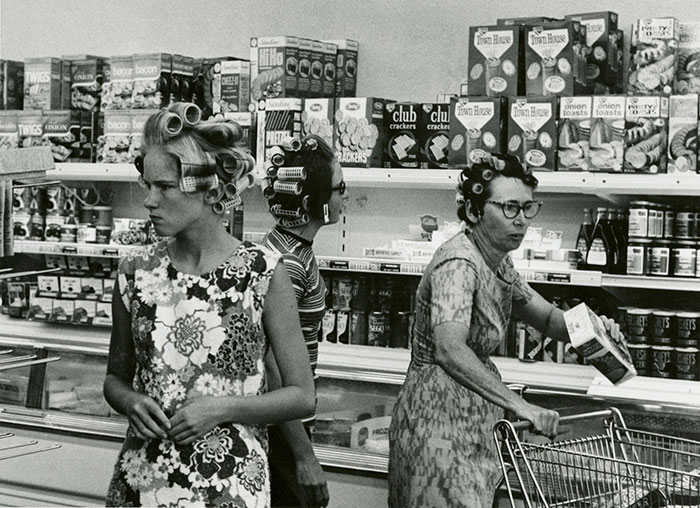
Shoppers saving their ‘good hair’ for later. I do love this photo. Not mine, but…

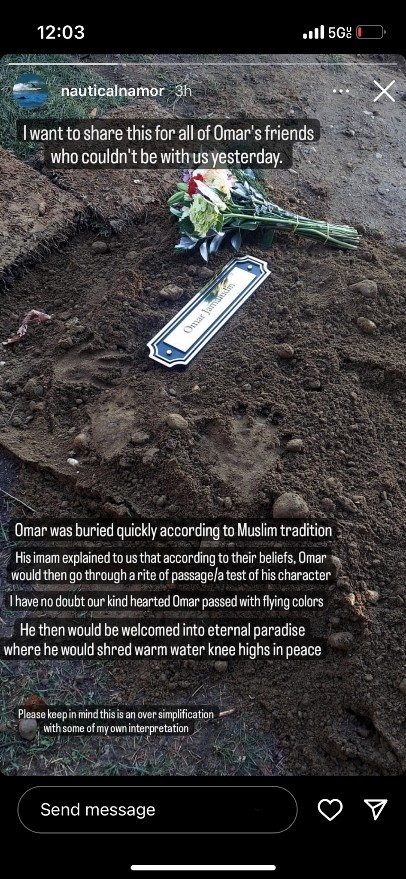
UPDATE- There will be a paddle out on Sunday, January first to honor and celebrate the life of real surfer Omar Jamaludin. It will be held at a break Omar and many of us consider our (favorite or a favorite) spot. No, not H****ck.

I am, finally, getting to the end of where I have now decided “Swamis” should end. While I have been actively, consciously trying to cut down or cut out anything that doesn’t further the main plot, I found myself with ninety thousand words and needing more than ten thousand more. THIS EXCERPT is from a chapter in which Joey is working at the fictional San Elijo Grocery Store, known as Mrs. Tony’s to the locals. There was, in the late sixties, a grocery store there, across the railroad tracks and highway 101 from the San Elijo State Beach. It featured a high wall of windows facing the view. I do recall Phil Harper and Ray Hicks and I, well into a week or so of camping and surfing, going into the market, and my becoming aware that I was probably close to maximum sun exposure. So, chocolate milk and Hostess donettes, back across the street.

The in store information is largely from Trish working at the Quilcene Village Store in Quilcene (in the 1980s) while it was known, by locals, as “Mary’s Village Store.” It was easy to get credit, easy to put purchased items on your tab. Mary also accepted, from the right customers, post-dated checks. And, she did some payday lending. Ten bucks on Monday was repaid with eleven on Friday. And, as the fictional Mrs. Tony and other checkers do in the manuscript, Mary and other checkers (not Trish) wore their hair in curlers at work, saving their ‘good hair’ for their men at home.

So… Swamis- a Sunday in March of 1969. Joey redefines is the narrator.

I was getting faster, steadily, at the register. I had already memorized most the prices on the most frequently purchased items, read others, only guessed on a couple; always, as instructed, ‘guessing up.’ And I was smiling, and sliding the goods, and bagging, and loading the carts, and responding positively to whatever clients said; I was making change and putting new balances on old tabs.

By my lunch break, 2:20, each of the Tonys told me I would get faster. Eventually. 

Just before what was supposed to be my afternoon break, 4:20, I checked out one customer, Sylvia Crawford, whose account card featured a red line under the balance. Sylvia Crawford, then I, looked over at Mr. Tony. He mouthed ‘okay,’ with a smile, followed by a bit of a stern look for Sylvia Crawford. Her expressions went from relief to a purposefully awkward smile, one meant to, if not conceal, to acknowledge the awkwardness and thereby lessen her embarrassment. She had offered no explanation of why she was behind, or when she would try to catch up. I was grateful for that. I just smiled. Neutral smile. As instructed.

After my smoke break, I held up a three-person line to get Mrs. Tony when a guy with a rather full cart slid a Traveler’s Cheque across the counter. “Where you from?” Mrs. Tony asked him. When she found out it was Arizona, she said, “Sure. Too hot there already, that’s my guess.” She took over checking out his purchase. I did the bagging and the moving of items from counter to bag to cart.

“Now, Jody,” Mrs. Tony said, the Arizona guy still there, “If this was an out of state check, you’d have to say ‘no.’ With a ‘sorry,’ of course.”

“What if, Mrs. Tony, he had been from, say, Minnesota?”

“I’d have said, ‘sure, still too cold there’s my guess.” Arizona Guy and Mrs. Tony both chuckled. Still, her look told me I could have stayed quiet.  Should have.

When Arizona Guy and the three other customers were gone, she said, “Jody. I know you’re smart. What you aren’t is better. None of us is better than our customers.” She put her right pointer finger high on my nose. She slid the finger down slowly and held it there for a moment. “They might want to tell us their business. Selling them… stuff, that’s ours. Got that, huh?

“Yes, Ma’am.”

“Huh?” 

“Got it.”

At about 5:45, I rang up purchases for a guy in his mid-twenties. He had a clean shirt on, but there were some grease stains on his hands and forearms, and he was wearing dark blue mechanic’s work pants and hard leather shoes. He held out a check made out to Jack Jacobs, and flipped it over. Jonathan Jacob, Junior’s signature was at the top, “pay to the order of Richard Haber” below it, and a signature, “Richard Haber” below that.

“That’s me,” he said. “Richard Haber. Two-party check. I already signed it over.” Richard Haber flipped the check over and set it on the counter. “Jackie Jacobs says you do this all the time.”

I smiled, took the check, pointed at Mr. Tony at the first register as I walked away.  

Mr. Tony looked at the check, looked at Richard Haber, who was busily bagging his own groceries. “Don’t recognize him.” That was in Mr. Tony’s version of a whisper. In his loudest, announcement voice, Mr. Tony said, “Mrs. Tony, can you come to check out stand two?”

Richard Haber, Mr. Tony, several other customers, and I all looked around for Mrs. Tony. “Friend of John Jacobs, Junior,” Mr. Tony said in his normal-but-still-loud voice. “Jackie Boy Jacobs.”

Richard Haber had loaded the groceries into a cart by the time Mrs. Tony almost ran down the cereal and bread aisle and to the middle register. Her apron and scarf were off, and her hair was out and brushed. Only two clips on her bangs remained. She had makeup on, far less than what she would describe as ‘whorish’ on another woman. Her lipstick, however, was color I had overheard her refer to in a conversation with Doris as Revlon red.

“Almost closing time,” Mrs. Tony said, more to me than to Richard Haber, “It’s Sunday.” She took the check in her left hand. “Better start sweeping up, Jody. I mean, Joey.”

The oversized dry mop and the other clean up items were already staged against and in the very middle of the front windows. On my walking away from the middle register, and with several gestures from Mrs. Tony, two of the customers who had been waiting moved over to her husband’s line.

“No. Sorry, kid,” Mrs. Tony told Richard Haber, in a low-but-not-low-enough voice, “Jackie Boy Jacobs stiffed Mr. Tony and me good.” Richard Haber waited as Mrs. Tony walked over to the file cabinet, pulled a card out from the bottom of the ‘H-I-J’ stack. She held the full card, three red lines under the last entry, by the top edge, hitting it against her left forearm as she walked back to the register. Don’t know what you did for him, but…”

Mrs. Tony pointed at pieces of paper suspended on strings above the filing cabinet until Richard Haber followed her eyes. “Bad checks,” she said, “Never could collect. I used to have a board… with names of cheats and deadbeats, over on the back of the register… so’s people could see them. Some guy from the County, a detective. He…” Mrs. Tony looked at me, the message being to return to her register. I leaned the mop against the cabinet. “He said naming names might be what’s called, ‘bad form.’ But, Richard Haber, I still got every one of the names…” She tapped her forehead. “…Up here.”

Mrs. Tony put Jonathan Jacobs, Junior’s check on the top row of keys on the register. She looked at the total for the items on the counter, hit a key, opening the drawer. She took out five dollars and sixty-five cents, moved it all into her left hand, and said, quietly, “Or you can try the bank. Tomorrow. Or… maybe, if you see Jackie boy, see if he’ll come in and… honor his debt.”

“I need more money than that,” Richard Haber said. He removed several items from the bags, set them on the counter: A half-gallon of milk, a loaf of bread, a medium sized jar of peanut butter.

“Tell you what, Richard,” Mrs. Tony said, ringing-in the items, sliding them backwards on the counter, “take the bottle of Red Mountain… on me… and Mr. Tony. And, good news, you’re out of it. Lesson learned.” She looked at me, mouthed ‘lesson learned.’ I nodded.

Richard Haber wasn’t halfway to the door when one of the customers from Mr. Tony’s line, probably about their ages, late forties, headed back toward Mrs. Tony’s and Doris’s and, for a few hours, so far, my register. “Quitting time, Lenny; me and my mister are… going out.” Lenny smiled, turned back toward Mr. Tony’s register. “I got my hair undone, my lips painted up, and…” She kicked her right foot out toward Lenny, half-whispered, “Got my ‘chase me, catch me, fuck me’ pumps on,”

“You do look… delectable, Loretta.”

Loretta La Rosa shook her head, turned toward me. “You didn’t hear that part, Jody… I mean, Joey.” I shook my head. “So, Joey… Miss Cole? Huh?”

I shook my head again and started loading the items Richard Haber couldn’t afford into an empty cart.

“Swamis” is copyrighted and, as is all original material in realsurfers.net, the property of the author, Erwin A. Dence, Jr. All rights are reserved.

On the Eve, the Cusp, the Verge of…

…Whatever is coming our way.

Something bad to struggle with, possibly overcome; something good to be, hopefully, savored and appreciated. The world is confusing and frightening and chaotic in its changes; and monotonous and boring; and, in almost the same moments, tantalizing in its possibilities. Life has a taste so bitter in our defeats, so delicious in our too often too late realization of its beauties; the patterns and colors we should have seen; the tiny miracles we should have better appreciated; the worth of the people who cross or even block our path.

There is a reason the dead of winter; the darkest, shortest, and coldest of days; is celebrated. It isn’t out of joy. It is out of hope.

I’ve never had the faith to flow with the season and its challenges. I freeze up, unable to do what I can do until I can do what I have to do. This may or may not make sense to you. Though I claim, and claim it to be true that I cannot hold on to sorrow or depression, I do realize it when I am in their grip. Sorrow and depression are heavy. They are exhausting. They cannot be allowed to hold us back or down.

Make a move; something positive.

This is what I do. I write. The frozen pipes, the broken shoe lace, the snow and the ice, the branch in the highway that bounced and hit my car, the fuckers who somehow used my bank account to purchase their presents, the recent deaths of people I knew, or knew of… I try to put this and more into some context.

And I try to make some small repairs. Sometimes things get fixed. Sometimes it’s more than half-ass. A small victory is still a victory.

I’m not over it; I’m not… joyful. I am trying to just keep moving, When I realize, later, that I have survived the darker days, I tell myself I should have had more faith. Should have. If we know sorrow and depression are heavy and exhausting, joy, in any quantity, is lighter than air.

Joy, then.

WAIT. I should add that my hope for my family and loved ones, to my friends and theirs, to real surfers everywhere, to those I don’t know, and to the assholes who hacked my account; is that we (yeah, me, too) recognize joy and have joy and share joy. Peace is a bonus gift.

Omar’s Funeral and “Little Rod at Grandview,” from “Swamis”

This is a posting by Nam Siu. I got it as a text image from Reggie Smart. It speaks for itself. It speaks for many of us, even all of us who consider ourselves part of the diverse group of individuals who make up the Northwest surf community.

Thank you for representing. Peace.

Meanwhile: Because, in my attempt to shorten and tighten my manuscript, “Swamis,” I have to eliminate storylines that give more background, more exposition than plot, I have been aware for awhile that I would have to cut this story about Rodrigo and Sid and the narrator, Joey DeFreines. SIDE NOTE: I will probably have to change SID’S name. I did want to include some real people in the novel. Putting real people in fictional situations might be… dangerous. And I know very little about the Sid who was in a Surfboards Hawaii ad fifty-five years ago or so, hanging ten. I did know his last name. I no longer remember it. I am not skilled enough at researching to find him. AND, I put the character in situations the real Sid might not be stoked about. NO, he’s not a bad guy. SO, new name. I have a few in mind. For now, he’s still Sid.

So, still thinking.

The parking lot was about three-quarters full. The wind was just changing to onshore. It was relatively glassy. Kelp beds would dampen the chop. Another truism learned early in any surfer’s evolution, is that winds, rising to clear the bluff, kept a spot like Swamis from getting blown out just a bit longer. The sun was high enough that the entire lineup was free of the shadow of the bluff.

Though it would easily fit inside the station wagon, my new-to-me Surfboards Hawaii six-six was resting on the Falcon’s factory model roof racks; proof, perhaps, that I was no longer riding garage soul boards made using foam from stripped-down, reshaped long boards. If no one else noticed the change, it was important to me.

My towel, once white, with palm trees and a sun and some ridiculous allusion to surfing, was spread out on the hood of the Falcon. My windbreaker was hanging on the sideview mirror. I was wearing my almost-matching Hang Ten t-shirt and trunks. The one-third full quart of chocolate milk and the three PeeChee folders were spread out on top of the towel. I opened the top folder, took out a red notebook. I grabbed the chocolate milk container, closed the spout, shook it, opened it, and took a drink as I moved to the front bumper. I set the milk beside me and did a half-sit lean onto the hood. It was a pose. I was aware. Posturing. Not like Hodad posturing; but posturing.

            I thumbed through the pages. Notes and little sketches of cartoon teachers and classmates, cartoon waves, psychedelic lettering for various surf spots.

GRANDVIEW. That was enough. I visualized:

            The Hawaiian guy, probably my age, and I were the only ones on the south side of the almost channel. We were on the lefts. The rights were a bit bigger, a bit more lined up, better. He paddled over to me, sat closer than necessary.

“Right’s better… huh?”

“Yeah,” I said, “I was there before, at the peak, before… everyone else got here.”

“No,” he said, pointing to the empty space between houses. The vantage point. The access. “I saw it. Sid ran you out.”

“I thought Swamis was his spot.”

“All spots are his spots. He burned you, though. Saw it.”

“I guess all waves are Sid’s waves.’”

“Assholes always be assholes.” The Hawaiian Guy laughed. “I’m goofy; so lefts good with me.”

“Yeah.” I kept looking at the rights. Surfers, paddling back out, seemed to be looking at both of us, but mostly at me.

“You… you’re not so popular ‘round here. Huh?”

“Not popular. My father’s a Sheriff’s… detective. Kind of a… hardass.” The Hawaiian guy nodded. “Half-Japanese,” I said, before he could ask.

“Half-Portuguese,” he said. “Thereby, I’m… Hapa Hawaiian. But here, Mainland, people just take me as… Hawaiian.” I nodded. “Rodrigo. My name. My dad also surfs, so I’m called ‘Little Rod.’ I’m okay with it.”

“Joe DeFreines. My, um, friends call me… Joey.”

Little Rod looked over at the rights. There was a lull. Six or seven surfers were in a loose pack at peak. Sid was still the farthest surfer out. Apex. “What do those… people call you?” I didn’t answer. “Hey, Joey; follow me.”

Rodrigo paddled out and toward the main peak. With every stroke, he would point out toward the horizon. The peak pack started to notice. He yelled, “Outside!” He started paddling harder. There was a set coming, though not an outside set. Two surfers turned and paddled out. The others maintained their positions.

“Your wave, Joey!”

Little Rod blocked the one surfer who tried for it. I went. Bottom turn, two up and down moves, kicked out in the closeout section. The blocked surfer caught the second wave. I was paddling back toward the lefts, watching the peak as I went over the second wave. The third wave was the one. Bigger, peakier. Little Rod paddled hard. Sid was sitting toward the tail of his board, the nose up, parallel to the wave. He was ready to turn and take off on the shoulder, but, seeing Rodrigo’s furious paddling, knowing Rodrigo’s intent, Sid spun around, paddled, at an angle, even with, then beyond the peak.   

Two deep. Rather than backing off, Sid attempted a takeoff and failed. He went over the falls as Little Rod dropped in. He ripped it. Backside. Sid swam.

The surfer Rodrigo had blocked flashed him a peace sign as he paddled back out. Rodrigo returned it, moving his hand into a ‘hang loose’ gesture; the first time I had seen one.

Rodrigo joined me and two other surfers at the lefts. The three of them laughed. With Sid just getting to his board inshore, I did not. “Joey,” Rodrigo said, “I’m here with my uncle. Not my real uncle. Hawaii, lots of uncles and aunties. He’s shaping at Surfboards Hawaii. No one’s gonna fuck with me. And, Joey, you surf… not bad.”

“Not bad’s… good. For now. You rip it up, by the way.”

“I do.” Rodrigo laughed. “Things go on ‘round here, Joey. Got to ask… you a narc?”

I laughed. “No, Hot Rod. No one tells me shit.”

The four of us at the south peak watched as Sid paddled back out. His eyes were on the rights, but he did flip the bird with his left hand, twice, between strokes. “So, Joey; if I asked you if you know Jesus…?”

“Jesus?” I thought of the many churches I had attended: Vacation bible schools, revivals. “Jesus. Yeah, he’s either half-God or um, guess he’s hapi human.”

I laughed. We both laughed. “Hapa, Joey; hapa human.”

All excerpts or outtakes from “Swamis” and realsurfers.net original content are copyright protected. All rights are claimed by the author, Erwin A. Dence, Jr.

The Danger of Talking Story

                  I should say, first, that no one under the legal drinking age wants to hear a surf story from anyone old enough to collect social security. No, they’re just being polite. A surfer in his or her forties, different story on the stories. Two old farts; they’re just going to keep rambling on.

Let us say you are on Dawn Patrol, hanging in the parking lot or trailhead or pullout, lining up your board and leash and wax, slamming down the dregs of coffee that was too hot a moment ago, dressing out in whatever surf garb is appropriate for your surf location. Someone else is nearby, doing the same thing, his or her version of pre-surf ritual, and he or she just can’t help sharing his or her resume. “I surfed here” or, “This one time, I hiked into Trestles and…”

            You, of course, are tempted if not expected to reciprocate. To compete, perhaps. First liar scenario. “Yeah, I surfed there, also,” or, “Ten months I worked there, just up the hill from Lower Trestles, surfed there just about every day… drove out on the beach. An hour and a half on a half hour lunch break. And, sometimes, after work, I’d go to…”

            And then you go out in the water. There are expectations you may or may not live up to in real life, in current time. So, dangerous, if not, like, foolish. No, you didn’t mention your ten months at Trestles was 1975, forty-seven years ago. Next time, perhaps, depending on your performance, you might.

            Most of us, I can’t help believing, are heroes in our own narrative. Even if we dip into a little self-deprecation, we probably hope we come across as, if not a flawed protagonist, at least a character or person someone can sympathize with. If we’re talking story with another surfer with similar stories of beat downs and barrels… empathize.

            Great.   

            But wait; maybe I’m misusing the sympathy/empathy thing. Or expanding it. I don’t want to research this, but do we only sympathize with bad things? Shit. Google. Shit; guess I am wrong, we… no, there are different interpretations: sympathy and pity, empathy and understanding without sharing the actual experience. No, that can’t be right.

            WOW! I am dangerously close to getting into the sociopath/narcissist thing. I have worked for an amazingly disproportionate number of people (because everyone in my area seems to need a therapist/life coach/psychiatric specialist, or a yoga instructor/hair dresser/bartender, or, for those of us who can’t afford any of those folks, a friend) whose job it is to determine just how fucked up the client is, then make sure the client never quite gets cured (assuming, cynically, that any of us can be cured of being who we are/have become). Each one of these professionals, when pressed on the question, face to face, has told me I am completely normal.

            OR maybe that’s just the story he or she believes I want to hear. Not true, actually; one professional-but-retired marriage counselor (at least once divorced) told Stephen R. Davis and I that we might not be sociopaths, but we are both, definitely, narcissists. I thought he meant Steve more than me, but “Hey man, can’t we be both?” “Um, sure; I guess so.”

            YES, I have told this story before, maybe here before. Redundancies tighten a tale, the obvious embellishments dropping away. Or not.

            STORIES. I heard from two sources about a ‘barrel of a lifetime’ a mutual friend got. I would tell it to you, but then it would be third hand. I called up the barrel rider, got it first hand. In the course of our conversation, which, incidentally, was consistent with the two other versions, the barrel rider told me a very funny story. It wasn’t surf related, but it was a surfer’s anecdote.

            And funny.

While talking to another surfer this morning, and I was so tempted to tell the story. I might have if he didn’t give me the “I’ll let you go” thing. Usually, out here in the wilderness-adjacent (I stole the ‘adjacent’ thing, now it’s part of my patter), cell calls frequently get dropped. Oddly, it seems as if it’s more frequently after the other party has completed his or her anecdote and I’m about to… I should mention that all my friends are adept at competitive talking and none are afraid to tell me it’s their turn. Etiquette, it’s important everywhere.

            THE MESSAGE- Don’t tell other people’s stories as your own.

Here are two gentlemen talking story:

            It is “SWAMIS,” my manuscript and where I am in it that got me thinking about stories and fiction and fictional characters. Each of the main characters is damaged, psychologically if not physically. Or both. None are created. I’m not quite delusional enough to believe they are. Each is a composite, some mixture of real people I have met in my real life. As I write and rewrite and edit, I get to know each one better. I can plug any of them into a fabricated setting and know, almost, how they will react. If empathy is not sharing the same experiences but understanding how someone in that situation feels, I want the reader to be empathetic. If sympathy can be expanded to include feeling joy for someone feeling joy, I want the reader to be sympathetic.

            Did I tell you how I got pounded and held down at the Groins? I felt sorry for myself. Someone on the rocks, a witness, said, “We all have to get thrashed occasionally.” We do. I recovered. Just another story, increasingly removed by time, replaced with other thrashings, other recoveries.  But shit, guy could’ve been a little nicer about it.

            STORIES. Try telling some surf experience over the phone to some non-surfer. It is only a matter of time when the reaction to even the frothiest, most barrel-filled tale is, “I have to let you go.”

            I could say more but, um, I have to let you go.

Youth, Lost and/or Found

I am writing this on my tablet. Dru loaned me a computer so Trish can keep the one we share while she is spending time at Dru’s house. The borrowed laptop is a Mac rather than Mic (read Mike). Mostly the mac is for continuing “Swamis.” I haven’t yet connected it to the internet. So, hunting and pecking on my tablet. Mic and Mac and now, Tab.

IS writing a novel set in my youth a way to relive what has been lost in the fifty-plus years since? Yes. And no.

NO, much of the time covered was great. Far from all. It’s over. That wave is gone. I’m having new setbacks and adventures, dramas and traumas and the occasional great ride.

YES, I get to remember the obvious people and events. In remembering, things I have not put in the easily accessed files are brought back. This is… enjoyable, even as I realize an ever higher percentage of what I write will be cut (but probably saved, elsewhere).

AND, I get to shape characters from the amazing real people I have come into contact with. Even those characters originally based on friends have become… different. This is, again, part of the fun. Each character becomes more complex, the added fictions making him or her more… realistic. Hopefully this is also true for the reader.

THE STORY I believed I knew has demanded to be something else. More and, somehow, less. I am tightening the timeline. YET, when I finish whatever counts as a writing session, I cannot help but consider where and how it could be different, hopefully better.

We can’t change the past. We can’t go back and edit out the awkward falls and crappy conditions, can’t add a few more awesome rides to past surf sessions.

Next time, man…

No, it’s never that simple, never that…

…easy.

Here’s a photo from March of 2004. My son, Sean, daughter Drucilla, and I were down south for a sort of family reunion/celebration of my father’s 80th birthday, arranged and staged by my sister, Suellen, and centered in Oceanside. I used the occasion to go on a sort of show-and-tell trip that included staying as close to the coast as possible, with, no doubt, stories of every spot. The south jetty, where I most often surfed before work at Buddy’s Sign Service, the building in which I worked, the pier, the auto repair shop where my dad worked two nights a week and Sundays for years, Tamarack, Grandview, Beacons, Swamis.

Swamis, just before the applause on the bluff.

My plan was to write about two things here: Dru’s cancer and my novel, “Swamis.” Plans change. ALWAYS.

ME FIRST. Dru is recovering from surgery, like, a week ago. Trish has been taking care of her, staying at her place, twenty-two minutes away (if no one crashes on or near the Hood Canal Bridge, or some sailboat or nuclear submarine has to go through it) from our house. In order for Trish to do some other stuff, and to give her a break, I got to take over for a day, like, yesterday. Trish left a list of chores that I almost totally ignored. NOW, I have been telling/warning our daughter that I would not help her if she didn’t read the latest chapter I wrote, my third complete rewrite (counting the outline that turned into a sort of treatment) of my novel, “Swamis.” Dru, of course, though I had sent it to her, had not yet read it.

AND YET I came over, watched a horror movie, tried to sleep on her futon, did not make her a delicious breakfast as her mother had been doing, but did, while Dru was scrambling some eggs for simple breakfast burritos, start reading the chapter to her. There were interruptions, including a rare call from George Takamoto. I had to take the call, and somehow, managed to sit on my plate of burritos. Wouldn’t have been bad if it hadn’t been for the toothpicks. SO DRU started reading the chapter to me.

IT WAS GREAT. A couple of awkward parts. Fixable. Here’s the sort of unexpected thing: “Dad, it’s a short story.” No. “Yes. I can stand on its own. Short story.” Yeah, that’s what I was afraid of.

Over a hundred pages into the manuscript, sixty thousand plus words, CHAPTER FOURTEEN has enough of the story to ALMOST stand alone. Not completely, but, as each version of “Swamis” focuses more on the main story line, the plot, if I now go back, if Chapter Fourteen becomes Chapter Five, say, with three more after that, all leading to a non-conclusion… well, that would be a novel I wouldn’t have to beg or threaten someone to read. OR THAT IS THE HOPE.

Dru and I, 2004. Still surfers in the water. Dru’s hair now is back to dark, mine is pretty much white. No, I, unlike Trish and our three kids, was never a blonde. I do enjoy it when people think I might have been.

THE OTHER THING that was on the agenda for yesterday was a zoom call with Dru’s surgeon. Bearing in mind that I am quite uncomfortable talking about this, Dru had decided to go with radical surgery with some hope if not expectation that Chemo and/or Radiation might not be necessary. THIS, almost of course, is not how it is going. Though other testing and discussion and shit has to happen, the Doctor said the two (rightfully) scary options might be in her future. THE ANTICIPATION of surgery- frightening; but she’s past that and recovering. WHAT WE KNOW about others who have undergone these procedures caused me to ambush the doctor when she asked Dru if she had any other questions. “Yeah, I do. I thought we got rid of the cancer. It’s not in her lymph nodes, so?” The doctor referred to the size of the tumor and how much it had grown since first discovered. “But the tumor’s gone. Past tense.” Not so easy. There are ‘maybes’ and ‘we don’t know yets.’ The doctor explained those and tried to lessen any anxiety. “Thank you.”

SO, Yeah. So, “fuck!” So, sure; it can’t just be over. No. Few things are easy. Nothing is EVER simple.

WE ALL GO THROUGH our lives among and between waves of hopeful anticipation and troughs of fearful anticipation. Few events are as blissfully, floatingly good or as full-stop, unbearably bad as the renderings, mosaics, perhaps, our imaginations create from the collected bits of shattered dreams, and the pieces of scattered moments of magic and peace and joy and BLISS.

What we really do, all we really can do is KEEP GOING.

I have to say that Dru seems to be more optimistic about enduring further treatment than I am. Trish, as always, will be supportive. Disappointment. Regroup. Keep going.

MEANWHILE, my good friend Stephen Davis, having made it through six rounds of Chemo, with his cancer knocked-back, is currently getting ready to take another step; a massive dose of chemicals that will do so much damage that, once through it, he will have to retake all his childhood inoculations. And that might not be the end of it. He will be unable to work or, probably, surf, for six months or so. SCARY!

This is a not-quite complete version of Stephen R. Davis’s painting of a mystical, possibly mind-created spot. Steve took it off the frame, took it to the PRINTERY in Port Townsend. There it was scanned on the big-enough unit used for blueprints, which doesn’t print in color, and transferred to a thumb drive. Steve has ordered prints of various sizes. The plan is to produce several, possibly full-sized giclee prints, up about a hundred limited edition (which would be numbered and signed) photo prints on 11″x14″ paper, with the possibility of also doing a number (limited by Steve) of smaller versions, some as greeting cards. I am not sure what Steve plans to do with the original. Trish and I have one of his original works, directly across from our bed. From that distance, it looks perfect. Part of the magic. If you notice, the land on the left of this painting is totally abstract, nonsensically so. If you Iook at the wave in the foreground in the completed version, it is perfectly rendered. If you step back, just far enough, the whole scene is fantastically real.

OKAY, I’ll get a photo of the completed version on here. Soon.

Insert your own uplifting aphorism here.

Ironically Flipping the Peace Sign

It’s another outtake from my manuscript for “Swamis,” re-edited, because I just can’t help it, and posted here because I just can’t leave it in some bound-to-get-lost file. I like the story. It is based, mostly, on two incidents: My running into a classmate on the night of the homecoming game, five years or so out of high school, and my being declined for purchasing cigarettes when I was seventeen. Gordy was with another classmate, a girl who was my chemistry lab partner, and with whom I had gone on one date, just before I met Trish. Gordy had gone full-on hippie, did put the emphasis on the ‘ing’ part of the word ‘fuck-ing.’ All a bit anachronistic.

This was the first image in a search. I wasn’t lazy, it just works the best.

SO FUCK-ING COOL… MAN

Gordy claimed to be a surfer, though I never saw him actually in the water. On the beach a few times, talking surfing as if he had just been in, somewhere else, somewhere better, or just about to get in. Later, if it got better. He was two years ahead of me in high school and regaled the other non-surfing jocks at school. Gordy was not one of the older students Gary and I bugged and begged for rides to the beach. Once, maybe.

I was in a liquor store in Vista. Gordy was sporting a full-if-sparse beard and long hair (Fallbrook High had a dress code), parted in the middle (of course), and clothing, Hippie-garb I called it, that denied his quite-upper class upbringing.

“Still fuck-ing’ surfing, Jody?”

I took the usual few seconds to replay his sentence. He had separated the syllables, put the emphasis on the second one. “Ing!’”

“Of course.”

“So fuck-ing’ cool, man.  We just don’t fuck-ing’ see each other, man; like, like we used to.” 

Gordy was, obviously, stoned. He had his left arm over the shoulder of an even more-stoned girl, younger, possibly still in high school. She was wearing a headband, her boutique-chic top hanging precariously on her breasts. She was nodding, giggling, her eyes unable to focus or even adjust to the light from the coolers we were standing next to.

The girl looked at me, squinting, then nodding, a finger pointed way too close to my eyes. Big smile. “My brother Larry,” she said, “he says you’re a fuck-ing’ stuck-up asshole; oh and…” She lost her thought. 

Emphasis on the ‘ing.’

“Larry?”

“Larry,” the girl said. “Larry Walker.”

“Oh. Larry Walker? Yeah.”  

“Yeah. Larry. You did punch him out, Jordy.” Gordy didn’t wait for my response. “Freshman football. Practice. I was J.V., just before I went varsity.”

I replayed the incident in my mind. Larry was the ball carrier. I had tackled him. Open field. He and I were both on the ground. The play was over. He gave me an elbow shot to the groin. Someone pulled him up. He pulled his helmet up and back, smiling at me with his plastic mouth guard smile. “Gettin’ tackled by a beaner’s bad enough. Some fuckin’ half-Jap…”

Straight shot. No broken teeth. Mouth guard.   

“Yeah.” Gordy and Larry’s little sister had walked away. I walked toward the counter. The guy behind it looked at me for a second, continued leering at the girl as she and Gordy came up behind me. “Larry’s little sister,” I said. The Counter Guy nodded. Appreciatively (by which I mean creepily). 

“She’s probably going to be, like…” I turned, looked at her (questioningly, not, I hope, creepily).  “…a Junior?”

Larry’s sister nodded, her nod a bit uncontrolled. “Uh huh.”

“Class of, uh, a second…”

“Seventy-one!  Yea!”  She made a bit of a cheerleader pompom gesture, one hand, a jump motion without actually getting off the ground.  Junior Varsity.

I looked back at the Counter Guy. He looked at Gordy. A little judgey, not that Gordy noticed. 

Gordy took his left hand off Larry’s sister’s shoulder and put it on mine. I looked at his hand. He took it away. I put two one-dollar bills, my package of Hostess donettes and a quart of chocolate milk on the counter, pointed to a pack of Marlboros (hard pack) on the back wall, turned back to Gordy and Larry’s sister. Gordy sort gave me a specific look. Disappointment.

“I know, man… Gordie; you probably don’t fuck-ing’ smoke… cigarettes.” He and the girl both giggled.

The Counter Guy set the cigarettes on the counter, rang up the carton of milk and the donettes. 

“Pack of matches, too; please.”

Counter Guy put two packs of matches on top of the Marlboros. “You’re seventeen, huh?”

I didn’t think. “Yeah, I am.”

“Well,” he said, “You got to be eighteen.”

Gordy laughed. The girl laughed a moment later.

The Counter Guy slid the cigarettes away from me, slid a fifty-cent piece and two dimes and two pennies back to me.

“Oh,” I said. “I’m eighteen, too. I meant…”

Counter Guy looked past me, to Gordy. “And you, sir?”

“I left my license in my other pants,” I said. Counter Guy ignored me, smiled (still creepily) at Larry’s sister. I looked at her. She seemed to take the leering as flirting. Gordy handed his date a bag of potato chips and returned a six pack to the cooler. 

Gordy returned, surprisingly quickly. He put one hand on the cigarettes, the other on my change.  “I’m eighteen,” he said, “and I can fucking’ prove it.”

“Twenty-six cents more then, for the chips.”

“Didn’t mean to be so… fucking’ uncool, Gordy,” I said, as he and I stepped outside, Larry’s sister a few steps behind us.   

“Nah; it’s cool,” Gordy said. He flipped me the cigarettes, one pack of matches, making sure I realized he was keeping the other one. He pulled Larry’s sister closer to him, slung his left hand over her shoulder and perilously close to her breasts, extended his right hand as two (obviously) off-duty Marines approached (obviously Marines, obviously off duty), both looking more at her than at him. “Either of you two gentlemen twenty-one?” he asked, pulling out several ten-dollar bills.

Neither of them was, but the next guy approaching, not a Marine, definitely was. The citizen looked at the two Marines, at Gordy, at Larry’s sister.  He put his hand out, said, “it’ll cost you.”

“Peace, man,” I said, walking away, waving my free hand in a peace sign. Gordy, his hands off Larry’s sister, left hand holding his wallet, flipped me the peace sign with his right hand, but quickly, and not where the Marines could see the gesture. Not that they or the Citizen taking money from Gordy were looking past Larry’s sister. She gave each of them a very quick, weak smile, and, in a moment of self-awareness, pulled her top up a little higher on her breasts.

Flipping the peace sign was, for anyone under thirty or so, pretty much over by this time, the winter of 1969. On special occasions, perhaps; the act was shared with friends as a sort of code, an action we would only later” refer to or try to explain as having been done “ironically.”

IF YOU’RE STILL WITH ME, thanks. I should add that the football punch part is actually derived from an incident in which classmate Bill Birt, in practice, sophomore year, pulled off a teammate’s helmet and slugged him in the face. Kicked off the J.V. team, the coach, allegedly, said, “Now, Bill, if you only played that way in a game…” The result of blending in all the real stuff is fiction.

All original writing contained in realsurfers.net and anything taken from manuscripts for “Swamis” is protected under copywrite and is the property of Erwin A. Dence, Jr.

GOOD LUCK SURFING. And I don’t mean that sarcastically or ironically.

Payday, the Falcon, and Usury

An early 60s Falcon, factory racks, custom tires (pretty sure)

This is another outtake from “Swamis.” If writing is trying to put the puzzle pieces together, this was written to support something later in the manuscript and taken out because I figured out another way to get the information on the page.

I will reveal where the idea that a small, independent grocery store would have tabs for customers. It is based on The Village Store in Quilcene, Washington, known at the time when Trish and I moved here, late fall, 1978, as “Mary’s” Village Store. Mary and her husband, nicknamed Pard, offered credit based on a quick conversation. “We’ll set you up with a tab.” Nearly everyone in town had a tab. Mary also offered a sort of ‘payday loan,’ with, like ten percent interest, as in, if you borrow a hundred bucks on Tuesday, you pay a hundred and ten on Friday. Good money.

Because you had a tab, you had some obligation to buy locally, as in not going to a supermarket in Port Townsend or elsewhere for groceries. And Mary kept tabs, so to speak, on those who had tabs. Her standard greeting was, “What do you know?” She was persistent and serious in this. She wanted to know.

We, of course, had a tab. Trish worked at the store for (I’d have to ask her) some amount of time. I painted the store to pay off the tab. I wasn’t happy with having one.

Still, it worked well for Mary and Pard. They had stacks of thin pieces of cardboard, tabs, in order, alphabetically. If Mary was at the counter, she would survey the card. Her expression would reveal whether or not you should put this purchase on the tab or give some explanation on when you might pay the amount owed down.

When Mary and Pard attempted to sell the Village Store, local gossip/legend has it, they had to eat a lot of the debt accumulated over the years. There have been several owners since. I have no idea whether the current owners take this kind of casual credit. My guess is… no. I haven’t asked.

Okay, here’s the outtake:

                                SIDESLIPPING- OUTTAKES FROM “SWAMIS”

I loved the Falcon. My first car.

No, it wasn’t a gift. I was making payments, money withheld from paychecks at the job my father set me up with. “Responsibility has to be learned,” my father said each time he picked up his half, straight from the middle register at the San Elijo Grocery. It was a sort of ritual, every other Saturday night, my father taking cash from the hands of his old Marine Corps buddy. “We all have to learn how to work hard. Huh, Tony?”

Tony, Mr. Tony to me, would look at the cash, look at me, and smile. “Right, Gunny.”

With my first payday, December 28, 1968, Tony gave me my half, which, at a dollar fifty an hour, for sixteen hours on weekends, plus a few more days during Christmas vacation, paid for the gas to get to Cardiff from Fallbrook, and not much more. He winked and said, “It’s Kind of like…” Mr. Tony nodded and smiled, the nod with a certain and meaningful rhythm, a bit of a jaw thrust included in the motion. There was a bit of a twist of the lips in Tony’s smile. Suggestive.

My father gave Tony a look I was very familiar with. Disapproving. Disappointed.

“Sorry, Gunny.”

“It’s all right.” Tony seemed relieved when my father laughed and pushed me away. “Real world, huh?” Tony nodded.  “The boy keeping his tab clear?”

“Chocolate milk and those little donuts are all he’d put on a tab, Gunny.” My father looked at Tony with another expression I was familiar with, the just-try-lying-to-me look. “No tab for Jody, Gunner, no little loan ‘til payday with exorbitant interest.”

                “Usury, it’s called, Tony.”

                “Yeah. Jesus doesn’t like it.”

                “But you do.”

                “Brings in customers. Kind of makes up for the folks who skip out.”             

“And you and Mrs. Tony love having people… owe you.”

“We do.”

I loved my job; bagging, stocking shelves, sweeping up; I described myself as a nub at a family grocery store with a view of Cardiff Reef.

I already said this, but I loved the Falcon. This was the family wagon in which my mother, and then I learned to drive. Three on the tree. Pop the clutch. Stall. Try again. My father, frustrated enough teaching my mother, gave her the task of teaching me when I was fifteen and a half. Exactly. She was so much calmer than he had been. I knew, even as my father turned the Falcon over to me, that I would be expected to teach my brother, Freddy. I didn’t plan on being calm. I didn’t plan on being around. I had other plans.

As always, thanks for reading. All “Swamis” outtakes are protected under copyright, as is all original writing and original illustrations contained in realsurfers. Almost all the photos are borrowed.

Good luck and good surfing.

Cutting Margo Godfrey and Cheer Critchlow from “Swamis”

Margo Godfrey, Santa Cruz, Oct 1969

In my attempt to cut and whittle and refine my manuscript, “Swamis,” into something, one, readable, and two, sellable (could have said marketable), I am eliminating this portion. Changes: Virginia (Ginny) Cole is now Julia (Julia), Erwin as a character (put in because some readers might believe Joey (aka Jody) is me, is gone. Out. I should (will) add that Trish did go to junior high in Oceanside with Barbi Barron and was a temporary member of Barbi’s unofficial Oceanside girls’ surf club before Trisha’s dad got transferred to the East Coast. I did see Barbi frequently at the Oceanside jetties and the pier when I was working at Buddy’s Sign Shop in (let’s call it) O’side. I did have a night class, public speaking, with Cheer Critchlow, Palomar Junior (now Community) College. He did, and I reminded him of this, at a high school contest at Moonlight Beach in 1968, in which he was a judge, eliminate real people Scott Sutton and Jeff Officer and me in our first (and only) heats. I never met Margo, did hear and read about her.

With those notes, the story is sort of (kind of) true (if fiction is sliced from real life).

CHAPTER 14- WEDNESDAY, FEBRUARY 19, 1969

For reference, this was a week and a day before my father’s death, four weeks before Chulo’s.  

Ginny Cole was, to my seventeen-year-old self, perfect.  There is no way my memory, in the fifty-plus years since, could have further enhanced that image, that belief.  Perfect. 

Some of the girls I had gone all through school with were great, and I could easily supply a list of those I’d had crushes on, but, yes, I’d gone all through school with most of them. There were, always, new girls; daughters of Marines stationed at Camp Pendleton, temporary duty, three years and gone.  They came from or went to Twenty-nine Palms, Camp LeJeune, Barstow; occasionally one would come from Hawaii, Philadelphia, even overseas.

Fallbrook is on the east side of the triangle that is Camp Pendleton- Fallbrook, Oceanside, San Clemente. From kindergarten on there were sons and daughters of Civil Service workers, pharmacists and ranchers and irrigation contractors and teachers and real estate agents and builders. There were those whose fathers lived, during the week, in apartments in the vast smoggy sinfulness of Los Angeles.

If we were isolated, purposefully, there were always newcomers with stories of different places. Exotic, mysterious, sophisticated, up to date.

Ginny Cole was, in my mind, miles away from dusty Fallbrook. Mysterious, exotic, distant; and she surfed. Ginny would know what it means that someone surfed, and she would know the allure, more fiction, even fantasy, than reality, of surfing itself.  There’s what surfing is, and what surfing suggests, what being a surfer says about a person- the aura around the reality.  Perfect.

Ginny Cole was like the best photos from surfing magazines, like memories of my best rides. I could bring her image into my mind at will, or without willing it; images from the few times I’d been on the beach or in a parking area or in the water with her. Not with her; around her, near her. It wasn’t like she knew me; another teenage surfer, awkward out of the water, not yet skilled enough to be noticed in the water; but working on it; hoping to be a surfer who, when I took off on a wave, people would watch.  

Teenager fantasy, of course, in the same way, playing pickup football, my friends would self-narrate: “Roger Staubach drops back… and the crowd goes wild!”  There were always witnesses in my mind when I would skateboard; carving bottom turns and cutbacks, pulling up and into the curl, crouching, hands out, locked in, eighteen miles, straight, from the nearest saltwater.

Competing.  Improving.

It was more than that Ginny was a girl in the lineup. She could surf, ride a wave with graceful, dancer-like moves, always close to the power. She would always be noticed.

I cannot honestly swear that it wasn’t that I wanted a surfer girl girlfriend the way a girl might want a football quarterback, a lead guitarist in a garage band; the way a guy might want a cheerleader or that girl who’s always just so nice. And so pretty.

Ginny wasn’t phony nice or made up pretty. She was just-out-of-the-water pretty; she was real; she was perfect. I saw it. I assumed everyone did. 

If I did see Ginny as perfect, I did think winning her over would be difficult, challenging. There would be other suitors. I knew I was ridiculous, naïve; definitely, but I was competitive. I didn’t know her, couldn’t see more than my romanticized image of her. I did hope that if she shared that obsession with and addiction to surfing, she might understand me.

Still, also, and always, I knew I was ridiculous.

 …

Virginia Cole wasn’t the only girl surfer in the North County; there were a few others: Barbie Barron, Margo Godfrey. I frequently saw Barbie in the water and in the parking lot at Oceanside’s shorter jetty, or over by the pier.  Southside.

I once saw Margo with Cheer Critchlow at Swamis on a still-winter afternoon; uncrowded, big and blownout. Pretty scary. Yet they were just casually walking out, chatting, wading out on the fingers of rock, pushing through to the outside peak. Scott and Jeff and Erwin and I, our portable crowd; four inland cowboys, shoulder-hopped, choosing only the smaller waves on the inside, watching any time either Cheer or Margo would take off.

Coolness, casualness, some sort of self-confidence, some sense of comfort in one’s own skin.  Things I lacked, things I appreciated, qualities I believed Virginia Cole had. Yes, I do realize how this makes me sound; exactly like a seventeen-year-old on the cusp, the very cusp of… everything.

MORE NOTES: I am also tightening the timeline for the story. I have to. One thing all the over-writing has given me, besides so many back-stories for characters I have to eliminate or cut back on, is the knowledge that there is at least one main and worthwhile story in “Swamis.” I will keep cutting back and hacking and going down the line until… yeah, until.

ALSO: I have changed some other names, partially because I have written words the real people didn’t say, put them in situations that are totally and completely fictional. My best surfing friends Ray and Phillip- sorry, you’re now Gary and Roger (names from childhood neighbors), Wally Blodgett, who drove kids around for dawn patrol, is now Petey (kept the Blodgett part). Sid (whose name I borrowed from a real surfer who was in a Surfboards Hawaii ad in mid-sixties, can’t remember his last name) is, so far, still Sid. I will let you know who else changed as the manuscript changes.

ALSO: Pretty shitty spring for waves on the Strait AND pretty shitty weather for painting houses. YES, it would seem that would give me more time for writing and drawing. So, maybe it’s not THAT shitty.

Good luck to all the real people and real surfers. Remember, this stuff is copywrite protected.