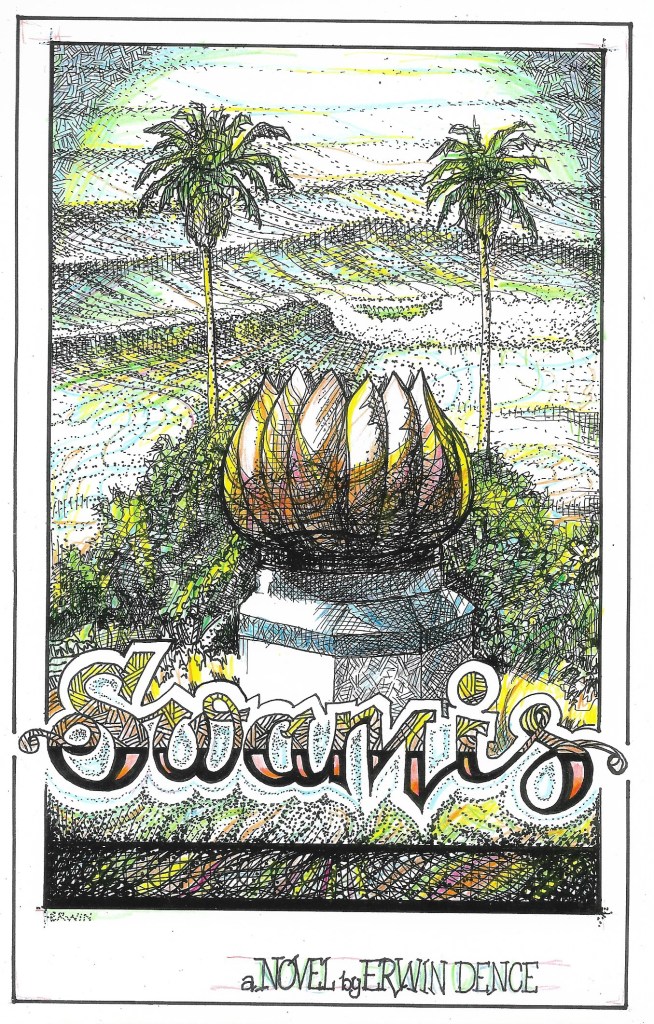
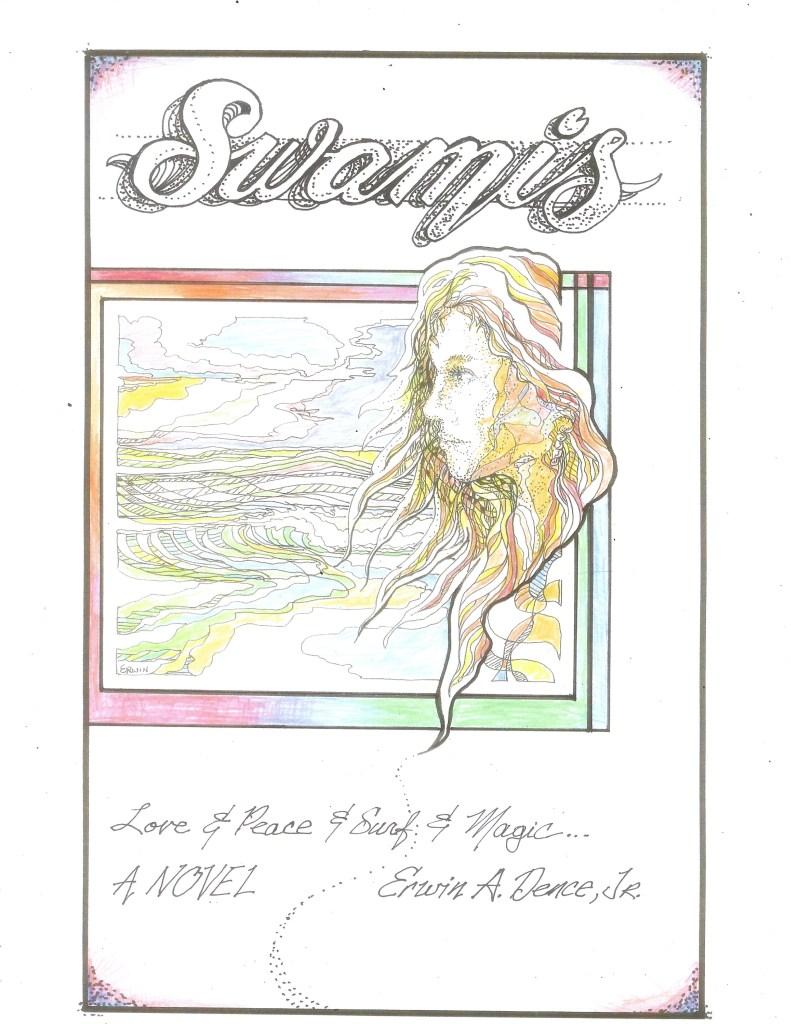
“SWAMIS” Chapter Four

A reminder- “Swamis” is fiction. I will be attempting to put the chapters on another page, and will continue to post on Wednesdays with other content on Sundays.

CHAPTER FOUR- THURSDAY, FEBRUARY 27, 1969

Our house in the hills between Fallbrook and Bonsall was a split level, stucco house, aluminum sash windows, composite roof. Someone else had started building from some plans purchased from a developer. My parents could save money, they were told, by finishing the lower level and the garage. They could replace the plywood shed at the edge of a corral with a small barn, room for a horse, a side area for hay and tack. New fencing. More trees. A garden. A covered patio off the kitchen, or, perhaps, a bay window.

 My father promised the patio, and then the bay window. He was working on it, but he was working. Working. There was, outside the sliding door, a concrete slab, with paving stones leading around the corner and down to the driveway. The two-story portion of the house featured a plate glass window, four foot high and eight feet wide, in total, with crank out, aluminum sash windows on either side. This window offered a view to the west, over scrubby trees and deep arroyos, of the hills, some rounded, others more jagged, with ancient boulders visible on all of them. Mission Avenue was hidden below and between. Mission, the road that linked Fallbrook with Bonsall, Vista, Oceanside, everywhere west, everywhere worth going to.

Looking out this window, I felt almost level with the hills, a yellow light descending from the ridgeline. Morning. There were, I knew, waves of hills in irregular lines between my hills and the unseen ocean. I had spent time, looking away from my studies, imagining the hills in timelapse, the sun setting at one place in winter, another in summer, lines off clouds held back at the ridgeline, breaking over the top, torn, scattering. I had imagined the block as transparent, the ocean visible, late afternoon sunlight reflected off the water and into the empty skies.

… 

I was at the dinette table in the kitchen, head down, a bowl of oatmeal, a tab of butter on top of it, in front of me. There was a glass pitcher of milk between my setting and the other two. There were four lunch sacks on the counter. Two were a light blue, one was a shade more orange than pink, the fourth was the standard lunch sack brown. My mother, already dressed and ready for work, took a carton of Lucky Strikes from a cupboard, put a pack into the brown lunch sack.

She looked out the window over the sink. She sniffled.

My father, in one of his everyday detective suits; coat unbuttoned, tie untied; leaned over from the head of the table. “Go get it, Jody.” The ‘now’ part of the command was unspoken. His voice was calm. Almost always. I didn’t move. I didn’t look up from my oatmeal. “You didn’t think they’d send a copy to the school? Jody?”

I stood up, lifting my chair up high enough that the metal legs, even though they had plastic shoes at the bottom, wouldn’t scrape the oak flooring. I looked at my father. He was looking at my mother. She sniffled, again, but didn’t turn around.

My bedroom was at the end of the hallway, past my parent’s and my father’s den on the right, the guest bathroom, Freddy’s room, then mine on the left. There were pictures taken from surfing magazines on several walls, a cluttered desk between the closet and a bunk bed, the bottom bunk converted into a space for books and toys and cardboard boxes taped and marked, stuff from our house in Fallbrook, the middle-class starter home. The Magarian Tract.

Though we had been at the ranchette for more than four years, and because I really didn’t need the stuff, and because the garage had never become water and weather tight, most of the boxes in my room remained stacked and taped and marked. Grease pencil. Yellow, mostly. Some black. I lifted one marked “Cowboy stuff” and took out the legal sized envelope.

As I walked up the hallway, I heard my father ask, “You thought I’d just sign this, Ruth?”

“You always have.”

My parents almost never raised their voices. My father didn’t have to, my mother just… wouldn’t. I’ve been asked about my parent’s relationship many times. Japanese war bride, ex-Marine. My answer will always be, “They had a certain dynamic.” The answer could as easily be, “It wasn’t what you think.” Whatever they thought.

My parents were standing at the counter to the right of the double sink. I placed the envelope on the tablecloth, next to my father’s plate. Sausage and eggs. Uneaten. Cup of coffee. Half full. I sat down. I looked over. My father signed at the bottom of two pages. My mother refolded them into thirds and put them into an envelope. She set the envelope on the left side of the sink and said, “thank you.”

My father was looking at several other pages. Legal size. He looked toward his wife. Her back was to the sink, both hands behind her on the edge of the counter. She looked at my father’s hands as he folded those papers in half. He took in a breath, took two steps toward her, let out the breath slowly. He handed her the papers with his right hand. She took them with her left, picked up and handed him the brown lunch sack with her right.

“Not mine, Ruth. Never was. You could… this could give you… freedom. Ikura desuka?”

My father almost never spoke Japanese. My mother froze. My father’s expression was one of instant regret.

“Freedom, Joe?”

I replayed the words. “E’-kew-rah des-kah.” Again. “E’-kew-rah des-kah.”

My mother and the envelope and the papers were gone. My father set the brown lunch sack onto the counter, took two more packs from the carton of Lucky Strikes from the cupboard, unfolded the two folds on the lunch sack, put them in, refolded the sack. Not as neatly. He took two steps toward the sliding glass door, looked at his feet. “Socks,” he said. “Jody, you won’t be surfing… or working at Mrs. Tony’s; none of that shit.” He paused, looked at the envelope on the dinette table. “Stanford.” He threw his left hand out and down, ends of his fingers touching the Stanford logo. “You… you earned this. You’re going.”

“Going?”

My father looked toward the hallway, looked at me. “It’ll be… she’ll be fine. I have to…”

“Go. Yes.”

Freddy came into the kitchen. “Daddy?” Our father responded with a weak sideways nod. Freddy followed him through the living room, into the foyer, out onto the front porch. The front door slammed.

When Freddy returned, our mother was back in the kitchen. My brother, not even trying not to cry, looked at her, and then me, as if whatever was happening was our fault.

“Freedom,” I whispered, my left hand, in a fist, over my mouth.

The house phone was on a table just outside the formal dining room. Our mother picked up the receiver and dieled a number on the phone’s base. “No, I am well,” she said. “Annual leave. ‘Use it or lose it.’ I have accumulated…” She chuckled. Fake. “No. They’re both fine. I will be in tomorrow.” She looked at me. “Thank you.” She put the phone back on the base. “Joey, I will need the station wagon. You and Freddy… better hurry; you will have to take the bus.”

Freddy looked at me. “What did you do this time, Jody?”

…  

            Gary and Roger were my closest surf friends. Roger started board surfing the summer I did, 1965. Roger started the next summer. Though Roger lived closer to me, Gary offered to give me a ride home. I was riding shotgun. Gary’s sister, squeezed tightly against the passenger door, backseat of their mom’s Corvair, said, in an unnecessarily whiny voice, “I’m glad it’s all cool with you, Gary.”

“It is, Princess; cool with me.” Gary glanced over at me. “The Princess has a license, but our mom won’t let her drive without… supervision.”

“Well, thanks again for the ride, Gary; and for going by Potter for… Freddy. Oh, and thank you…”

“Princess,” Gary said.

The Princess blew air out of the side of her mouth. I looked around and over the seat. The Princess shook the wrist of her left hand, gave me a look I took as that the raspberry was meant for her brother rather than me. Freddy was not quite as tight against the door on the driver’s side. Neither tried to talk to, or even look at the other.

“So, Joey,” Gary asked, “what do you think of Roger’s latest girlfriend?”

“She’s a sophomore, you know,” the Princess said. “Sophomore.”

“Thanks for the info, Princess. Now, Joey, maybe, after school… days are getting longer. We could do Oceanside pier. Tamarack, if I drive.”

 “Four gallons of gas, two quarts of oil; that sound about right, Gary?”

“Or Joey; we could go in Roger’s stepdad’s Mustang.”

The Princess mumbled a quiet, “Fuck you, Gary,” as her brother downshifted, unnecessarily, at the first of several uphill curves. Freddy’s laugh and repetition of the words were louder and clearer.

“Or Princess and some of her friends… Juniors, no sophomores, could go with us,” Gary offered. The Princess let out a high-pitched, “Ha!” and a low-pitched sort of extended grunt sound. Freddy giggled. “Or, if we can’t go surfing after school, maybe me and you and Roger could ditch and go all day.”

Gary looked at me and winked. I shook my head, but I did smile. “Or maybe next week… or so, if we have all our stuff ready, boards loaded, we could make it to Grandview. Swamis. Somewhere… good.”

“Possible. Timewise.”

“Cool.”

The princess’s head suddenly appeared between Gary and me. “Most of you Fallbrook surfers aren’t even partway cool,” she said. “And besides, my friends won’t even cruise town in this crappy car; and besides that, it would be creepy.” The Princess looked at me and seemed to realize her face and mine were way too close. Still, she didn’t move away.

“Creepy,” I said.

“And they might find out Gary’s surfing just isn’t all that… cool,” the Princess said, almost smiling before she fell back into the seat and against the door.

We arrived at our driveway. The Falcon station wagon was still there, my nine-six pintail on the rack. The Falcon was backed up to the curved gravel pathway that went up the slight grade to the front door. Bender board and stakes had been installed for a while, ready for concrete.

“Board on the roof. Obvious Hodad move, Joey.”

I looked up at Gary’s Hansen surfboard hanging over the hood of the Corvair. “Obvious.”

Gary used the area between the unfinished garage and the temporary shed at the corner of the corral to turn around. The Corvair had barely stopped when Freddy jumped out and ran for the house. The Princess jumped out and ran around to the front passenger door. I took a few seconds to get my books and folders out of the seat. She leaned on the open door and checked out the ranchette. Disapprovingly.

Gary popped the clutch on the Corvair halfway down the driveway. There was a second cloud of black smoke as Gary, unnecessarily double-clutched, attempting, unsuccessfully, to get scratch in second gear. There were a few drops of oil soaking into and staining the insufficient gravel on the decomposed granite driveway.

My mom was standing at the front driver’s side door of the Falcon, Freddy pressed against her and between her and the seat. She was looking at me. “You know I’ll be back,” she said, for both Freddy and me.  She looked over at the old horse casually eating grain on the near side of what she called a paddock. “I can’t trust you boys to properly take care of Tallulah.”

The outside ringer for the telephone went off. We all looked toward the house. Freddy ran. I set my books down on the grass, walked around the front of the Falcon.

“Joey. I left some money… on the counter. Take the Volvo. You and Freddy can go to that Smorgasbord place he likes. You know how to find the Rollins Place; right?” I nodded. “No eating in the Volvo. Right?” I shook my head.

“Mom,” Freddy yelled, “It’s Daddy.”

“A couple of days. That’s all. You know I can’t really leave… my boys.”

“Or Tallulah.”

“Or Tallulah.” My mother got into the Falcon. She chuckled. “Stick shift. Hope I haven’t forgotten how.”

“Daddy! He wants to talk with mom. Joey!”    

“Three on the tree, Mom.” I closed the door for her. “You’ll be fine.”

My mom started the Falcon. “I called the station. Your father was out. I talked to Larry.”

“Larry? Wendall.” She nodded. “What did you tell… Wendall?”

“Nothing. I just… no, nothing. I said everything was… fine. Like always.”

 My mother had that determined look on her face; determined to be strong, to not cry; even if the strength wouldn’t last, even if the tears would flow as soon as she went down the driveway. She popped the clutch. Accidentally. The back tires threw some gravel and the Falcon stalled. She hit the steering wheel, restarted the engine, eased the clutch out, moved down the driveway and left, down La Canada.

I looked toward the west. The sun was high enough. There was enough time for a few waves between school and dark if I went to the pier. I wasn’t crying. Freddy, clearly, was.

“Jody. He wants to talk to you. Jody!”

            The doors to the Volvo were locked. Of course. I ran up the path to the door. Freddy was on the porch. The phone’s base was on the floor, three feet from the table. The cord to the receiver was stretched to its maximum length. Freddy tried to press the phone to my chest as I tried to pass him. The keys to the Volvo were hanging, along with other rings of keys and a rabbit’s foot, on a crudely shaped horse’s head Freddy had made at summer camp.

I grabbed the keys. Freddy pushed me. I pushed him down, the phone still in his hand. I took it from him. “Freddy, stop the blubbering. Dad?” I wasn’t really listening. I tried to direct Freddy toward the kitchen, rubbing my fingers together in the ‘money’ symbol. He was too busy blubbering. I leaned down toward my brother. “No, Dad; I couldn’t stop her.” Pause. “I am sorry about whatever Margaret, and Wendall, and everyone at the substation… thinks.” Pause. “Insolent? No.” Pause. “Dad, the clues were all there; you were just… busy.” Pause. “Hello. Hello.” Dial tone. “Dad?”  

I looped the long cord as I headed toward the kitchen, put the receiver onto the base, the base back on the table. Freddy stayed on the floor, his back against the frame of the opening between the foyer and the living room. “You could have stopped her, Jody.” I didn’t respond. Freddy screamed, “Everyone’s right; you’re a god-damned retard. Retard!”

“Let’s go then, Freddy.” My voice was as even as I could manage. I grabbed the cash from the dinette, walked back, stood over him. “Come on.”

Freddy laid out flat. He shook his head. “I’ll wait for Daddy. Dad.”

“There’s pizza in the refrigerator. You can heat it up in the oven or, I don’t know, god-damned retard like me, you can… goddamn eat it cold.”

The phone rang. Freddy rolled to his stomach, jumped up, and got to the phone on the second ring. “Uncle Larry.” Pause. “No, I don’t know where. Jody?” I shook my head. “Joey!” Out the door and down the path, Freddy still calling my name, all I heard was, “Retard.”

“Swamis” copyright 2020, Erwin A. Dence, Jr. All rights reserved
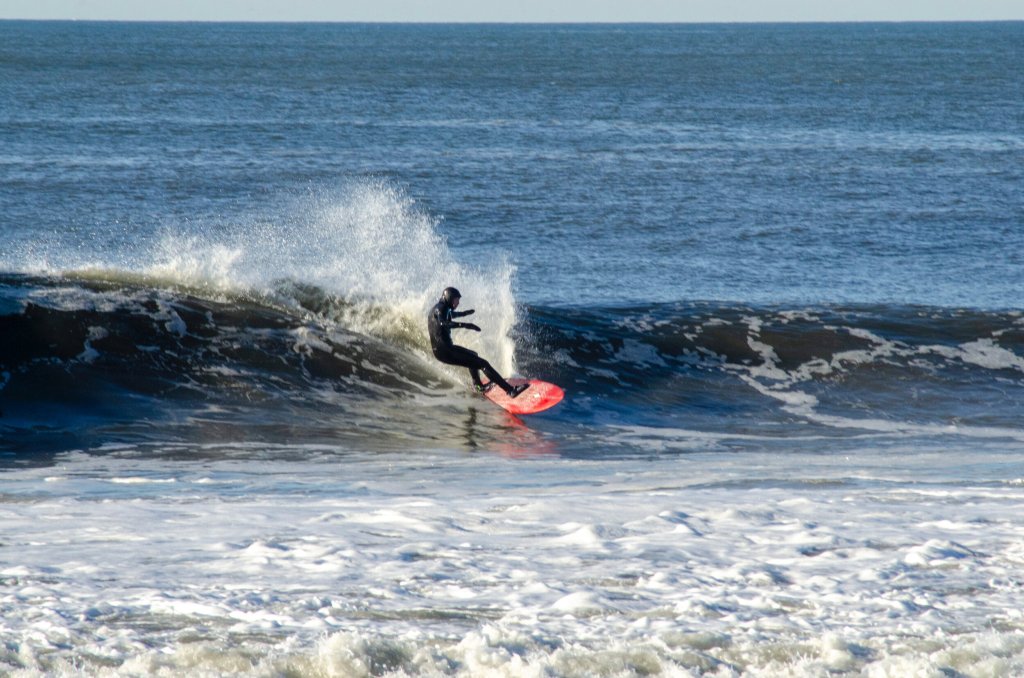
Barrel Dodging, Inspiration, and Eventual New Surf Rig

This is the piece I didn’t read at the THIRD SURF OCCASIONAL SURF CULTURE ON THE STRAIT OF JUAN DE FUCA AND THE SALISH SEA EVENT. I kind of free-balled on what the piece may or not say:

Art, Surfing, and Barrel Dodging

IMAGINATION connects surfing and art. Surfers imagine how they’re going to cruise or glide or dance on waves… or rip them up. Artists look around, or they, perhaps, stare at a blank canvas and imagine some piece of artwork. It starts with the IMAGE.

The image is, quite possibly, perfect, perfectly rendered, real. Or there are variations, slight or major changes, embellishments, color, perspective, shape, shading, formatting.  

REALITY. This is tougher. Image to reality.

Unless you live at a beach, surfing requires getting your gear together and heading out. Maybe you have reason to believe there will be good waves. EXPECTATION. ANTICIPATION. Even if someone broke a major rule of etiquette and called you, you can’t be entirely certain the waves are chest high and perfect. So, you’re anxious, excited.

You arrive, gear assembled. It’s time for the GREG NOLL MOMENT. Not at third reef pipeline. I’m sure you have that image cataloged in your brain somewhere. Every surfer takes that moment, mind surfing a few waves, putting yourself in the picture. You will wait for a lull, jump in and… surf. Timing, timing, COMMITTMENT. You either wade or you leap.

For a writer or an artist, a blank page or an empty canvas can be daunting, even frightening. Getting started can easily be put off with real life chores and commitments. Eventually you make the first sketchy strokes. Wading. Or leaping.

It shouldn’t really be surprising that things don’t go as you hoped. Your words or colors or that six wave set that catches you inside, or wave selection, or just plain PERFORMANCE don’t go as you had imagined. Almost never. Still, you’re doing… okay.

Okay. Let’s say you have a piece of art that you’re pretty satisfied with. Not fully stoked, not ready to sign your name to it. You could do more to it, maybe improve it. But you could also, by continuing, destroy it, lose some quality you almost accidentally, but happily achieved.

Twisting and squeezing this metaphor; you’re surfing down the line, high on the wave face. The wave is getting critical. You could tuck into a barrel you may not make it out of, risk getting pitched over the falls, or you could drop down, attempt to go under and around that section, maybe connect back with the green wave face on the other side.

BARREL DODGING. The result is a less than memorable, could-have-been great ride. And you still might have been wiped out by the broken wave.

The rides that are memorable, the ones that make whatever sacrifice we tell ourselves we’re making to surf, or write, or pursue some sort of artistic accomplishment, are the sections we didn’t think we would make, barrels we didn’t think we would come out of. But we did. Sometimes, even if we didn’t make the wave, we were in there.

I believed I would be a successful artist, or writer, or both, at about the same time I started surfing. If I was grateful any time I got a good ride, I wasn’t satisfied with anything but getting better. I would get frustrated and even angry when my performance in real life, hard, tedious, overwhelming, that Cinerama, surround-sound, twenty-four-seven real world didn’t live up to my great expectations. Pretty standard story.

There are waves, specific rides I remember. Name a spot I’ve surfed, and I will tell you my best ride there, or a perfect wave on which I blew the takeoff, or I didn’t grab the rail when I might have made it if I had; or, here’s an example: Warmwater Jetty, 1970. I pulled out, over the top of a steep section, and watched from behind it peel off perfectly for fifty more yards.

There are things I drew or painted or wrote that I hold, or held, in high regard. And there are all the other drawings and paintings and stories. If I go back and check out works from my past, I am occasionally surprised. Time has given me a chance to be more objective. Some are good enough I can’t believe I did them; others are not.

If we actually had movies, videos, some actual real-time, real-life visuals of any of us surfing, we would learn something our mental GoPro misses. Not as smooth, not as graceful, not as deep in the barrel as we imagined.

With art, there is something to read, or look at, or touch. Almost none of it is perfect. Or sacred. The truth is almost nothing is perfect. If we insist on perfection to be happy or satisfied, we won’t be. Still, we don’t want to settle for ‘good enough.’ We can set a project aside, repaint, redraw. Or we can hit ‘save as’ and keep writing, keep editing. Or we can take that step of putting the brush or the pen or the pencil back onto the surface, boldly going somewhere just past where our imagination has taken us. Or we can tuck in and hang on.

Wipe out or come out.

Either way, the possible gift is another moment we might remember. Art, surfing, life. If our memories aren’t as tangible, as real, as any story or song or painting or sculpture or assemblage, our mental images are what remains, and almost all that remains, of anything we’ve seen or read or experienced.

As surfers, as workers, as artists, as people who are in this real world with other real people, we seek to form new images, future memories.

The best memories, of the near perfect and near-weightless, blissful moments, allow us to forget the anxiety, the fearful and the hateful times we’ve experienced, the real and psychological pain we’ve felt.

These images are our personal art collections, and, hopefully, they last as long as we do.  If there’s a message in here it’s this: Be brave when you can.

Not me, obviously, and possibly a set up for the next section rather than barrel dodging the first section.

SIDE (SLIP) STORY- In between rides, I told BIG DAVE, who will sideslip a steep section, plow through a barrel or even a closing-down section rather than drop down and go around it, something like, “You know, sometimes, in order to make the wave, I kind of go through a slower section and then…” “Oh,” he said, “What part of __redacted___ are you from?”

FUTURE SURF RIG- I’ve been waiting for, and finally got my new surf rig. Great! Then, something wasn’t working. NEW BATTERY. Then, something else. Possible ALTERNATOR. I’m working on getting it worked on. I will update on WEDNESDAY, with the next installment from “SWAMIS.”

COPYRIGHT STUFF- Both local newspapers used stuff I wrote as a press release for the EVENT, edited it to suit their purposes, and published without giving me credit. IF YOU want to take anything from the above little piece, help yourself. THIS PIECE ONLY.

OTHERWISE, good luck in getting a few barrels, a few cruisers, and home safely.

“SWAMIS” Chapter three

                                    CHAPTER THREE- WEDNESDAY, DECEMBER 23, 1968

            It was Christmas vacation. I had surfed, but I wanted a few more rides. More. I had the time, I had the second-best parking spot of the now-full lot at Swamis- front row, two cars off center. It was cool but sunny. I was dead center on the Falcon, leaning over the hood. I checked the diving watch on my wrist. It was fogged up. I shook my wrist, removed the watch, set it on the part of the Falcon’s hood my spread-out beach towel didn’t cover, directly over the radiator, the face of the watch facing the ocean and the sun.

            Spread about on the towel was a quart of chocolate milk in a waxed cardboard container, the spout open; a lunch sack, light blue, open; an apple; a partial pack of Marlboros, hard pack, open, a book of paper matches inside; and three Pee-Chee folders. One of the folders was open. A red notebook, writing on both sides of most pages, was open to pages five and six.

            A car stopped immediately behind the Falcon. Two doors slammed. Two teenagers, sixteen, I guessed, to my almost eighteen, ran between my car and the car to my left and to the bluff.  Jumping and gesturing, they gave one-word assessments of the conditions. “Epic!” and “So… bitchin’!”

They looked at each other. They looked over me at their car, idling in the lane. They looked at me. The taller one, with a bad complexion, his hair parted in the middle, shirtless and with three strands of love beads around his neck, walked toward the driver’s side of the Falcon and asked, “Hey, man. You going out or been out?”

            “Both. Man.”

“Both?” Love Beads guy moved closer to me.

“Good spot,” the driver, with bottle bleached hair, Beach Boys striped shirt, and khaki pants, said, coming up the passenger side of the Falcon. I nodded. Politely. I smiled, politely, and looked down at my notebooks. “You a local?”

I shifted the notebooks, took out the one on the bottom, light blue, opened it, turned, and looked out at the lineup, half-sitting on the Falcon, I may or may not have scoffed.

 Short Guy stayed on the bluff. A car honked behind us. Not at me, at the Teenage Non-Locals. “At least go get the boards.” Love Beads Guy walked around me, close enough to give me what could have been an accidental nudge. “You fuckers down here are fuckin’ greedy,” he said, giving Beach Boys shirt an on-purpose nudge.

Beach Boy said, “Fuck you, Brian,” and, joined by Short Guy, ran out and into the lane to remove the boards. Love Beads Brian, moved directly in front of me. He puffed out his chest a bit. His expression changed. He looked a bit fierce. Or he attempted to. I twisted my left arm behind my back and set the notebook down and picked up my diving watch. When I brought my arm back around, very quickly, Brian twitched. I smiled. 

My left hand was on my watch band, close to its face. I shook it. Hard. Three quick strokes, then tapped it, three times, with the pointer finger of my right hand. “The joke, see, Brian, is that, once it gets filled up with water, no more can get in. Hence, Waterproof.” I put the watch on. “Nope, don’t have to leave yet… Brian.”

Brian was glowering, tensed-up. “Brian,” Short Guy said as he carried two boards over to the bluff and set them down, “You could, you know, help.” Brian raised his right hand, threw it out to his left and swung it back. I took the gesture to mean ‘shut up and keep walking, Short Guy.’ I chuckled. Brian moved his right hand closer to my face, pointer finger up.

I moved my face closer to his hand, then leaned back, feigning an inability to focus. “Brian,” I said, “I have a history…” Brian smirked. “…of striking out, and quite violently… when I feel threatened.” I blinked. “Brian.”

Brian looked around as if his friends might back him up. “Quite violently?”

“Brian. Yeah. Suddenly and… violently.” I nodded and rolled my eyes. I moved closer to his face. “My father says, there are times to react and times to… take a moment, assess the situation. I’m trying. Everyone… people are hoping the surfing is… helping. I am not… sure.”

“Brian,” Beach Boy said, “we’ll get a spot.”

“I can… watch your boards for you. Okay?”

“Okay? No! Fuck you, Jap!” It wasn’t loud. Brian moved back as he said it.

“Brian. I’m, uh, assessing.” I folded my hands across my chest. Brian was mumbling and swaying back and forth, closer and farther away. I couldn’t make sense of his words. His face was not in focus. He had become background, overlapped by, superimposed with, the faces of a succession of bullies, kids from school, third grade to high school. Each of the faces, each of them taunting, was too close to mine. I couldn’t hear them, either. I knew the words: “Retard!” “Idiot!” “What’s wrong with you?”

 I could hear my father’s voice. “They don’t know you, Jody. It’s all a joke. Laugh.” In this vision, or spell, or episode, each of my alleged tormentors, all of them boys, fell away. Each face was bracketed, punctuated with a blink of a red light. Every three seconds. Approximately.

One face belonged to a nine-year-old boy, a look of shock that would become pain on his face. He was falling back and down, blood coming out of his mouth. Red light. I looked at the school drinking fountain. A bit of blood. Red light. I saw more faces. The red lights became weaker, and with them, the images.

The lighting changed. More like silver than blue. Cold light. I saw my father’s face, and mine, in the bathroom mirror. Faces; his short, almost blond hair, almost curly, eyes almost impossibly blue; my hair straight and black, my eyes almost black. “Jody, just… smile.” I did. Big smile. “No, son; not that smile.”

I smiled. That smile.

Brian’s face came back into focus, two steps back from where he had been. He wasn’t going to challenge me. Short Guy was behind him and to his right. I asked, “Surf friends, huh?” Short Guy nodded. I unfolded my arms, looked at my watch, looked past the two teenagers and out to the kelp beds. “Wind’s picking up, Brian.”

I turned toward the Falcon, closed the notebook, set it on one side of the open Pee-Chee, picked up the light blue notebook from the other side. There were crude sketches of dark waves and cartoonish surfers on the cover. I opened it to the first page.

“Wind is picking up.” I may have spun around a bit quickly, hands in a pre-fight position. It was Rincon Ronny in a shortjohn wetsuit, a board under his arm. Ronny nodded toward the stairs. “They’re gone.” He leaned away and laughed. I relaxed my hands and my stance. “The one kid was carrying both boards. Scared shitless.”

“Oh.” I closed the notebook. Ronny nodded. I looked around to see if any of his friends were with him, then back to him. “I was… really… polite.”

“Polite. Yeah. From what I saw.”

“What you saw?” I had to think about what he did see, how long I was… in whatever state I was in. Out. I started gathering my belongings, pulling up the edges of my towel. “I just didn’t want to give my spot to fuckers from… I don’t know. Where are you parked… Ronny?”

“I’m… close enough.” Ronny looked at my shortjohn wetsuit, laid out over my board. “One thing; those two… fuckers, they won’t fuck with you in the water. Junior.”

“Joey.” I said, “Someone will.”

Ronny mouthed, “Joey,” and did a combination blink/nod. “Yeah. It’s… Swamis. Joey.”

Ronny looked at the waves, back at me. A gust of west wind blew the cover of one of my notebooks, a green one, open. “Julie” was written in almost unreadably psychedelic letters across pages eight and nine. “Julie.” Hopefully unreadable.

I repeated Ronny’s words mentally, careful not to mouth them. “From what I saw.”

“Swamis” copyright 2020. Erwin A. Dence, Jr.

Adam Wipeout’s Solstice Survivor and “Swamis” Chapter Two

The photos don’t do the board justice. I mean, if I do say so myself. The board will be on display at the THIRD OCCASIONAL SURF CULTURE ON THE STRAIT OF JUAN DE FUCA AND THE SALISH SEA EVENT, this Friday, June 30, Port Townsend Library, 6pm.

                        CHAPTER TWO- SUNDAY, SEPTEMBER 15, 1968

My nine-six Surfboards Hawaii pintail was on the Falcon’s factory racks. I was headed along Neptune, from Grandview, toward Moonlight Beach. The bluff side of Neptune was either garage or gate and fence, or hedge, tight to the road. There were few views of the water. I was, no doubt, smiling, remembering something from that morning’s session.

There had been six surfers out at the preferred lineup for righthanders. They all knew each other. If one of them didn’t know me, the asshole detective’s son, others would clue him in. There was no way the local crew and acceptable friends would allow me to catch a set wave; maybe a wave all of them missed or none of them wanted. No. One of the surfers would act as if he was going to take off on some smaller waves, just to keep me off them.  

As the first one in the water, I had surfed the peak, had selected the wave I thought might be the best of a set. Three other surfers came out. Okay. Three more surfers came out. Sid was one of them. A set wave came in. I had been waiting. I was in position. It was my wave. I took off.  Sid took off in front of me, ten yards over. I said something like, “Hey!”

Rather than speed down the line or pull out, Sid stalled. It was either hit him or bail. I bailed. Sid said “Hey!” Louder. He looked at me, cranked a turn at the last moment. He made the wave. I swam.

“I didn’t do anything wrong,” I said, back at the lineup. The four other surfers there were laughing with Sid.

“Wrong, Junior; you broke the locals rule.” Sid pointed to the lefts, the waves perceived as not being as good, on the other side of a real or imagined channel. “Local’s rule. Get it?” Trying to ignore the taunts of the others, I caught an insider and moved over.

After three lefts, surfed, I believed, with a certain urgency and a definite aggression, I paddled back, staying prone on my board, tacking back and forth. A wave was approaching, a decently sized set wave. I wanted it. 

“Outside!” I yelled, as loud as I could; loud enough that four of them, including Sid, started paddling for the horizon. I paddled at an angle, forty-five degrees from straight out, lined up the wave at the peak. Though the takeoff was late, I made the drop, rode the wave into the closeout section, pulling off the highest roller coaster I had ever even attempted.

There had been no outside set. I kept my back turned to the water as I exited, not daring to look up at the surfers on the bluff, hooting and pointing. Maybe I looked up for a moment as I grabbed my towel, my keys and wallet and cigarettes rolled up in it, tromped up the washout to Neptune Avenue, trying not to smile.   

Just before Moonlight Beach, a late fifties model Volkswagen bus, two-tone, white over gray, was almost blocking the southbound lane. Smoke was coming out of the open engine compartment. Black smoke. Three teenagers were standing behind the bus, two young men, Duncan Burgess and Rincon Ronny, on the right side, one young woman, Monica, on the left. 

There was more room on the northbound side. I pulled over, squeezed out between the door and someone’s bougainvillea hedge, and walked into the middle of the street, fifteen feet behind the van. “Can I help?” 

Duncan, Ronny, and Monica were dressed as if they had surfed but were going to check somewhere else. Those three were wearing nylon windbreakers, towels around their waists. Duncan’s and Monica’s were different, but both were red with white, horizontal stripes that differed in number and thickness. Ronny was wearing a dark blue windbreaker with white, vertical strip, a “Yater” patch sewn on. Each of the three looked at me, and looked back at each other, then at the smoking engine. The movement of their heads said, “No.”

Someone stepped out of an opening in the hedge on the bluff side of the road, pretty much even with me. I was startled. I almost fell back. Three steps before I regained my balance. I stared.

Julia Cole. She was wearing an oversized V-neck sweater, beige boys’ nylon trunks, bare legs, and huarache sandals. She looked upset, more angry than sad. But then… she almost laughed. I managed a smile.

“It’s you,” she said. It was. Me. “Are you a mechanic?” I shook my head, took a step toward the middle of the road, away from her. “An Angel?” Another head shake, another step. She took two more steps, forty-five degrees from straight, toward me. We were close. She seemed to be studying me, moving her head and eyes as if she might learn more from an only slightly different angle. I couldn’t continue to study Julia Cole. I looked past her. Her friends looked at her, then looked at each other, then looked, again, at the subsiding smoke and the growing pool of oil on the pavement. “We saw what you did,” she said. I took a sideways step, my eyes back on her. She smiled. “From the bluff.” Her voice was a whisper when she added, “Outside,” the fingers of her right hand out, but twisting, pulling into her palm, little finger first, as her hand itself twisted. “Outside,” she said again, slightly louder.

“Oh,” I said. “Yeah.”

By the time I shifted my focus from Julia Cole’s face to her right hand, it had become a fist, soft rather than tight. She moved her arm slowly across her body, stopping for a moment just under the parts of her sweater dampened by her bathing suit top. Breasts. I looked back into her eyes for the next moment. Green. Translucent. She moved her hand, just away from her body, up. She cupped her chin, thumb on one cheek, fingers lifting, pointer finger first, drumming, pinkie finger first. Three times. She pulled her hand away from her face, reaching toward me. Her hand stopped. She was about to say something.  

“Julie!” It was Duncan. Julie, Julia Cole didn’t look around. She lowered her hand and took another step closer to me. We were very close.

“If you were an… attorney. I could… use an attorney.”

“Oh. No.” I leaned back before I stepped back. “Not yet.”

“Okay, then. You can’t help.” Julia Cole loosened the tie holding her hair. Sun-bleached at the ends, no darker than dirty blonde at the roots. She used the fingers of both hands to straighten it.

“I can… give you a ride.”

“Look, Fallbrook…” It was Duncan. Again. He walked toward us, toward Julia Cole and me. “We’re fine.” He extended a hand toward Julia. She did a half-turn, sidestep. Fluid. Duncan kept looking at me. Not in a friendly way. He put his right hand on Julia Cole’s left shoulder.

Julia Cole was still smiling when I asked, “Phone booth? There’s one at… I’m heading for Swamis.”

            A car come up behind me. I wasn’t aware. Rincon Ronny and Monica watched it. Duncan backed toward the shoulder. Julia and I looked at each other for another moment. “You really should get out of the street… Junior.”

            “Joey,” I said. “Joey.”

            She could have said, “Julie.” Or “Julia.” She said neither.     

No one got a ride. I checked out several spots, didn’t surf. The VW bus was gone when I drove back by. Dirt from under someone’s hedge was scattered over the oil, some of it seeping through.

“Swamis,” copyright 2020, Erwin A. Dence, Jr.

“Swamis” Chapter One- Conclusion

It’s Wednesday. Swamis day. ON FRIDAY, June 23, I will be on the radio. KPTZ, 91.9 fm, Port Townsend, Washington, Barney Burke’s Blues show, 8 to 10 pm. You can stream it if you’re out of range. I will be talking about the upcoming SURF CULTURE ON THE STRAIT OF JUAN DE FUCA AND THE SALISH SEA EVENT and, maybe, possibly, be reciting some lyrics to blues songs I have written, possibly playing some harmonica. It can’t possibly be as cool as I imagine it could be, but… tune in.

I did a bit of a stall on my second wave. I rode the third wave into the shallows, moved up to the nose, attempted a Hawaiian pullout in the little reform. Copying, emulating; it’s part of learning, of getting better.

Though I claimed I had no surf heroes, Jumper Hayes and Chulo Lopez had been two of mine when I made the switch from Styrofoam surfies and canvas surf mats. June, 1965, just out of Junior High, begging my mom to take me to Tamarack. Jumper and Chulo Lopez were three years older, and were, as expected, not welcoming of even casual contact or communication with kooks.

Sid was outright hostile. Two years older than me, Sid was thousands of waves behind Chulo and Jumper, thousands ahead of me. There were “Watch out for that guy” comments on the beach, everyone watching him when he took off. Sid, obviously proud of his reputation as an asshole, had some undeniably good moves. He had moved up in the local hierarchy when Chulo and Jumper dropped off the scene. Trouble with the law. Stolen avocados. My father was involved. Detective. He did not share details. Unprofessional.

Chulo had come back with a love for Jesus and a definite limp. Now Jumper, as rumored, was back. Damaged.  

The sun was clearing the hill behind Swamis, and the trees on the bluff, and was hitting the horizon. The bluff would be a shadow on the waves for several hours. Surfers, checking the waves from the parking lot or the top of the stairs, were silhouettes, backlit. I counted the individuals. Six. Now seven. I looked at the stairs. In the deep shadow, Sid was two stairs ahead of Jumper, almost to the platform. A surfer coming down the stairs stopped.  

Or Sid stopped him. The stairs were too far away for me to hear words or see clearly. Body language. Jumper’s head was down. My guess was the other surfer wanted to say something to Jumper, or, at least, some sort of acknowledgement. Sid pushed him aside. Sid and Jumper continued up the stairs. The other surfer went down two steps, turned, raised his free hand in the air, a full-on flipping of the bird. “Eagle.” If he comboed the gesture with a “Fuck you,” it wouldn’t have been loud enough for Jumper or Sid to hear.  

The shower seemed a bit warmer than the ocean. Still wet, I put my windbreaker on and zipped it up. I put my keys and wallet in an outside pocket. I tucked my board under my arm, flopped my towel and t shirt over it. I looked back at the water as I went up. There were five surfers at the inside peak, six on the outside. I stopped at the landing to zip the jacket down enough to allow me to dig my dad’s lighter and my Marlboros from the inside pocket. I leaned my board against the ‘old men stop here’ rail and lit up. I wasn’t old.  

Exactly halfway up the top set of stairs, I could feel the vibration. More surfers. I didn’t look up. I moved to my left. I looked at the bluff, various shades of tan, shadows in the creases on the last of Swamis Point, the calved-off rocks and decomposed sandstone in a pile on the beach. I inhaled. When the vibration became a rocking motion, I turned and blew the smoke toward the middle of the stairway. Dick move.

There were two of them, each carrying a surfboard, but side-by-side, three steps up. Both stopped and let the smoke dissipate. Both looked down at me, my mouth open, lips in an ‘o’ shape. Oh.

I nodded. Neither returned the nod.

We did know each other; Duncan Burgess and Julia Cole, longtime locals, my age. Class of sixty-nine. San Dieguito for them, Fallbrook for me. That my mother and brother and I had just moved to Leucadia did not make me an instantly accepted local.

Julia Cole had her new pink board, almost matching her oversized sweater, under her right arm. There was a strap, something like a guitar strap, beaded, several colors in a Southwest native design, over her left shoulder and attached to her large gray bag. It was almost large enough to carry laundry or sports equipment, but of a heavier material. Leather. Worn and dirtied. She jumped the bag from step to step.

“Julie,” I said. “Duncan.” Neither answered. The silent equivalent of a put-down, loud and shared.

They kept coming down, side-by-side, Julia Cole closer to me, Duncan Burgess on the other rail. I squeezed closer to the outside rail. I had to look at Julie. I wanted to believe she would turn toward me, if only just enough to have me in her peripheral vision. If she did look at me, she would not look away until I did. Not her. Not Julia Cole. They were three steps below me when I said, “Jumper was out.” They kept walking.

After a moment of following them, I looked up the stairs, squinting into the sun. There was someone at the top of the stairs, parking lot level. I lost focus. Rather, I replayed the moments it had taken for Julia Cole to pass. Julie. Her right arm had been around her board, a reddish-brown towel draped and balanced on the board’s rail. The bag, hanging from her left shoulder, had pulled at the neckline of her sweater. She had allowed the bag to rest for a split second on a stair as the cigarette smoke clouded the space between us. She had blinked. She had looked at me. A look of contempt. Or hurt. Serious. Cold. As if I had betrayed her.

I had. In this vision, or version of a vision, I seemed to zoom in on her eyes. Translucent. So green.

I blinked. I shook my head. I had seen Julie’s green eyes before. This was another little mind movie, other images to be stored away. Not too deep.

Julie and Duncan stopped for a moment at the landing. They looked at the lineup. Julie said something to Duncan. Duncan looked around and up the stairs. At me. I inhaled. Heavily. I held the smoke as long as I could and exhaled as hard as I could. With the air as dead as it ever was, in that brief period between the offshore breeze and the onshore updrafts, the cloud hung in the air, as much of it spreading down as up or out. I crushed the cherry between my thumb and pointer finger, flicked it as hard as I could with the use of my middle finger. Julie and Duncan watched the last of the flight of the cigarette butt, down and into the groundcover plants inadequately covering the sandstone, down the steeper drop to the scrub brush above the beach.

Julie and Duncan looked at me, then beyond me, higher up the stairs. I had to look. Again. I squinted against the sun. Again. Someone was sitting, three steps down from the parking lot. The sun, just clearing the trees, was still behind him. He was looking at me, elbows on his knees, a hand on each side of his face. Jumper Hayes. Though his face was in shadow, I still believe he was smiling. He would wait. 

I closed my eyes and ran a thousand chaotic scenes, faces and phrases, black and white photographs, red lights and sirens and gunshots, before I stepped away from the railing and started up the upper stairs. “Redemption day, Jody,” Jumper had said, “You’re going with me.”

Jumper Hayes, dressed in white pants and a yellow t shirt with “Flowers by Hayes” in semi-psychedelic letters, stood when I got to the stair tread two below him.

“Redemption day?”

“Yes, Jody.” Jumper moved to one side, motioning me to pass by. “I hear you’re going by Joey now.” I may have chuckled. Jumper did chuckle. “I figure we have three possible… suspects… left. Joey.”

Jumper Hayes followed me to the Falcon. Optimum spot. Sid’s van was gone. The pickup was gone. A bright yellow van with two old longboards on top and “Flowers by Hayes” painted on the side was in its place. I set my board on the Falcon’s racks, my towel on the hood. I took the keys out of my windbreaker, unlocked the tailgate, and cranked the window down.

Jumper Hayes walked between my car and the Flowers by Hayes van. He opened the back doors, walked back, pulled my board from the Falcon’s rack. He walked, with a noticeable limp, between our vehicles, with my board over his head. I cranked the back window back up, locked the tailgate, unlocked the driver’s door, and opened it.

I was lighting up a Marlboro when Jumper returned. “I figure… four… Jumper.”

Jumper smiled, leaned close to my face, leaned back, snatched the cigarette from my mouth. “I was told you quit.”

If I was ready to strike, Jumper was ready to defend. He smiled first.

“I did.” I held out the Zippo lighter with the Sheriff’s Office logo for a moment. Jumper nodded. I opened the door, set it on the seat. “But then…” I looked around the Swamis parking lot, stopping for a moment on a 1969 Jeep Wagoneer with fake wood paneling.

“You were brave, Jody.”

“I was a fool, Jumper. Nothing changed.”

“Bravery, foolishness… yeah; but things did. You and Julie, that’s…”

Jumper had an annoyingly sympathetic expression when I spun around. He didn’t drop it. I looked at the two popout surfboards on top of his family business’s van. “You have a… real board… inside?”

“Real in 1967. Before the revolution. Before… Well, since I’m still a Jarhead, technically… guess a Marine doesn’t need a spleen…” Jumper’s laugh was almost apologetic. My smile, in return, went from probably weak to possibly surprised, something short of shocked, before I turned away. Jumper laughed again. He wasn’t apologetic. “I can get us on base. Maybe we can get a few waves at Trestles on the way back home. Hmm?”

“Trestles, huh?”

“San Onofre… at least.”

“San Onofre’s… fine.”

“Fine, then. Illegal to surf Trestles anyway.” Jumper Hayes laughed, pointed at his bright yellow t shirt, pointed at me. I shook my head. He nodded, laughed, and headed toward the van.

Thanks for reading, “SWAMIS,” copyright Erwin A. Dence, Jr. All rights reserved.

Erwin on the Radio, Blues, Excuses… more

The big cultural event is coming up, and I’m going to be pimping it on the local Port Townsend radio station (KPTZ, 91.9, available for streaming on your devices, hearing if you’re anywhere east of Pillar Point and South of North Whidbey Island) next Friday.


FRIDAY NIGHT BLUES with Barney Burke
Friday 8-10pm
Barney’s been hosting the Friday Night Blues since the launch of KPTZ and he’s always live on the air. He’ll get your feet tappin’ with all kinds of classic blues (and plenty of live tracks) plus a half-dozen soul and R&B tunes.
June 23  Longtime Quilcene painter/writer/artist/surfer Erwin Dence sits in with Barney Burke to discuss blues lyrics and local surf-inspired artists and other highlights of the upcoming Third Occasional Surf Culture on the Strait of Juan de Fuca and the Salish Sea event at the Port Townsend Library on Friday, June 30 at 6pm. Having Erwin Dence live in the studio will be one of those fasten your seatbelt moments … more compelling that an NPR driveway moment, even.
 
Barney texted me he was going to mention me during last Friday’s show. I tuned in too late, missed it, had to go to the archives the next morning. Yeah, good intro, tough to live up to. I will try.

Now, I did go on another show, Ron McElroy’s ‘Free Spin,’ to promote the first SURF CULTURE EVENT, about ten years ago. I was supposed to be on for about seven minutes, I got Ron talking about how he was in a car that went over the cliff at Santa Cruz… and survived. I am a competitive talker. I was on the show for about forty minutes.

THIS TIME, I got the opportunity because Barney Burke and I both once wrote for the Port Townsend Leader, I did some painting for him (how I meet some great folks- and others), and because I sent him the lyrics for fifteen or so blues songs I have written. Blues. SO, YEAH, we’ll see how that goes. I am bringing my harmonica, and I’ll be ready to talk, recite some lyrics, and try hard not to swear, belch, actually attempt to sing, or melt down on air. Yeah, it’s fuckin’ hard for me to keep a civil tongue.

I do have a couple of things I wrote that I plan on reciting at the SURF CULTURE ON THE STRAIT OF JUAN DE FUCA AND THE SALISH SEA EVENT. They were written as songs, but, because I’m pretty good at talking, even reciting, singing… no.

THE DIFFERENCE between reciting and singing is kind of like the difference between speed-walking (possibly still an Olympic event) is with speed walking, both feet are never off the ground at the same time. I will try.

OKAY, HERE IS WHAT I wrote for this Sunday’s post:

                                    EXCUSES

It might actually happen that no one asks you why you missed the last swell window. You, a person who monitors forecasts and buoy readings, who said last time that the next time you’d not miss the chance to maybe, just maybe… score. Even before you got the after-session (as is proper- depending on who they are shared with) reports from several sources and several spots, you knew, while you were doing whatever you were doing in the place of driving and hiking and waiting, that you were missing it. And you were. And you knew it. Confirmed. 

There was no one but you to blame, no one but you to hear your explanation of exactly what was more important than loading up, driving out, catching a few waves, maybe after the tide evened out or the swell found its way to where you were waiting, watching, hoping.

Excuses. You give me your list, and I’ll give you mine.

Yeah, my surf rig is dead, and I’m trading out work to get a replacement, and the job is not quite done. No, I’m not willing to take my work rig, with its less than wonderful miles per gallon rating and the current, inexplicable (retail compared to the per barrel crude oil cost) and  high price per gallon. Yes, the forecasts are almost always iffy. Winds can wreak a strong swell, tides can be too high or too low, perfect tide and wind conditions can’t beat a swell that angles somewhere else.

Excuses. Here is my quote on people’s excuses: The laziest people have the best excuses.

It’s not laziness. Though I’ve said for as long as I’ve known Trish (55 years) that surfing is the other woman, and that there have been ‘surf or me’ moments, I must add that WORK is the cruel mistress that has most often kept me painting, sometimes on the bluff, with perfect and glassy waves being enjoyed and missed and misridden well within my view.

Oh, and if I’m being this honest, I must add that poor life planning is part of the reason that an old fart still is working. Oh, and laziness-wise, though I’ve done it throughout my work life, I seem to be increasingly unwilling to even talk myself into racing out for a quick session, and back for work. No, I want the all day option. 

Or, if I just happen to be working close to some wave possibilities… sure; amazing how one can shake off the tiredness with cold water and a some tantalizing wave possibilities.

Next time, next time, next time…

I’m a couple of days short of getting my new-to-me surf rig.

Yes, it will double as a work rig on those days I don’t need a big boy van full of tools and dropcloths and ladders. WORK RIG. Surf rig. YES! And I’ll go stealth for as long as I can.

As with the anticipation for the next swell window, I can hardly wait.

Thanks to Barney Burke for the opportunity. I’m positive it won’t be as I imagine it, but I’m sure it will be… interesting. REMEMBER to check out realsurfers.net for the remainder of Chapter One of “SWAMIS” on Wednesday, tune into KPTZ 8pm on this coming Friday, and make plans to be at the Library, uptown Port Townsend for the Event, Friday, June 30. Oh, and please respect my copyrights.

“SWAMIS” Chapter One, Part One

CHAPTER ONE- FRIDAY, JUNE 6, 1969

            There was something almost comforting about the darkness, about not having a horizon to worry about. An oversized flashlight in my hand, the words on the pages of the palm-sized notepad, open and pushed up against the steering wheel; this was all I could really see. Notes, in cop shorthand, detective code. Still, I could hear the steady sound of waves, the rhythm occasionally changed with what had to be an outside set. I had felt, when I pulled into the lot and got out of the car, the push of night wind hit me, pass me, and get lost, dispersed in the vastness beyond the bluff. Offshore. Perfect.  

I was in the driver’s seat of my car, mine, the hand-me-down Ford Falcon station wagon, new in 1964. The Falcon was parked in the optimum location in the Swamis parking lot, dead center, front row, facing the bluff. When it got light enough, I would be able to watch the waves wrap around the point. There would be a moment where I would know I would be dropping down the stairs and paddling out. If Swamis was at all decent, it would get crowded.

            It was not nearly light enough. I closed the notepad, thumb holding my place, and tried to repeat what I had transposed from a days’ worth of my father’s notes. I opened the pad, reread the third of any pages that had real action, real adventure. A break-in, chase, and arrest. Vista, October 1967. I recited the words. I checked again, for accuracy. Close. Or closer.

I shined the flashlight on the seat beside me. A black metal file box with other note pads and a spare t shirt, for later, three scuffed and dirtied, formerly dirty-orange Pee-Chee binders, three college-ruled notebooks inside each one. I put the notepad into the pocket of the top binder, middle of three. I pulled out the bottom Pee-Chee, opened it, took out the middle notebook. Wire bound, with serrations, tear out pages. Not that I would. I pulled a ballpoint pen from the wire, left a space between the previous day’s notes, wrote, “Free. These are days where freedom and peace and war and revolution are often used in the same sentence.”

            I repeated my words. “’Love.’ I should add ‘love,’” I told myself. “People say it, don’t mean it.” I didn’t. I added, “School day. Work day. Not for me. Free! And… it sounds like Swamis is actually breaking. Got my spot. Optimum location. No one else here. Yet.”

            Putting the pen back into the binding, adding the notebook to the stack of Pee-Chee binders and notebooks, a waxed cardboard quart of chocolate milk trapped behind them, I reached into the small wooden box of eight track tapes on the driveline hump, fingered my way to the third one down, flipped it to the proper direction, and inserted it in the dash-mounted player.

            Legal. At least this one looked legal. The player would work without the car running because the guy I bought it from, Mark, friend of a friend, hooked it up the way my father’s Sheriff’s Office radio had been wired.

Mark claimed if this tape deck was stolen, he hadn’t stolen it. My surf friends Gary and Roger, and several of their friends, claimed he did, and I should have known. “Just don’t let the cops fuck with this one,” Gary said. “Get some better tapes,” Roger added.  

I pushed in “Aerial Ballet.”

I was listening, and then I wasn’t. Asleep, perhaps. I didn’t hear the two vehicles pull in, one on either side, didn’t hear the doors close, wasn’t aware two people had met at the front of the Falcon.

Wham!

The flashlight was up, instantly stuck between the spokes of the steering wheel and pointed at the man leaning toward me, straight across the hood, the flat palm of his right hand raised and ready for another slap.  The light hit the curve of the fogged-up windshield, bounced back. I turned the flashlight off. I still hadn’t recognized the man.

“It’s still fuckin’ dark, man,” he said. I recognized the voice. Sid. I would have, should have recognized the sound of his van, seven out of eight pistons firing. I must have been asleep.

“Yeah. Dark.” I didn’t recognize that voice. “Okay, Sidney; five waves and I have to go.”

“No, man, I’m doing the delivery. It’s still my job. And… I have some… green stamps I need to… redeem.”

“No. Not today. Man. Five waves and…” I waited for a completion of the sentence. “And, you know what, you aren’t going.”

“No? Just you? Fuck it, then, man; five for you means ten for me.”

Wham! Flat palm on the hood. A different hand. Passenger side. “Break of dawn, DeFreines.” There was humming. Military cadence. “Jody’s got Sid’s surfboard, got his Daddy’s Falcon, too; no sense feelin’ lonely, no sense feelin’ blue.” The cadence continued the with a lighter tapping on the hood. One finger, maybe two.

I filled in the rest in my mind. Silently. “Sound off, one, two; sound off, three four…” I stopped myself. “Jody,” I thought, “He called me Jody.”

“Jody.” A face was at my side window, close to the glass. I was startled into an uncontrollable upper body twitch. Still, I didn’t turn to look until the man was a darker shadow in the dark. “Redemption day, Jody, and… and you’re going with me.” He hit the window with a flat palm. The shadow receded.

Junipero Serra Hayes. Jumper.

I didn’t get out of the car until two metal doors slammed on the vehicle to my right, until Sid’s vague shadow passed. Other cars, headlights on, were coming into the lot from 101.

It was a pickup truck to the left of the Falcon; step-side, late fifties, brownish red and rusty red. Farm truck. I brought up a mental image of where I had seen this truck. Grandview Street, off 101, right hand side. Farmhouse, barn, greenhouses, a little shop with “Flowers by Hayes” over the sliding glass door. Jumper. Junipero Hayes.  

Everyone knew Jumper was back in the North County. No one had seen him in the water.

The mid-sixties Chevy van on my right, Sid’s, was a light gray. Factory color. It was jacked-up in the back, with overwide tires, accommodated by Sid having cut the wheel wells and glassed-on the red-primed, flared fenders. No windows. Surfboards Hawaii decal on the driver’s door. Sid. Team rider. Another asshole in the water. Of course, they were friends, Sid and Jumper. Locals. 

            I opened both driver side doors, tossed a damp beach towel over the back door, used the cover to strip out of my Levis jeans and into my driest trunks. I stuck my towel onto the roof, pulled my wallet out of the jeans, set it on the towel. I grabbed a pack of Marlboros and a Zippo lighter off the dashboard, placed them into the inside pocket of my windbreaker. I folded my boxers in with the Levis, set them on the floor in front of the driver’s seat. I set my shoes, socks already inside them, on top of my Levis. I pulled my latest board, formerly Sid’s board, out of the back of the Falcon, set it on the roof racks. I opened, locked, and closed all the doors, circled the Falcon again, making sure all the doors were locked. I wrapped my keys and wallet into the towel, clutched it to my chest with my left hand, slid the board off the racks with my right hand, stepped away and pivoted it, wax side out, into position under my arm.

            I took three breaths and walked toward the stairs.

            …

It was still dark enough that the water, other than a silver-green line at the horizon, was more black-and-white than any sort of discernible color. Carrying the surfboard that had, indeed, once belonged to Sid, I took two steps at a time down the top flight of the wooden stair system at Swamis. I stopped on the platform where the stairs made a ninety degree turn and dropped, parallel to the beach, the rest of the way down.

The platform was approximately six feet by eight feet and offered a perfect view of the lineup and the point. Because it was at a particularly steep portion of the bluff, probably sixty feet or more above the beach, galvanized chain link fencing, eight feet high, the metal posts attached to the wooden posts and railings, had been added to two sides of the landing.

The ocean, forty minutes before dawn, was horizontal streaks of grays. Still, Swamis was, obviously, lined up. Someone was getting a ride. New streaks, breaking the plane. Another surfer was on the next wave. My guess was that Jumper Hayes, on a longer board, drawing traditional lines, had been on the first wave. This was Sid. I knew Sid’s style: More turns, more aggressive turns. I could hear hoots between the only two surfers in the water, locals. Not would not have been acceptable behavior for Kooks and non-locals. Rules. Code. Etiquette. Rather rigid, strict; constantly broken, only occasionally enforced; as with all codes.

Running my hand along the horizontal railing on the downhill side of the platform, I felt the letters carved into the wood gone smooth with time and thousands of hands. I knew the words. “Old men stop here.” It was true. Not that a seventeen-year-old paid any attention to surfers over twenty-five, and definitely not to surfers over thirty. Old men.

There was movement on the upper stairs. Vibration, just short of rocking. Two more surfers were coming down. Both were laughing, bouncing, hurrying. I pushed closer to the corner, let them pass. I didn’t look at them, they didn’t acknowledge me.  

Taking two stairs at a time, I almost caught up with those two surfers at the bottom deck. They were on the beach and running for the water as I got to the lower platform, running like extras in a “Beach Blanket” movie. Kook move. The foundations for the supports of the six step stairway were showing, the winter waves and tides having pushed the sand south. Summer swells would return it. I leapt off the bottom step. Silent hoot.

I stuck my towel in the tangle of roots and dead lower branches of some scrub, six feet or so above the beach and fifteen feet beyond the lifeguard tower. I took off my windbreaker and t shirt, draping the red jacket over the rest of my stuff. There was, I still believed, a code that kept surfers from stealing from other surfers. Still, I wanted my valuables somewhere it was obvious they were there on purpose, somewhere I could possibly see them.

            In what had become my pre-surf ritual, I pulled a pack of Marlboros, box, not soft pack, from the windbreaker. I took out the Zippo lighter. Chrome. Freshly filled, new flint. Big flame. I lit up, clicked the lid shut. I ran two fingers over the lighter’s raised logo. “San Diego County Sheriff’s Office.” Gold on chrome.

            I inhaled, popped the lid open by hitting a corner on my other hand, and looked at the flame. Smaller. In the brightness I saw, or imagined I saw, red lights, spinning, flashing in three second intervals, coming closer. I blinked, looked to my right. I saw a painted image of Jesus, the red lights distorting his calm countenance. I followed his arm to his fingers, pointing forward, into the lights, into the sun. Blinding. I turned through the brightness and to my left, the vehicle that was the source of the lights. A reflection-distorted image of my father was in the windshield, then the open window. He was very close, passing very slowly. I couldn’t quite focus on his expression. He turned his head away. Forward.

            The flashing lights moved past me leaving only the brighter light. I blinked. I popped the lid on my father’s lighter shut. “Ten seconds,” I said. “Maybe eight. Concentrate. Can’t do this.”   

My stuff was re-wrapped and re-positioned, my cigarette was still in my mouth, and I was into the ragged line left by the high tide when a surfer on a long board took off from the outside peak. Jumper Hayes. A bit slow on the takeoff and popup, jerky on the bottom turn, he cruised through the first wall and into the slow section. With a series of subtle stalls, he lined up the inside section, and, rather stiffly, shuffled toward the nose. He hung five, pearling and spinning into a Hawaiian pullout. His board skittered in a ways before it was released by the soup and popped up. It must have been Jumper’s fifth wave. He flipped his board over, skeg up. Pulling his board up by a rail, he trudged alongside it through the rocks and eel grass toward the beach, stepping carefully, ready for the holes in the rock ledges.

Yeah, it was Jumper. He was fifty feet or so up the point when a spent wave hit my shins. He pulled the board up under his right arm and stared at me. “You,” I imagined, was the word he almost whispered, I almost heard.

“You.” I looked away. The next wave came in without a rider. Sid, on the wave after that one, made three upper body movements before he hit the trough, cranked a turn that brought him to the top of the wave and five feet down the line. Unweight, half-slide, hit the middle of the wave, crouch, hand in the wave face. Stall, stall, let go and get a partial coverup. A lot of work. Sid. If Sid was showing off for Jumper, it was wasted. Jumper was still staring at me, still moving forward.

Thigh deep, I looked back as Sid, thrashing forward, caught up to Jumper in six inches of water. Sid reached for Jumper’s shoulder. I looked away. For a second. Sid must have said something. Maybe it was just, “Hey!”

I turned back. Sid was in the air, feet over his head. So quick. Down. Sid was on his back. Jumper’s board beside him. Jumper was holding Sid’s board, like a spear, at his friend’s chest. They seemed to be frozen in these positions.

It was a definite “Hey!” Sid was scrambling, crablike, up the curve of the beach. “It’s me! Jumper! Me!”

I froze, my back to the ocean. Though I could still see the two surfers, I replayed what I had just seen in my mind in a sort of double exposure. Reach. Touch. Reaction.

A wave hit me, only temporarily affecting my balance, but wiping the image away. I was back to real time. Jumper raised Sid’s board, twisted away, and threw the board toward the higher beach. The full length of the board landed on a rail, flipped onto the other rail, and landed skeg up. I replayed those movements as I watched the two surfers.

Sid was sitting just above the scalloped high tide line, the fragments of driftwood and seaweed. Jumper was crouching next to him. Jumper may have been crying. I couldn’t tell. I looked away when Jumper, and then Sid, looked in my direction. If I expected anger that I had been a witness, what I saw was more like embarrassment.

Maybe that was more imagined than real. I turned away, threw board and my body into an oncoming wave, and paddled out.

REMEMBER, “Swamis” is copyright protected, all rights reserved by the author, Erwin A. Dence, Jr.

INCIDENTALLY, I GOT THIS very interesting comment from JAMES IREDELL MOSS: “My grandma (Ida May Noonan) lived on Noonan Point till her house burned down in 1893. They did not rebuild. Eventually SRF (Self Realization Fellowship) bought the point and established the temple. Now it is called Swamis. I went to San DIeguito with Cheer Critchlow, that is what eventually led me to your site.”

Thanks, James. In researching, and, yes, I have researched, I got Swamis Point listed as NONAME POINT. That it is actually NOONAN POINT is so fantastic. It doesn’t mean I’m changing the title to “Noonan’s,” but I love inside scoop. If you were a classmate of Cheer Critchlow, you and I are contemporaries. I think I had to cut Cheer out of the main manuscript, but I did take a night SPEECH class he was also taking at Palomar. Main memory of that, other than he was way more confident at public speaking than I was: Cheer said he had tried to be a professional surfer, there just wasn’t enough money for such a career. 1969, no; nowadays he would be, as he was in the pretty insular North County surfworld, a star.

Also, the Sid name if not the character is loosely based on a Surfboards Hawaii team surfer whose last name I once knew. He was featured, hanging ten, in a small ad. I did, indeed, look at a board he had thrashed in with the other used boards. “He doesn’t really care where he surfs” was the actual comment. I didn’t buy the board. Fictional Joey does.

SO, OKAY, now that I am burning potential content, Sundays are for content, WEDNESDAYS ARE FOR “SWAMIS.”

“Swamis,” Not Processed, Processing

MY NOVEL. Erwin’s Opus. It seems like I’ve been working on it forever. Writing, writing, editing, cutting, reworking. With tens of thousands of words sliced and phrasing polished, side stories removed, characters dropped, the timeline shortened, the storyline tightened, a hundred little inconsistencies fixed, I am almost, for at least the fourth time, approaching the end.

DO I have some faith that this version of the manuscript is reader friendly, like, commercial, like, perhaps, some novel you might consider for a casual read?

NO. Put it down to stubbornness, perhaps. My acceptance that I had to make changes to make “Swamis” readable is in a battle with my desire to make the fictional real.

I HAVE DECIDED TO start publishing “Swamis” in serial form on this site. BECAUSE I have committed to doing content on Sundays, I will start with the INTRODUCTION and post pages on WEDNESDAYS.

                                    “SWAMIS” INTRODUCTION

It was a conceit, I now can see, my belief that I had a gift. I could visualize, actually see, in my mind, what I had just witnessed. I could store this visualization, file it with others, bring it back into my mental vision at will. Memories. Not all memories. Important ones. Images of things I’ve seen, audio of words heard. Or overheard.

Ridiculous. We all seem to have this ability. If developed, it becomes a skill. My not realizing my own ridiculousness when I was seventeen may have been to my advantage.

Or maybe that’s just how I remember it.

My father was a detective. “What do you see?” That was always the question. Little things: A bent spoon, spilled milk, eyes that evade, words that contradict. Clues. Evidence. “What does it all mean?” The tougher question. “The greatest theory,” my father would say, “is nothing compared to the tiniest truth.”

Still, I noticed as many of the little things as I could. I tried to notice everything. Partially because I trusted my selected groups of clues, my biased interpretations, even less than I trusted the words and motives of others, I kept notes. Years and years of notes.

If I can’t seem to pull some vague memory out of my files… notes. 

 Memories, I have come to believe, have lives; a pulse of their own that we, as hosts, can push aside or ignore, try to forget, or try to pretend some memories were not real; we can place a memory in with enough other memories and dreams and fictions and secrets and lies that we can, briefly, convince ourselves that, at some time, in some situation, under some condition, the truth of that repressed memory will not come back to hit us, full force. If the truth of that secret, that lie, is revealed, we fear, our lives will be changed. Full force.

We cannot, continuing my overthinking, completely delete or erase even a pleasant memory, a mundane memory. All memories are somewhere.

I had an image, in some place between dream and awake-ness, of little containers, something to hold a bar of soap on a quick trip. Plastic, lid fitting over a tray. There were many of these containers, some larger than others, moving up and down vertical lines, something more like ropes, three strands, weaved. The containers were white because, supposedly, men lack enough imagination to dream in color. The ropes, I would swear, were greens and reds. The background was definitely black. 

It was a dream. I knew that. i did have enough imagination to convince myself that these containers held memories. Why not? There was movement, forces from the side, a wind, possibly, bumping one line into another, that one into the next one. Not chaotic but almost controlled movement. Almost a dance. And there was a beat. Background. The pulse thing. Almost music.

Trying to stay in the dream; trying to hold the moment; I theorized that memories are as much in our blood streams as in our brains; definitely not as cataloged and compartmentalized as we tell ourselves, and definitely not as controlled.

Perhaps, if I opened this one container…

I couldn’t. Or I woke up before I could open it. I was aware of my surroundings. Saturday, December third, two thousand and twenty-two. Briefly aware. I slipped from dream to memory.

I was paddling as hard as I could. A wave, already breaking to my left, was bearing down on me. I felt the wind push the top off the foam on the already lifting surface of the water, the remnants of the larger wave before this one coming up the face. I was aware of the heaviness and the speed of my breathing. I felt the lift and the drop and the weightlessness and the catching of my weight on my board. Instant rebalancing, pressure with my right foot on the inside rail. Swing. I turned. I had to rise, had to go faster. I did. Again, weightless, the low sun flashed off the wave face. Gold, white, too bright. The curve of the wave, yards ahead of me, was impossibly steep, the lip feathering, throwing itself forward, lace and diamonds and rainbows. I had to keep my eyes open. Had to. I was in the tube. I was elated. The very few seconds were magical and terrifying.

The knock down was not as violent as I would have thought. Had I thought. The lip hit me. There was no recovery. My board slipped and skittered and went sideways. It was six feet down to the trough, sideways to upside down to down, six feet of wave pushing me. My body was curling and straightening under the power and the weight, pushed six feet under water, to the bottom, tumbling, caught in the surge, and struggling. Uselessly. I came up fifteen feet over and twenty feet closer to shore. Another broken wave hit me before I could cough out and take in another breath.

Three rides on a day that would become legendary was enough. I stood up in the shallows, the sea grass covered rock ledges that were like ever extending fingers from the cove to the point. I would pick my way to shore, collect my board, and head for the stairs. Three rides. Two on waves other surfers had fallen on, one magic tube ride on a wave that was just mine. Magic. No shame.

No board. I looked around. There were other surfers on the beach, those who had failed and those waiting to build enough nerve to go out. The steep cliff was still in a shadow that extended halfway out to the inside peak. I looked up. There were silhouettes, trees and a line of people, spectators at the stadium. All of them seemed to be pointing out and yelling in unison. I couldn’t quite hear them. Three surfers on the beach joined in. “It’s in the rip! It’s in the rip!”

I had to swim back out. Had to.

The same rip current that had taken my board, down the beach and around the biggest of the waves, created enough of a channel that surfers whose skills did not match the conditions could get to the lineup. Fools and heroes. Just witnessing great surfers on great waves was enough for some of them. Five surfers would back off as another, thirty yards deeper, would scream toward and then under and then past them, Santana winds blowing back fifteen feet from each breaking wave. Occasionally a fool would take off in front of someone who just might make the wave. Fools and heroes and witnesses, spectators with cameras on the bluff.

 I had just reached my board. It was floating, right side up, just beyond the regular takeoff spot for the inside peak. Someone yelled, “Outside!” Everyone started paddling, desperately, toward deeper water. A young woman dropped in, two stroke takeoff, on the first wave, fifty yards out and forty yards up the point from me. She seemed to be standing, effortlessly, she and her board separately freefalling to the bottom third of the wave. She landed, toes first, and rebalanced, moving her right foot back. She cleanly and gracefully leaned into the wave, her body stretched, her left arm pointing down the line. Despite the strength of her turn, she seemed to glide up to the top third of the hollow pit. She crouched, tight, disappeared even from my view, in the glare and the gold and the diamonds and lace. She reappeared, sideslipped, put her right hand into the face of the wave, reconnected, and, with the lip of the wave throwing itself out and over her head, and with the biggest smile possible on her face, she looked directly at me and screamed, “Joe-y!”

I screamed, “Ju-lie!” Julia Truelove Cole. Swamis. Tuesday, December second, nineteen-sixty-nine. Fifty-four years ago, as I write this, and…  And Julie made the wave.

I am fully awake now. I can visualize all of this in living, vibrant, real-to-life color. It is real to me.

“Swamis” is a memoir, of sorts, memories of Joseph Atsushi DeFreines. “Swamis” is not a surf novel but a surfer’s story. “Swamis” does not fit comfortably in the detective/mystery genre. Writing and rewriting “Swamis” would have been so much easier if the narrator hadn’t been caught up in the back stories and the side stories, the tangents and the overlapping circles. After countless hours remembering and thinking and writing, editing and deleting, of trying to fit what I want to say in some format a reader would recognize, I might have to say “Swamis” is mostly a coming-of-age/romance novel set in a very specific, magical and terrifying time and place.

I apologize in advance for telling too much about minor characters, for side trips into the periphery. I refuse to apologize for the enjoyment I have had, so many years on, opening and reopening those containers. Of those I stories I have deleted: They’re somewhere, some backup file, some thumb drive. Of those I so feared opening: I have opened them now. I had to.

“Swamis” is copyrighted. All rights reserved by Erwin Dence.

Art, WSL, Cuts, and… POWER OUtAGE!

I tried really hard to have today’s post UP AND ONLINE by ten am. SORRY. 9:45, big power outage. I’m dealing with it. I got the boondocks-necessary generator going. Great! Hooked up the router and a few other items, went back to working on this. OOPS. Out of gas. Luckily, I didn’t put it all in my van. Back up and going. NOW, of course, the power came back on and I’m afraid to switch back over and lose whatever I haven’t already lost.

I did go on a little too much on the WSL stuff. I intended to just post some of my new illustrations.

OKAY, that:

JUST A BIT of explanation- The top part of this image is all I felt I could save from a larger drawing. The lower part was intended to be a WOLF. Maybe it’s the ears, but even I think BEAR. Oh, and maybe it’s the computer, but the colors seem to have come out way better than usual. WOLF/BEAR.

NOW, what I overwrote about the WSL:

It has become quite popular to criticize the shit out of the WORLD SURF LEAGUE, so… why shouldn’t I?

OKAY, I will.

Though I do appreciate that I can watch surf contests from all over the world on my big screen TV, and after I repeat an assertion I frequently make to doubters and haters that the difference in the wave riding skills of top-level competitive surfers and even above average non-competitors is proportionately greater than the difference between your local rippers and those who can objectively be labeled as kooks. HAVING SAID THAT, I leave a lot of room for those free surfers who are as good, and often better, as the men and women who seek fame, fortune, whatever, by subjecting themselves to the boredom and tension and the whims of judges.

OH, yeah, judging is SUBJECTIVE, subject to some person’s opinion on whether this air is more difficult than that carve, whether a floater is more functional than a kick-stall, whether making fifteen jitterbug moves is cooler than just being in the optimum position. People, even judges and even commentators and company executives could, maybe, even possibly, evenly reasonably influenced by companies that sponsor surfers as well as surf contests.

NOT THAT this happens, or that the WSL would bend a bit to keep or to even get popular surfers on the tour, or… or, or…

BUT a little behind the scenes stuff from the two seasons of that series about, you know, winning and whining and (I couldn’t remember the title and didn’t want to take the time to search further- but I did watch every episode), showed that in judging, there is a head judge who makes sure the other judges are on the same page. SO, yeah, totally subjective, semi regulated and controlled.

MAYBE.

SHIT! I didn’t want to get this involved. THE MID-SEASON CUT was completed. Twenty-two men, ten women. Elation and tears. I stayed up a little later than I would have to watch some critical rounds of the WSL contest at MARGARET RIVER, WESTERN AUSTRALIA.

YES, it was the last heat of the day, but as soon as it became apparent that SALLY FITZGIBBONS was going to lose, I turned it all off.

NOW, I do find it easier to follow women’s surfing. Not all of my surfing friends even give a shit about contests. Some do. Some have favorites. My daughter, DRU, thinks Tyler is a bad ass. She is. TRISH, based on watching, kind of over my shoulder, a contest from Huntington Beach a few years ago, became a COURTNEY CONLOGUE fan. I wasn’t, so much, but Trish keeps asking me, “How’d my girl do?”

Oh, she was underscored, just as she was in the BELL’S BEACH contest. A fierce competitor, Courtney didn’t make the cut. Sorry.

AND NOW, Sally Fitz, Sal, she’s out. Didn’t make the cut. Because Sally lost in the quarterfinals to Caroline Marks, this other woman, who, I believe, Sally defeated earlier, is in the top ten, and is still on the tour, and Sally… well, I don’t know. I turned the TV off and went to bed.

HERE is how to defeat a contestant as experienced, as capable, as skilled in SURFING TO THE CRITERIA as anyone- Sally: Give her a 3-plus on a well-surfed wave. Give Caroline a 7-plus for a similarly surfed wave (but backside). This difference in scoring puts Sally at a disadvantage. SURFING well is all about confidence. Surfing scared or angry or tentatively is not a losing strategy. Sally fell or took off on the wrong wave. Caroline got a well-deserved score. She won the heat. And she would have without any scoring help. Sally didn’t get a last second gift/miracle buzzer beater wave like CARISSA MOORE did in the heat before hers.

Sally’s out. She had a long career. She’s popular. She may or may not go on to the CHALLENGER SERIES.

I DON’T KNOW.

There is a WINNING FORMULA. With so much study done on how to win a heat (priority and time management, having that Kelly Slater turn on lock, knowing which claim to throw when), watching eight heats in a row has become… kind of… less thrilling. IF A SURFER can’t figure it out, hire a coach, do the work (always gets me, surfing as work), perfect that tail slide and that fin drift, remember to cut your competitor off from a last wave even if he or she can’t possibly get enough points to beat you (these are not your friends in the water), be ruthless… and always appear humble in the post-heat interview, always wear the hat and the sunglasses.

I watched a child/teen contest recently, from Trestles. The formula worked. Turn, turn, off the top, fin slide. If the kids didn’t have the moves down, they will. Coaches, sponsors, judges. 

ALL THIS SAID, I don’t exactly know how the WSL could do a better job. AND I do enjoy the big screen coverage. WAIT, how’s about they mix up the time-filler ad between heats? How about… I’m thinking. If I can’t sit through a bunch of heats next time, maybe I’ll just watch the shorter versions on YouTube.

Wednesday at Swamis

Check out Reggie Smart Art by scrolling down. I do plan on posting new stuff on SUNDAYS, but I might just have more stuff to say than one-a-week can handle.

I continue to tighten and refine my manuscript for “SWAMIS.” Every time I am happy with one chapter, I think about how I can cut some fat from another chapter. When I say ‘think,’ I mean obsess. Most of this chopping and hacking involves covering what characters do without going too far into some background on the character.

But first, without too explanation- A few new illustrations:

WAIT! I screwed up and didn’t switch the view on several other drawings. Not being skilled enough to save this and add the corrected images. I guess I’ll have to save them for SUNDAY. SUNDAY!

MEANWHILE, here is a section that comes early in the novel, and is sort of retold a bit later. I already cut a character who was in this chapter. Sorry, man. I did a bit of a combo, taking what I thought was the best of each and making a version that is BETTER.

SO…

I tried to concentrate on the water, listening, studying where the waves peaked, where the best takeoff point might be. Instead, I visualized Sid in the water at Swamis on a sunny, glassy morning. Sitting with four other surfers, Sid was the farthest surfer over, farthest out. The apex of a loose triangle. He watched me push through a wave, kept his eyes on me as I paddled over far enough over to not be in the way if someone caught a right hander, close enough to pick up a wave someone missed or fell early on. Scraps.

Sid motioned to the surfer on his immediate right as a wave approached. The surfer paddled for and caught it. Three-wave set. Sid motioned to another surfer to go on the second, then took the third, and largest wave. I was on the shoulder, forty-five degrees to the waves, sitting back on my board, ready to go. Sid kept his eyes on me, shaking his head. He rode as close to me as he could, cranked his board around in a cutback, spraying me as he passed. I paddled on, out, toward the peak.

Another set came quickly enough that the surfer who missed the previous waves took the first one. I took the second one. Smooth takeoff, I thought, decent bottom turn. I lined up the section, pulled up high on the wave face. I did see Sid down the line. I didn’t expect him to turn, last second, and drop in. I had two choices: Run Sid over or bail.

No choice, really.

“That’s for paddling past me,” Sid said, paddling back out as I stood in chest deep water, my board, broach to the wave, popping up halfway to shore.

“I didn’t break any rules,” I said.

Sid stopped, got off his board. It was floating between us. “Yeah, Kook, you broke the locals rule.” He took in a mouth full of water, spit it across the board at me. He smiled. “Locals rule.” He nodded toward the lefts. “Okay… cowboy?”

“Okay” I said, out loud. I opened my eyes. I was still on the platform. “Ten seconds,” I whispered. “Maybe twelve.”

OH, yeah, remember that all rights to this stuff are claimed by the artist and/or artist and are protected by copyright.

See you SUNDAY!